
Blog
Alonso’s Zandvoort Gamble: “I’m a Very Good Driver”
 123Helmets Editorial Team

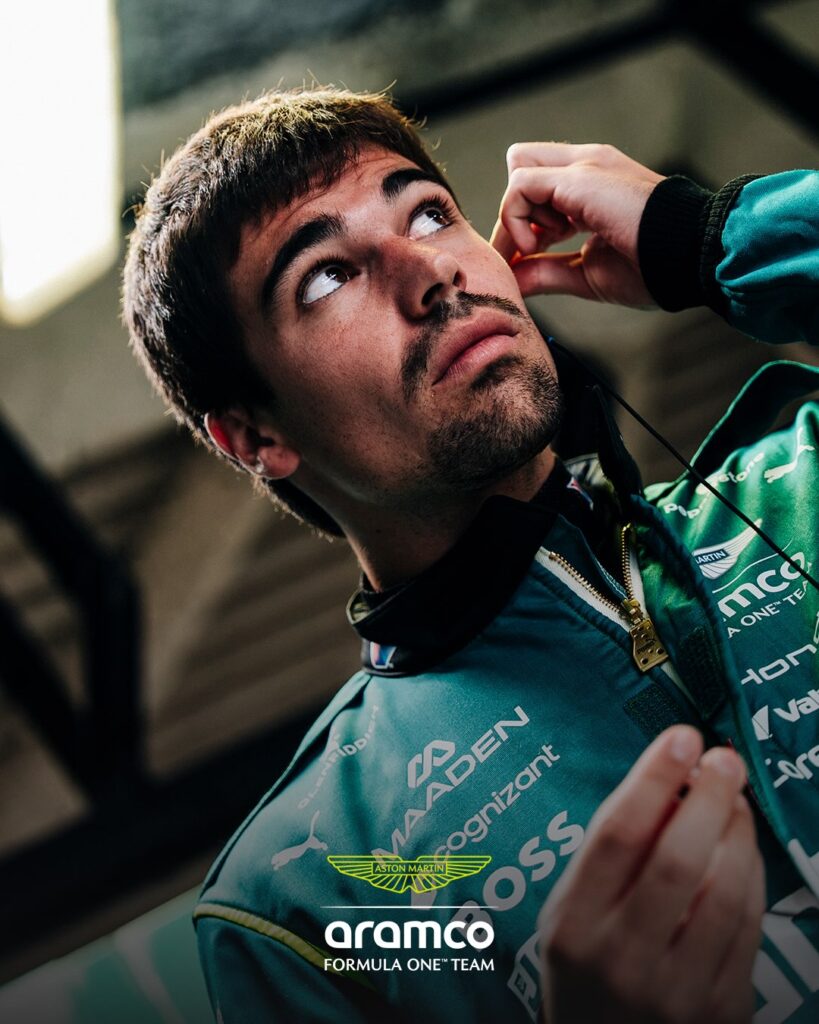
Fernando Alonso turned an 18th-place grid slot into ninth at the Dutch Grand Prix on 2026-08-23, running a single soft-to-hard strategy through Zandvoort while the rest of the field pitted twice, and credited his own racecraft for making it stick.
Key Takeaways
Alonso finished ninth at Zandvoort from 18th on the grid, his second points finish of the 2026 season after 10th at Monaco in June
He ran a soft-then-hard, single-stop strategy through lap 34 of the 72-lap race while rivals used at least two stops
Aston Martin arrived in the Netherlands with an upgraded Honda engine after a new chassis debuted in Budapest, and is no longer F1’s slowest team
Alonso qualified last for the sprint after a straightline-mode fault caused a Turn 1 lockup, before recovering to 18th for the Grand Prix
How Alonso Turned 18th into Ninth
Fernando Alonso converted a poor Saturday into a points finish by refusing to follow the pack’s strategy. Starting 18th on the grid at Zandvoort, the Aston Martin driver stayed out on a single set of soft tyres until lap 34 of the 72-lap race before switching to hards for the remainder of the Grand Prix, while most of the field ran at least two stops.
The approach was not the original script. Alonso admitted post-race that the team had planned a more conventional two-stop race, but track position in traffic forced a rethink. Aston Martin’s Formula 1 car was quicker through the corners than several rivals ahead but lost time on the straights, leaving Alonso stuck in dirty air until pit windows opened up space in front of him.
“That was not the plan,” Alonso said. “I think the plan was two stops and to go more conventional. But we need to sometimes deviate a little bit from what is normal.” The overcut, built on patience rather than pace, delivered his ninth-place finish and a second haul of points in 2026, following his 10th place at Monaco in June.
“I’m a Very Good Driver” – Alonso’s Verdict
Alonso’s now-famous line came when he was asked directly how the strategy worked out so well. “I’m a very good driver,” he said, before explaining the mechanics of the overcut in detail.
He described the situation facing Aston Martin for much of the afternoon: “When we are in traffic, we cannot use our potential. We are faster in the corners and the people in front of us, we are slower on the straights, and we’re stuck behind.” Rather than force overtakes that risked tyre wear or damage, Alonso and his engineers waited for clean air. “So, as soon as we have free track in front of us, we try to use it, even if it’s not the optimal performance and the optimal strategy, and it’s what we did today,” he added.
It is the kind of race-management call that has defined much of Alonso’s career, and one that fans who follow his helmet designs across different eras will recognize as part of the same competitive identity he has carried through multiple championship campaigns.
Aston Martin’s Weekend: From Sprint Trouble to Race-Day Recovery
Aston Martin’s Zandvoort weekend started badly before Alonso’s race-day recovery turned it around. Alonso qualified last for the sprint race after a straightline-mode fault on his car caused a lockup at Turn 1, while team-mate Lance Stroll qualified 19th for the same session.
The sprint itself brought little relief: Stroll finished 17th and Alonso 18th. Saturday’s main qualifying session was more respectable, with the pair taking 18th and 19th on the grid, ahead of both Haas and newcomer Cadillac. That grid slot set up Sunday’s ninth-place finish for Alonso, a result built almost entirely on strategy rather than raw grid position.
The broader context matters here. Aston Martin brought a significantly revised chassis to the prior round in Budapest, then followed it with an upgraded Honda engine for the Dutch Grand Prix weekend. Those updates appear to be working: the team is no longer regarded as Formula 1’s slowest outfit, a label that has now shifted to Cadillac following the American manufacturer’s 2026 grid debut.
What Ninth Place Looks Like on Track and in the Paddock
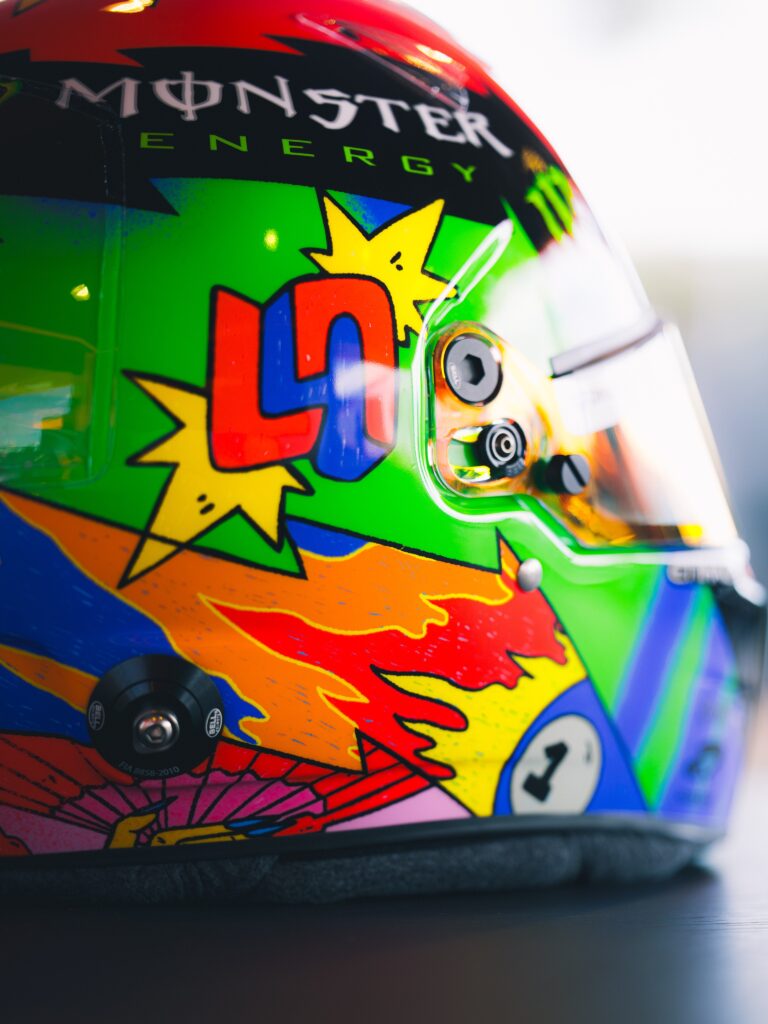
A ninth-place finish from 18th on the grid is a visual story as much as a results-sheet one, and it is the kind of moment that collectors look to commemorate. Alonso’s helmet through the Zandvoort weekend carried him through a sprint lockup, a recovery qualifying session, and a 72-lap strategic gamble that paid off in points.
Fans of Aston Martin’s 2026 campaign have been watching closely as the team works through its development curve, and Alonso’s Dutch Grand Prix result is a marker of where the car currently sits relative to the rest of the midfield. Full-size 1:1 replica helmets tied to moments like this one let fans hold onto a specific race weekend rather than a generic season summary — the lockup, the patience, the overcut, and the ninth-place result all attached to a single piece.
For those tracking Alonso’s 2026 season, the Zandvoort result sits alongside his Monaco points finish as evidence that Aston Martin’s midseason updates are translating into tangible gains, even on a weekend that started with mechanical trouble in the sprint.
Looking Ahead: Low-Downforce Tracks and Aston Martin’s Trajectory
Alonso has already flagged that low-downforce circuits may not suit Aston Martin’s current package as well as Zandvoort did. He indicated the team will not be as “competitive” at tracks that favor straightline speed over cornering grip, a trade-off that mirrors the exact traffic problem he described after the Dutch Grand Prix — strong in the corners, exposed on the straights.
That assessment will shape expectations for the next rounds of the 2026 calendar. With the upgraded Honda engine now in the car and the new chassis bedded in since Budapest, Aston Martin’s trajectory points upward, but Alonso’s own comments suggest the gains are circuit-dependent rather than universal.
Whatever the next results bring, the Dutch Grand Prix has already produced one of the more memorable strategic drives of Alonso’s 2026 season, and one of his more quotable lines in the process.
“I’m a very good driver. That was not the plan. I think the plan was two stops and to go more conventional. But we need to sometimes deviate a little bit from what is normal.”
— Fernando Alonso, Aston Martin
“When we are in traffic, we cannot use our potential. We are faster in the corners and the people in front of us, we are slower on the straights, and we’re stuck behind.”
— Fernando Alonso, Aston Martin
FAQ
Q: Where did Fernando Alonso finish at the 2026 Dutch Grand Prix?
Alonso finished ninth at Zandvoort on 2026-08-23, having started 18th on the grid, marking his second points finish of the 2026 season after 10th place at Monaco in June.
Q: What strategy did Alonso use to score points at Zandvoort?
Alonso ran a single-stop strategy, staying on soft tyres until lap 34 of the 72-lap race before switching to hards, while most rivals used at least two pit stops.
Q: Why did Alonso say “I’m a very good driver”?
He said it when asked how his unconventional strategy worked, explaining that Aston Martin exploited clean air once rivals pitted rather than forcing overtakes while stuck in traffic.
Q: How did Aston Martin perform in Dutch GP qualifying and the sprint?
Alonso qualified last for the sprint race after a straightline-mode fault caused a Turn 1 lockup, finishing 18th in the sprint, before qualifying 18th for the Grand Prix itself, with Lance Stroll 19th.
Q: Has Aston Martin improved its car in 2026?
Yes, the team introduced a new chassis at the prior round in Budapest and an upgraded Honda engine for the Dutch Grand Prix, and is no longer considered F1’s slowest team, a tag now held by Cadillac.
Shop Fernando Alonso Collection
Display and collector replicas only. Not certified for protective use. Full-size 1:1 scale.