
Blog
The Five Greatest Hungarian GP Drives in F1 History
 123Helmets Editorial Team
From Michael Schumacher’s three-stop gamble to Fernando Alonso’s breakthrough win as a 22-year-old, the Hungaroring has produced some of Formula 1’s sharpest drives — and ahead of the 2026 season’s look back at the circuit, these five stand above the rest.
Key Takeaways
Fernando Alonso became F1’s youngest-ever Grand Prix winner at the 2003 Hungarian GP, aged 22 years and 26 days, driving for Renault.
Michael Schumacher’s 1998 win came from a three-stop strategy that outpaced McLaren’s two-stop plan across the Hungaroring’s 70-lap distance.
Damon Hill came within laps of a shock win for Arrows in 1997 before a late mechanical issue cost him the victory.
Jenson Button’s 2006 win, taken from 14th on the grid in mixed conditions, remains one of the most-cited recovery drives at the circuit.
Why the Hungaroring Rewards Great Drives
The Hungaroring is a tight, technical 4.381 km circuit that punishes mistakes and rewards patience over its 70-lap race distance. Overtaking has historically been difficult there, which means the drives that stand out are usually built on strategy calls, wheel-to-wheel racing under pressure, or recoveries from bad grid slots rather than raw straight-line speed. That is exactly why the five drives below have stayed in the conversation for decades — each one turned the circuit’s difficulty into an opportunity rather than a limitation.
Every driver on this list either beat the field with their head, their car, or both, and each performance still gets replayed whenever the paddock returns to Budapest for the next edition of the race.
Michael Schumacher, 1998: The Three-Stop Masterclass
Michael Schumacher’s 1998 Hungarian Grand Prix win for Ferrari is widely regarded as one of the most complete tactical drives in F1 history. Facing a McLaren that appeared faster over a single lap, Ferrari and Schumacher committed to a three-stop strategy against McLaren’s two-stop plan, banking on lower fuel loads to unlock lap times the McLaren simply could not match on heavier fuel.
Schumacher had to string together a run of qualifying-pace laps in the middle of the race, on a circuit where clean air is everything, to make the extra pit stop pay off. The result validated Ferrari’s read of the race and is still used as a reference case for strategy-led Grand Prix wins on a track where overtaking is genuinely hard.
Damon Hill, 1997: Arrows’ Near-Miracle
Damon Hill came within laps of delivering a win for the Arrows team in 1997, one of the biggest shocks the Hungaroring has ever produced. Driving a car that was nowhere near the pace of the front-running teams for most of the season, Hill led for the majority of the Grand Prix distance before a late mechanical issue in the closing laps cost him the lead and the win, and he crossed the line second instead.
The drive is remembered less for the final result and more for how close an underfunded team came to an outright win, with Hill controlling a race he had no business leading for that long. It remains one of the sport’s great what-if afternoons.
Fernando Alonso, 2003: The Breakthrough Win
Fernando Alonso’s 2003 Hungarian Grand Prix win made him Formula 1’s youngest-ever Grand Prix winner at the time, at 22 years and 26 days old, driving for Renault. Alonso took pole position and controlled the race from the front, converting that grid slot into a lights-to-flag victory that announced him as a genuine title contender years before his two championships arrived.
That result is the reason this drive sits alongside Schumacher’s and Hill’s on any list of Hungaroring classics — it was the first data point that told the paddock a generational driver had arrived. Collectors following Alonso’s career often point to 2003 as the season that defined his early identity as a front-running, pole-to-flag racer.
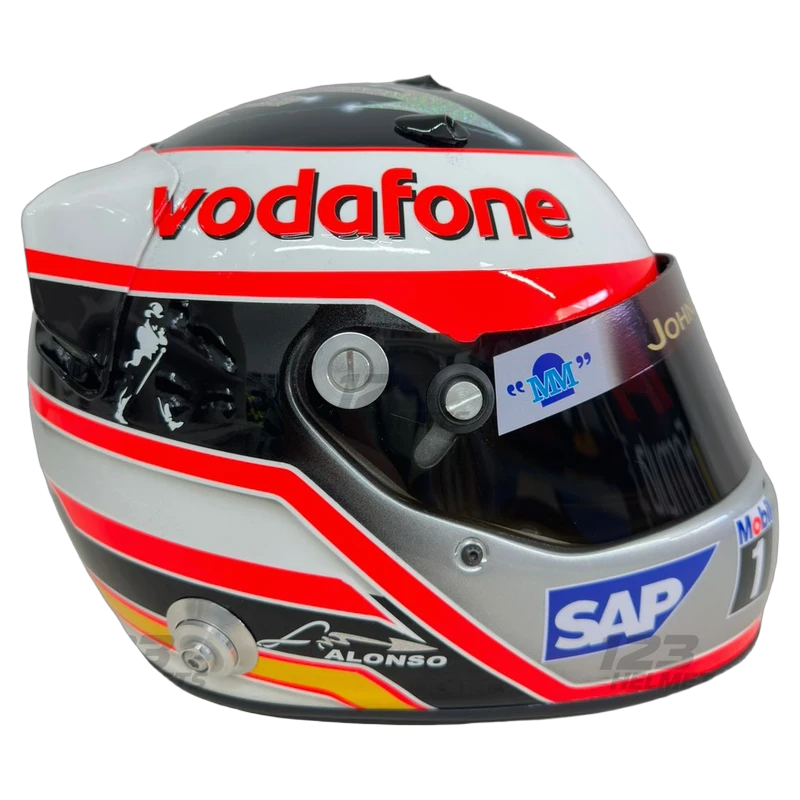
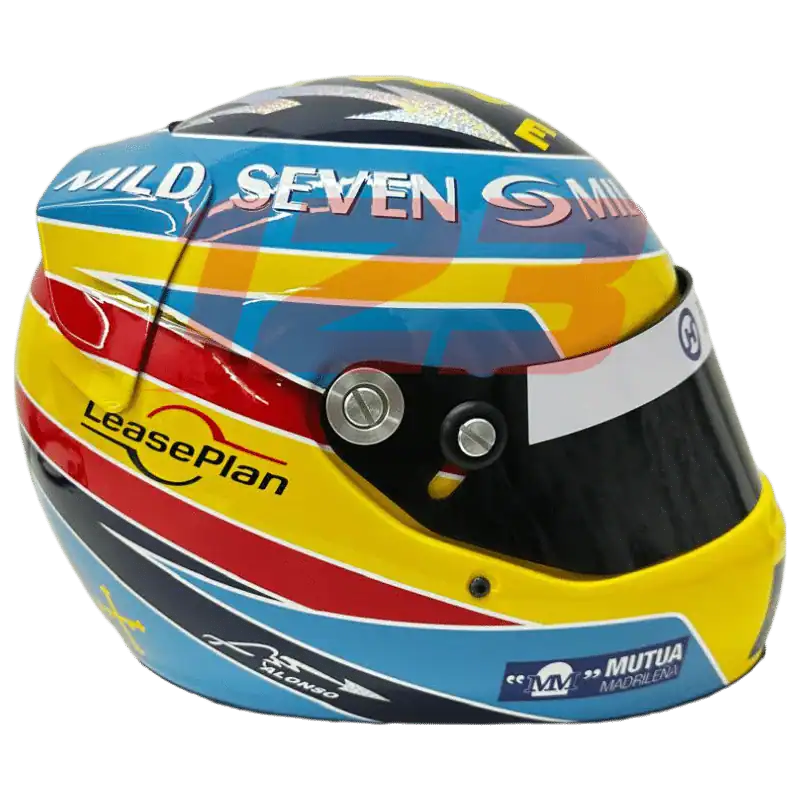
For fans tracking his career arc from that Renault breakthrough through to his later seasons, the Fernando Alonso collection covers the liveries and helmet designs associated with those milestone years.
Jenson Button, 2006: The Recovery Drive
Jenson Button’s 2006 Hungarian Grand Prix win is one of the most-cited recovery drives at the circuit, taken from a lowly 14th on the grid in mixed and changeable conditions. Button had to work through traffic on a track where passing is difficult, using tyre and strategy calls to climb steadily rather than relying on a single overtaking move, and eventually inherited and held the lead to take his first career Grand Prix win.
The result mattered beyond the trophy: it was also a first win for the Honda works team in that era of F1, adding significance to a drive that already stood out for the ground Button covered from a grid slot that normally rules out a win entirely.
Esteban Ocon, 2021: The Shock Winner
Esteban Ocon’s 2021 Hungarian Grand Prix win was his first career victory in Formula 1, taken for Alpine in a race that turned on chaos at the start and a strong strategic drive through the middle laps. Ocon kept his head clear of the early incidents that eliminated several rivals and then defended a hard-fought lead to the finish, delivering the team’s first win in years.
It is the newest drive on this list and the one that shows the Hungaroring still produces surprise results even in the modern, more predictable era of the sport, where strategy and race management can still beat outright pace on a circuit this technical.
FAQ
Q: Who is the youngest driver to win the Hungarian Grand Prix?
Fernando Alonso is the youngest driver to win the Hungarian Grand Prix, taking victory in 2003 for Renault at 22 years and 26 days old, which made him F1’s youngest-ever Grand Prix winner at the time.
Q: Why is Michael Schumacher’s 1998 Hungarian GP win considered a masterclass?
It is considered a masterclass because Schumacher and Ferrari won using a three-stop strategy against McLaren’s two-stop plan, requiring him to run a string of qualifying-pace laps mid-race across the Hungaroring’s 70-lap distance to make the extra stop pay off.
Q: How close did Damon Hill come to winning the 1997 Hungarian Grand Prix?
Damon Hill led the 1997 Hungarian Grand Prix for most of the race distance in an Arrows before a mechanical issue in the closing laps cost him the lead, and he finished second instead of taking the win.
Q: What made Jenson Button’s 2006 Hungarian GP win notable?
Button’s 2006 win is notable because he started 14th on the grid in mixed conditions and worked through the field to take his first career Grand Prix win, which was also a first win for the Honda works team.
Q: Was Esteban Ocon’s 2021 Hungarian GP win his first F1 victory?
Yes, Esteban Ocon’s 2021 Hungarian Grand Prix win was his first career Formula 1 victory, taken for Alpine after he avoided early-race incidents and controlled the lead through to the finish.
Shop Fernando Alonso Collection
Display and collector replicas only. Not certified for protective use. Full-size 1:1 scale.
This article was written with the help of AI tools. Editorial policy