- Keke Rosberg
- Nigel Mansell
- Jenson Button
- Nico Rosberg
- Gilles Villeneuve
- Mika Hakkinen
- Jackie Stewart
- Charles Leclerc
- Lewis Hamilton
- Max Verstappen
- Lando Norris
- Ayrton Senna
- Michael Schumacher
- Fernando Alonso
- Oscar Piastri
- George Russell
- Kimi Antonelli
- Nico Hülkenberg
- Gabriel Bortoleto
- Pierre Gasly
- Franco Colapinto
- Carlos Sainz
- Oliver Bearman
- Sergio Pérez
- Valtteri Bottas
- Isack Hadjar
- Alain Prost
- James Hunt
Hakkinen’s Blueprint: What Russell Must Do to Overcome Antonelli’s Five-Race Streak
Posted by
 123Helmets Editorial Team
123Helmets Editorial Team

Championship Analysis
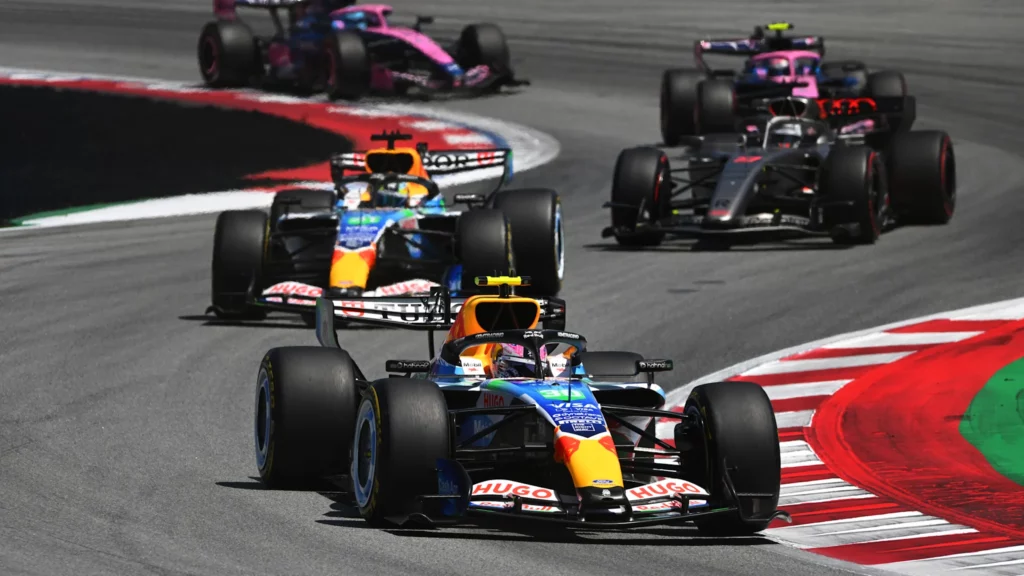
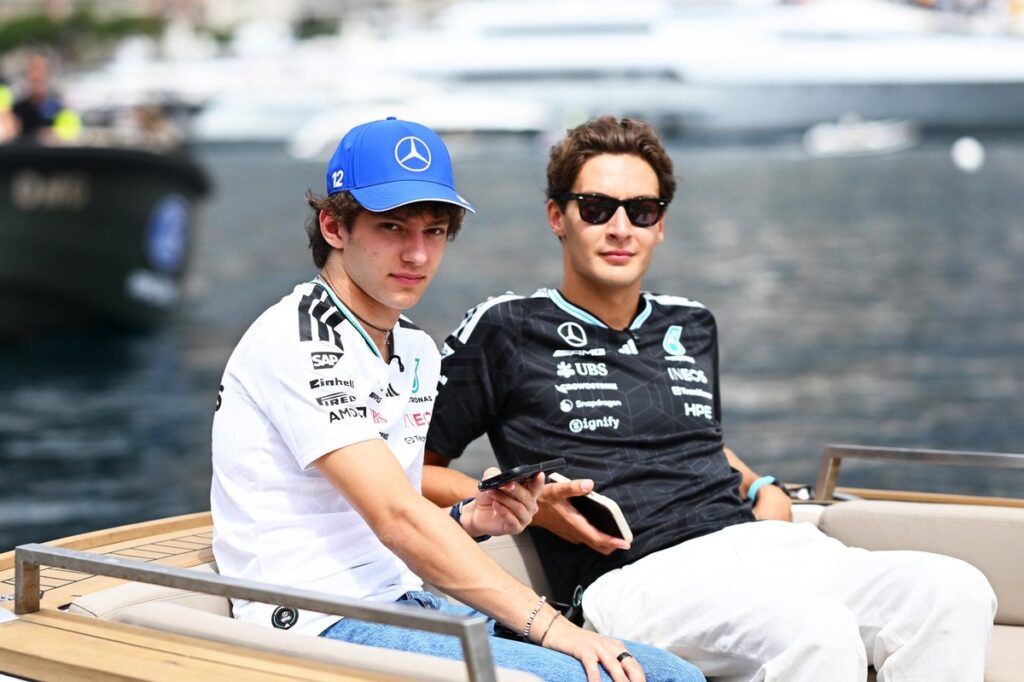
With 68 points separating George Russell from Kimi Antonelli heading into Barcelona, Mika Hakkinen has laid out precisely what the Mercedes Briton needs to do — and it has everything to do with outworking, not outdriving, his team-mate. For collectors, the 2025 season is already producing helmet moments that belong on a display shelf.
Key Takeaways
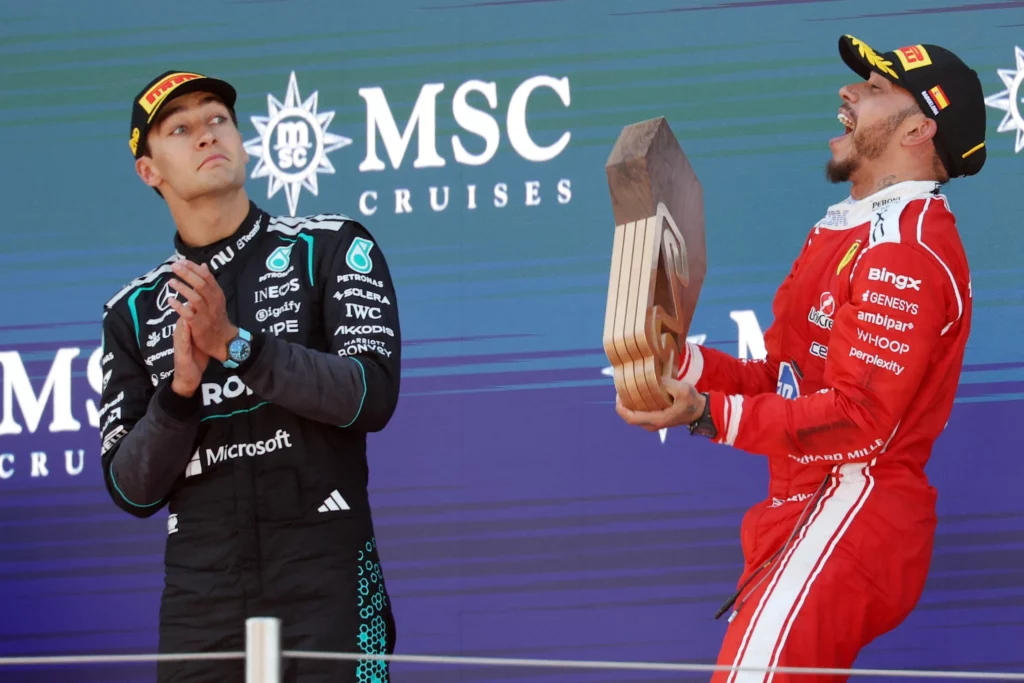
George Russell sits 68 points behind Kimi Antonelli in the Drivers’ Championship after Monaco, having slipped to third behind Lewis Hamilton.
Antonelli has won five consecutive Grands Prix since China — a streak that makes his 2025 helmet livery one of the most display-sought designs of the season.
Hakkinen believes whichever driver works hardest with engineers and simulator time will ultimately win — not necessarily the faster qualifier.
Russell’s dominant Australian GP win remains his season highlight, a race whose podium visuals are already considered exhibition-quality collector moments.
The Gap That Defines a Season
Sixty-eight points. That is the exact deficit George Russell carries into the Barcelona-Catalunya Grand Prix weekend, a number that tells a story of bad luck, missed rhythms and one very fast Italian team-mate on an almost unprecedented roll. Kimi Antonelli has won every Grand Prix since China — five consecutive victories — while Russell has watched a championship lead evaporate race by race.
For context, Antonelli’s five-win streak in 2025 is the kind of run that makes a driver’s helmet design immediately collectible. Full-size 1:1 replica helmets from dominant championship periods carry a different weight on a display stand — they represent not just a livery but an era being written in real time. Russell’s own Australian GP lid, worn during his dominant season-opening win, has that same quality: it captures the last moment the Briton was truly ahead of events.
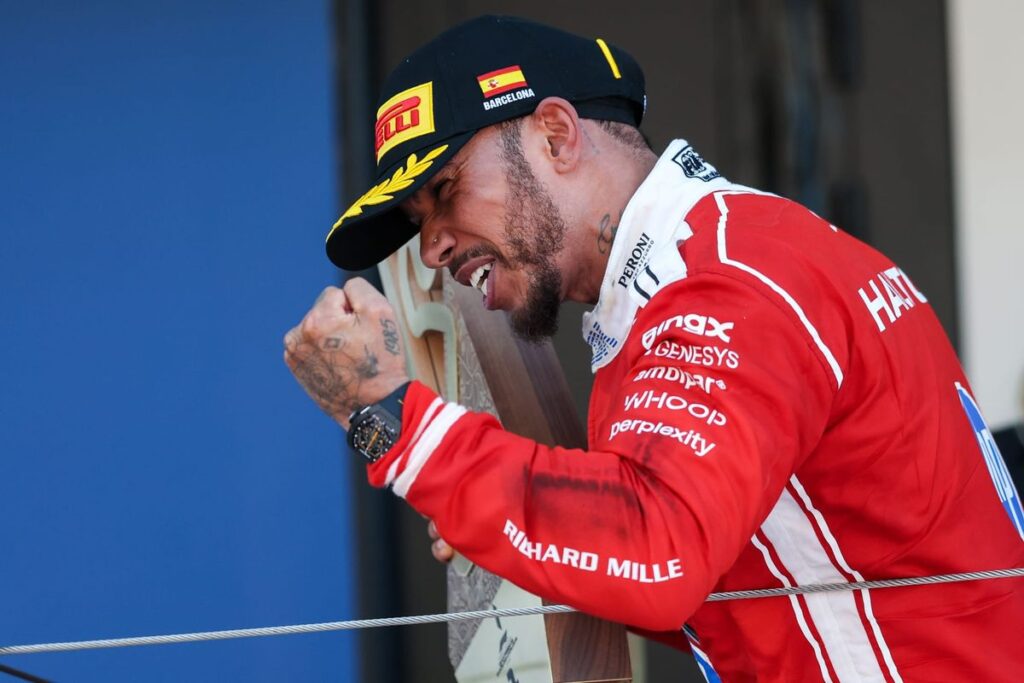
The Monaco round hurt Russell particularly sharply. He dropped to third in the Drivers’ standings behind Lewis Hamilton, meaning Mercedes’ intra-team hierarchy has reshuffled dramatically since February testing. The Principality’s tight barriers and processional racing offered no space to recover the kind of gap that had been building since the Chinese round.
Hakkinen Speaks — Overconfidence, Car Development and the Work Ethic Equation
Mika Hakkinen, the 1998 and 1999 World Champion, does not deal in comfortable platitudes. Speaking exclusively to F1.com, he named what he believes is Russell’s core problem with a frankness that only a double champion can afford.
“George is a great racing driver. But I got the feeling early this year that he was extremely confident. He felt a little bit overconfident.”
Hakkinen was careful to frame this as observation rather than criticism — he noted he likes Russell personally and called him a great personality — but the point landed clearly. Confidence that isn’t regularly stress-tested against hard data can become a liability when a team-mate starts pulling clear. Antonelli’s five consecutive wins have provided that stress test in the most public way possible.
The Finn then moved to what he considers the real lever in any intra-team championship battle: car development. His assessment is grounded in how modern F1 machinery actually evolves through a season.
“When you start a season with this car, at the end of the season, maybe 80% of the car is different. So drivers have to work all the time with the engineers and the simulators to develop the car that fits you and suits you the best.”
That 80% figure is striking. It means the car Russell drove to victory in Australia is, by season’s end, largely unrecognisable underneath its livery. A driver who lets the engineering relationship drift — who stops feeding back precise simulator data — will find the updated machinery drifting away from him. The driver who shapes the development direction will find the car shaped around his strengths.
Hakkinen’s conclusion was simple and direct: “Now it’s a question about which driver will work the hardest. And this driver will win.”
Hakkinen’s Own Blueprint — How He Beat Coulthard
Hakkinen did not arrive at this analysis theoretically. He lived it during two championship-winning seasons at McLaren, where his team-mate was David Coulthard — a driver who went on to record 13 Grand Prix victories across his career. That is not a weak team-mate. That is someone capable of beating you if you let your guard slip.
The Finn admitted he made a deliberate effort to study Coulthard’s strengths, not to admire them, but to understand and then neutralise them. Every edge Coulthard had in a given circuit type, Hakkinen worked to close. Every simulator session, every debrief note, every setup preference from the Scottish driver’s side of the garage was intelligence to be processed and answered.
This is the model he is prescribing to Russell now. Antonelli is young, fast and currently riding a momentum wave that is hard to interrupt from the outside. The only practical response is internal: outwork the team-mate in the areas that compound over time — simulator hours, engineering alignment, setup confidence in qualifying trim and race-pace management.
For those who collect helmets as displays of championship history, the Hakkinen-Coulthard era at McLaren produced some of the most visually iconic lids of the late 1990s. Full-size 1:1 replica collector pieces from that period capture the exact moment when two elite drivers were separated by marginal work-rate differences rather than raw talent. The 2025 Mercedes season looks increasingly likely to be remembered in the same way.
The Visual Record — Russell and Antonelli Helmets as Display Pieces
Whatever the championship mathematics ultimately produce, the 2025 season is already generating helmet liveries that stand as display-worthy collector items in their own right. A full-size 1:1 replica helmet carries a 27 × 35 cm footprint on a standard display stand and typically weighs in the region of 1.45 kg — substantial enough to feel purposeful as a collector piece, compact enough to work on a shelf or in a cabinet alongside other significant lids from the same era.
Russell’s Australian GP helmet design — worn during the dominant season-opening win — has the quality of a moment frozen in time. It represents the high-water mark of his 2025 season so far, a race where pace, strategy and execution aligned. The livery details from that weekend, including the specific visor tint choice and any sponsor panel adjustments, make it distinguishable from later-season iterations that reflect a driver under greater pressure.
Antonelli’s five-win streak helmets represent the opposite kind of collector narrative: a young driver arriving at the front of the sport and not looking back. Each of the five consecutive race-win lids from China onward carries the weight of an unbroken sequence — a fact that, in collector terms, makes any one of them more significant than it would be in isolation.
Exhibition-quality replicas typically reproduce the external shell geometry, visor panel dimensions and livery colour accuracy down to the paint layering process. Some collector-grade pieces use a visor thickness of 26 mm in the replica panel to match the visual depth of the real article. These details matter when a helmet is displayed under lighting designed to show off the surface finish — they are the difference between a decorative object and a genuine exhibition piece.
What Barcelona Could Mean for Both Drivers
The Circuit de Barcelona-Catalunya is a development circuit in the truest sense. Its long, high-speed corners in Sector 1 — particularly turns 3 and 4 — stress tyre compounds in ways that reward mechanical setup precision over raw one-lap pace. If Hakkinen’s car-development thesis holds, Barcelona is exactly the kind of race where simulator work from the previous three weeks shows up directly in tyre degradation curves and race-pace consistency.
Russell needs a result here. Sixty-eight points is not an insurmountable deficit — the remaining calendar is long, and Hakkinen specifically noted that “there are so many races ahead” — but it will become structural if Antonelli scores another dominant win while Russell trails in the points. A Barcelona podium for Russell, particularly from a front-row start, would be the visual and sporting reset the Briton’s season requires.
For helmet collectors tracking the 2025 season, Barcelona is the next meaningful data point. A Russell victory here would produce one of the most resonant display pieces of the year — a comeback win at a circuit where setup intelligence is rewarded, in a season where the narrative has been building against him. That combination, as any serious collector knows, is what separates a helmet that marks a race from one that marks a turning point.
Whether Antonelli’s streak reaches six, or Russell interrupts it, the visual record will be documented in the helmet designs and livery details that collectors preserve as 1:1 full-size display replicas. These are not safety items — they are exhibition pieces, collector artifacts, the physical form of seasons that otherwise exist only in broadcast footage and lap time data.
The Long Game — Why Hakkinen’s Advice Ages Well
Hakkinen’s framing of the Russell-Antonelli battle as a work-rate competition rather than a talent contest is not a consolation. It is a serious competitive analysis from a man who navigated exactly this situation across two championship-winning seasons. The 1998 title was not decided by raw speed — it was decided by the accumulation of small advantages in car development, simulator feedback and engineering trust built across a full year.
Russell has the raw ability. His Australian GP win demonstrated that when conditions and setup align, he can produce drives that make team-mates and rivals irrelevant. The question Hakkinen is raising is whether Russell will do the less glamorous work required to make those conditions appear more consistently — or whether Antonelli, who is younger and currently operating with greater momentum, will take control of the engineering relationship and shape the Mercedes W16’s development around his own preferences.
That battle, largely invisible to television cameras, will determine the shape of the remaining 2025 season as much as any qualifying lap or race restart. It will also determine which helmet designs end up carrying the weight of a champion’s year — and which ones mark the season a great driver let a title slip by working slightly less than the driver next door.
For those building a collection around the 2025 Mercedes chapter of Formula 1 history, both narratives — Russell’s comeback attempt and Antonelli’s dominant streak — are already worth preserving in full-size 1:1 display form. The story is still being written, and that is precisely what makes these collector pieces worth adding now.
“Now it’s a question about which driver will work the hardest. And this driver will win.”
— Mika Hakkinen, 1998 & 1999 F1 World Champion, speaking to F1.com
“When you start a season with this car, at the end of the season, maybe 80% of the car is different. So drivers have to work all the time with the engineers and the simulators to develop the car that fits you and suits you the best.”
— Mika Hakkinen, speaking to F1.com
FAQ
Q: How many points is George Russell behind Kimi Antonelli heading into the Barcelona GP?
Russell sits 68 points behind Antonelli in the 2025 Drivers’ Championship heading into the Barcelona-Catalunya Grand Prix, having also dropped to third overall behind Lewis Hamilton following Monaco.
Q: How many consecutive races has Antonelli won in the 2025 F1 season?
Kimi Antonelli has won five consecutive Grands Prix since the Chinese GP, making him the dominant force in the 2025 championship at the midpoint of the season.
Q: What does Mika Hakkinen say Russell needs to do to beat Antonelli?
Hakkinen believes the key is work rate rather than raw pace. He argues that whichever driver commits most fully to simulator sessions, engineering collaboration and car development feedback will ultimately win the championship — drawing directly on his own experience beating David Coulthard across two title-winning seasons.
Q: Are the 2025 Russell and Antonelli helmet designs available as collector display replicas?
Full-size 1:1 collector and display replica helmets from the 2025 F1 season, including designs associated with Russell and Antonelli, are available as exhibition-quality pieces. These are display items only — not certified for any protective or safety use.
Q: What makes a season-specific F1 helmet replica worth collecting?
Championship context, livery uniqueness and the significance of the races associated with a specific helmet design all add collector value. Helmets from dominant winning streaks or comeback wins tend to carry the greatest exhibition appeal. Full-size 1:1 replicas typically measure around 27 × 35 cm and weigh approximately 1.45 kg, with visor panels reproduced to accurate visual depth.
Browse F1 Helmet Collection — find exhibition-quality, full-size 1:1 display replicas from the 2025 season and beyond. Every piece is a collector item, not a safety product. Shop the collection.
Display and collector replicas only. Not certified for protective use. Full-size 1:1 scale.