Blog
Norris’ ‘Pretty Insane’ Claim: McLaren’s 2026 Gains
 123Helmets Editorial Team

Lando Norris backed up his Budapest win with a second straight victory at the Dutch Grand Prix on 2026-08-30, and the numbers behind McLaren’s in-season development gain explain why he called the turnaround ‘pretty insane’.
Key Takeaways
Lando Norris won at Zandvoort to record back-to-back victories after also winning in Budapest, his 13th career F1 win.
Norris has cut his championship deficit to 83 points, a sharper recovery than Max Verstappen managed after Zandvoort in the previous season, when he trailed by 104 points.
Paceteq race-pace data shows McLaren was 1.34 seconds per lap slower than Mercedes in Melbourne, a gap Norris says has been clawed back by almost a second at some circuits since.
Norris says McLaren has ‘outdeveloped’ its rivals through 2026 despite starting the season on the back foot after prioritizing the previous car.
Zandvoort turns from heartbreak to redemption
Lando Norris won the final edition of the Dutch Grand Prix at Zandvoort, reversing the outcome of the previous year’s race at the same circuit that ended his title challenge in the dunes. The 2026 result gave Norris his second consecutive victory after his earlier win in Budapest, and his 13th career F1 win overall.
Where the previous Zandvoort weekend produced a DNF that became one of the season’s defining images, this year Norris crossed the line first and immediately used the radio to signal intent rather than relief: “The fight is still on.” That reaction matters because Norris is the reigning world champion defending his title against Max Verstappen, and a second straight win keeps the pressure squarely on the chasing pack heading into the remaining rounds.
For a team that supplies the current champion, back-to-back wins at this stage of the year are the clearest possible signal that the car has moved forward, not just that one driver had a good weekend.
The ‘pretty insane’ development claim, explained
Norris said McLaren has ‘outdeveloped’ every rival on track this season, and Paceteq race-pace data supports the claim. At the season-opening race in Melbourne, McLaren was on average 1.34 seconds per lap slower than the Mercedes works team — a deficit large enough to define the opening weeks of the campaign as a rebuilding period rather than a title assault.
Norris was explicit about why that gap opened up in the first place. “We were always going to start behind this season because of how much we focused on last year,” he said after Zandvoort. “It was inevitable that we were not going to start on the pace this season.” McLaren’s early-season commitment to the previous car’s development left less time for the new regulation set, and the Melbourne gap to Mercedes was the visible cost of that decision.
What changed is the trajectory. Norris estimated the swing at Zandvoort itself: “On a track like this, almost a second of development from us as McLaren versus our competitors. So that’s pretty insane.” Going from 1.34 seconds behind Mercedes in Melbourne to roughly a second of gained pace over competitors by Zandvoort is the kind of in-season swing that rarely shows up this cleanly in the data, and it is why Norris framed it as insane rather than simply good progress.
The championship math after Zandvoort
Norris now trails the championship lead by 83 points, a smaller gap than Verstappen faced at the equivalent point the previous season. After that year’s Zandvoort race, Verstappen was 104 points behind then-leader Oscar Piastri and still went on to fall only two points short of the title by the season finale.
That comparison is the context Norris and McLaren are leaning on. A 104-point deficit proved recoverable to within two points once before, so an 83-point gap with McLaren’s current development rate — a car gaining roughly a second on some circuits relative to Melbourne — is being treated inside the team as very much alive rather than a formality for whoever currently leads.
The two consecutive wins in Budapest and at Zandvoort are the concrete evidence that the gap is closing race by race rather than through one outlier weekend. Consistency across back-to-back rounds, on different types of circuit, is what turns a development trend into genuine championship pressure.
Podium visuals: a Zandvoort weekend built for display
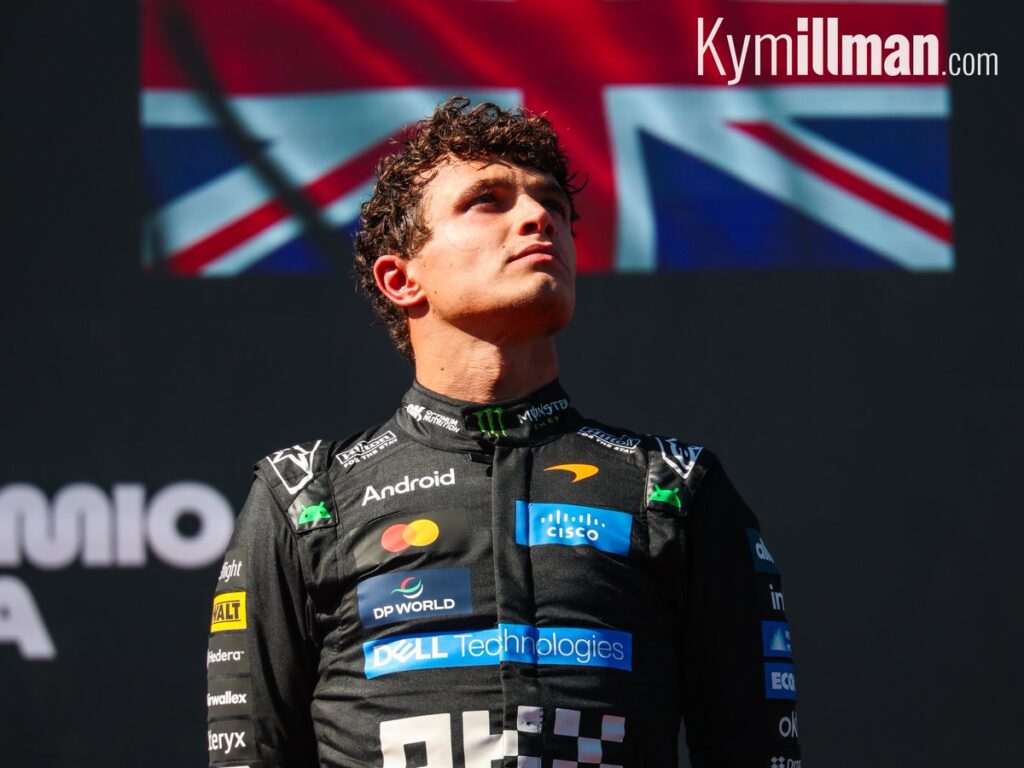
Norris’ Zandvoort win produced the kind of podium image that collectors look for: a champion in current McLaren papaya, on the top step, at the circuit where his title bid unraveled twelve months earlier. The contrast between last year’s dune-side DNF and this year’s victory lap gives the 2026 Zandvoort weekend a natural before-and-after narrative that helmet liveries are built to carry.
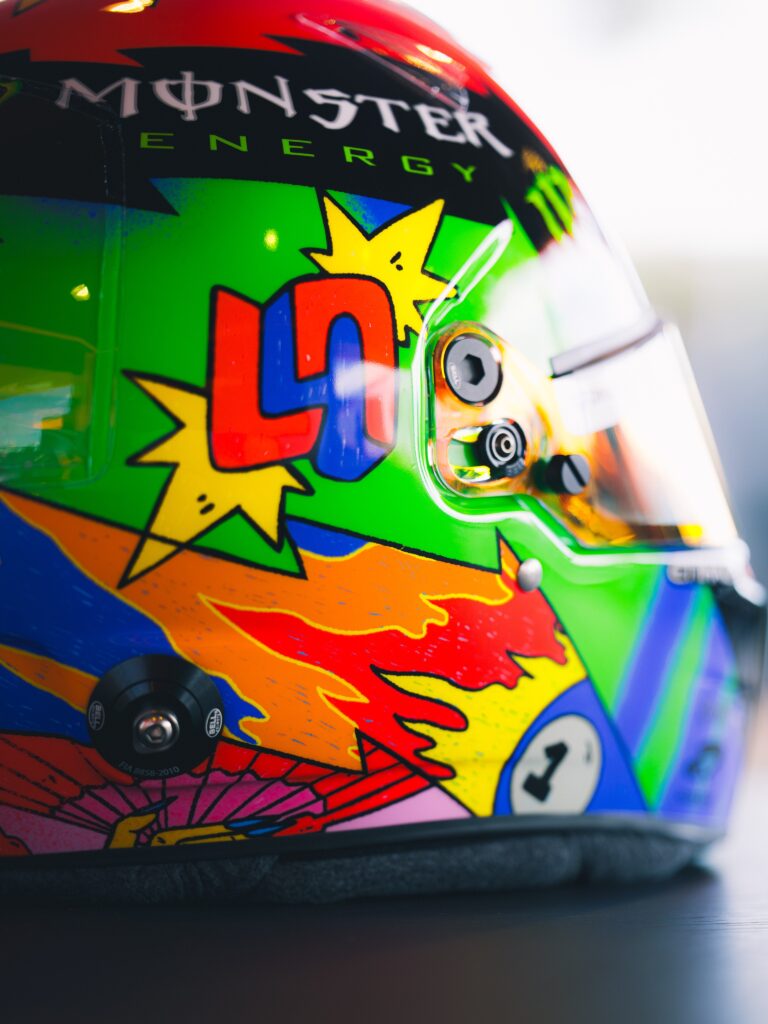
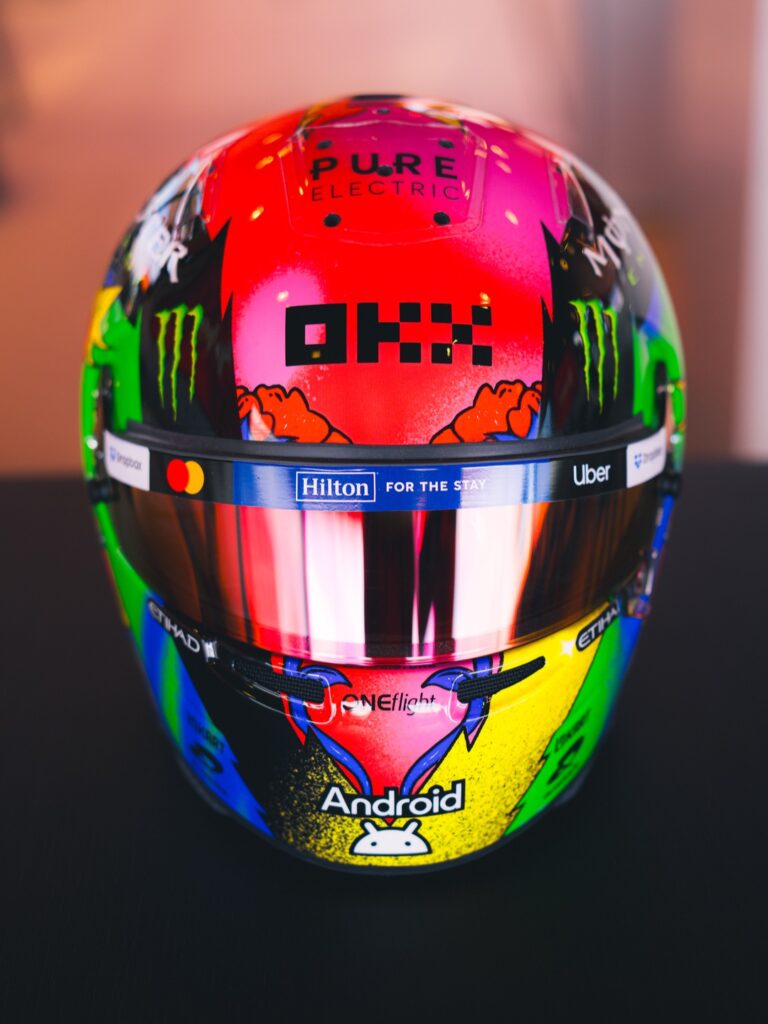
Race-worn and signature-style helmet designs tied to specific rounds — a Budapest win, a Zandvoort redemption story — are exactly the moments that turn a season into individual collector pieces. A full-size 1:1 replica of the helmet Norris wore across this two-race winning run captures both results in a single display item, rather than a generic season design.
Fans building a McLaren display around the 2026 title fight have two consecutive wins to anchor it: Budapest first, then Zandvoort. Pairing a helmet replica with a photo or print from either podium turns the 83-point deficit into a visual story of recovery rather than just a number in the standings.
What the development trend means for the rest of 2026
McLaren’s development curve, if it holds, points to a tighter title fight through the remaining rounds rather than a settled outcome. Norris’ own framing — starting behind after prioritizing the prior car, then closing roughly a second of pace by Zandvoort — describes a team still adding performance in real time, which is different from a car that peaked early and is now being caught.
The precedent Norris and his team are pointing to is the previous season’s Verstappen recovery, where a 104-point gap after Zandvoort narrowed to two points by the finale. McLaren’s current 83-point deficit, combined with two straight wins and a measurable development gain over rivals, is smaller than that recovery required and arrives with more races still to run.
None of that guarantees a title. But it does mean the remaining Grands Prix carry more weight than the raw points gap suggests, and every additional win from here tightens both the championship math and the case for treating 2026 as one of McLaren’s strongest in-season development years.
“I think we’ve easily done the best job when you look at everything from where we were last year.”
— Lando Norris, McLaren
“For us to catch up, we’ve outdeveloped them. On a track like this, almost a second of development from us as McLaren versus our competitors. So that’s pretty insane.”
— Lando Norris, McLaren
“The fight is still on.”
— Lando Norris, over team radio at Zandvoort
FAQ
Q: How much has McLaren closed the gap in 2026?
McLaren went from being 1.34 seconds per lap slower than Mercedes in Melbourne to a car Lando Norris says has gained almost a second of pace over rivals by the Zandvoort race, based on Paceteq race-pace data.
Q: What is Lando Norris’ championship deficit after Zandvoort?
Norris trails the championship lead by 83 points after his Zandvoort win, having also won the previous round in Budapest for back-to-back victories.
Q: Why did Norris call McLaren’s development ‘pretty insane’?
Norris used the phrase to describe how much performance McLaren added compared to competitors despite starting 2026 behind after focusing heavily on the previous car, estimating close to a second of gained development at Zandvoort.
Q: How does the 2026 title fight compare to the previous season’s recovery?
Max Verstappen trailed by 104 points after the previous Zandvoort race and still finished just two points short of the title, a larger deficit than Norris’ current 83-point gap in 2026.
Q: Was this Lando Norris’ first win of the 2026 season?
No, Zandvoort was his second consecutive win, following an earlier victory in Budapest, and his 13th career F1 win overall.
Shop Lando Norris Collection
Display and collector replicas only. Not certified for protective use. Full-size 1:1 scale.