
Blog
How Often Do F1 Drivers Change Helmets? The Art of the Special Edition
 123Helmets Editorial Team

How Often Do F1 Drivers Change Helmets? The Art of the Special Edition
From tribute liveries to home-race specials, Formula 1 drivers swap helmets far more often than fans realise — and every new design tells a story worth preserving.
Key Takeaways
F1 drivers may debut an entirely new helmet design at virtually every Grand Prix, with some running 20+ unique liveries in a single season.
Special edition helmets — tributes, home-race designs, and anniversary liveries — represent the most collectable and emotionally resonant pieces in any motorsport display collection.
Since the FIA lifted its helmet-change ban in 2015, visual creativity has exploded, giving collectors a vast landscape of one-race designs to celebrate.
Full-size 1:1 display replica helmets let enthusiasts own an exhibition-quality piece that captures a specific moment, race, or tribute that can never be repeated.
A New Helmet at Every Race? More Common Than You Think
A New Helmet at Every Race?
More Common Than You Think
The frequency of F1 helmet changes might be the sport’s best-kept secret outside the paddock.
Display & Collector Replicas — Full-Size 1:1 Scale
Ask a casual Formula 1 fan how often drivers change their helmets and the answer is usually a confident shrug. Most people assume a driver has one helmet design per season — their signature livery, the one plastered on posters and merchandise. The truth is far more dynamic, and for collectors, far more exciting.
In reality, the world’s top F1 drivers can and do change their helmet designs at virtually every round of the championship. A 24-race calendar means 24 potential opportunities for a brand-new piece of wearable art to debut under the lights of Bahrain, through the barrier-lined streets of Monaco, or in front of 300,000 roaring fans at Silverstone. Over a full season, a single driver might run anywhere from three or four distinct designs to well over fifteen unique liveries — each one a deliberate creative statement tied to a moment, a message, or a memory.
The Rule That Changed Everything
For a brief, controversial period between 2014 and 2015, the FIA actually restricted helmet changes mid-season. The regulation was intended to help spectators identify drivers by their helmet colours — a noble goal in an era of ever-more-enclosed cockpits. But the rule was widely unpopular with drivers and designers alike, and it was quietly reversed before the 2015 season concluded, with one permitted mid-season change allowed thereafter.
Since then, the floodgates have opened. Helmet design has become one of the most vibrant forms of personal expression in modern Formula 1, with drivers collaborating with specialist artists, livery designers, and sponsors to produce pieces that are genuinely unique to a single weekend. For the collector community, that means there has never been a richer landscape of designs to celebrate and display.
The Anatomy of a Special Edition: Why Drivers Create Tribute Helmets
Honouring Legends and Milestones
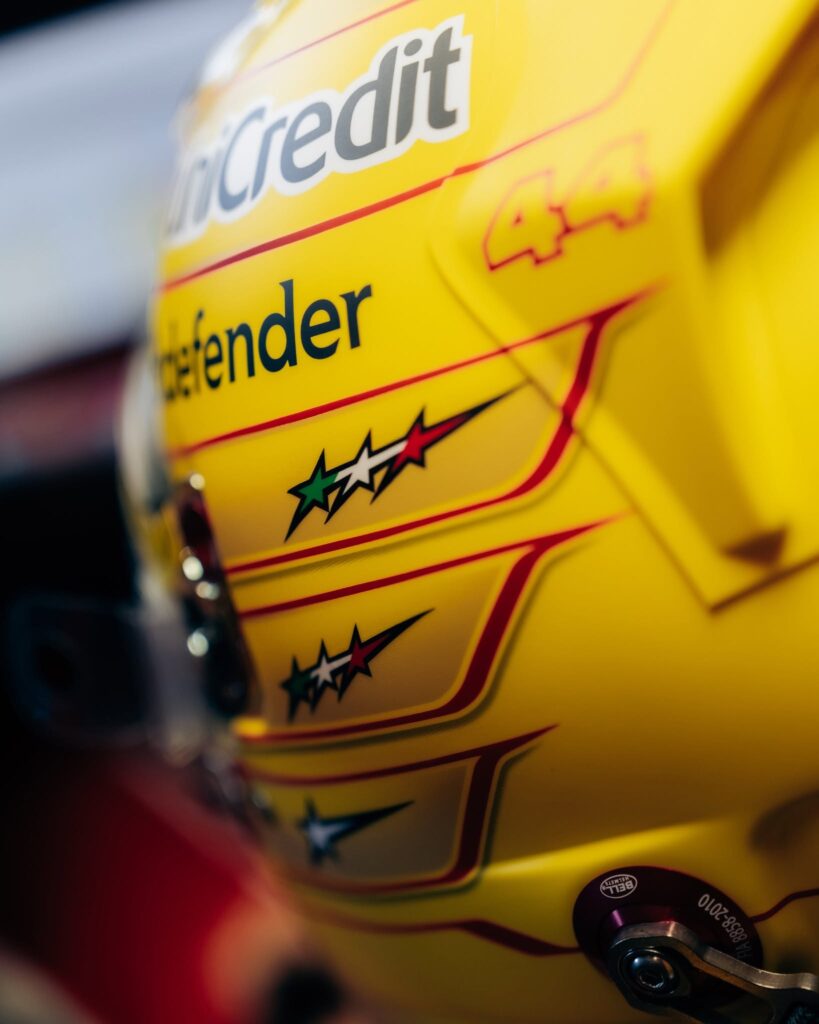
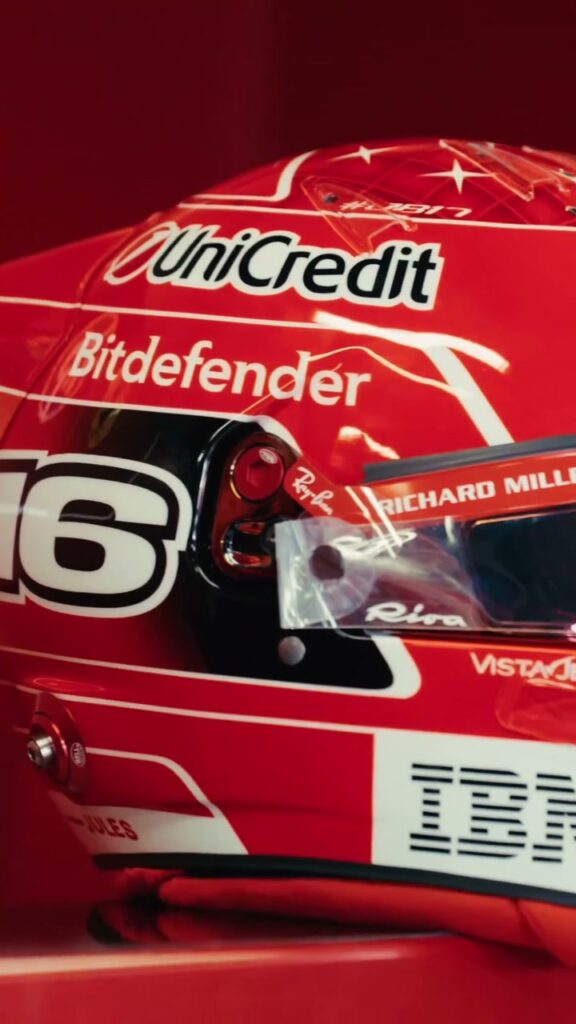
Of all the reasons a driver might commission a one-off helmet design, the most emotionally resonant is the tribute. When a beloved figure from motorsport history passes away, it is almost a given that at least one — and often several — drivers will appear at the following Grand Prix wearing a helmet that pays homage to their legacy. These designs typically incorporate the honoured person’s racing colours, their number, or their signature livery elements, weaving them together with the current driver’s own visual identity.
Tribute helmets carry a weight that purely commercial designs do not. They are artefacts of a specific emotional moment in the sport, created to mark a passing that the entire paddock feels. That gravitas translates directly into collector value. A display replica of a tribute helmet is not simply a piece of memorabilia — it is a three-dimensional record of grief, respect, and love for motorsport’s history.
Home Race Designs: The Crowd Pleaser
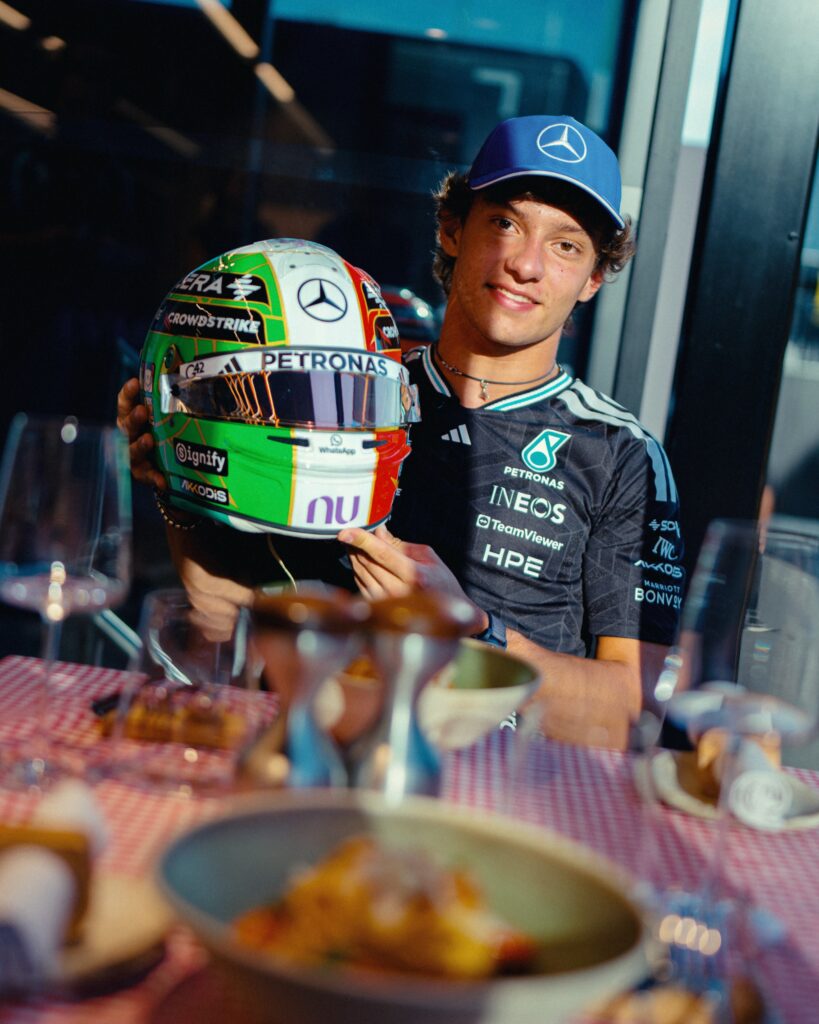
Almost every driver on the grid releases a specially designed helmet for their home Grand Prix. A British driver at Silverstone, a Dutch driver at Zandvoort, a Mexican driver at the Autodromo Hermanos Rodriguez — each occasion prompts the creation of a design that speaks directly to the crowd filling the grandstands. National colours, cultural iconography, flag motifs, and local artistic influences all find their way onto the shell.
Home race helmets are among the most commercially sought-after designs of any season, and it is easy to understand why. They represent a convergence of national pride, driver identity, and crowd energy that is impossible to replicate in any other sporting context. Displayed on a shelf or in a cabinet, a home-race replica instantly communicates the story of that weekend to anyone who sees it.
Anniversary and Championship Commemoratives
Milestone races — the 100th Grand Prix for a team, the 50th anniversary of a circuit, the celebration of a world championship win — are natural triggers for commemorative helmet designs. These pieces tend to be among the most elaborately designed of any season, with their creators given licence to go beyond the driver’s usual colour palette and explore historical references, metallic finishes, and intricate graphic detailing that would be too complex to run as a standard livery across a full year.
Design Details That Define a Collectible Helmet
What Separates a Memorable Design from a Forgettable One?
Not every special edition helmet achieves iconic status. The designs that endure in the collective memory of fans and collectors tend to share several key characteristics — elements that translate beautifully onto a full-size 1:1 display replica.
Colour coherence: The most celebrated helmet designs use colour with intentionality. Rather than cramming every sponsor’s palette onto a single shell, the greatest designs establish a dominant colour story — one or two primary hues that command the eye — and use accent colours sparingly to create contrast and depth. When you look at the greatest tribute or home-race helmets in F1 history, they are immediately readable from across a room, which is exactly what you want from a display piece.
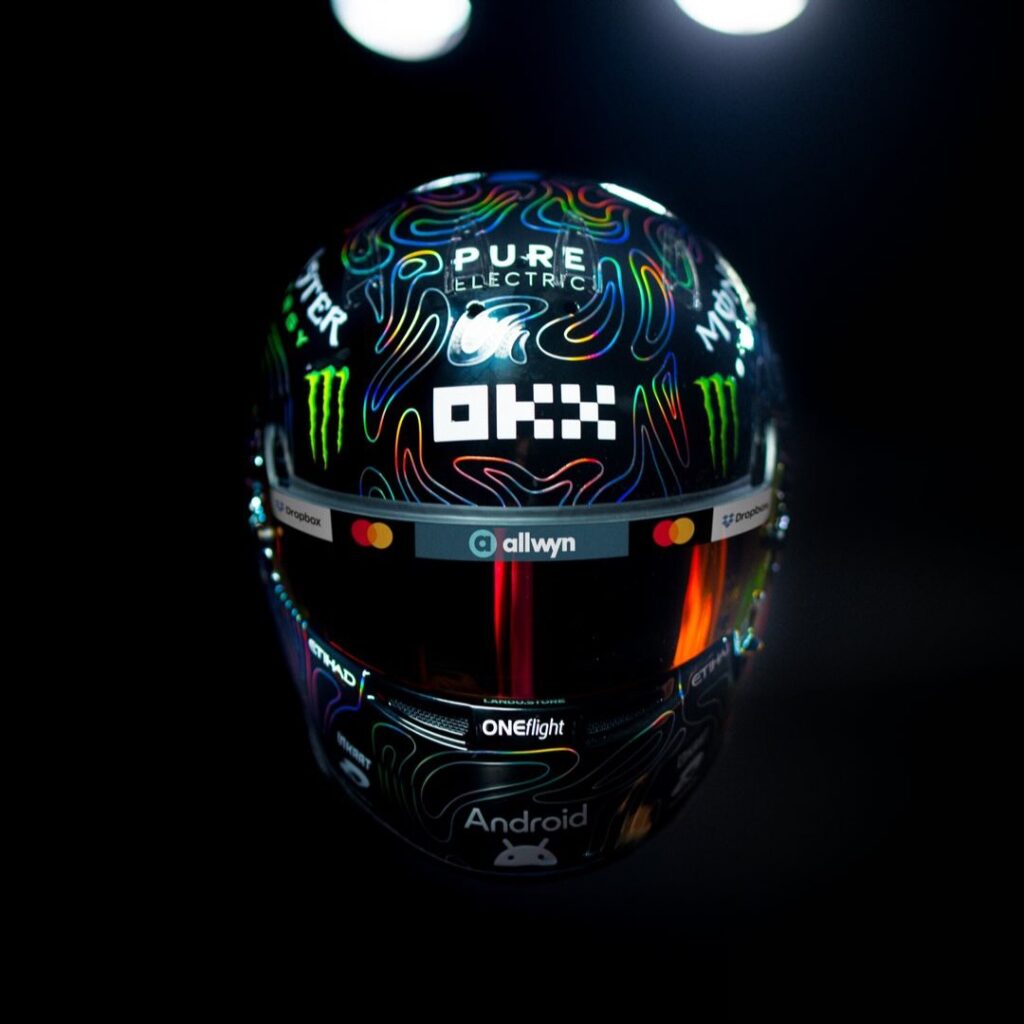
Meaningful graphic narrative: Special edition helmets reward close inspection. The difference between a generic livery and a truly collectible design is often found in the details — a subtle portrait embedded in the visor band, a circuit map traced along the chin piece, a phrase in a local language hidden within a graphic element. These Easter eggs give the piece a story that unfolds the longer you look at it.
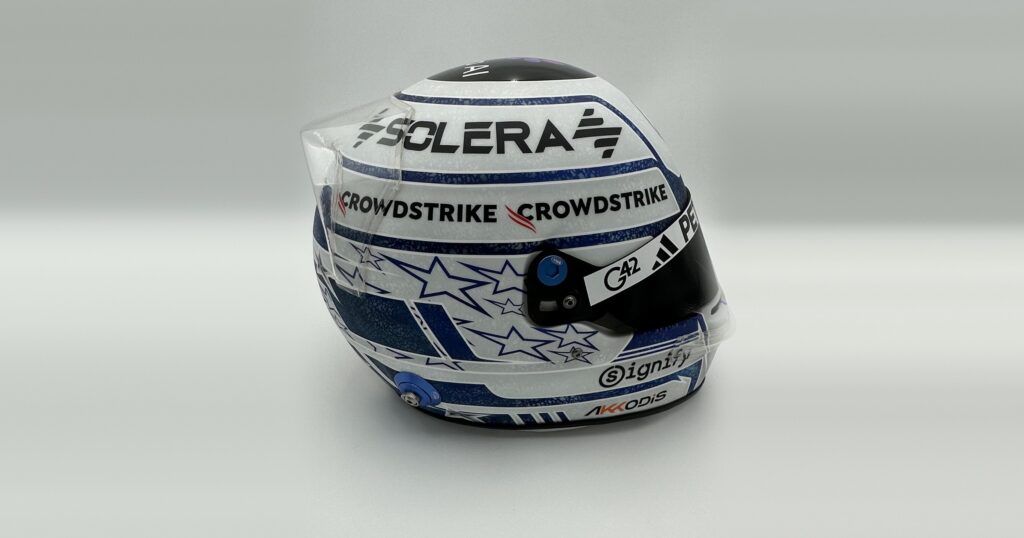
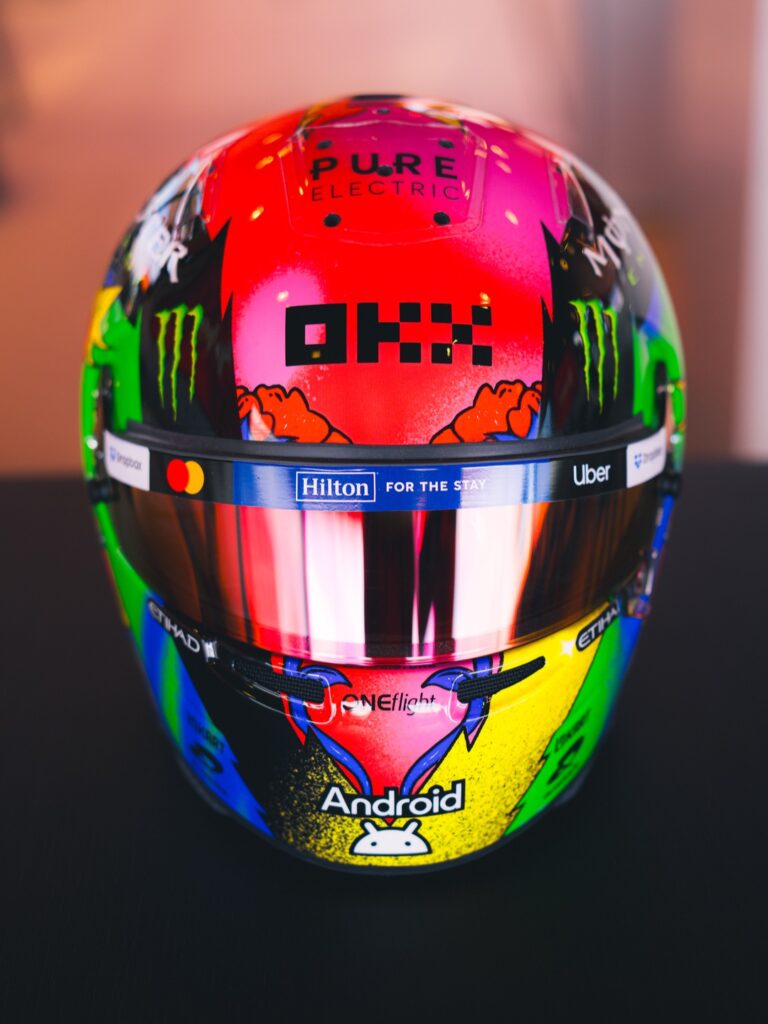
Material and finish quality: On the real helmets worn in competition, painters work on carbon-fibre shells using automotive-grade lacquers and paints, finishing with UV-resistant clear coats that allow the design to survive the extraordinary physical demands of racing. Exhibition-quality display replicas replicate these finishes faithfully, capturing metallic flakes, chrome accents, and gradient fades with the same visual richness as the originals.
The Role of the Helmet Artist
Behind every extraordinary special edition is a designer — often a specialist working exclusively in the niche of racing helmet liveries. Names like Jens Munser, whose Munich-based studio has created hundreds of F1 helmet designs, have become as respected in the collector community as the drivers themselves. These artists bring a deep understanding of the helmet’s three-dimensional geometry, knowing exactly how a graphic element that looks flat on a computer screen will wrap around a crown, flow over a cheek piece, and terminate cleanly at a visor aperture.
Understanding who designed a helmet — and what their creative intentions were — adds immeasurably to its display value. A replica that comes with documented design provenance tells a richer story than one without context.
The Collector’s Perspective: Why One-Race Designs Are the Most Coveted
Scarcity, Context, and Display Impact
In any collecting discipline, scarcity drives desirability. A design worn for a single race weekend and never repeated possesses an inherent exclusivity that a season-long livery simply cannot match. This is the fundamental reason why special edition and tribute helmet replicas command such attention among serious collectors.
Consider the mathematics. A driver’s standard 2024 livery might appear across 20 or more race weekends, in team photographs, in sponsor activations, in broadcast graphics, and on every piece of official merchandise produced that year. It is everywhere. But a tribute helmet created for a single Grand Prix, or a home-race design used only once before being retired? That design exists in the public consciousness for exactly 72 hours — race weekend, start to finish — before it disappears into history.
A full-size 1:1 display replica of that specific design is therefore one of the most direct ways a collector can preserve that moment. It is an exhibition-quality artefact that says, definitively: this happened, here, at this race, for this reason.
Curating a Thematic Display Collection
Many serious collectors do not simply accumulate helmets at random. They build themed collections with an internal logic that tells a larger story. Common curatorial approaches include:
- Driver-specific collections: Every special edition released by a single driver across their career, arranged chronologically to show the evolution of their visual identity and the milestones they chose to commemorate.
- Tribute helmet collections: A gallery dedicated entirely to helmets created to honour legends of the sport — a moving and historically rich display that speaks to motorsport’s deep sense of community and memory.
- Race-specific collections: All the special editions created for a single iconic Grand Prix — Monaco, Monza, Suzuka — across multiple seasons and multiple drivers, showing how different personalities interpret the same occasion.
- Era collections: Helmets from a specific decade that capture the graphic design sensibilities, sponsor landscapes, and cultural references of their time.
Each approach results in a display that is genuinely educational as well as visually spectacular — a conversation piece that can anchor any room dedicated to motorsport appreciation.
Display Appeal: Showing a Special Edition Helmet at Its Best
Presentation as Part of the Story
A full-size 1:1 display replica helmet is a three-dimensional object that demands to be seen from multiple angles. Unlike a flat print or a photograph, a helmet occupies real space — its curves, its depth, its finish all interact with the light in the room around it. Getting the presentation right is as important as choosing the right design in the first place.
Lighting: Directional lighting — whether from a recessed ceiling spot or a dedicated display light — brings out the metallic and chrome elements in a helmet design in a way that ambient room light simply cannot. A single, well-aimed light source can make a helmet appear to glow, especially those featuring pearl whites, electric blues, or gold-leaf accents. For helmets with dark base colours, try a warmer light temperature (around 2700–3000K) to add richness without washing out the graphic details.
Stand and rotation: The angle at which a helmet is presented changes everything about how the design reads. Most collectors display their helmets facing slightly to the left or right rather than dead-on, which creates a more dynamic visual impression and allows the side panels — often where the most intricate graphic work lives — to contribute to the overall composition. A rotating display stand, used sparingly, can also reveal the full 360-degree narrative of a complex design to visitors.
Contextual display: Pairing a special edition helmet replica with contextual elements — a framed race programme from the weekend in question, a photograph of the podium, a small placard explaining the tribute or occasion — transforms a single display piece into a micro-exhibition. This is particularly powerful for tribute helmets, where the backstory is as important as the object itself.
Caring for Your Display Replica
Exhibition-quality display replicas are built to last, but they benefit from sensible care. Keep them out of direct sunlight to prevent UV degradation of the painted finish. Dust regularly with a soft microfibre cloth rather than spray cleaners, which can dull lacquer over time. Store in a climate-controlled environment away from extreme temperature fluctuations, which can cause expansion and contraction that stresses the shell material over years.
Treated with respect, a well-made display replica will retain its visual brilliance for decades — long enough to become a piece of motorsport history in its own right.
Why Special Edition F1 Helmet Replicas Belong in Every Serious Collection
More Than Memorabilia — A Form of Motorsport Historiography
There is a meaningful distinction between memorabilia and collecting. Memorabilia is nostalgic and personal — a ticket stub, a paddock pass, a signed photograph. Collecting, at its best, is historiographical. It preserves, documents, and interprets the past through carefully chosen physical objects.
Special edition F1 helmet replicas sit firmly in the collecting category. They are not generic souvenirs. Each one represents a specific creative decision made by a specific person at a specific moment in the sport’s history. When you display a tribute helmet replica, you are not simply showing off a piece of motorsport merchandise — you are making a curatorial statement about what matters in Formula 1, and why it is worth remembering.
The frequency with which drivers change their helmets is not a trivial operational detail. It is an expression of the sport’s extraordinary visual culture — a culture in which individual identity, commercial partnership, national pride, and personal emotion are all negotiated on the surface of a carbon-fibre shell, at 300 kilometres per hour, in front of the entire world.
That is a story worth telling. And a full-size 1:1 collector display replica is one of the most compelling ways to tell it.
“Every helmet design is a self-portrait. The special editions are the ones where the driver signs their name in full.”
Disclaimer: All helmets available at 123Helmets.com are display and collector replicas only. They are not certified for protective use and are intended exclusively as exhibition-quality, full-size 1:1 scale display pieces.
“Every helmet design is a self-portrait. The special editions are the ones where the driver signs their name in full.”
— 123Helmets.com Editorial
“A tribute helmet worn for a single Grand Prix weekend is perhaps the most time-specific artefact in all of motorsport collecting — it exists, fully formed, for exactly 72 hours before it passes into history.”
— 123Helmets.com Collector Guide
FAQ
Q: How many different helmet designs can an F1 driver use in a single season?
There is no fixed limit. Since the FIA relaxed its helmet-change restrictions, drivers are free to debut a new design at every race if they choose. Some drivers run three to five distinct designs across a season, while others — particularly those who embrace helmet design as personal expression — can produce fifteen or more unique liveries in a single championship year.
Q: What is a tribute helmet in Formula 1?
A tribute helmet is a specially designed one-off livery created to honour a person, event, or milestone significant to the driver. Common occasions include the passing of a fellow driver or motorsport legend, a team or circuit anniversary, or a championship milestone. Tribute helmets are among the most emotionally significant and collectable designs in the sport.
Q: Are the replica helmets at 123Helmets.com safe to wear or use in motorsport?
No. All helmets at 123Helmets.com are display and collector replicas only. They are full-size 1:1 scale exhibition-quality pieces intended exclusively for display and collection purposes. They carry no safety certifications and are not suitable for any form of protective or competitive use.
Q: Why are special edition and home-race helmet designs more valuable to collectors than standard season liveries?
Scarcity and context drive collector value. A standard season livery appears across multiple race weekends and in widespread merchandise. A special edition or home-race helmet is tied to a single occasion and is never repeated, giving it a historical specificity that makes it far more meaningful as a display piece and a record of motorsport history.
Q: How should I display a full-size F1 helmet replica at home?
Display your replica on a purpose-built helmet stand, ideally angled slightly to one side to show the side panel graphics. Use directional lighting at a warm colour temperature to bring out metallic and chrome design elements. Avoid direct sunlight to protect the painted finish, and dust regularly with a soft microfibre cloth. Adding contextual display elements — race programmes, photographs, or informational placards — enriches the display and gives visitors the full story behind the design.
Browse F1 Helmet Collection
Display and collector replicas only. Not certified for protective use. Full-size 1:1 scale.
This article was written with the help of AI tools. Editorial policy