Blog
LEGO Launches New Ferrari F1 Helmet Sets: Lewis Hamilton’s Scuderia Debut Gets the Brick Treatment
 123Helmets Editorial Team
LEGO Launches New Ferrari F1 Helmet Sets: Lewis Hamilton’s Scuderia Debut Gets the Brick Treatment
The convergence of two iconic brands — LEGO and Scuderia Ferrari — has produced one of the most anticipated collector releases of the season. With Lewis Hamilton now wearing the Prancing Horse on his racing suit, the new LEGO Ferrari F1 helmet sets arrive at a cultural intersection that no display shelf can ignore. We break down the design language, the livery cues, and why this release matters for collectors building serious Hamilton-era Ferrari memorabilia.
Key Takeaways
LEGO’s Ferrari F1 helmet sets coincide with Lewis Hamilton’s historic move to Scuderia Ferrari, creating an unprecedented collector moment.
The brick-built design captures Ferrari’s signature Rosso Corsa palette with surprising fidelity to modern F1 helmet silhouettes.
For serious collectors, LEGO sets complement — rather than replace — full-size 1:1 replica helmets as part of a layered display strategy.
Limited production windows and licensed branding make these sets likely candidates for secondary-market appreciation.
A Brand Collision Years in the Making
When LEGO and Ferrari announce a collaboration, collectors pay attention. When that collaboration arrives in the same season Lewis Hamilton swaps his silver overalls for Rosso Corsa red, the cultural weight multiplies. The new LEGO Ferrari F1 helmet sets are not simply another licensed product — they are a snapshot of a transitional moment in Formula 1 history, rendered in interlocking plastic bricks and packaged for the display shelf.
The partnership between LEGO and Formula 1 has matured significantly over recent years. What began as small Speed Champions cars has evolved into elaborate, sculptural pieces aimed squarely at adult collectors. The Ferrari F1 helmet sets sit at the premium end of that evolution, joining a growing catalogue of brick-built motorsport tributes that prioritise display presence over playability.
For Hamilton enthusiasts, the timing could hardly be more poetic. After more than a decade defining the modern era at Mercedes, his arrival at Maranello has triggered a wave of new merchandise — and the LEGO release stands out for its tactile, build-it-yourself approach to celebrating the move.
Why this release feels different
Most F1 merchandise is consumed and forgotten within a season. LEGO collectibles, by contrast, occupy a unique category: they are simultaneously toys, sculptures, and time capsules. A sealed box from a specific year carries provenance in a way few other collectibles can match. That archival quality elevates the Ferrari helmet sets beyond impulse purchase territory.
Livery Breakdown: Decoding the Rosso Corsa Language
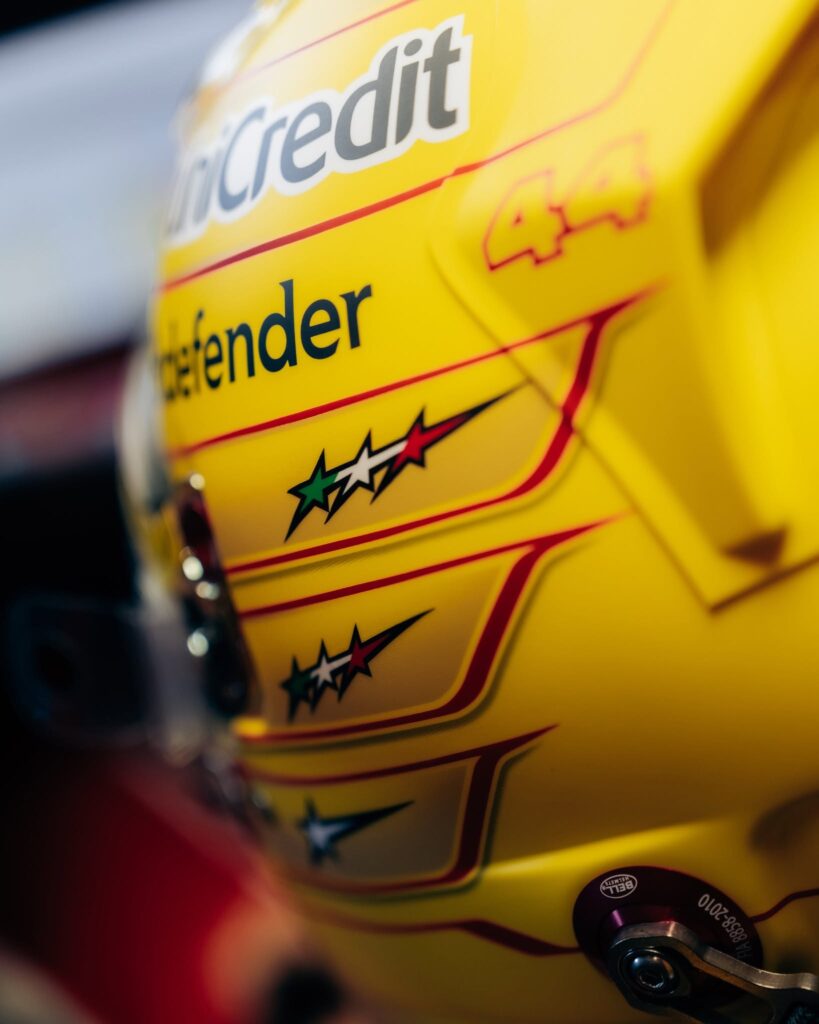
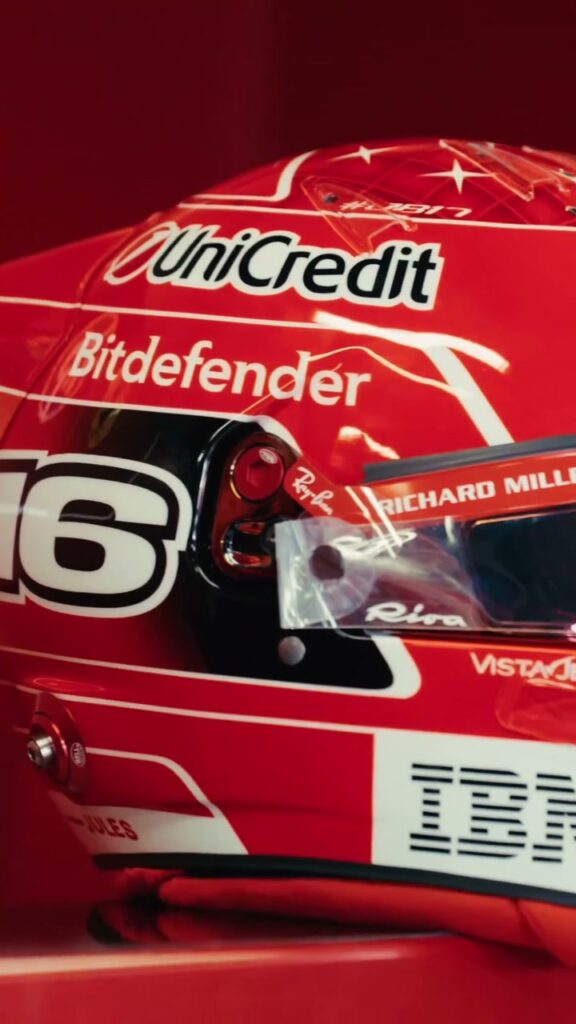
Ferrari’s visual identity is one of the most studied in motorsport, and translating it into LEGO bricks demands precision. The dominant Rosso Corsa red is unmistakable, but the modern Ferrari F1 helmet vocabulary involves far more than a single colour. Subtle yellow accents nodding to Modena’s civic crest, the matte black contrast zones around the visor aperture, and the disciplined application of sponsor placement all contribute to the overall character.
The brick interpretation handles the broad strokes confidently. The wraparound red shell reads instantly as Ferrari from across a room — exactly the kind of silhouette recognition that drives a great display piece. Where the medium shows its constraints is in the fine detail: the lettering, the small graphic flourishes, and the gradient transitions that define a real F1 helmet’s livery are reduced to printed tiles and stickered elements.
The yellow detail debate
Among Ferrari purists, the yellow accent is sacred. It connects the modern car to the Cavallino Rampante’s heritage and provides chromatic contrast against the sea of red. The LEGO set incorporates yellow strategically rather than liberally — a choice that some collectors will praise for restraint and others will critique for under-emphasis. Either reading is valid; both reveal how seriously the community treats Ferrari iconography.
Sponsor logos and branding
Modern F1 helmets are crowded canvases. Title sponsors, technical partners, and personal endorsements compete for surface area. LEGO’s licensing approach typically simplifies this complexity, prioritising the headline marks while abstracting the rest. The result is a cleaner, more sculptural object than a literal helmet — arguably better suited to long-term display because it ages without dating itself to a specific sponsor cycle.
Visual Details That Reward Close Inspection
Step closer to the LEGO Ferrari helmet and the engineering becomes the story. The curvature of a modern F1 helmet — the swept-back profile, the aerodynamic chin bar, the integrated visor surround — is notoriously difficult to recreate in straight-edged building blocks. LEGO’s design team leans on a technique known in the community as SNOT: Studs Not On Top. By orienting bricks sideways and downward, they achieve curves and angles impossible with conventional stacking.
The visor itself is the dramatic centrepiece. Whether rendered in tinted transparent plastic or treated as a printed surface, this single element does most of the heavy lifting in selling the helmet’s identity. A well-executed visor reads instantly as glass; a poorly executed one collapses the illusion. Early reveals suggest LEGO has invested significantly in this component, which speaks to their understanding of what collectors will scrutinise first.
Base, plaque, and presentation
Premium LEGO display sets increasingly arrive with integrated bases, branded plaques, and contextual graphics. The Ferrari helmet follows that template, providing a finished presentation that doesn’t require additional staging. For collectors who already own a curated shelf of motorsport memorabilia, the included base ensures the set integrates rather than clashes.
The brick count, while substantial, is not the headline metric here. What matters is build complexity and the satisfaction of the finished silhouette. Reports from advance previews suggest the build itself is engaging without being punitive — a balance that LEGO’s adult-targeted ranges have refined considerably in recent years.
Where the LEGO Set Fits in a Hamilton-Ferrari Collection
Serious collectors rarely buy in isolation. A Hamilton-Ferrari display, assembled with intention, layers multiple object types: photography, framed prints, scale die-cast models, apparel, and — at the apex — full-size 1:1 replica helmets. The LEGO set occupies an interesting middle tier in that ecosystem.
It is not a substitute for a 1:1 helmet replica. The two objects serve fundamentally different purposes. A full-size collector replica delivers presence, scale fidelity, and the visceral impact of seeing an F1 helmet at its actual dimensions. A LEGO set delivers craft narrative, build memory, and the conversational appeal of a recognisable brand collaboration.
Building a layered display
The most compelling private collections we encounter combine these registers deliberately. A 1:1 replica anchors the central sightline. Around it, smaller objects — mini helmets, scale cars, framed photography, and yes, LEGO sculptural pieces — fill out the visual rhythm. The LEGO Ferrari helmet works particularly well as a secondary focal point, drawing the eye without competing with the headline replica.
Considerations for collectors
Storage, lighting, and dust management all become relevant once a collection grows. LEGO sets are durable but vulnerable to dust accumulation in their crevices. A glass display case or enclosed shelf solves this elegantly while protecting the printed elements from UV fade over time.
Collector Significance and Market Outlook
The collector market for licensed F1 memorabilia has matured rapidly. Once dominated by die-cast manufacturers and apparel licensees, the category now includes high-end art prints, NFT experiments, and increasingly elaborate LEGO releases. Within that landscape, the intersection of three factors makes the Ferrari helmet sets particularly noteworthy.
First, brand prestige. LEGO and Ferrari are both cultural shorthand for craftsmanship and aspiration. Their collaborations historically perform well on the secondary market once retired, particularly when sealed in original packaging.
Second, narrative timing. Hamilton’s move to Ferrari is a generational story. Any product that authentically marks that transition carries narrative weight that compounds over years, not months. Collectors who acquire and preserve these sets are effectively bookmarking a chapter.
Third, production windows. LEGO sets are produced in defined cycles. Once retired, they exit retail channels permanently. Sealed sets from popular ranges routinely appreciate, sometimes dramatically, in the years following retirement.
Practical advice for serious buyers
If acquisition is purely for display, one set suffices. If acquisition includes any speculative dimension, the conventional wisdom is to purchase two: one to build and display, one to retain sealed. This approach preserves optionality without compromising the immediate enjoyment of the object.
Provenance documentation — original receipts, unopened seals, undamaged outer cartons — becomes increasingly valuable over time. Treating the box itself as part of the collectible is a habit that distinguishes the experienced collector from the casual buyer.
The Bigger Picture: F1 Memorabilia in 2025
The LEGO Ferrari helmet sets land in a memorabilia market reshaped by Formula 1’s global expansion. New audiences, particularly across North America and Asia, have driven unprecedented demand for collectibles that bridge motorsport and design culture. LEGO sits at exactly that intersection, which explains the increasing ambition of its motorsport range.
For 123Helmets.com collectors, the LEGO release should be read as confirmation of a broader trend: F1 helmets, in any medium, are becoming central artefacts of the sport’s collectible identity. The full-size 1:1 replica remains the definitive expression of that interest — the object that anchors a serious display — but the surrounding ecosystem of complementary pieces has never been richer.
Hamilton’s Ferrari chapter will generate countless commemorative products before it concludes. The LEGO sets are an early entry, but their combination of brand quality, narrative timing, and display versatility makes them a logical pickup for collectors building toward a comprehensive Hamilton-era Ferrari display.
“The best collector pieces are the ones that capture not just an object, but a moment in time. Hamilton at Ferrari is exactly that kind of moment.”
— 123Helmets.com Editorial
FAQ
Q: Are the LEGO Ferrari F1 helmet sets a replacement for full-size 1:1 replica helmets?
No. The LEGO sets are sculptural collectibles built at a smaller, stylised scale. Full-size 1:1 replica helmets remain the definitive display piece for serious collectors, offering true scale fidelity and visual presence. The two objects complement each other within a layered collection rather than substituting for one another.
Q: Will the LEGO Ferrari helmet sets increase in value after retirement?
Historical patterns suggest premium LEGO sets featuring strong licensed brands often appreciate on the secondary market once retired, especially when sealed in original packaging. However, no investment outcome is guaranteed. Most collectors prioritise display enjoyment, with potential appreciation as a secondary benefit.
Q: How accurate is the livery compared to the actual Ferrari F1 helmet design?
The brick medium captures the dominant Rosso Corsa identity and overall silhouette convincingly, though fine details such as sponsor logos and gradient transitions are necessarily simplified. The result is a stylised but immediately recognisable interpretation rather than a literal reproduction.
Q: Should I buy one set or two?
For pure display purposes, one set is sufficient. Collectors who want to enjoy the build while preserving long-term collectible value often purchase two: one to assemble and display, one to retain sealed in original packaging with documentation.
Q: How does the LEGO set fit alongside a 1:1 Hamilton Ferrari replica helmet display?
Beautifully, when staged with intention. A full-size 1:1 replica anchors the central sightline of any serious display. The LEGO set works as a secondary focal point — drawing attention through its craft narrative without competing with the scale and presence of the headline replica piece.
Shop Lewis Hamilton Collection
Display and collector replicas only. Not certified for protective use. Full-size 1:1 scale.
This article was written with the help of AI tools. Editorial policy