Blog
Racing Bulls Double SQ3: Lindblad & Lawson Helmets Shine
 123Helmets Editorial Team
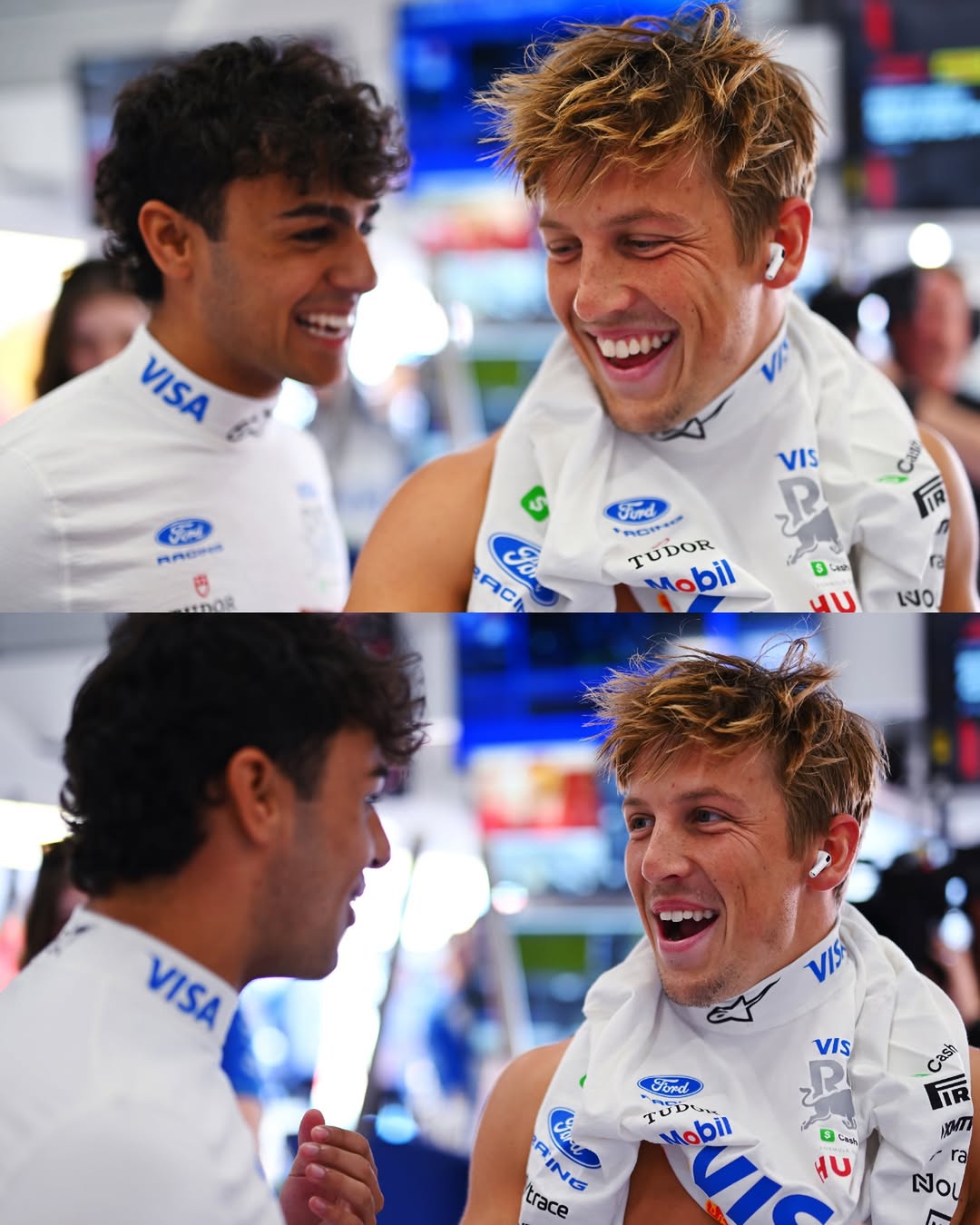
Racing Bulls sent both cars through to SQ3 at the British Grand Prix on 2026-07-03, and the team’s own caption said it best: “Double SQ3 = smiley boys.” The result puts fresh attention on the matching helmet designs worn by Arvid Lindblad and Liam Lawson, two lids built for exhibition-grade collecting as much as for a photo on the timing screen.
Key Takeaways
Racing Bulls placed both cars into SQ3 at the British Grand Prix, a result the team celebrated as “Double SQ3 = smiley boys” on 2026-07-03
The two liveries share the team’s VISA and Tudor sponsor blocks but keep separate accent panels for Lindblad and Lawson, making each helmet visually distinct on track
Full-size 1:1 display replicas of both designs reproduce the shell at true scale with a 29 × 25 × 35 cm profile and a finished weight around 1.2–1.5 kg
Multi-layer paint work, typically five or more coats plus a clear finish, is what gives these replica shells the same depth of color seen under Silverstone’s floodlights
What Happened in SQ3
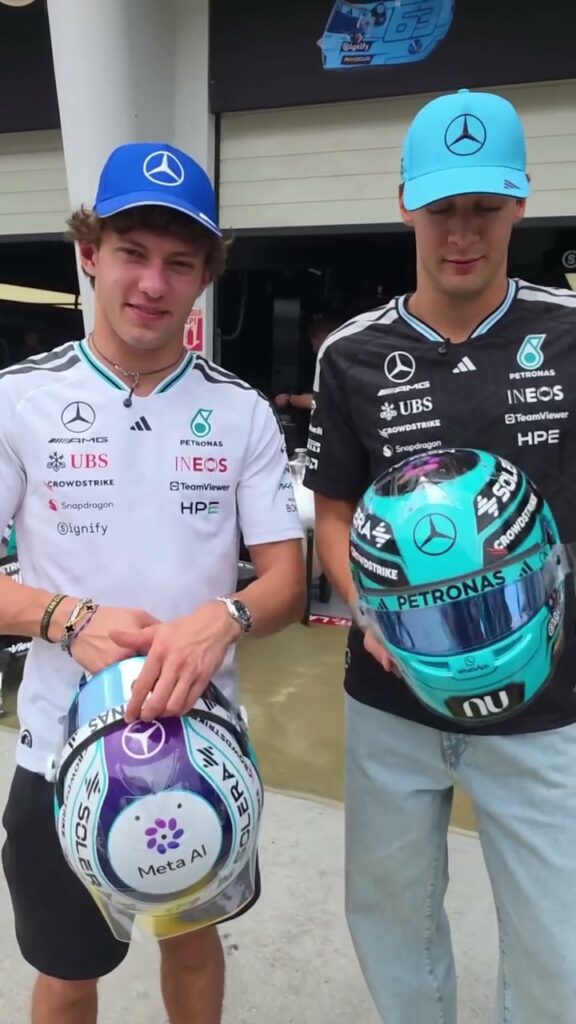
Racing Bulls got both cars through every phase of Sprint Qualifying at the British Grand Prix, finishing the session with two cars locked into SQ3 on 2026-07-03. The team’s social channels marked the moment with a simple caption, “Double SQ3 = smiley boys,” alongside a paddock shot showing both drivers in their race helmets next to the cars.
A double SQ3 appearance is a qualifying result, not a race result — it means both Racing Bulls entries made it through SQ1 and SQ2 to contest the final part of Sprint Qualifying, which sets the sprint grid. For a mid-grid team, getting two cars that deep into the session is a strong marker of pace and reliability across a single lap, and it is exactly the kind of moment that turns a helmet design into a piece fans want to own rather than just look at in a broadcast graphic.
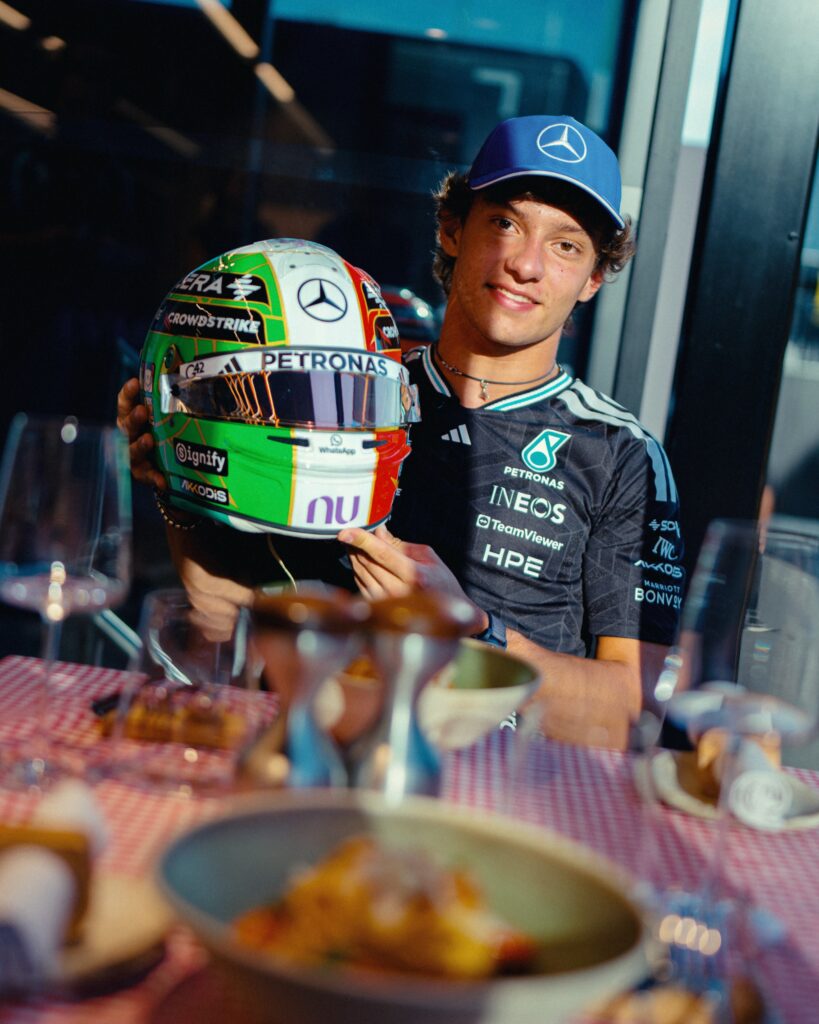
The image released by the team shows the VISA branding running across the top of both helmets, with Tudor and other sponsor marks placed along the sides — the same sponsor architecture that appears on the car livery itself, keeping the visual identity consistent between chassis and headgear.
Arvid Lindblad’s Helmet Design
Arvid Lindblad’s helmet keeps the Racing Bulls dark base with sponsor blocking mirrored from the car, anchored by the VISA lockup across the crown. The shell design follows the team’s house style rather than a one-off special, which is typical for a Sprint Qualifying weekend where teams tend to save fully custom artwork for headline events later in the calendar.
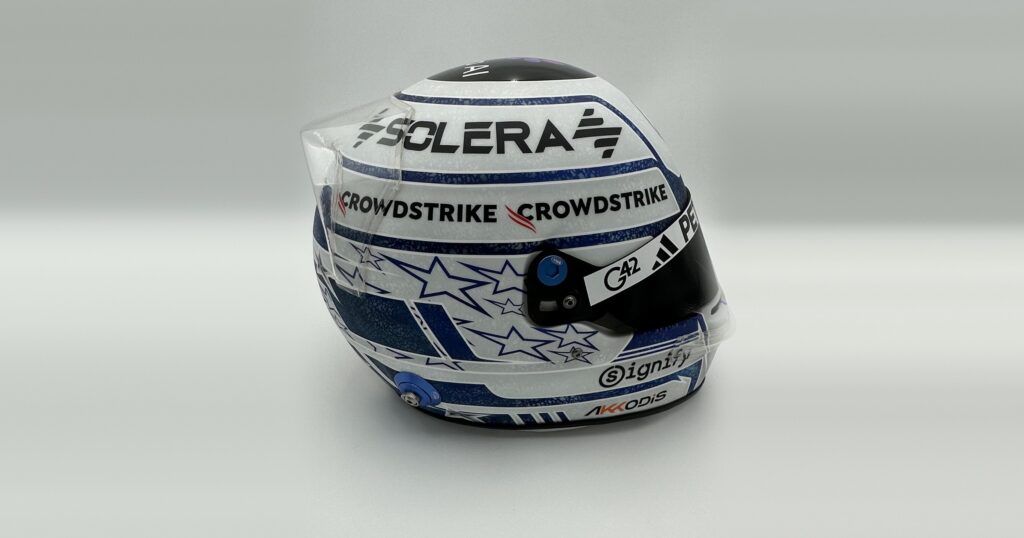
On the collector side, a full-size 1:1 replica of this shell reproduces the same panel layout and sponsor placement as the on-track lid, built to the 29 × 25 × 35 cm profile and roughly 1.2–1.5 kg finished weight that define an exhibition-quality display helmet. The visor cut and chin bar proportions match the design worn in the paddock photo, so the replica reads correctly from every angle when mounted on a stand rather than only from the front.
Because Lindblad’s design carries the standard team livery rather than a limited one-race scheme, it sits well as a foundation piece in a Racing Bulls collection — the kind of helmet that pairs naturally with later-season special editions once those are revealed.
Liam Lawson’s Helmet Design
Liam Lawson’s helmet shares the same VISA and Tudor sponsor grid as his teammate’s but distinguishes itself through his personal accent colors and crown graphics, keeping the two cars instantly identifiable from the pit wall. This kind of shared-but-distinct approach is standard across the grid — teammates run the same sponsor obligations while keeping a personal signature on the shell.
The display version of Lawson’s helmet follows the same production standard as his teammate’s: a full-size 1:1 shell, painted rather than printed where the design calls for it, with the layered clear coat finish that gives the surface the same gloss depth seen in trackside photography. Multiple base coats — typically five or more thin layers before the clear finish — are what let fine sponsor text and thin pinstripe dividers stay sharp instead of blurring into the base color.
For collectors following Lawson’s career, a helmet tied to a double SQ3 result carries a specific story attached to it: the exact session, the exact date, and the paddock image the team itself published to mark the moment.
Livery Breakdown: Shared Sponsor Architecture
Both Racing Bulls helmets for the British Grand Prix weekend carry the same primary sponsor package — VISA across the top, Tudor and supporting partners along the lower shell — matching the car’s paint scheme panel for panel. Keeping sponsor placement identical between chassis and helmet is a practical requirement for teams, since broadcast cameras and paddock photography need the branding to read cleanly from multiple angles during a single session.
What separates the two designs is the driver-specific detailing: personal accent stripes, number placement, and crown graphics that differ between Lindblad and Lawson even though the sponsor blocks are shared. This is the same pattern seen across most constructors on the grid — a common livery template with individualized detailing layered on top.
On a full-size display replica, this shared-and-distinct structure is worth checking closely before buying: the sponsor text should be legible at close range, and the visor thickness on an exhibition piece typically sits in the 3 mm range, thick enough to hold its shape on a stand without warping.
Why This Pairing Matters for Collectors
A double SQ3 result gives a helmet pairing a documented moment in the season rather than a generic release. Collectors who focus on session-specific pieces look for exactly this kind of marker — a dated result, a published team photo, and two liveries that were on track together at the same Grand Prix weekend.
Displaying both helmets side by side also tells the shared-sponsor story visually: identical VISA and Tudor placement next to individualized driver graphics is easier to appreciate in person, on stands, than in a single photograph. For anyone building a Racing Bulls collection, the British Grand Prix weekend on 2026-07-03 is a clean reference point to anchor both pieces to.
Racing Bulls fans can browse team and driver pages for related pieces at /product-category/team/racing-bulls/.
“Double SQ3 = smiley boys.”
— Racing Bulls team caption, 2026-07-03
FAQ
Q: What does a double SQ3 result mean?
It means both Racing Bulls cars advanced through every phase of Sprint Qualifying and reached SQ3, the final segment that sets the sprint grid. It reflects strong single-lap pace from both drivers on 2026-07-03 at the British Grand Prix weekend, not a race finishing position.
Q: Are Lindblad’s and Lawson’s helmets identical?
No, they share the same sponsor architecture but differ in personal detailing. Both carry the same VISA and Tudor placement matching the car livery, while crown graphics and accent colors are specific to each driver.
Q: What size is a full-size 1:1 display helmet replica?
A full-size replica is built to the same scale as the on-track shell, typically around a 29 × 25 × 35 cm profile and roughly 1.2–1.5 kg finished weight, matching the proportions seen in official paddock photography.
Q: How many paint layers go into a replica like this?
Exhibition-quality replicas commonly use five or more base coats before a clear finish is applied. That layering is what keeps fine sponsor text and thin dividing stripes sharp rather than blurred.
Q: Is this helmet suitable for wearing on track?
No, these are display and collector items only. They are full-size 1:1 exhibition pieces intended for stands and display cases, not for protective or on-track use.
Browse F1 Helmet Collection
Display and collector replicas only. Not certified for protective use. Full-size 1:1 scale.
This article was written with the help of AI tools. Editorial policy