
Blog
FIA Document 43: Carlos Sainz Yellow Flag Ruling at Spa 2026
 123Helmets Editorial Team
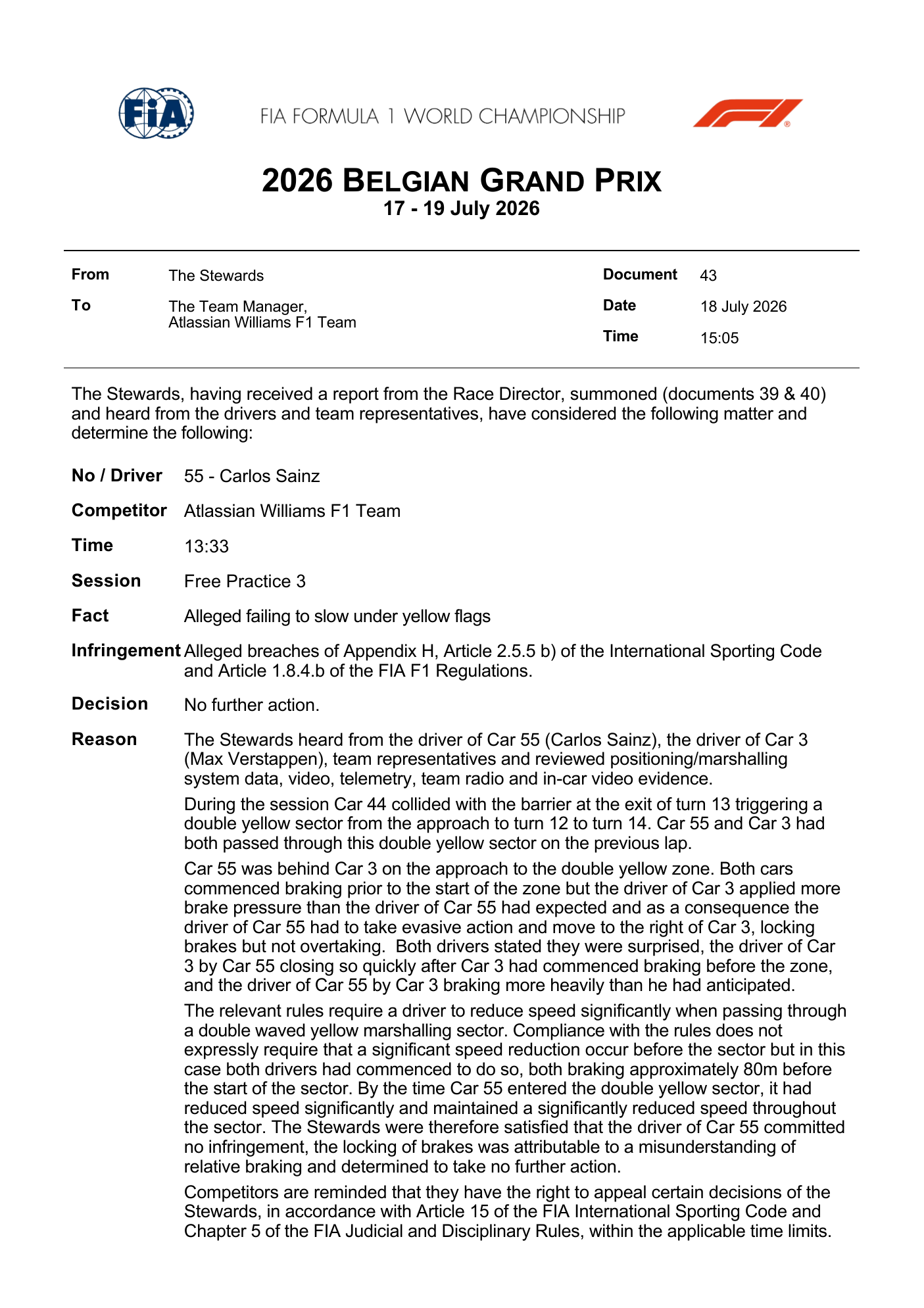
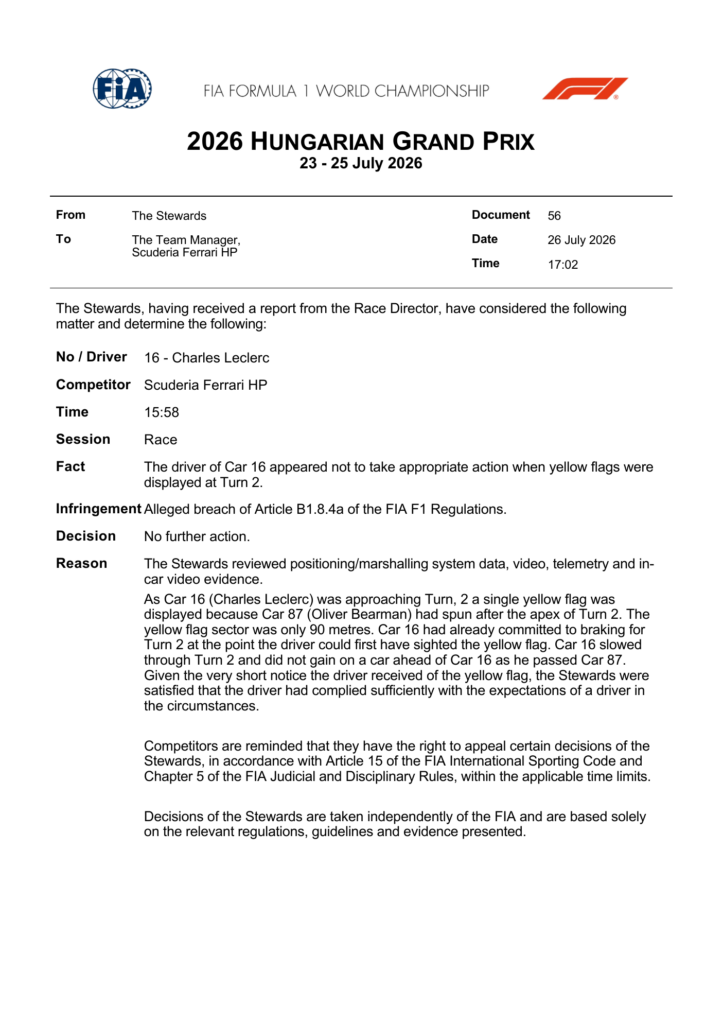
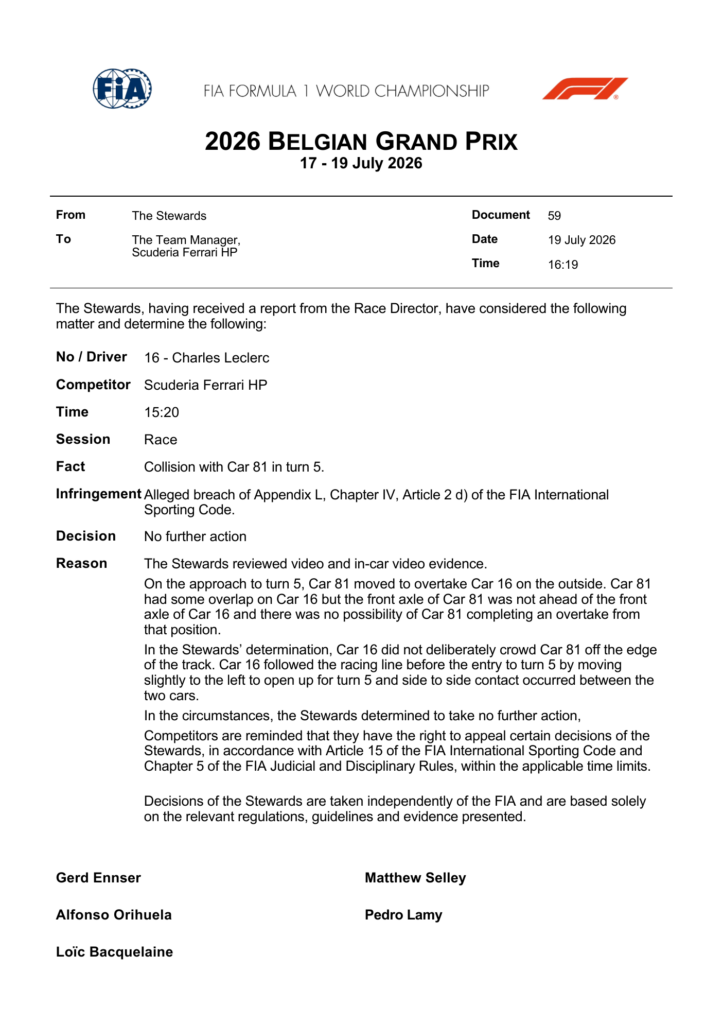
FIA stewards issued Document 43 at the Belgian Grand Prix weekend addressing an alleged failure by Carlos Sainz of Williams to slow sufficiently for double waved yellow flags. The ruling is a reminder of how closely telemetry and marshal reports are scrutinized at Spa-Francorchamps, a 7.004 km circuit with 19 corners where visibility and reaction time are constantly tested.
Key Takeaways
Document 43 relates to an alleged breach of Article 2.5 of the FIA International Sporting Code by Carlos Sainz (Williams) at the Belgian Grand Prix.
Double waved yellow flags require a marked reduction in speed and preparedness to change direction or stop, with no overtaking permitted in the affected zone.
Spa-Francorchamps measures 7.004 km across 19 corners, a layout where sightlines can change quickly between sectors like Eau Rouge/Raidillon and Pouhon.
Stewards decisions like this one shape how collectors read a race weekend, adding context to helmet liveries and race-worn replica displays tied to specific Grands Prix.
What Document 43 Covers
Document 43 is the FIA stewards’ written ruling on an alleged failure by Carlos Sainz to slow adequately for double waved yellow flags during the Belgian Grand Prix weekend at Spa-Francorchamps. Each stewards’ document is numbered sequentially across a race weekend, and a Document 43 designation indicates this was one of dozens of formal notices, summonses, and rulings already issued by that stage, covering everything from entry list amendments to driving standards matters.
The car is registered to Carlos Sainz, who competes for Williams in the 2026 season. The alleged incident centers on telemetry and video evidence reviewed against the marshal post that displayed the double yellow signal, with stewards comparing minimum speed data through the affected sector to the driver’s average pace on comparable laps.
Spa-Francorchamps runs 7.004 km per lap across 19 corners, and its elevation changes of roughly 100 meters between the lowest and highest points of the circuit mean flag panels are not always visible from a consistent distance. That layout is central to why yellow flag compliance cases at this venue are reviewed with particular attention to sightlines and reaction windows.
The Double Yellow Flag Rule Explained
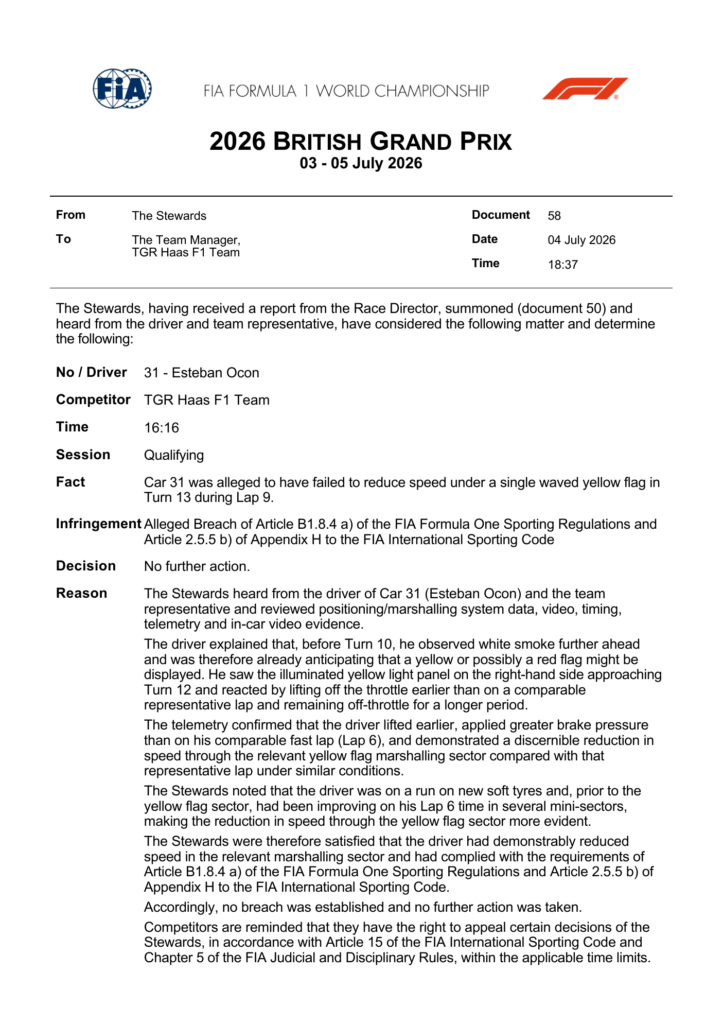
A double waved yellow flag means a hazard partly or fully blocks the track, and drivers must significantly reduce speed and be prepared to stop or change direction, with overtaking strictly forbidden in the marked zone. This is distinct from a single yellow flag, which signals a hazard beside the track without the same obligation to be ready to stop.
Under Article 2.5 of the FIA International Sporting Code and the corresponding provisions in Appendix H, compliance is judged primarily through GPS-based minimum speed benchmarks set for each yellow flag zone before the session. Stewards compare a driver’s recorded minimum speed against that reference figure, and any car that fails to show a clear and consistent reduction can be summoned for review.
Why enforcement is strict
Marshal safety depends on drivers respecting these signals in real time, since recovery vehicles and personnel may already be on or near the racing line when the flag is shown. That is why FIA stewards, rather than race control alone, handle the final determination once telemetry has been pulled and cross-checked against onboard footage.
Inside the Stewards’ Process
The stewards’ process for a Document 43-type ruling follows a fixed sequence: notification, summons, hearing, and written decision. Once race control flags a potential breach, the driver and a team representative are summoned to appear before the stewards panel, typically within the same session or shortly after, where GPS traces, in-car video, and marshal reports are presented as evidence.
Penalties for a confirmed failure to slow for double yellows commonly range from a reprimand to a time penalty of five seconds, with a grid penalty of three places reserved for more serious or repeat offenses. Financial penalties, when applied, generally follow the scale set out in FIA Document 34, which standardizes fines for various sporting infractions across the season.
Because Document 43 falls relatively late in a weekend’s numbering sequence, it suggests stewards had already processed a substantial volume of incidents by the time Carlos Sainz’s case was heard, consistent with a busy weekend of track activity at a demanding venue like Spa-Francorchamps.
Carlos Sainz and Williams in 2026
The car belongs to Carlos Sainz, who drives for Williams in the 2026 championship. Any stewards inquiry involving a recognized driver like Carlos Sainz draws attention beyond the immediate penalty, since car numbers become part of a driver’s visual identity across liveries, race broadcasts, and collector merchandise tied to a specific season.
For followers tracking Williams’ 2026 campaign, incidents like this one are typically resolved within the same race weekend documentation cycle, and the final classification of any penalty is recorded alongside the session results. Fans wanting the full context of a driver’s Carlos Sainz season, including how Williams liveries and helmet designs evolve race by race, often look to weekend-specific documents like this one to understand how a session actually unfolded on track.
Why Stewards Rulings Matter to Collectors
Stewards documents give collectors a verified timeline for a specific Grand Prix weekend, which matters when a full-size 1:1 display helmet is chosen to commemorate a particular race rather than a driver’s career in general. A ruling tied to a named circuit, a specific car number, and a documented flag zone adds a factual anchor that separates one weekend’s exhibition piece from another season’s generic tribute.
Display and collector replica helmets built to exhibition quality are frequently paired with race programs, ticket stubs, or printed stewards bulletins from the same event to create a dated, verifiable display set. A 7.004 km circuit with 19 corners like Spa-Francorchamps produces enough distinct flag zones and sector-specific incidents across a season that individual documents, such as this one on Carlos Sainz, can serve as a reference point for exactly which session a collector’s piece represents.
“Double waved yellow flags require drivers to significantly reduce speed and be prepared to change direction or stop; overtaking is not permitted in the affected zone.”
— FIA International Sporting Code, Article 2.5 (paraphrased)
FAQ
Q: What is FIA Document 43 about?
Document 43 is the FIA stewards’ written ruling on an alleged failure by Carlos Sainz of Williams to slow adequately for double waved yellow flags during the Belgian Grand Prix weekend at Spa-Francorchamps.
Q: What does a double waved yellow flag require of a driver?
A double waved yellow flag requires a driver to significantly reduce speed and be prepared to stop or change direction, with overtaking banned in the marked zone, because it signals a hazard partly or fully blocking the track.
Q: What penalties can follow a confirmed yellow flag breach?
Confirmed breaches typically range from a reprimand to a five-second time penalty, with a three-place grid penalty reserved for more serious cases, and fines following the scale set out in FIA Document 34.
Q: How long is the Spa-Francorchamps circuit?
Spa-Francorchamps measures 7.004 km per lap across 19 corners, with elevation changes of roughly 100 meters that affect how far in advance drivers can see marshal flag panels.
Q: Why do stewards documents matter for helmet collectors?
Stewards documents provide a dated, verifiable record of a specific race weekend, which collectors use to anchor full-size 1:1 display helmets and other exhibition pieces to a particular Grand Prix rather than a general season tribute.
Browse F1 Helmet Collection
Display and collector replicas only. Not certified for protective use. Full-size 1:1 scale.