
Blog
FIA Doc 59: British GP Qualifying SC1-SC2 Time Ruling
 123Helmets Editorial Team
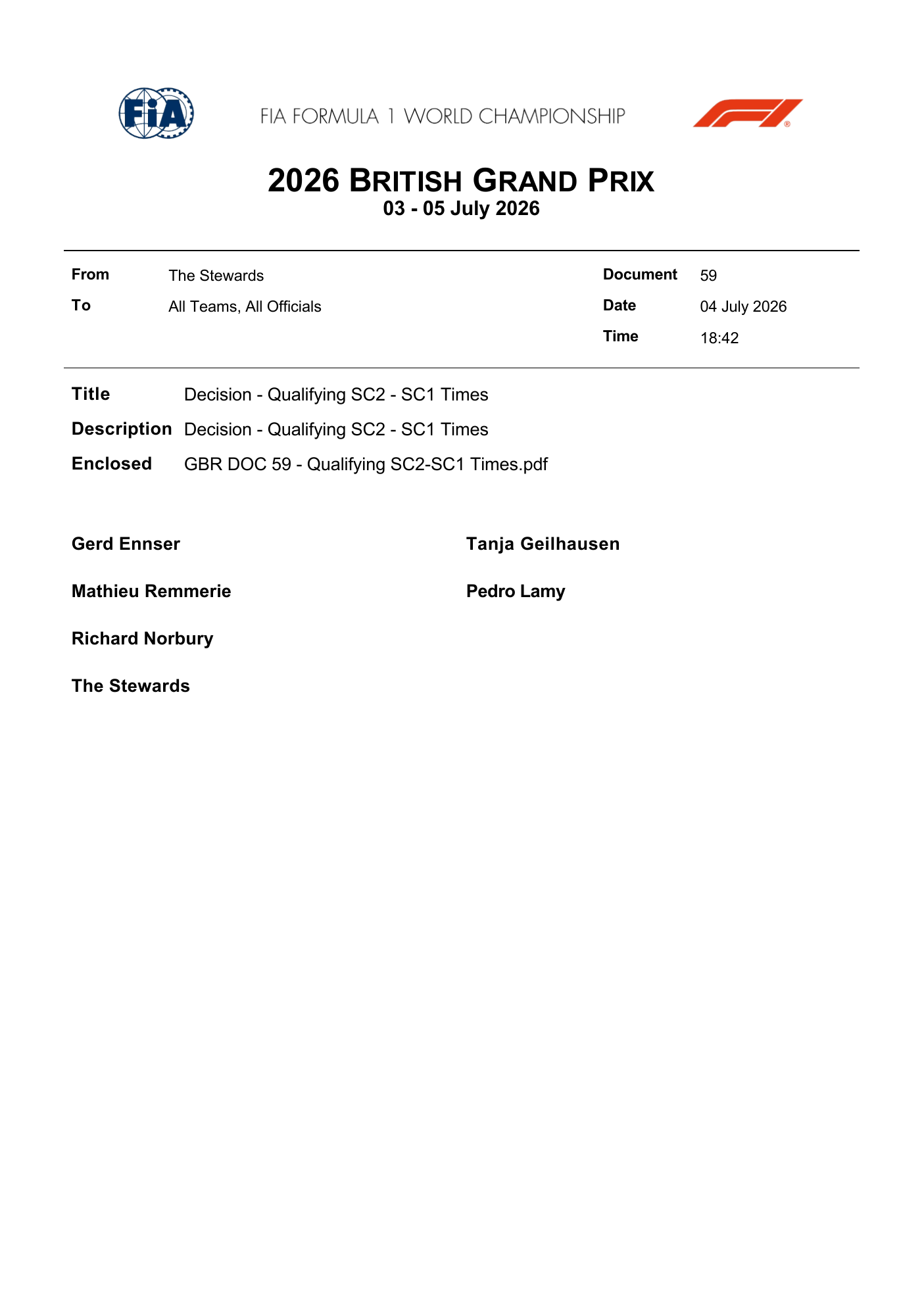
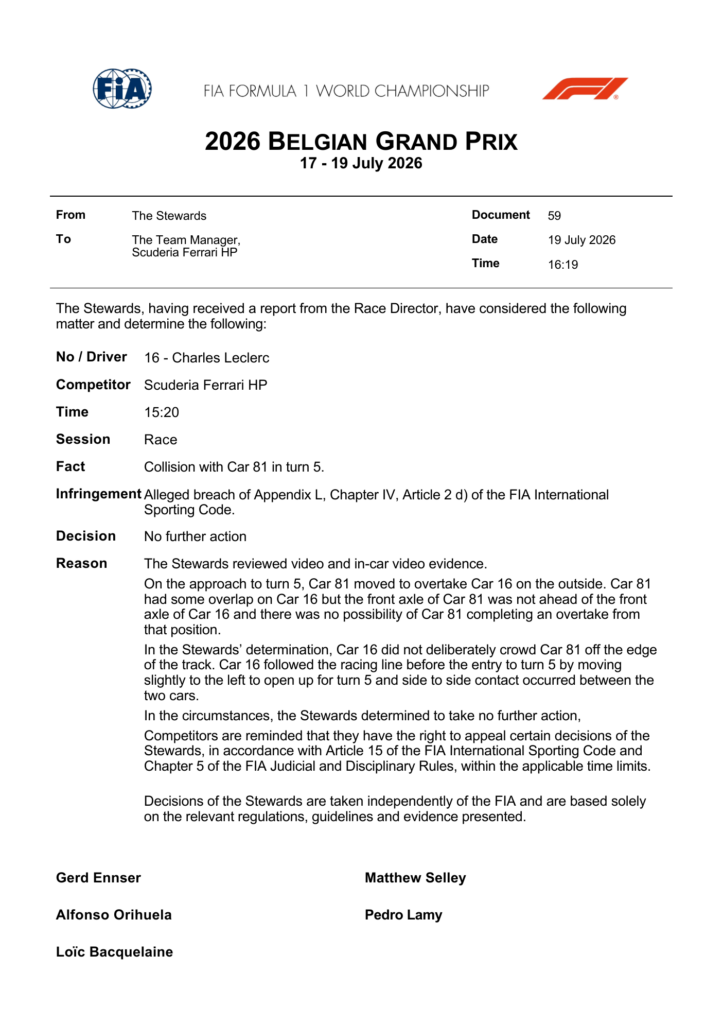
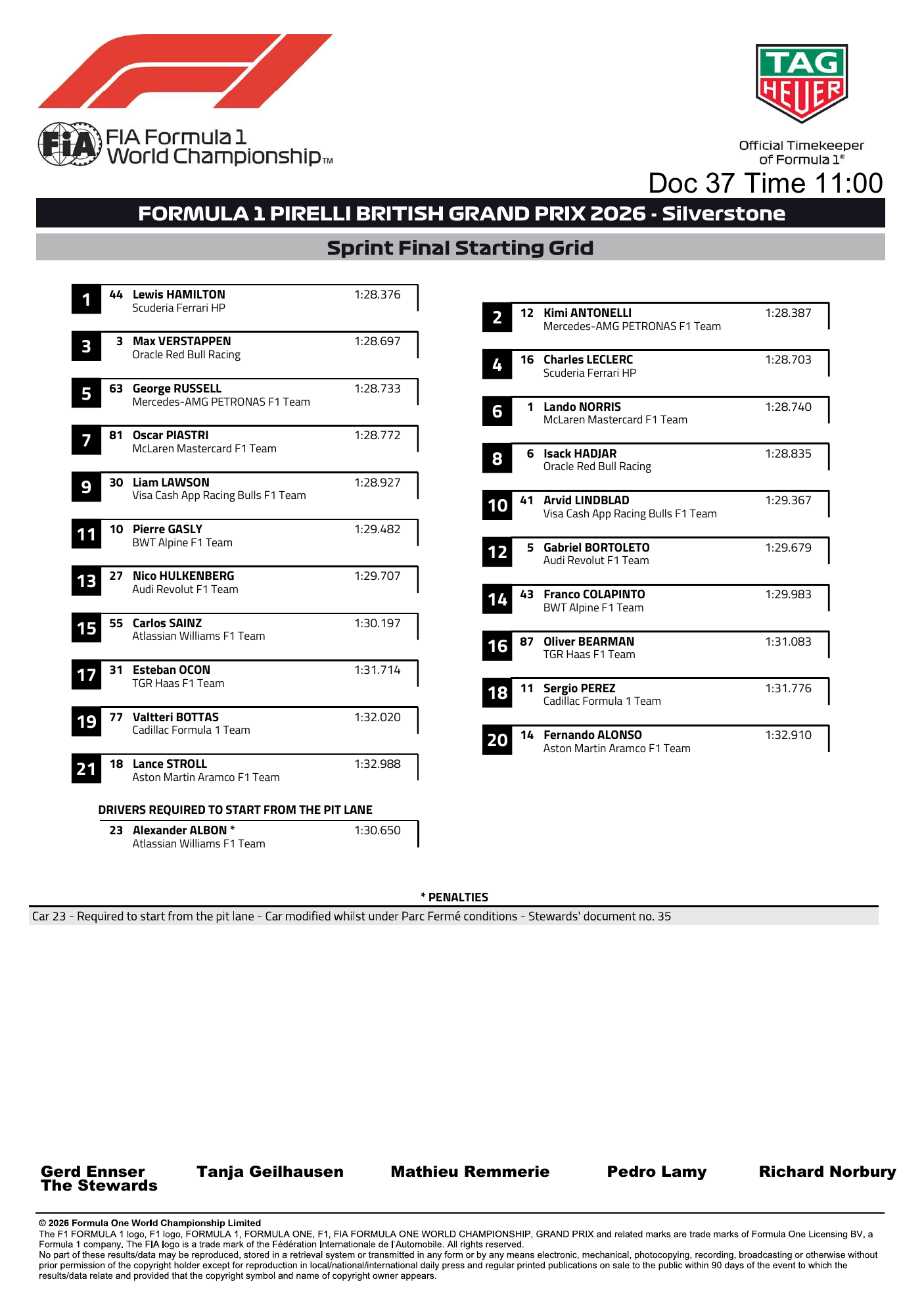
FIA Document 59 addresses how lap times set during two separate Safety Car interruptions in British Grand Prix qualifying at Silverstone are treated for grid purposes, a technical ruling that shapes both the starting order and the visual record collectors associate with the weekend.
Key Takeaways
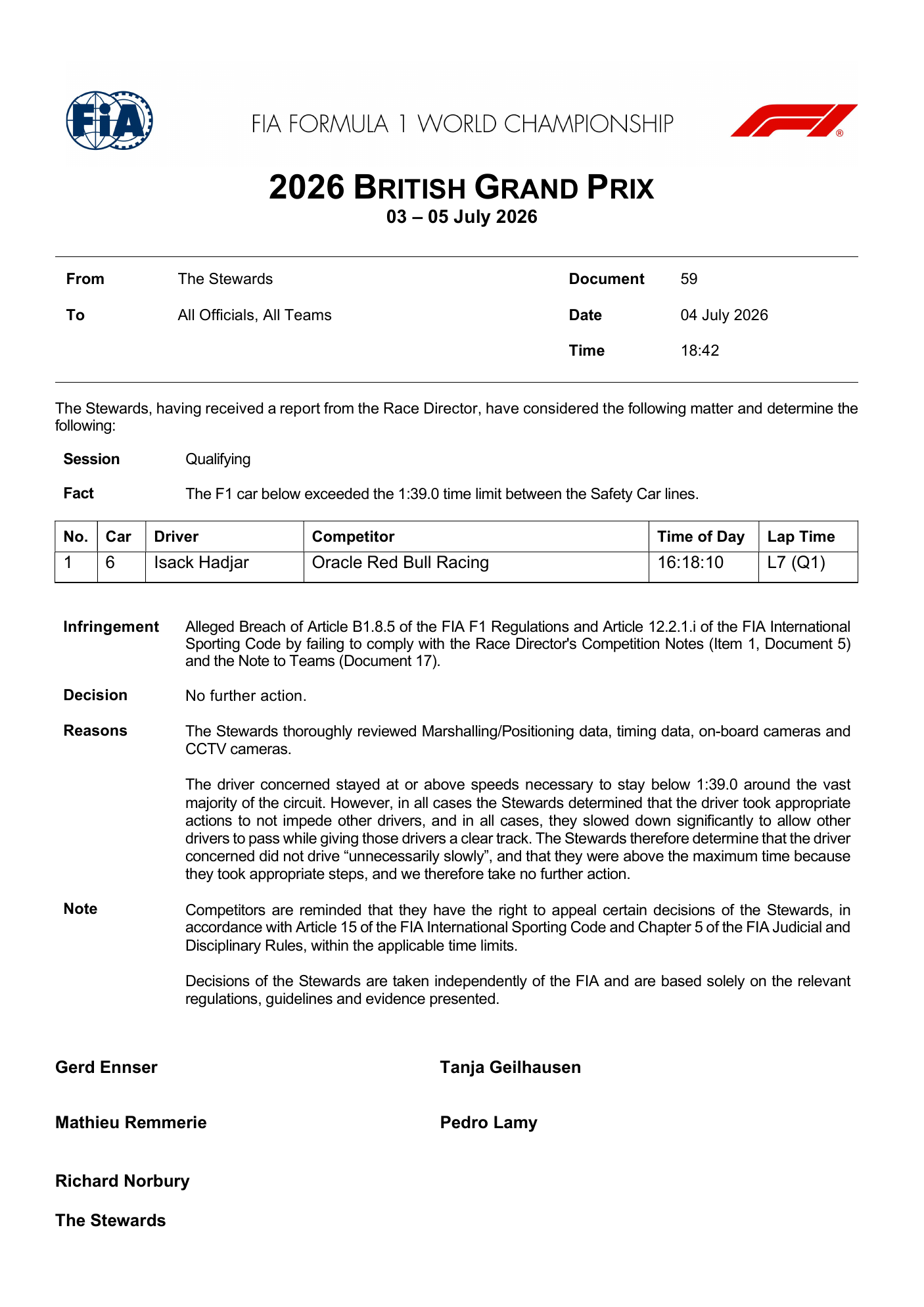
FIA Document 59 is a stewards’ ruling on qualifying lap times affected by two Safety Car deployments (SC1 and SC2) during the 2026 British Grand Prix session at Silverstone.
Safety Car periods in qualifying trigger a review process under the FIA Sporting Regulations to decide whether lap times set under yellow or SC conditions stand, are deleted, or are otherwise flagged.
Silverstone’s Grand Prix layout runs 5.891 km per lap across a 52-lap race distance, numbers that frame why session interruptions carry heavy stakes for grid position.
Collectors track these regulatory documents because qualifying incidents and stewards’ rulings often become part of the story behind a driver’s helmet design or livery for that specific race weekend.
What FIA Document 59 Actually Covers
FIA Document 59 is the stewards’ written decision addressing how lap times recorded during two Safety Car periods, labeled SC1 and SC2, are handled in the classification of British Grand Prix qualifying. Stewards’ documents of this kind are issued sequentially over a race weekend, covering everything from track limits to session interruptions, and Document 59 sits within that same numbered chain published for the 2026 event at Silverstone.
The purpose of this specific ruling is procedural rather than punitive. When a Safety Car is deployed during a qualifying session, cars on track at that moment are running under controlled conditions rather than a free flying lap. The stewards must then determine which recorded times, if any, were compromised by yellow flag zones or reduced pace behind the Safety Car, and whether those times should be retained, adjusted, or struck from the session record.
Because qualifying at Silverstone determines the starting grid for the Grand Prix itself, a ruling like Document 59 is not a footnote. It is the difference between a lap standing on the timesheet and a lap being erased, which can shift grid slots up or down the order before a single car takes the formation lap.
Why Safety Car Periods Complicate Qualifying Times
Safety Car deployments during qualifying create timing conditions that differ from a clear track, which is why stewards review affected laps rather than accepting them automatically. Under the FIA Sporting Regulations, when the Safety Car or a red flag is used mid-session, drivers on track must slow immediately and follow procedure, meaning any lap time being set at that moment reflects reduced speed rather than genuine pace.
Two separate incidents, referenced here as SC1 and SC2, indicate that qualifying at Silverstone was interrupted on two distinct occasions. Each interruption resets the timing question: were any drivers mid-lap when the Safety Car came out, and if so, did their times benefit or suffer as a result. The stewards’ role in Document 59 is to apply the regulations consistently across both incidents so that no competitor gains or loses an unfair advantage purely because of when their lap happened to fall relative to the two Safety Car periods.
This kind of review is standard practice in modern Formula 1, but it becomes newsworthy at a circuit like Silverstone precisely because grid position at a home-crowd, high-profile round can carry extra weight for teams and sponsors alike.
Silverstone and the Stakes of Grid Order
Silverstone’s Grand Prix circuit measures 5.891 km per lap, and the British Grand Prix is run over a 52-lap race distance, figures that underline how much ground separates a strong qualifying position from a compromised one. A single grid slot lost to a deleted qualifying lap can mean starting outside the top ten, in traffic, on a circuit where overtaking chances are concentrated at a handful of corners such as Copse, Stowe and Brooklands.
Document 59, dated to the 2026-07-04 qualifying session, sits alongside the broader set of stewards’ communications issued across the weekend. For teams, engineers and strategists, a ruling on SC1 and SC2 times is read closely because it can alter tire strategy planning overnight, changing which grid row a car starts from and therefore which tire compound and fuel plan makes sense for Sunday.
For fans following the sport historically, documents like this become part of the permanent record of a Grand Prix weekend, filed alongside session results and later referenced whenever that particular British Grand Prix is discussed in retrospect.
How a Stewards’ Ruling Echoes Into Race-Weekend History
A stewards’ decision on qualifying times becomes part of the documented narrative of a Grand Prix weekend, independent of what happens in the race itself. Formula 1 archives, broadcast recaps and team communications all reference these documents when explaining why a grid looked the way it did, which means Document 59 will likely be cited whenever the 2026 British Grand Prix qualifying session is discussed going forward.
This matters to anyone who follows the sport closely, including those who collect memorabilia tied to specific races. A qualifying session marked by two Safety Car interruptions and a formal stewards’ ruling is the kind of detail that gives a race weekend its own identity, distinct from a routine session with no incidents. Teams such as those competing under the Ferrari and Mercedes banners, among others on the 2026 grid, all had to navigate the same SC1 and SC2 conditions before their grid slots were finalized.
Whether or not the ruling changed a specific grid position, its existence confirms that Silverstone qualifying in 2026 was an eventful session, not a straightforward one, adding to the weekend’s story before the race even begins.
The Collector’s Angle on Regulatory Moments
Display and collector interest in a Grand Prix weekend often grows alongside its documented drama, and a stewards’ ruling like Document 59 adds a verifiable data point to that story. Full-size 1:1 display helmets tied to a specific driver and a specific race carry more context when the surrounding weekend included a notable regulatory moment, since it becomes part of what separates one British Grand Prix from another in the sport’s ongoing record.
None of this changes the physical specification of a display piece, but it does shape why collectors track race-weekend detail as closely as they track a driver’s paint scheme or visor design. A helmet associated with a session that included two Safety Car periods and a formal FIA ruling has a more specific place in the season’s timeline than one tied to a routine, incident-free qualifying hour.
For those building a collection around the 2026 season, documents like Document 59 are a reminder that every Grand Prix weekend generates its own paper trail, and that paper trail is part of what gives a full-size exhibition-quality replica its context on a shelf or in a display case.
FAQ
Q: What is FIA Document 59 for the British Grand Prix?
It is the stewards’ written decision addressing how qualifying lap times affected by two Safety Car periods, referred to as SC1 and SC2, are treated in the session classification for the 2026 British Grand Prix at Silverstone.
Q: Why do Safety Car periods affect qualifying lap times?
Because cars on track during a Safety Car deployment must slow immediately under regulation, meaning any lap time recorded at that moment reflects controlled pace rather than a genuine flying lap, which is why stewards review those times separately.
Q: Does a stewards’ document like this change the race itself?
It can change the starting grid order by validating, adjusting or deleting specific qualifying times, which then affects where each car lines up before the 52-lap British Grand Prix begins.
Q: How long is a lap at Silverstone?
A lap of the Silverstone Grand Prix circuit measures 5.891 km, one of the longer circuits on the 2026 Formula 1 calendar.
Q: Are 123Helmets.com replicas affected by qualifying rulings like Document 59?
No, these documents concern session timing and grid procedure only; our full-size 1:1 display and collector helmets are exhibition pieces reflecting driver liveries and are not connected to on-track certification or timing decisions.
Browse F1 Helmet Collection
Display and collector replicas only. Not certified for protective use. Full-size 1:1 scale.
This article was written with the help of AI tools. Editorial policy