Blog
Hamilton Drags Wing After Wall Hit in Wild Lap
 123Helmets Editorial Team
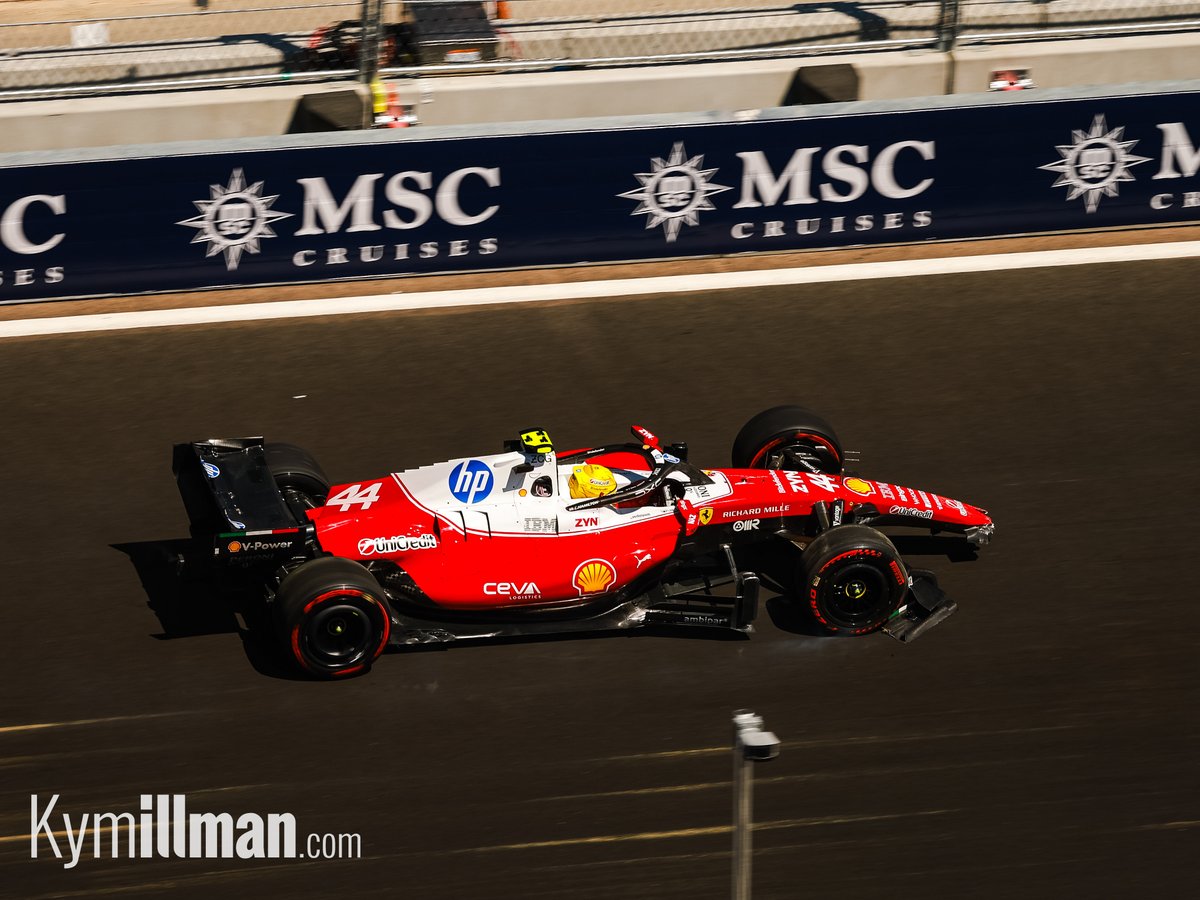
Lewis Hamilton locked up under braking at the final corner and clipped the wall, then continued for another lap with a damaged front wing lodged under his car before his team ordered him to stop.
Key Takeaways
Lewis Hamilton locked up at the final corner and made contact with the barrier, damaging the front wing on his car.
He continued for a further lap with the wing lodged underneath the car before his engineer told him to stop multiple times.
Hamilton eventually found an access point near the La Monumental section of the circuit to bring the car back in.
The incident, first shared publicly by photographer Kym Illman on X, is likely to draw scrutiny from the FIA stewards.
What happened at the final corner
Lewis Hamilton locked his brakes entering the last corner and made contact with the wall, an impact strong enough to dislodge his front wing. Rather than stopping immediately, he kept the car moving and set off on another lap in an attempt to return to the pit lane. The damaged wing became trapped beneath the chassis, dragging along the track surface for a significant portion of the lap rather than detaching cleanly.
Footage and images of the moment were first circulated by photographer Kym Illman on X, whose post “STOP THE CAR!” captured the alarm among those watching the situation unfold in real time.
Team radio traffic reportedly included at least one instruction from the pit wall for Hamilton, driving for Ferrari, to bring the car to a stop, though he continued driving with the wing still attached to the underside of the car.
Why he kept driving with a broken front wing
Hamilton appears to have believed he could nurse the car back to the pit lane rather than abandon it on track, a decision that extended the incident across most of a lap. Front wing endplates and flap elements are designed to shed cleanly in a heavy impact, but in this case the wing became wedged beneath the car instead of separating, which changed the calculation for both driver and team.
His engineer’s repeated calls to stop suggest the team judged the ongoing lap to carry more risk than an immediate halt, whether from debris on track, further damage to the floor and diffuser, or a compromised handling balance with a wing dragging beneath the car.
Only after navigating the section near La Monumental did Hamilton locate a track access point suitable for bringing the car to a safe stop, ending the extended, and unusual, final lap.
The scale of the damage
The car sustained front wing damage severe enough that the component detached from its mounts but remained trapped underneath rather than falling away. Dragging a wing along the track surface for a full lap typically scrapes away carbon fibre from the floor and can compromise the diffuser and other underfloor aerodynamic surfaces, components that generate a large share of a modern F1 car’s downforce.
Impacts of this kind at a final corner, often taken at higher speed on entry before a long braking zone, tend to produce heavier contact loads than mid-corner clips, which is consistent with the visible severity of the wing failure in this instance.
What the stewards may examine
The FIA stewards are likely to review whether Hamilton should have stopped sooner once the wing became detached and lodged under the car. Continuing to drive with loose bodywork raises questions under the sporting regulations that govern when a car must be brought to a stop for safety reasons, particularly if debris was shed onto the racing surface during the extended lap.
Stewards typically weigh factors including how much debris was left on track, whether marshals were required to attend to it, and how many corners or sectors were affected before the car was recovered. Given that Hamilton covered close to a full additional lap with the wing dragging beneath the car, and needed to pass through the area near La Monumental before finding an exit point, this incident is the kind of case that often results in a summons for further investigation, even without a collision involving another driver.
How incidents like this reach fans
Moments like this reach the wider public first through trackside photographers and reporters, and Kym Illman’s “STOP THE CAR!” post is a clear example of how quickly such incidents circulate before official team or FIA statements follow. The visual of a front wing dragging beneath a car for a lap is unusual enough that it tends to spread fast among fans and media alike, well ahead of any post-session steward’s document confirming what actually happened.
For collectors following Lewis Hamilton‘s season, race-week moments like this one add another chapter to a season already followed closely lap by lap, corner by corner.
“STOP THE CAR!”
— Kym Illman, photographer, on X
FAQ
Q: Did Lewis Hamilton crash during the session?
Yes, Hamilton locked up under braking at the final corner and made contact with the wall, which damaged his front wing.
Q: Why did Hamilton keep driving after hitting the wall?
He appears to have attempted to bring the car back to the pit lane under its own power rather than stop immediately, continuing for close to another lap before finding a track access point.
Q: What happened to the front wing?
The wing detached from its mounts but became lodged underneath the car instead of separating cleanly, dragging along the track surface for much of the lap.
Q: Will the FIA review the incident?
It is likely, since continuing to drive with detached bodywork and shedding potential debris on track is the kind of scenario stewards typically investigate after the session.
Q: Who first reported the incident?
Photographer Kym Illman shared the moment publicly on X with the post “STOP THE CAR!”, which is how many fans first learned of the incident.
Browse F1 Helmet Collection
Display and collector replicas only. Not certified for protective use. Full-size 1:1 scale.