Blog
Ollie Bearman Admits F2 Did Not Prepare Him for the Brutal Reality of His Ferrari F1 Debut
 123Helmets Editorial Team
Ollie Bearman Admits F2 Did Not Prepare Him for the Brutal Reality of His Ferrari F1 Debut
Thrown into the deep end at Jeddah after Carlos Sainz’s appendix surgery, teenage prodigy Oliver Bearman delivered a points finish in red — but the British rookie has since confessed that no amount of Formula 2 mileage could have prepared him for the relentless, unforgiving rhythm of a Ferrari Formula 1 weekend.
Key Takeaways
Bearman’s Jeddah debut produced a points finish despite zero prior practice in the SF-24.
The Briton admits F2 did not replicate the workload, media intensity or tyre management of F1.
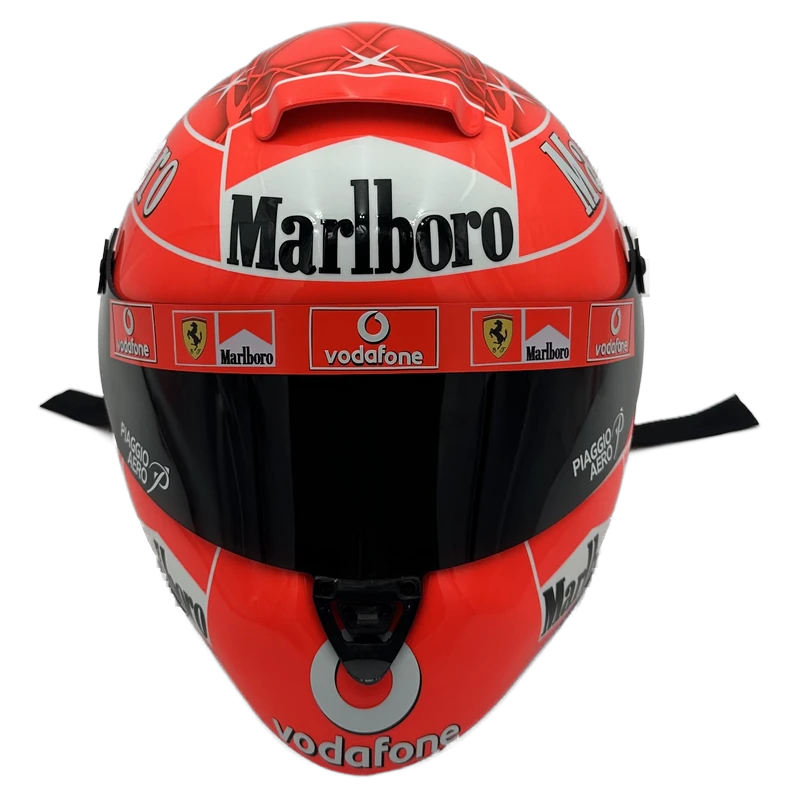
His Ferrari-liveried helmet became one of the most photographed display pieces of the weekend.
The performance fast-tracked Bearman’s path to a confirmed 2025 Haas F1 race seat.
A Saturday Morning Call That Changed Everything
When Oliver Bearman walked into the Jeddah Corniche Circuit paddock on Friday, he expected to drive the Haas in the opening practice session and then return to his Formula 2 commitments. By Saturday morning, the script had been torn apart. Carlos Sainz was hospitalised with appendicitis, and Ferrari needed a replacement before qualifying. The keys to one of the most coveted machines on the grid — the scarlet SF-24 — were handed to an 18-year-old who had never driven the car competitively.
The Saudi Arabian Grand Prix is no gentle introduction. Jeddah is the fastest street circuit on the calendar, a high-speed labyrinth of blind apexes and unforgiving walls. To be parachuted in without a single dry-running practice session, in a car you have never raced, with the weight of the Prancing Horse on your shoulders, would unsettle even a seasoned veteran. Bearman simply buckled his helmet, took a breath, and got on with it.
Qualifying: Composure Beyond His Years
Bearman qualified eleventh, a remarkable effort given that he was learning Ferrari’s switch maps, brake migration tools and energy deployment menus on the fly. He was within three tenths of Charles Leclerc in Q2 — a margin many established drivers would happily accept. The paddock took note. So did the television cameras, which lingered on the rookie’s helmet as he climbed from the cockpit, the red-and-yellow Ferrari colour scheme catching the floodlights like a piece of sculpture.
The Helmet That Stole the Spotlight
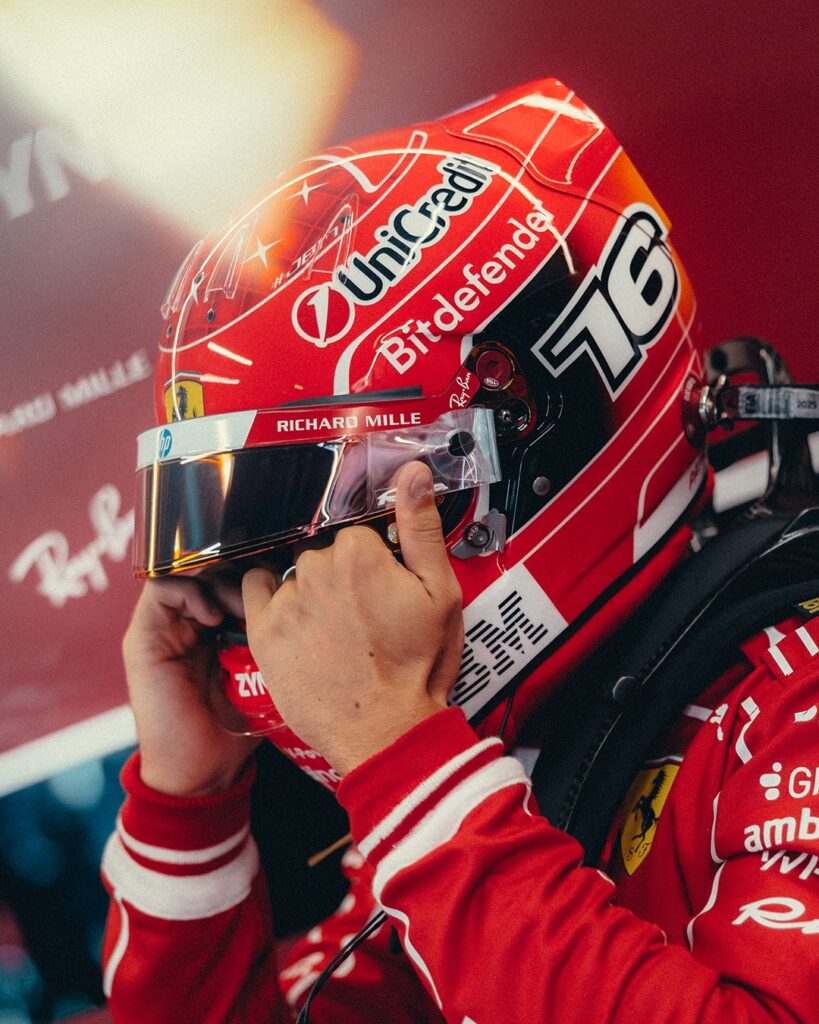
For collectors, Bearman’s Jeddah lid is already a piece of folklore. Designed in a hurry to align with Ferrari’s identity, the helmet fused his familiar personal palette with deeper Ferrari reds, gold accents and a subtle nod to the Scuderia’s iconic shield. Every photograph of the weekend that featured the helmet seemed destined for a frame on a study wall.
Livery and Display Detail
The helmet’s surface treatment paired matte and gloss zones, a finish that translates exceptionally well to full-size 1:1 replica form. The contrast between the bold red shell and the brushed gold visor surround makes it a natural centrepiece for any collector display cabinet. Add the context — a teenager’s first Ferrari race, in front of a global audience — and the storytelling power of the piece becomes obvious.
For exhibition-quality replicas, this design represents one of those rare moments where livery, narrative and rarity converge. It is not just a helmet; it is a snapshot of a debut that the sport will keep referencing for years.
The Race: A Brutal Lesson in F1 Reality
Bearman started eleventh, gained two places at the start, and held station with disciplined tyre management. He fended off Lando Norris in the closing laps — a duel that drew gasps in the Ferrari garage — and crossed the line seventh. Two points. A debut for the history books.
Yet the post-race interviews revealed the cost. Bearman admitted that the physical and mental load of an F1 weekend was on a different planet to Formula 2. “F2 didn’t prepare me for this,” he said candidly. “The car is faster, the meetings are longer, the tyre window is smaller, the steering wheel has triple the buttons, and the media schedule is non-stop. You don’t get a quiet moment.”
Where F2 Falls Short
Bearman pointed to three specific gaps. Firstly, the workload: F1 drivers attend dozens of engineering debriefs, marketing duties and sponsor activations across a weekend. Secondly, the tyre management: Pirelli’s F1 compounds demand a precision of brake bias and throttle modulation that F2’s spec rubber never trains. Thirdly, the simulator culture — preparing for an F1 race means hours in a multi-million-pound simulator, parsing data the size of small databases. None of that exists in junior categories.
The Mental Reset
Bearman also spoke about the psychological reset required between sessions. In F2, you can drive on instinct. In F1, every input is measured against terabytes of data. “You can’t hide,” he admitted. “Every lap is dissected. Every braking point is on a graph. It is humbling.”
Ferrari’s Verdict and the Wider Significance
Inside the Ferrari motorhome, the reaction was unanimous. Team principal Frédéric Vasseur described Bearman’s performance as “remarkable beyond words.” Charles Leclerc embraced the rookie in parc fermé. Even the Tifosi, famously demanding, took to social media to anoint the teenager as a future Scuderia driver.
The Haas Pipeline
While Ferrari already had its 2025 line-up locked in with Lewis Hamilton joining Leclerc, the Bearman performance accelerated his confirmed move to a full-time Haas seat. The Jeddah weekend was, in effect, a job interview conducted live on global television — and Bearman aced it.
Why This Matters for Collectors
One-off helmet designs tied to emergency call-ups are among the rarest categories in the F1 memorabilia universe. They typically exist for a single weekend, never to be reproduced in the driver’s regular rotation. The Jeddah Ferrari design from Bearman’s debut already commands fierce interest among display-replica enthusiasts. Full-size 1:1 collector pieces capture the exact proportions, livery placement and surface finishes of the original — perfect for shelf, cabinet or studio exhibition.
What Bearman Said Next
In the weeks following the race, Bearman gave a more measured assessment. He acknowledged that even his preparation work — countless simulator hours, fitness sessions, briefings with Ferrari engineers — could not replicate the chaos of a live race weekend. He praised the team for shielding him as much as possible but admitted he was operating on adrenaline by Sunday evening.
The Long Road Ahead
His message to younger drivers was striking: F2 is a necessary stepping stone, but it is not the final exam. The leap to F1 is steeper than the lap-time gap suggests. The workload, the scrutiny, the engineering complexity and the sheer relentlessness of a top-tier programme create a wall that only experience can break down.
From Debut to Display
For collectors, Bearman’s reflections add depth to the helmet itself. Each piece carries the story of a teenager confronting the truth of F1 head-on — and refusing to flinch. That narrative is precisely what elevates a display replica from decoration to documentation.
Building the Bearman Ferrari Display
For collectors looking to commemorate this moment, the Bearman Ferrari helmet pairs beautifully with broader Scuderia display sets. A Leclerc lid, a Sainz design from earlier in 2024, and the Bearman debut piece together form a chronological narrative of Ferrari’s season — three drivers, three storylines, one livery family.
Presentation Tips
Place the helmet on a rotating display plinth under directional lighting to draw out the gold accents. Pair with a printed timeline of the Jeddah weekend, perhaps a framed grid sheet. Exhibition-quality 1:1 replicas, with accurate visor tints and authentic decal placement, reward this level of curation.
The Bearman debut is a story that grew larger with every passing race. Owning the helmet is owning a chapter of it.
“F2 didn’t prepare me for this. The car is faster, the meetings are longer, the tyre window is smaller, and you don’t get a quiet moment.”
— Oliver Bearman, post-Saudi Arabian Grand Prix
“What Ollie did this weekend was remarkable beyond words. To step into our car, in Jeddah, with no practice, and score points — it tells you everything.”
— Frédéric Vasseur, Ferrari Team Principal
FAQ
Q: Why did Oliver Bearman drive for Ferrari at the Saudi Arabian Grand Prix?
He replaced Carlos Sainz on short notice after the Spaniard required emergency surgery for appendicitis on the Friday of the race weekend.
Q: What result did Bearman achieve on his Ferrari F1 debut?
He finished seventh, scoring six championship points and becoming one of the youngest drivers to score on debut in modern Formula 1 history.
Q: What made his Jeddah helmet design special for collectors?
It was a one-off livery created specifically for his Ferrari appearance, blending his personal colours with Ferrari red and gold accents — making it a rare and highly desirable display piece.
Q: Are these helmets suitable for on-track use?
No. These are full-size 1:1 collector and display replicas, designed exclusively for exhibition, display and memorabilia purposes. They are not certified for any form of protective or on-track use.
Q: What size are the replica helmets offered?
All replicas are produced at full-size 1:1 scale, matching the proportions and detailing of the original helmet worn by the driver, making them ideal centrepieces for collectors and display cabinets.
Shop Ferrari Helmets
Display and collector replicas only. Not certified for protective use. Full-size 1:1 scale.
This article was written with the help of AI tools. Editorial policy