Blog
Carlos Sainz Encouraged by Key Williams Progress After Tough 2026 Start
 123Helmets Editorial Team
Carlos Sainz Encouraged by Key Williams Progress After Tough 2026 Start
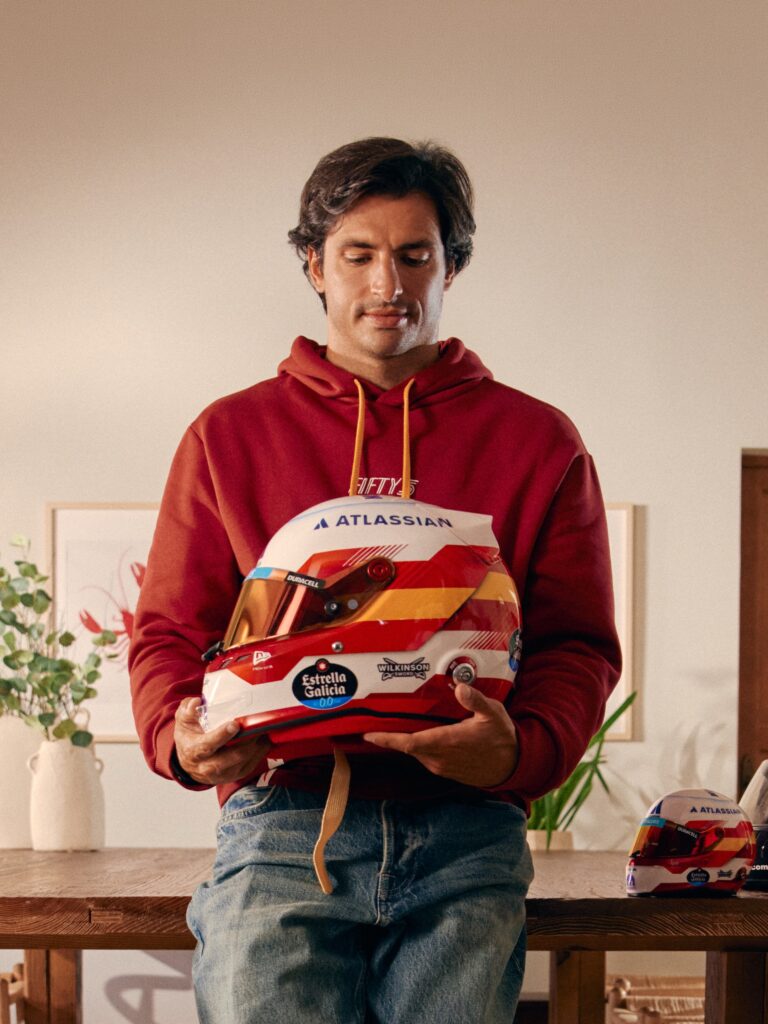
After a bruising opening to the 2026 campaign, Carlos Sainz has emerged with renewed optimism following clear technical gains made by the Williams squad. The Spaniard’s body language in the paddock told a story before he ever spoke to the microphones: chin up, eyes forward, and a helmet that gleamed under the floodlights as a symbol of a team rebuilding momentum. For collectors and Williams faithful alike, this is precisely the kind of weekend that turns a season around — and turns a helmet into a statement piece.
Key Takeaways
Sainz reports tangible Williams improvements after a difficult start to 2026
The Spaniard’s helmet design remains one of the grid’s most recognisable display pieces
Williams livery continues to honour its heritage blue while integrating modern graphics
Full-size 1:1 replica helmets capture every detail celebrated this weekend
A weekend that shifted the mood inside Williams
The opening rounds of 2026 were not kind to Williams. New regulations, a recalibrated power unit landscape and the usual teething pains of a fresh chassis combined to leave Carlos Sainz searching for the limits of a car that didn’t always answer back. Yet by the end of this latest race weekend, the Spaniard’s tone had shifted noticeably. Speaking after the chequered flag, Sainz pointed to a string of small but meaningful gains: better front-end stability through medium-speed corners, improved tyre warm-up on the harder compounds, and a more predictable platform in traffic.
None of those gains will headline a magazine cover on their own. Together, however, they describe a team that has stopped firefighting and started building. For an outfit with the historical weight of Williams — nine constructors’ titles, a roll call of legendary drivers, and a livery instantly recognisable to anyone who has ever watched the sport — that distinction matters enormously.
Why Sainz’s optimism carries weight
Carlos Sainz is not a driver prone to false dawns. His career has been defined by methodical progress, sharp technical feedback and an unwillingness to overstate a result. When he says a car is improving, paddock engineers tend to believe him. That credibility is exactly why his comments after the race resonated so strongly with Williams fans, and why the team’s display in the closing stints felt like more than just a single good Sunday.
The helmet on track: a collector’s centrepiece
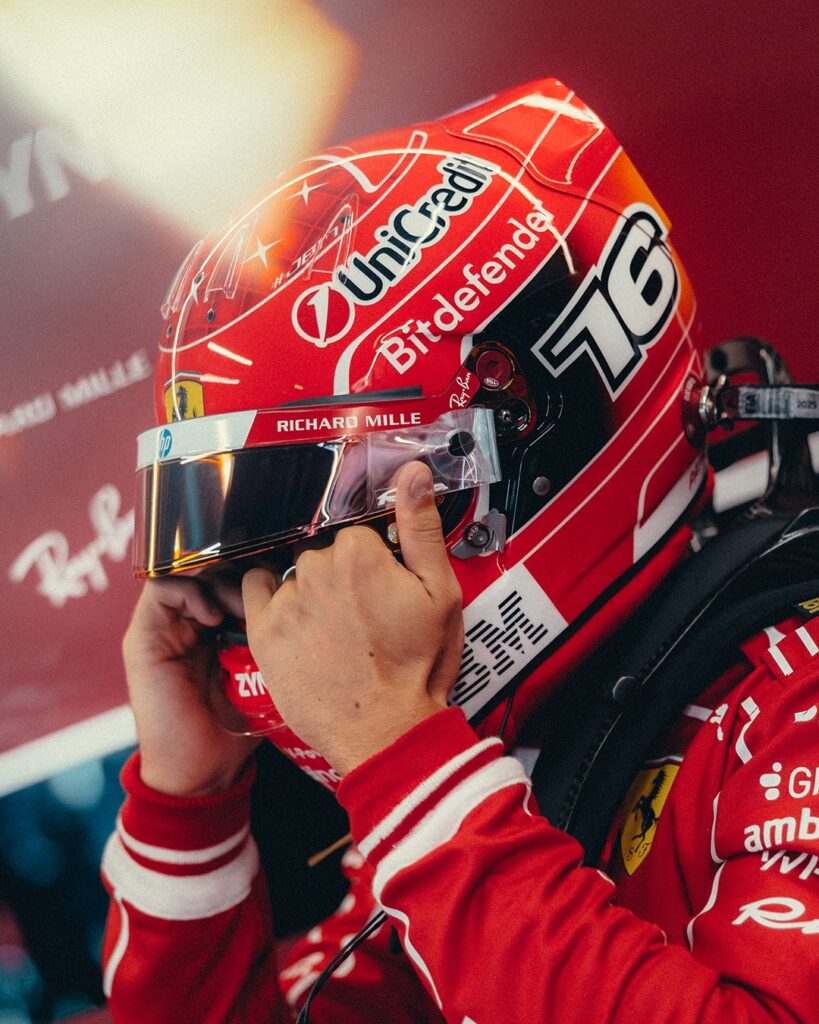
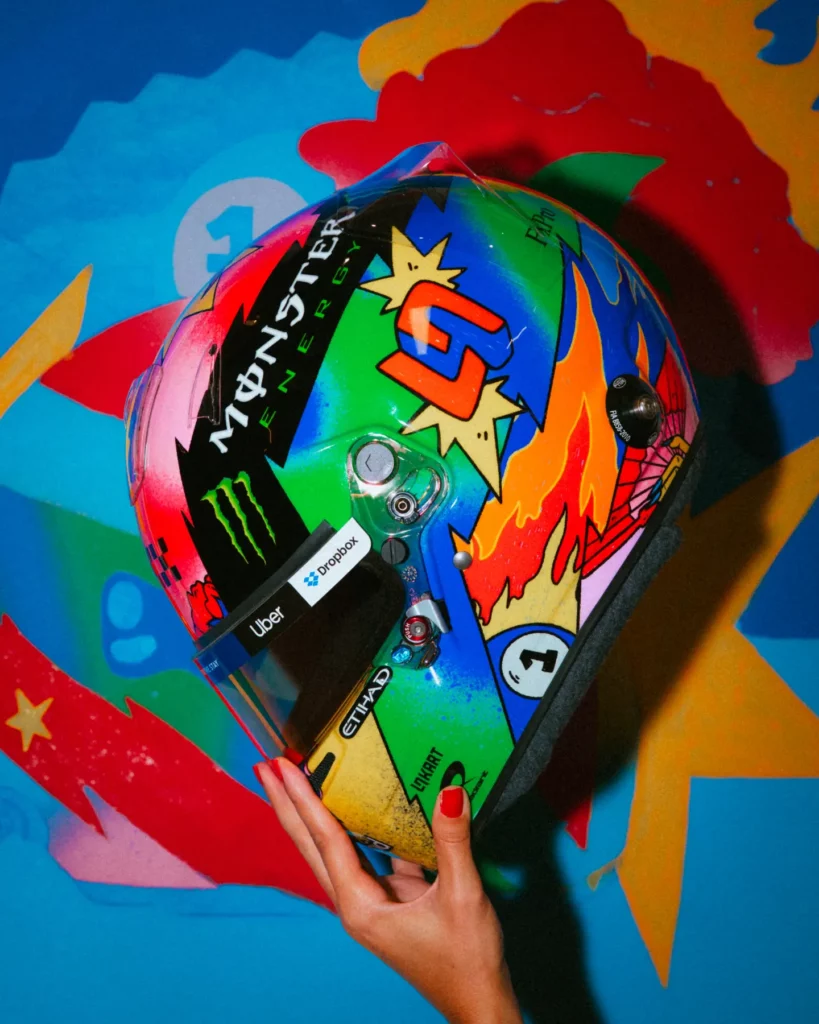
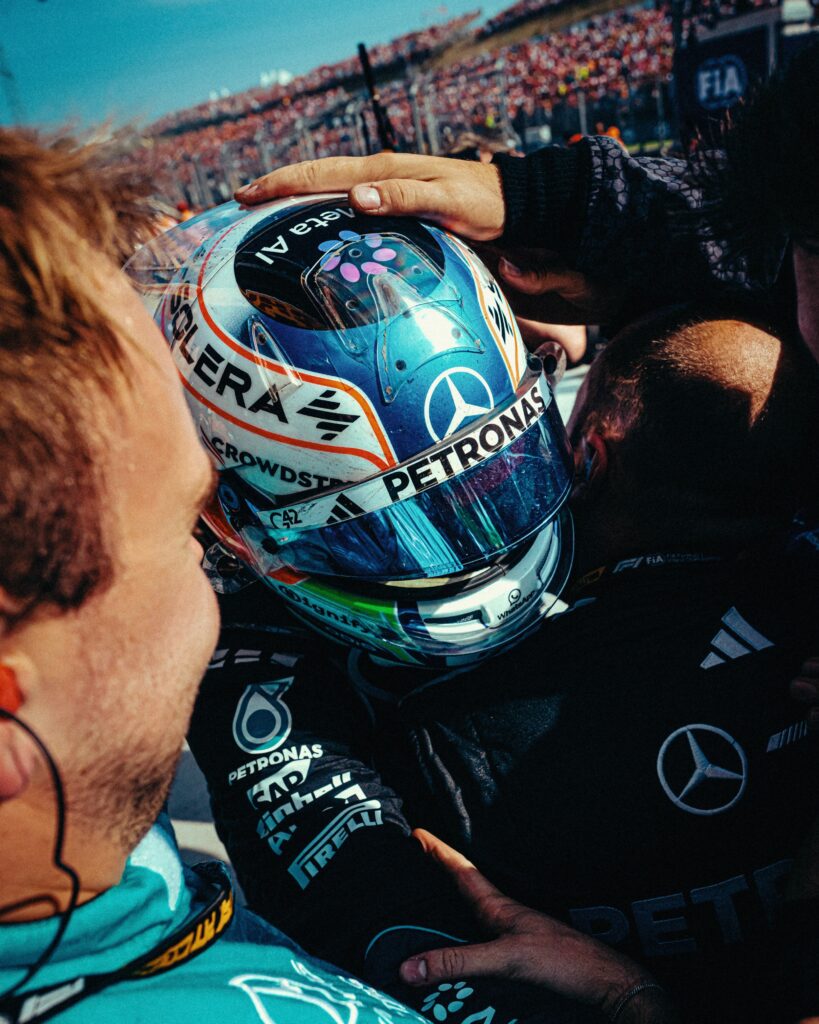
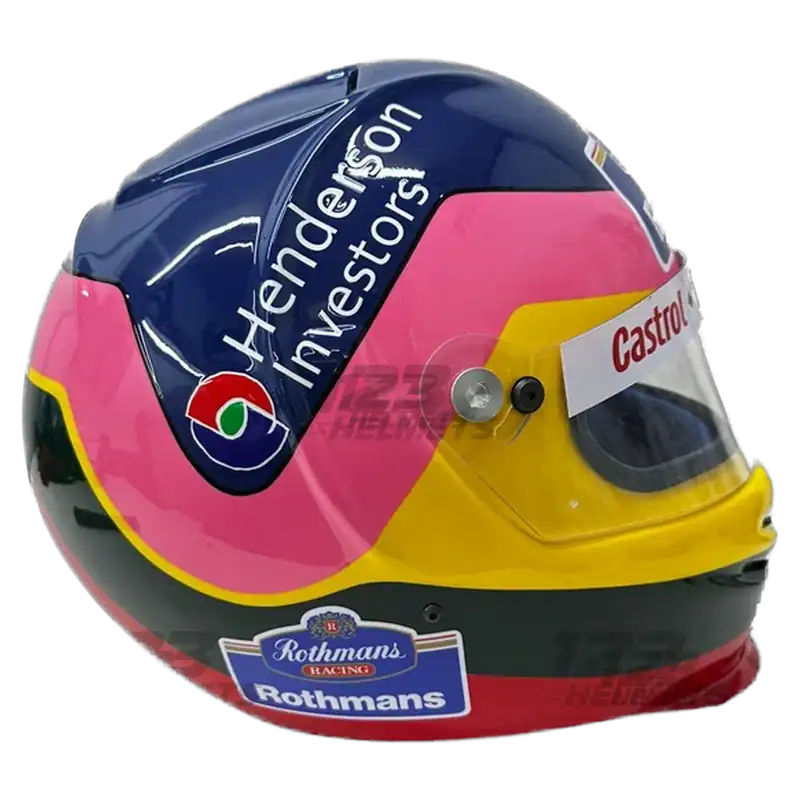
Sainz’s 2026 helmet remains one of the most photographed lids on the grid, and for good reason. The design carries forward the matador-inspired red and yellow accents that have become his personal signature, woven into a base that complements the Williams blue without ever being absorbed by it. Under the floodlights and against the deep navy of the FW chassis, the contrast is striking — the kind of image that translates directly into a display-worthy collector piece.
Design details that reward close inspection
What makes this helmet particularly compelling as a full-size 1:1 replica is the layering of its graphics. The crown features finely rendered geometric shapes that catch light differently depending on the angle, while the visor surround is finished with a metallic trim that frames the driver’s eye-line dramatically in onboard footage. The chin bar carries Sainz’s number and a personal motif, and the rear of the shell incorporates a tribute element that long-time fans of the family name will recognise instantly.
For collectors, those details are the entire point. A full-size 1:1 replica helmet is not simply a memento — it is an exhibition object that earns its place on a shelf precisely because every line, every shadow, every micro-graphic reads correctly at arm’s length.
Why scale matters
Miniature helmets have their charm, but they cannot capture the architecture of a modern F1 lid: the aerodynamic ridges, the air intake geometry, the subtle asymmetries between left and right sides. A full-size replica places the helmet in conversation with the real thing, and that is exactly what serious display collectors are looking for in 2026.
Livery presence: Williams blue, reimagined
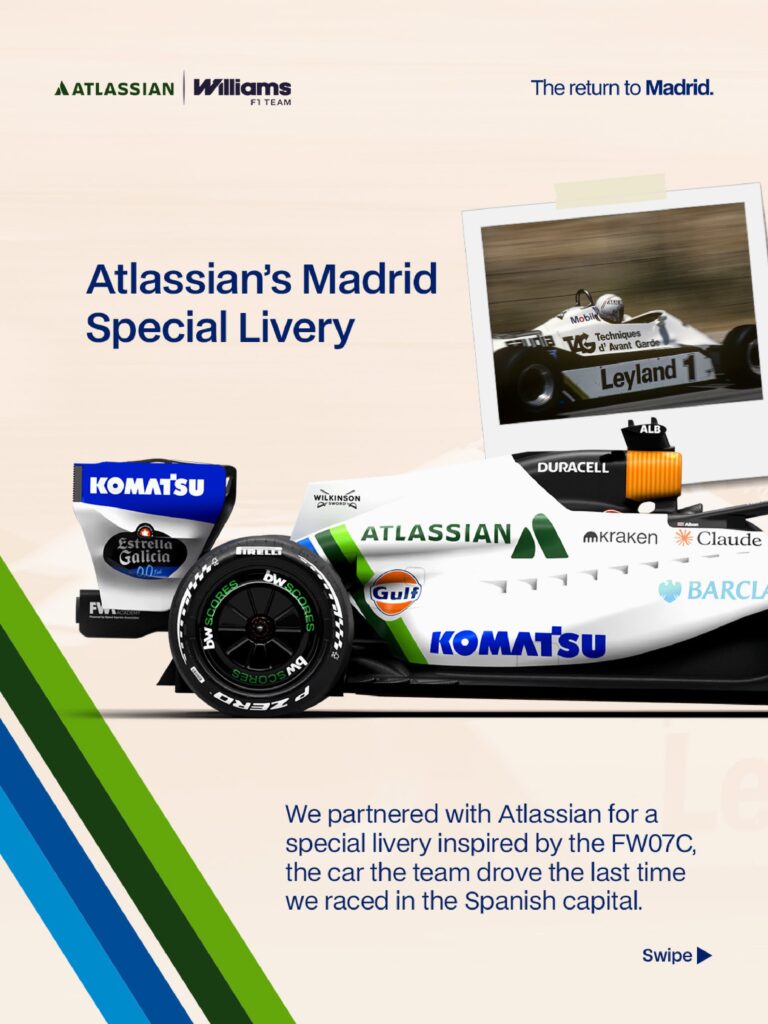
Williams has spent the past several seasons carefully evolving its visual identity, and the 2026 livery represents perhaps the most confident statement yet. The deep blue base remains unmistakable, but it now carries cleaner graphic breaks, a more assertive typeface for race numbers, and accent colours that pop against the matte and gloss zones of the bodywork. On track, particularly in the long shadows of late-afternoon sessions, the car photographs beautifully — and that photogenic quality feeds directly into the appeal of helmet replicas displayed alongside scale models or framed prints.
The visual conversation between car and helmet
One of the quiet pleasures of Sainz’s 2026 package is the way his helmet and the car talk to each other without competing. The blue of the chassis sets a stage; the warmer tones of the helmet provide the focal point. Watch any podium ceremony or pit-lane interview and your eye is drawn first to the helmet, then outward to the livery, then back again. For a display-room arrangement, that hierarchy translates perfectly: the replica helmet becomes the centrepiece, with team imagery providing the backdrop.
Race-by-race signs of progress
Beyond the headline quotes, the data points coming out of the Williams garage tell a coherent story. Sector times that were previously a clear weakness have tightened. Tyre degradation, a particular pain point earlier in the year, has improved on the longer stints. And crucially, the gap to the cars immediately ahead in the constructors’ standings has begun to compress rather than expand.
What changed under the bodywork
Williams engineers have been candid about the development direction: a focus on mechanical platform consistency rather than chasing peak downforce numbers. That philosophy aligns neatly with Sainz’s preferred driving style — a driver who thrives when he can lean on a stable rear end and commit to apex speed without second-guessing the car’s reaction. The weekend’s most encouraging stints came when Sainz was able to string together qualifying-style laps deep into a race run, suggesting the upgrade path is bearing fruit.
The next checkpoints
The team will not declare victory based on a single encouraging weekend, and neither will Sainz. But the markers to watch in the coming rounds are clear: consistent Q3 appearances, points finishes that no longer require attritional luck, and race pace that holds station with the midfield benchmark cars. Hit those marks, and the 2026 Williams story becomes one of the most compelling subplots of the season.
Display-worthy moments from the weekend
For collectors building a Williams shelf, this weekend offered several frame-worthy images. The pit-lane walk-out, with Sainz adjusting his gloves and the helmet visor reflecting a wall of photographers. The grid shot, helmet resting on the cockpit padding, livery catching the morning light. The post-race interview, helmet held at the hip, the chin bar facing the cameras in classic studio-portrait fashion.
Translating the moment into a display
Each of those images is, in essence, an instruction manual for how to display a full-size 1:1 replica helmet. Set on a clean black or carbon-finish stand, lit from above with a warm directional light, and angled slightly so the visor catches the room’s ambient light, a Sainz Williams replica becomes a small-scale recreation of the paddock itself. Add a livery print, a framed grid sheet, or a scale model of the FW chassis, and the collection takes on the gravity of a private museum exhibit.
Caring for the centrepiece
Display replicas reward thoughtful placement. A glass cabinet keeps dust off the matte zones, indirect lighting prevents long-term fade on the more vibrant graphics, and a stable temperature avoids any stress on the shell finish. Treated well, a 1:1 collector helmet remains exhibition-quality for decades — long enough to outlast many seasons, many liveries, and many comebacks.
What this means for the rest of 2026
Sainz’s encouraged tone is not a guarantee of podiums, and Williams will be the first to caution against runaway expectations. But for a team and a driver who started the year fighting their own equipment, the shift from defensive to constructive is the single most important indicator of trajectory. The grid is closer than it has been in years, the regulations are still bedding in, and a midfield team with a stable platform and a precise, experienced lead driver has every reason to believe in upward movement.
The collector takeaway
Moments like these — a turning-point weekend, a helmet design at the height of its visual impact, a livery photographing beautifully under varied conditions — are exactly when collectors tend to commit. A full-size 1:1 Sainz Williams replica purchased now is not just a snapshot of the start of 2026; it is a marker of the moment the season pivoted. That is the kind of context that makes a display piece more than decorative. It makes it a story.
“There are clear signs the car is heading in the right direction. The work behind the scenes is starting to show on Sundays.”
— Carlos Sainz, post-race
“We’re not getting carried away, but the trend is what we wanted to see. Now we keep building.”
— Williams trackside engineer
FAQ
Q: Is the Sainz 2026 Williams helmet available as a full-size replica?
Yes. Full-size 1:1 collector replicas of Carlos Sainz’s Williams helmet are produced as exhibition-quality display pieces, capturing the livery, graphics and finish of the design seen on track.
Q: Are these replicas suitable for protective use?
No. These are display and collector replicas only. They are not certified for protective use and are intended exclusively as exhibition pieces for shelves, cabinets and display rooms.
Q: What makes a 1:1 scale helmet better for display than a smaller model?
Full-size 1:1 replicas reproduce the actual proportions, geometry and surface details of the real helmet, allowing collectors to appreciate the design at the same scale a driver wears it. Smaller models simply cannot carry the same visual weight on a shelf.
Q: How should I display a Williams collector helmet?
A neutral stand, indirect lighting and a stable, dust-free environment work best. Many collectors pair the helmet with livery prints or scale chassis models to create a coordinated Williams display.
Q: Will the helmet design change during the 2026 season?
Drivers often run special-edition designs at selected rounds, but the core 2026 livery is what defines the season. Collectors typically build their displays around the principal design, with special editions added as commemorative pieces.
Shop Williams Helmets
Display and collector replicas only. Not certified for protective use. Full-size 1:1 scale.
This article was written with the help of AI tools. Editorial policy