
Blog
Leclerc Wins Chaotic British GP as FIA Cites Software Error
 123Helmets Editorial Team
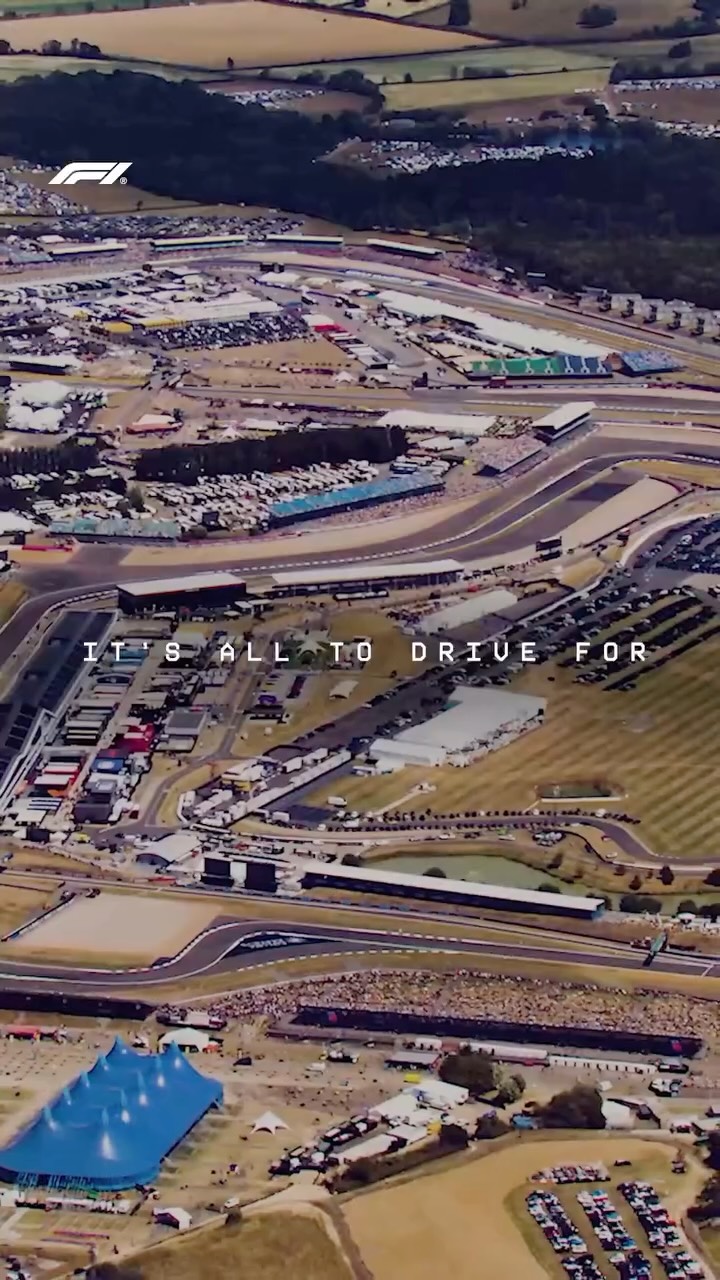
Charles Leclerc won at Silverstone on 2026-07-05 in a race that ran its full 52 laps and finished behind the Safety Car, but the headline afterward belonged to the FIA, which admitted a software error caused race control to wrongly signal a restart that never came.
Key Takeaways
The FIA confirmed the restart procedure itself followed Article B5.13.5 correctly, but a ‘Safety Car In This Lap’ message was displayed erroneously due to a software error
Max Verstappen’s spin into the Stowe gravel trap four laps from the end triggered the Safety Car and ended any hope of green-flag racing
Charles Leclerc won the 2026 British Grand Prix for Ferrari, with Lewis Hamilton holding third after a stewards’ reprimand for failing to slow for yellow flags
Carlos Sainz received a one-lap time penalty for illegally overtaking the Safety Car, closing out a chaotic final laps sequence reminiscent of Abu Dhabi 2021
What Happened at the End of the 2026 British Grand Prix
Max Verstappen spinning into the gravel trap at Stowe corner with four laps remaining triggered the Safety Car that decided the 2026 British Grand Prix. Race control initially indicated on the penultimate lap that the race would restart, but the Safety Car did not return to the pits and instead led the field around for the final lap, guaranteeing the chequered flag would fall under caution.
The Silverstone crowd reacted with visible dismay as the expected restart failed to materialise. For a circuit known for producing some of the sport’s most photogenic overtakes, ending under yellow-and-Safety-Car conditions denied fans the closing laps many had traveled for, and it left broadcasters and stewards fielding questions before the podium ceremony had even begun.
Charles Leclerc crossed the line first to take the win, with Lewis Hamilton holding third position despite a post-race stewards’ reprimand for failing to slow for a single yellow flag at Turn 9 on lap 38, where Hülkenberg’s Audi had stopped, well before the late Safety Car. The result gave Ferrari a strong points haul at one of the calendar’s most watched rounds, even as the manner of the finish dominated the conversation afterward.
The FIA’s Software Error Explanation
The FIA says the regulations governing the restart were followed correctly, and that the mistake was limited to an erroneous on-screen message. In a statement, the governing body said: “The Safety Car period regulation, Article B5.13.5, states that one lap must be completed following the unlapping procedure. This process was followed by Race Operations. The ‘Safety Car In This Lap’ message was displayed erroneously due to a software error.”
In practical terms, that means Race Operations never intended to restart the race in time for a green-flag finish — the one full lap required after the unlapping procedure could not be completed within the laps remaining. What went wrong was purely a display issue: the system told drivers, teams and fans a restart was imminent when the regulations, correctly applied, meant it was not going to happen before the flag. That distinction — a communications fault rather than a procedural one — is central to how the FIA is framing the incident.
For a sport that operates under increasingly software-dependent race control tools, the admission raises questions about redundancy checks on messaging systems, even as the FIA insists the underlying rule application was sound throughout the closing laps at Silverstone.
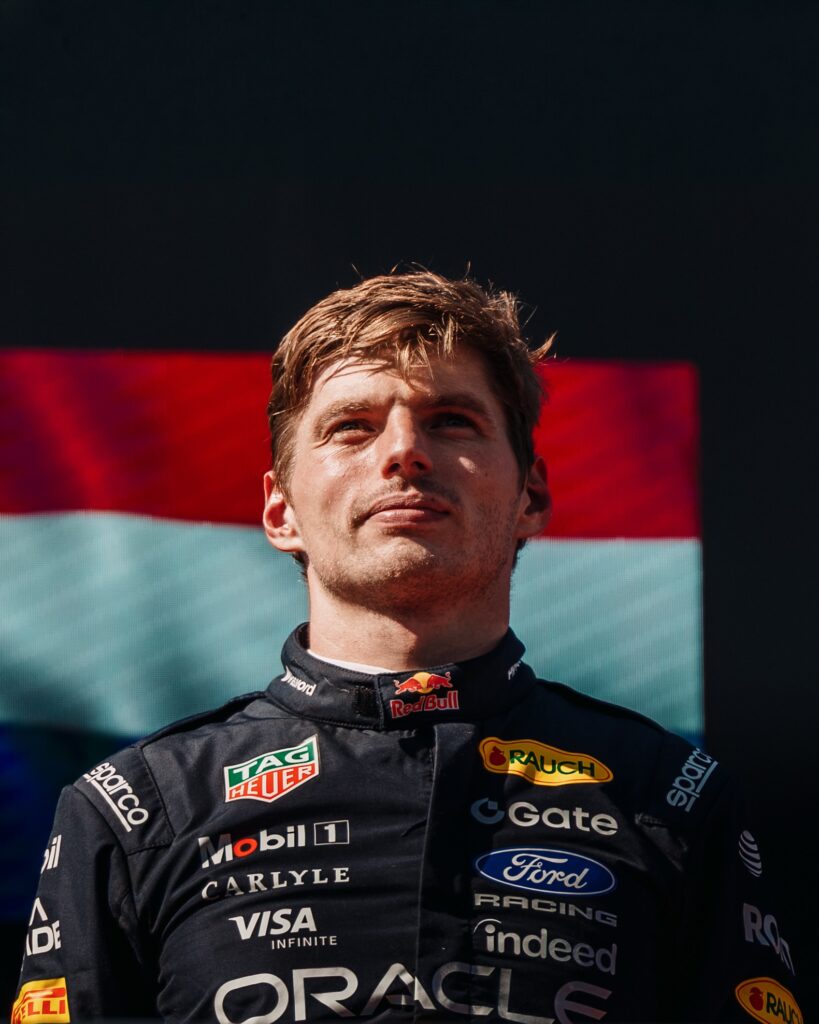
Podium Visuals: Ferrari Red Under the Silverstone Sky
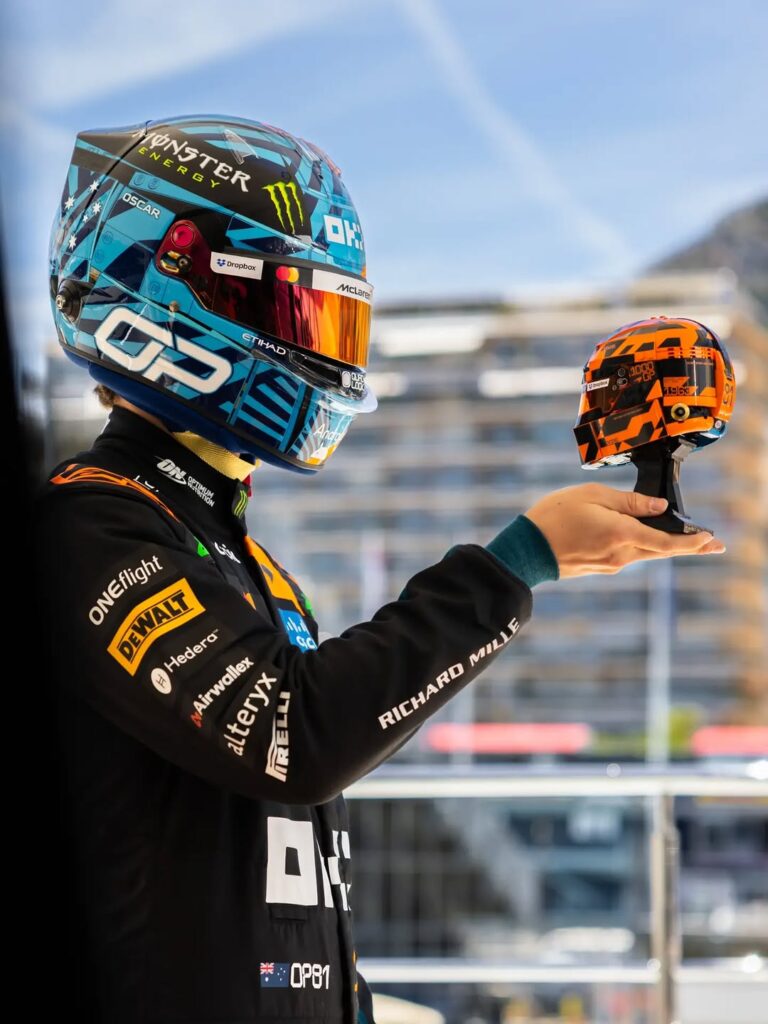
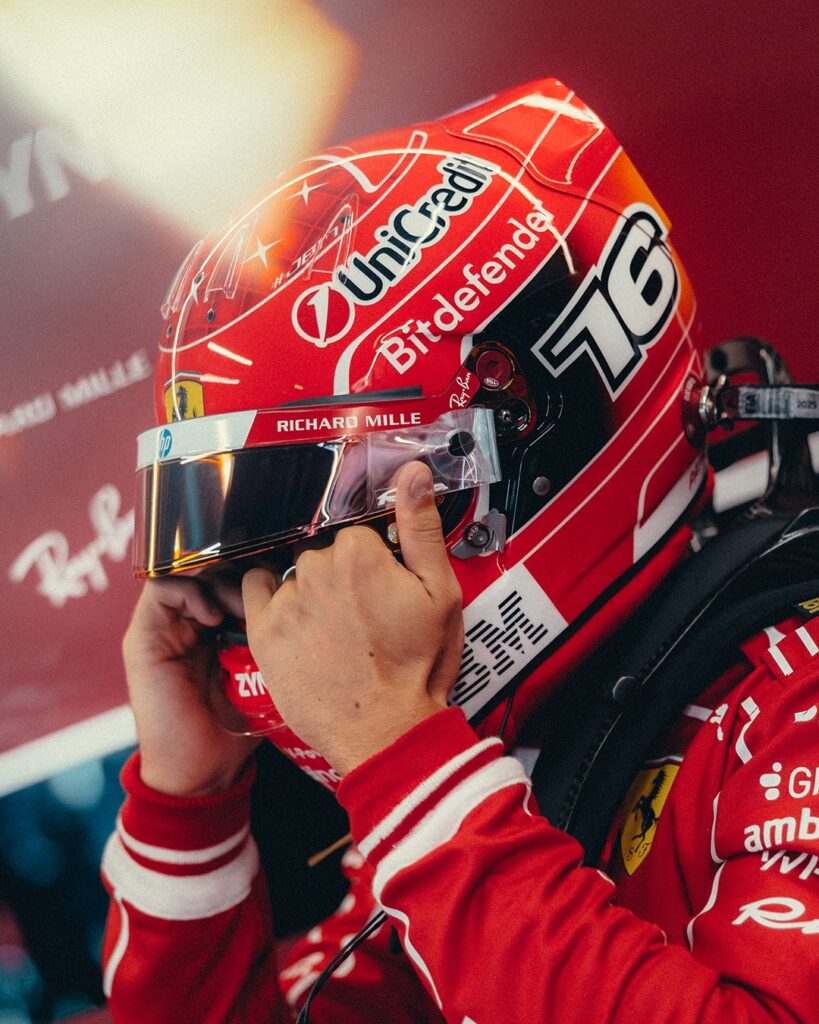
Leclerc’s win produced a Ferrari-heavy podium moment, with his and Hamilton’s matching red liveries framed against the Silverstone gantry lights in the early evening. The two helmets on the top step told contrasting stories: Leclerc’s design carrying the clean lines associated with his 2026 race-winning spec, and Hamilton’s featuring his personal detailing worn under the added scrutiny of a reprimand that nearly overshadowed his result.
Podium finishes decided by Safety Car chaos tend to produce some of the most collected imagery in the sport — drivers visibly processing confusion over the finish, team personnel reacting in real time, and champagne moments captured against a backdrop that fans already know intimately from decades of Silverstone coverage. Collectors often point to exactly these contested, talked-about races as the ones worth commemorating in full-size display form, since the story behind the result adds as much value as the trophy itself.
The gravel trap moment involving Max Verstappen at Stowe also became one of the weekend’s most replayed clips, his car buried in the gravel while the Safety Car boards went up around him — a visual that will likely be referenced in race retrospectives well beyond the 2026 season.
Penalties That Shaped the Final Classification
Carlos Sainz received a one-lap time penalty for illegally overtaking the Safety Car during the closing sequence, a decision that dropped him from 12th to 17th; as he had finished outside the points, the top ten was unchanged. The penalty underlines how tightly the stewards enforced procedure even while the broader restart communication had broken down — drivers were still expected to respect Safety Car protocol to the letter regardless of the confusion around the restart signal.
Hamilton’s reprimand for failing to slow sufficiently for yellow flags did not cost him position, allowing him to keep third, but it added another data point to a finish that generated more steward paperwork than most Grands Prix produce in an entire season. Between Sainz’s penalty and Hamilton’s reprimand, the stewards effectively confirmed that individual driver conduct was judged separately from the systemic messaging failure the FIA later admitted to.
For teams monitoring strategy in real time, the sequence was a reminder of how quickly a four-lap window can turn a straightforward result into a compliance exercise, with time penalties and reprimands issued well after the cars had crossed the line.
Echoes of Abu Dhabi 2021
The FIA overhauled its Safety Car and lapped-car restart procedures directly because of the controversial finish to the 2021 Abu Dhabi Grand Prix, when then-race director Michael Masi broke the regulations by organising a hurried restart on the final lap after only some lapped cars had passed the leader — one lap earlier than the rules allowed. Masi lost his job over that decision, and Article B5.13.5 exists specifically to prevent a repeat.
Silverstone 2026 tested that same regulation from the opposite direction: rather than a race director bending the rules to force a restart, the system displayed information suggesting a restart was coming when, by the book, it was not achievable in the laps remaining. The FIA’s insistence that “this process was followed by Race Operations” is a direct signal that the post-2021 safeguards worked as intended, even if the software layer communicating that decision to drivers and broadcasters did not.
Whether this incident prompts a further review of race control’s messaging systems, similar to the procedural rewrite that followed Abu Dhabi, remains an open question the FIA has not yet addressed beyond its initial statement.
“The Safety Car period regulation, Article B5.13.5, states that one lap must be completed following the unlapping procedure. This process was followed by Race Operations. The ‘Safety Car In This Lap’ message was displayed erroneously due to a software error.”
— FIA statement
FAQ
Q: Why did the 2026 British Grand Prix not restart after the Safety Car?
Because Article B5.13.5 requires one full lap to be completed after the unlapping procedure, which could not happen in the laps remaining once Max Verstappen’s car went into the Stowe gravel trap four laps from the end, meaning the race ended under Safety Car conditions despite an on-screen message suggesting otherwise.
Q: What did the FIA say caused the confusion at Silverstone?
The FIA said the restart procedure itself was applied correctly by Race Operations, but the ‘Safety Car In This Lap’ message was displayed erroneously due to a software error, misleading drivers, teams and fans into expecting a green-flag finish that the regulations never actually permitted.
Q: Who won the 2026 British Grand Prix?
Charles Leclerc won the race for Ferrari, with Lewis Hamilton finishing third after receiving a stewards’ reprimand for failing to slow for a single yellow flag at Turn 9 on lap 38, well before the late Safety Car period.
Q: What penalty did Carlos Sainz receive at the 2026 British Grand Prix?
Sainz was given a one-lap time penalty for illegally overtaking the Safety Car during the closing laps, a decision that dropped him from 12th to 17th without changing the points positions, as he had finished outside the top ten.
Q: How does this incident relate to the 2021 Abu Dhabi Grand Prix?
The regulations tested at Silverstone were introduced specifically because of the 2021 Abu Dhabi finish, where race director Michael Masi broke the rules to force a late restart and later lost his job; the FIA says those same regulations were followed correctly in 2026, with only the display message at fault.
Browse F1 Helmet Collection
Display and collector replicas only. Not certified for protective use. Full-size 1:1 scale.
This article was written with the help of AI tools. Editorial policy