- Keke Rosberg
- Nigel Mansell
- Jenson Button
- Nico Rosberg
- Gilles Villeneuve
- Mika Hakkinen
- Jackie Stewart
- Mika Salo
- Emerson Fittipaldi
- Charles Leclerc
- Lewis Hamilton
- Max Verstappen
- Lando Norris
- Ayrton Senna
- Michael Schumacher
- Fernando Alonso
- Oscar Piastri
- George Russell
- Kimi Antonelli
- Nico Hülkenberg
- Gabriel Bortoleto
- Pierre Gasly
- Franco Colapinto
- Carlos Sainz
- Oliver Bearman
- Sergio Pérez
- Valtteri Bottas
- Isack Hadjar
- Alain Prost
- James Hunt
Pirelli’s Sepang Tyre Plan for F1’s Relocated 2026 Race
Posted by
 123Helmets Editorial Team
123Helmets Editorial Team
TYRE STRATEGY
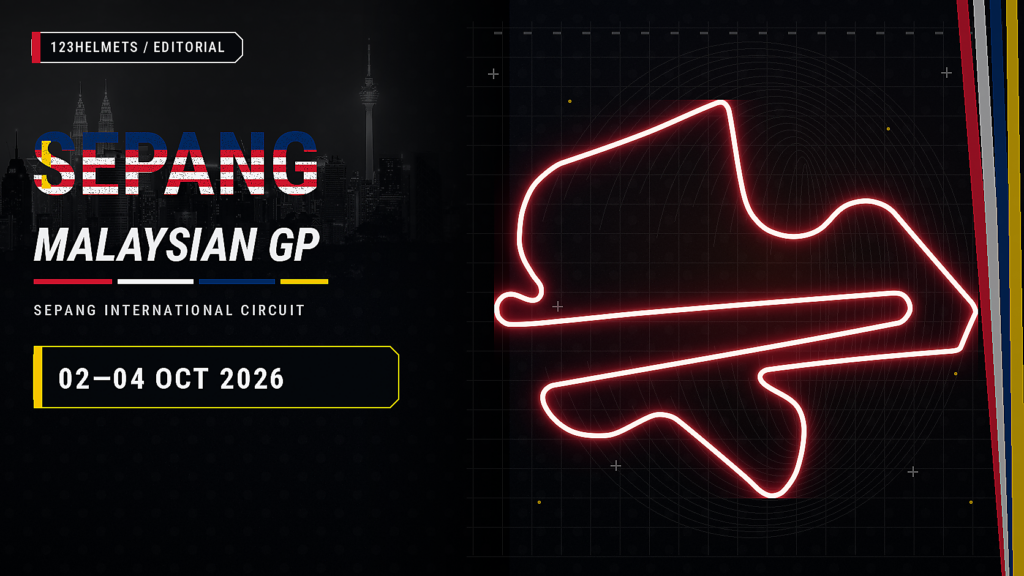
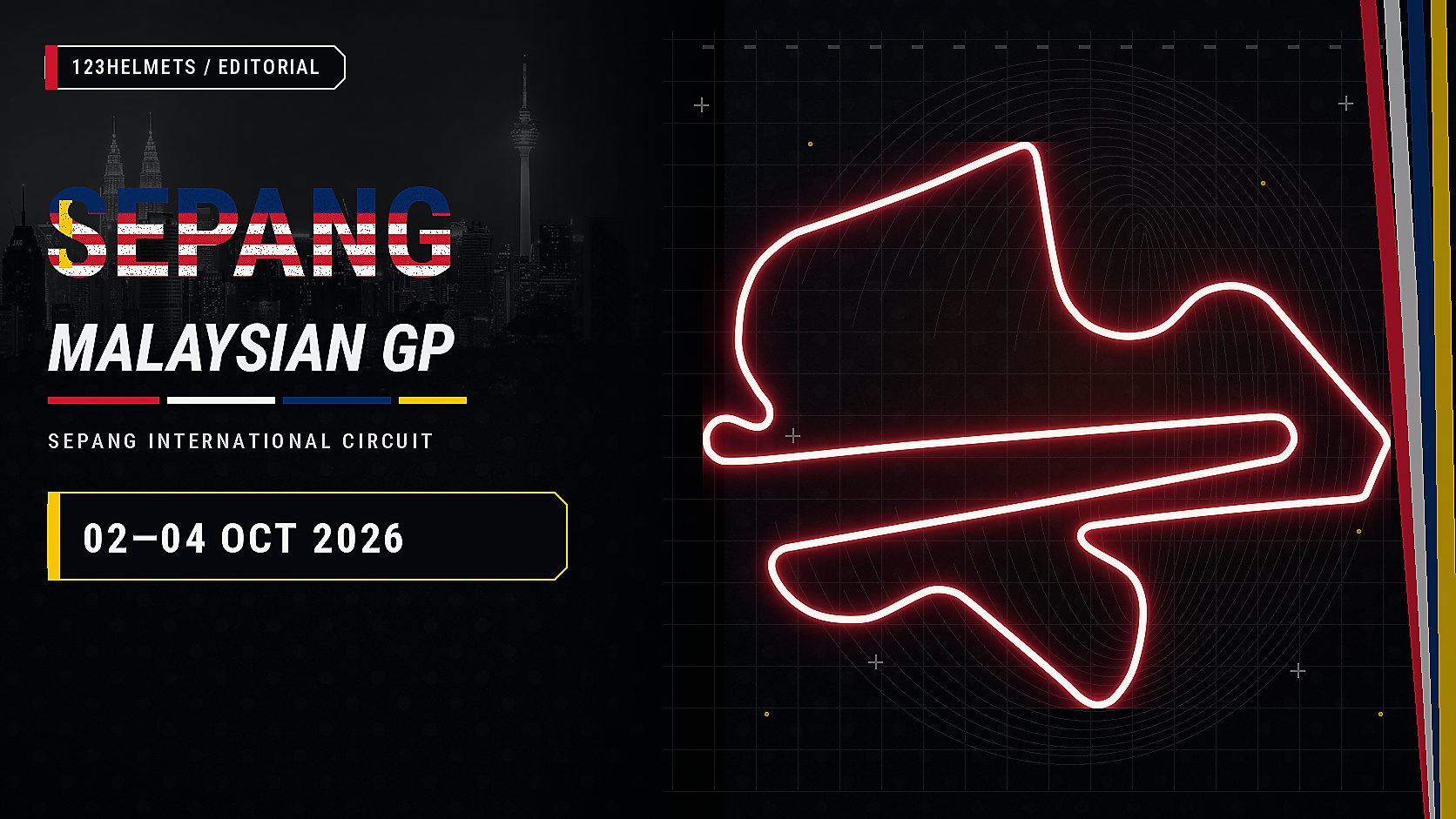
With the 2026 Bahrain Grand Prix relocated to Sepang after the Iran war forced a calendar rewrite, Pirelli is basing its compound choice on the circuit’s last Formula 1 visit in 2017 rather than sending engineers for fresh analysis.
Key Takeaways
Sepang has not hosted a Formula 1 race since 2017, a gap of nine years, after the 2026 Bahrain Grand Prix was relocated there.
Pirelli Motorsport director Dario Marrafuschi says the 2017 tyre choice — medium, soft and supersoft, equivalent to today’s C2-C3-C4 — will guide the 2026 selection.
Pirelli has been Formula 1’s sole tyre manufacturer since 2011, giving it a run of prior Sepang data to draw from despite the short notice.
Tyres for the relocated race will be air-freighted rather than shipped by sea, a direct consequence of the compressed preparation window.
With no time for a personnel visit to Malaysia, Pirelli is relying entirely on historical data rather than a fresh track inspection.
Why Sepang Is Hosting a Bahrain-Titled Race
The 2026 Bahrain Grand Prix is moving to Sepang after the Iran war made it impossible to run the event in its original April slot or reschedule it later in the calendar. Bahrain, the FIA, Formula 1 and Malaysian organizers reached an agreement to stage the race at the Sepang International Circuit instead, a venue that has not appeared on the Formula 1 calendar since 2017. The switch cannot be called last-minute in the strictest sense, since it followed weeks of discussion between the parties, but it still leaves every technical department — Pirelli chief among them — working against a compressed clock to prepare for a track most current personnel have never operated at in a Formula 1 context.
Pirelli’s Historical Baseline: Why 2017 Matters
Pirelli is basing its 2026 Sepang tyre choice directly on the compounds it supplied there in 2017, the last year Formula 1 raced at the circuit. Motorsport director Dario Marrafuschi said the decision comes down to relevance: 2017 was the first season with wider tyres, and the balance between tyre size and car package that year is judged reasonably close to the current regulations. “So I would base our decisions on 2017 results and would go for a choice in line with what we did that year and not in ’16, ’15 or ’14,” Marrafuschi said. Pirelli has supplied Formula 1 as its sole manufacturer since 2011, meaning it carries a full run of Sepang data from that period even though the track has sat outside the calendar for nine years.
The Compound Choice: Medium, Soft and Supersoft
Pirelli’s 2017 Sepang selection was medium, soft and supersoft, compounds that correspond to roughly C2, C3 and C4 in the current C1-to-C5 naming scale. That trio is the working reference for 2026, chosen to preserve strategic variance among teams while still respecting the tyre’s durability limits over a full race distance. Sepang’s long, sweeping corners and tropical heat historically punished tyres through high lateral loads and surface temperatures, factors that shaped the original 2017 compound spread and remain the starting point for Pirelli’s 2026 planning discussions.
Logistics Under Pressure: Air Freight Instead of Sea
Pirelli’s tyres for the relocated race will travel to Malaysia by air rather than by sea, a direct result of the shortened preparation timeline. Marrafuschi confirmed there will be no opportunity to send Pirelli personnel to Sepang in advance for on-site analysis, meaning the compound nomination rests entirely on the 2017 dataset rather than fresh track inspection. “There is a lot of headache about that,” Marrafuschi said of the calendar’s volatility this season. “We consider all the scenarios, but we always are flexible.” The switch to air freight adds cost and tightens the delivery schedule, but it is the only way to guarantee tyres arrive in time for track running.
What It Means for Teams and Strategy
Teams face a genuine unknown at Sepang in 2026: no current driver on the grid has raced there in Formula 1 machinery, and the track surface, grip levels and degradation characteristics will need to be relearned in real time across practice sessions. Engineers across the paddock, from Ferrari to Red Bull to Mercedes, will be working from 2017 telemetry and simulator modeling rather than recent lived experience, which raises the chance of strategic surprises once the compounds are put under load in Sepang’s heat and humidity. That uncertainty is part of what makes a relocated round like this one compelling to watch, even before a single lap is run.
Helmet and Livery Watch Ahead of Sepang
A circuit returning to the calendar after nine years is exactly the kind of occasion that tends to produce standout helmet designs and special liveries, as drivers and teams often mark rare or historic venues with one-off visual treatments. Fans tracking the Max Verstappen, Charles Leclerc and Lewis Hamilton helmet designs into the weekend will want to watch for any Sepang-specific artwork once liveries are confirmed closer to the event. Whatever design choices emerge from this unusual relocated round, they will be worth watching for anyone who follows helmet artwork alongside the racing itself.
“So I would base our decisions on 2017 results and would go for a choice in line with what we did that year and not in ’16, ’15 or ’14.”
— Dario Marrafuschi, Pirelli Motorsport Director
“There is a lot of headache about that. We consider all the scenarios, but we always are flexible.”
— Dario Marrafuschi, Pirelli Motorsport Director
FAQ
Q: Why is the 2026 Bahrain Grand Prix being held at Sepang?
The Iran war made it impossible to run the race in Bahrain during its original April slot or reschedule it later, so Bahrain, the FIA, Formula 1 and Malaysian organizers agreed to stage the event at Sepang instead.
Q: When did Formula 1 last race at Sepang?
Formula 1 last raced at Sepang in 2017, a nine-year gap before the relocated 2026 event.
Q: Which tyre compounds will Pirelli bring to Sepang in 2026?
Pirelli is basing its 2026 nomination on its 2017 Sepang choice of medium, soft and supersoft compounds, roughly equivalent to today’s C2, C3 and C4.
Q: How long has Pirelli supplied tyres to Formula 1?
Pirelli has been Formula 1’s sole tyre manufacturer since 2011, giving it a full data history of Sepang from its prior years on the calendar.
Q: Why are the tyres being air-freighted to Malaysia?
The compressed timeline created by the late relocation means Pirelli has no time for standard sea shipping, so tyres will travel to Sepang by air instead.
Browse F1 Helmet Collection
Display and collector replicas only. Not certified for protective use. Full-size 1:1 scale.