- Keke Rosberg
- Nigel Mansell
- Jenson Button
- Nico Rosberg
- Gilles Villeneuve
- Mika Hakkinen
- Jackie Stewart
- Charles Leclerc
- Lewis Hamilton
- Max Verstappen
- Lando Norris
- Ayrton Senna
- Michael Schumacher
- Fernando Alonso
- Oscar Piastri
- George Russell
- Kimi Antonelli
- Nico Hülkenberg
- Gabriel Bortoleto
- Pierre Gasly
- Franco Colapinto
- Carlos Sainz
- Oliver Bearman
- Sergio Pérez
- Valtteri Bottas
- Isack Hadjar
- Alain Prost
- James Hunt
George Russell’s Barcelona Pole: The ‘Big Reset’ That Put Mercedes Back on Top
Posted by
 123Helmets Editorial Team
123Helmets Editorial Team

2025 Spanish Grand Prix
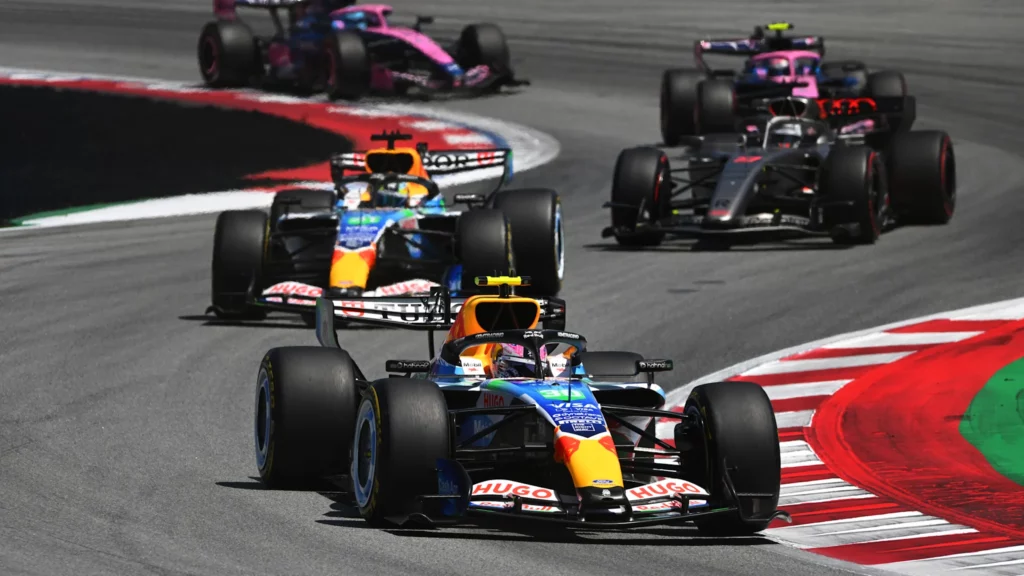
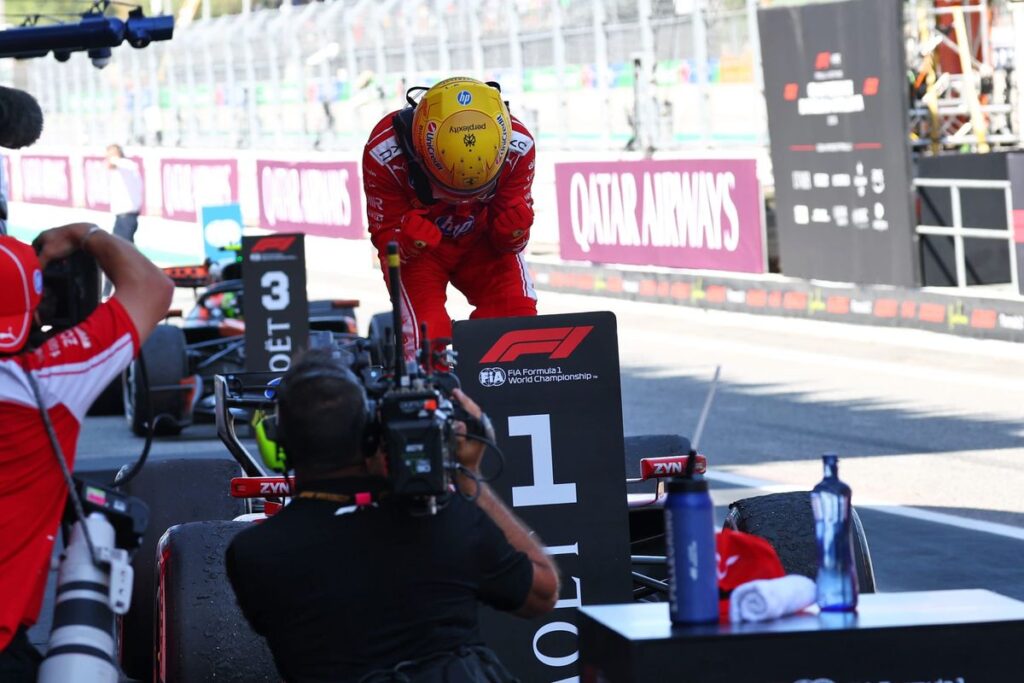
George Russell stripped back everything he thought he knew about his 2026 Mercedes, stopped looking at the data, and drove on instinct — walking out of qualifying at Barcelona with pole position and a renewed grip on the Formula 1 title fight.
Key Takeaways
Russell credited a deliberate break from data analysis, driving purely on instinct across every session from FP1 onward, as the reason for his Barcelona pole.
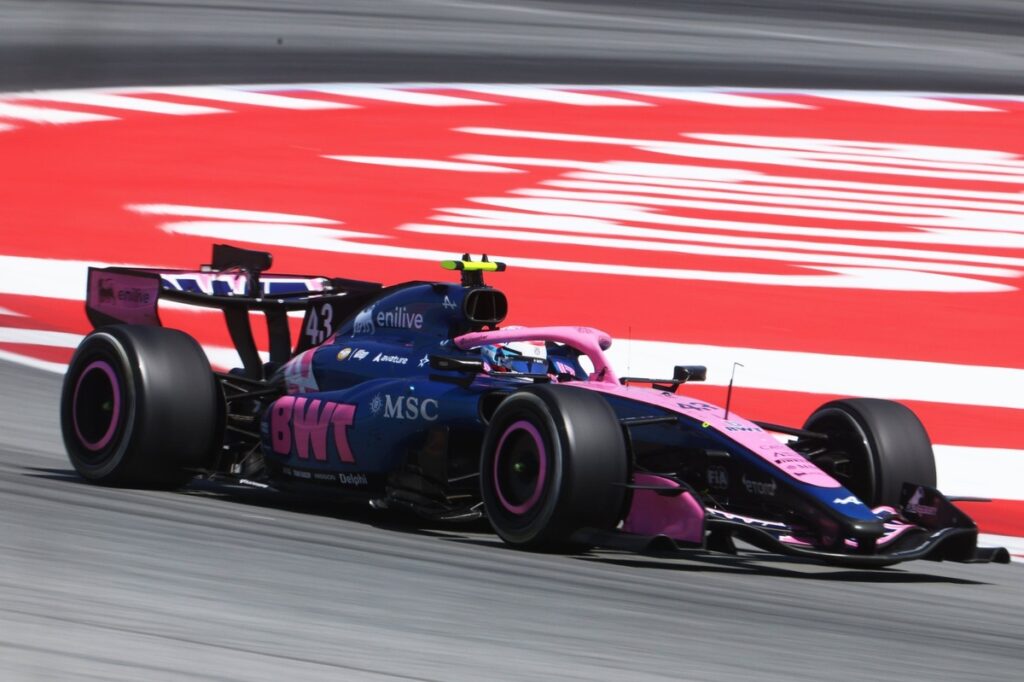
Kimi Antonelli arrived in Barcelona with a 68-point championship lead over Russell but qualified third, three tenths off the pace — a rare reversal in their 2025 form.
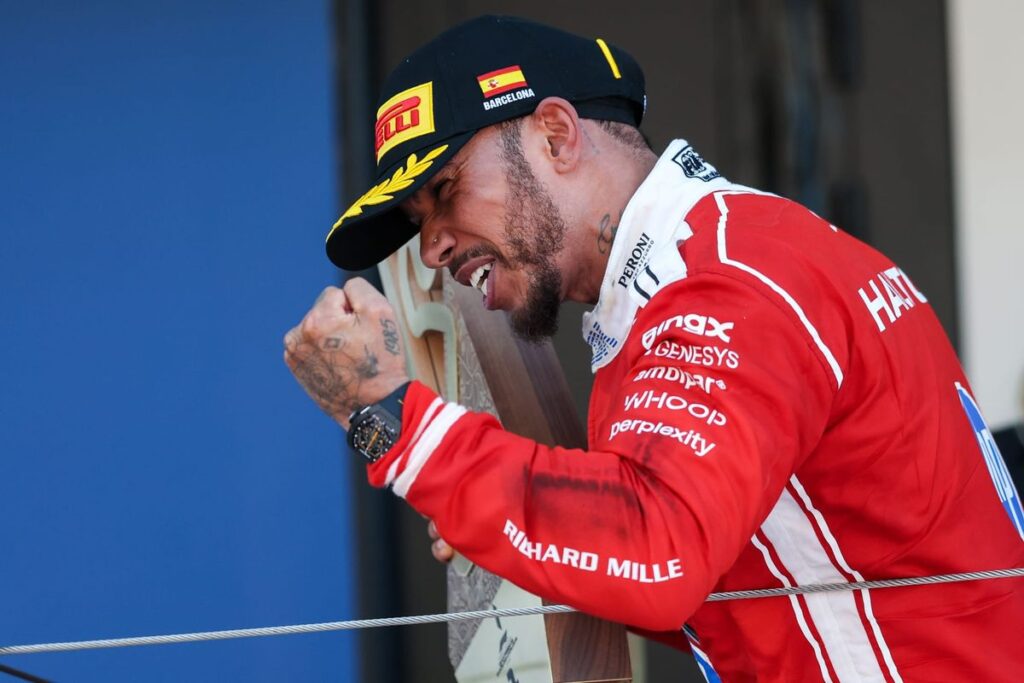
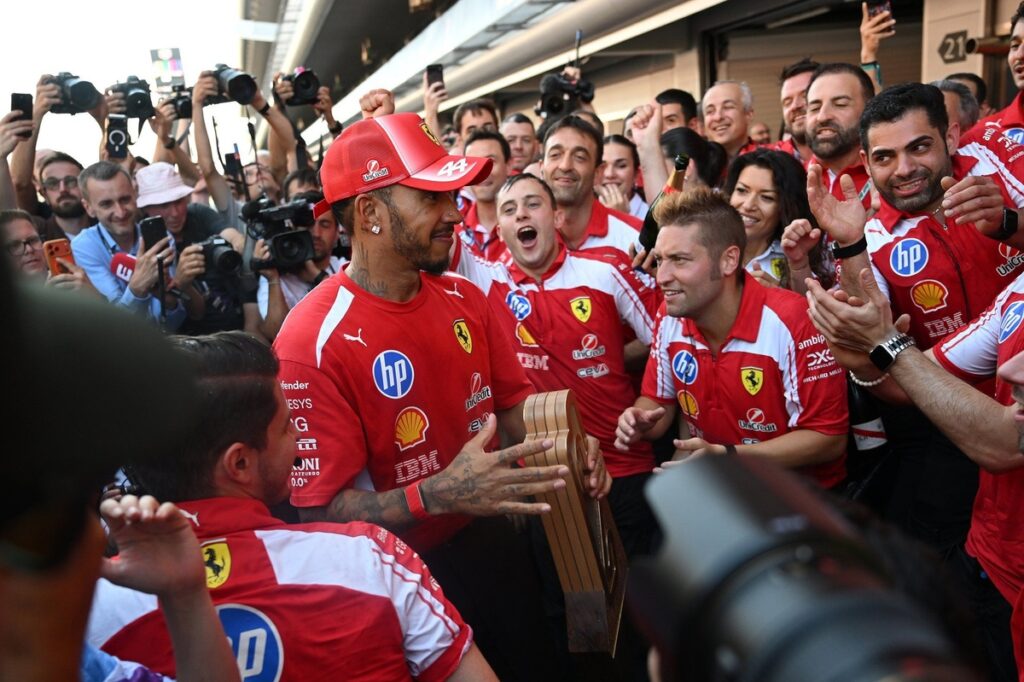
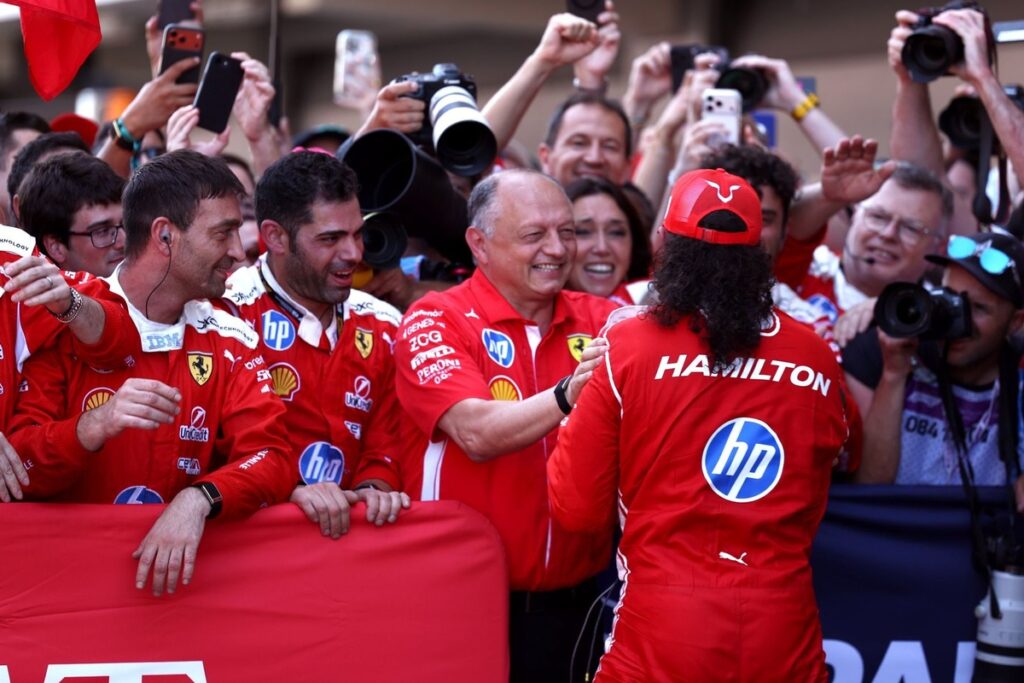
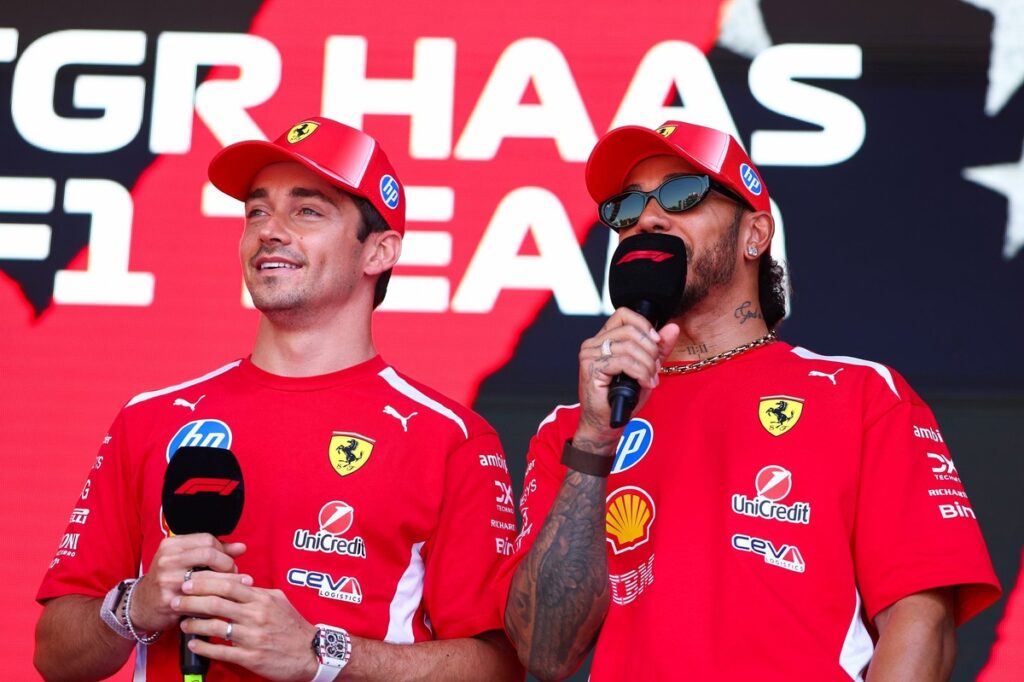
Lewis Hamilton, now in Ferrari red, qualified second, setting up a front-row that doubles as a collector display moment: two helmet liveries steeped in rival histories, side by side.
Russell’s Monaco weekend — where he qualified sixth and fell outside the top 10 after two penalties — proved the low point that triggered his approach change heading into Spain.
A Season That Needed a Turning Point
When George Russell crossed the finish line in Melbourne on the opening weekend of 2025, the season looked like it was going to be his. A race win on day one of a new technical era — the sweeping 2026 regulation overhaul that reshaped every car on the grid — felt like a statement. It wasn’t. Within five races, his 19-year-old team-mate Kimi Antonelli had won five consecutive grands prix and opened up a 68-point championship lead over the man who once mentored him through his first Mercedes test laps.
The gap wasn’t only down to Antonelli’s speed. Russell’s last two rounds before Barcelona had yielded zero points — a stretch of bad luck and operational misfortune that compounded what was already a complicated emotional situation for the 27-year-old Briton. At Monaco, arguably the worst of that run, he qualified sixth, received two penalties during the race, and watched Antonelli dominate from pole. It was the kind of weekend that forces a driver to either double down on process or tear up the manual entirely.
Russell tore up the manual.
What ‘No Data’ Actually Means at This Level
Modern Formula 1 cars are, by any measure, the most data-saturated racing machines ever built. The 2026 technical regulations introduced active aerodynamics and a revised hybrid architecture that generate telemetry streams engineers and drivers typically spend hundreds of hours parsing between sessions. Every micro-adjustment to suspension geometry, every throttle-map iteration, gets filtered through lap-time simulation before a driver even sits in the cockpit on a Friday morning.
So when Russell told Sky Sports — “I’ve not looked at a single piece of data the whole weekend. I’ve just driven the car and trusted my instincts” — it landed as something genuinely unusual. He acknowledged the risk directly: “These cars are so complicated and you’re always trying to find that next step of improvement.” Ignoring that pipeline entirely is not a decision engineers celebrate. But it was a calculated gamble, and Barcelona rewarded it.
From the opening minutes of Free Practice 1, Russell was inside the top two on every timed lap of the weekend. That consistency — across three practice sessions and two qualifying runs — was the number he actually cared about. “Every lap from the start of FP1 we’ve been in the top two positions,” he said, “and that is what I was most proud and happy about.”
The instinct vs. analysis tension in 2026 machinery
Russell had previously suggested that the nimbler, lighter character of the 2026 cars suited Antonelli’s more reactive driving style better than his own. That admission led to a period where Russell tried to adapt his technique toward Antonelli’s reference — a direction he ultimately abandoned before Spain. Going back to what felt natural, rather than what the data said should feel natural, appears to have closed the gap almost immediately.
Qualifying: Three Tenths and a Front Row That History Will Remember
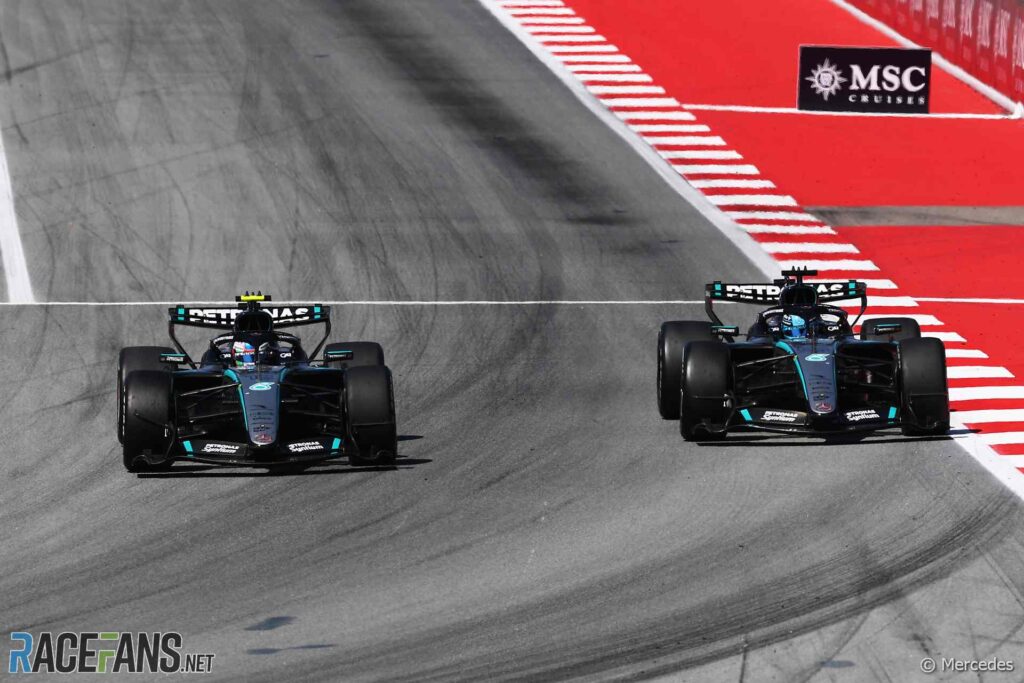
The final Q3 runs at Circuit de Barcelona-Catalunya produced a front row that carries genuine weight beyond the lap-time sheet. Russell took pole, Lewis Hamilton lined up second in his Ferrari, and Antonelli was third — 0.3 seconds off Russell’s benchmark. That three-tenths gap between the Mercedes team-mates, after five straight weekends of Antonelli dominance, is the clearest single-session signal that the championship picture is not settled.
Hamilton on the front row in a Ferrari alongside his former Mercedes team-mate is the kind of juxtaposition that defines an era’s visual memory. The Silver Arrows helmet next to the Prancing Horse red; two drivers whose careers have been intertwined since Hamilton joined Mercedes in 2013 and who now represent the two biggest marques in the sport, separated by fractions of a second on a Saturday afternoon in Spain.
For Russell, the pole was personal in a way that went beyond points. “After such a tough run of results, obviously for various different reasons, it was a big reset, and you never know how it’s going to pan out,” he said. “But I really felt my groove again, really felt comfortable in the car, very similar to how I felt at the start of the year.” The gratitude extended outward too: “I’m just really grateful for the team and everyone who sort of stood by me in these couple of weeks.”
The Helmet and Livery Story Behind Barcelona’s Podium Steps
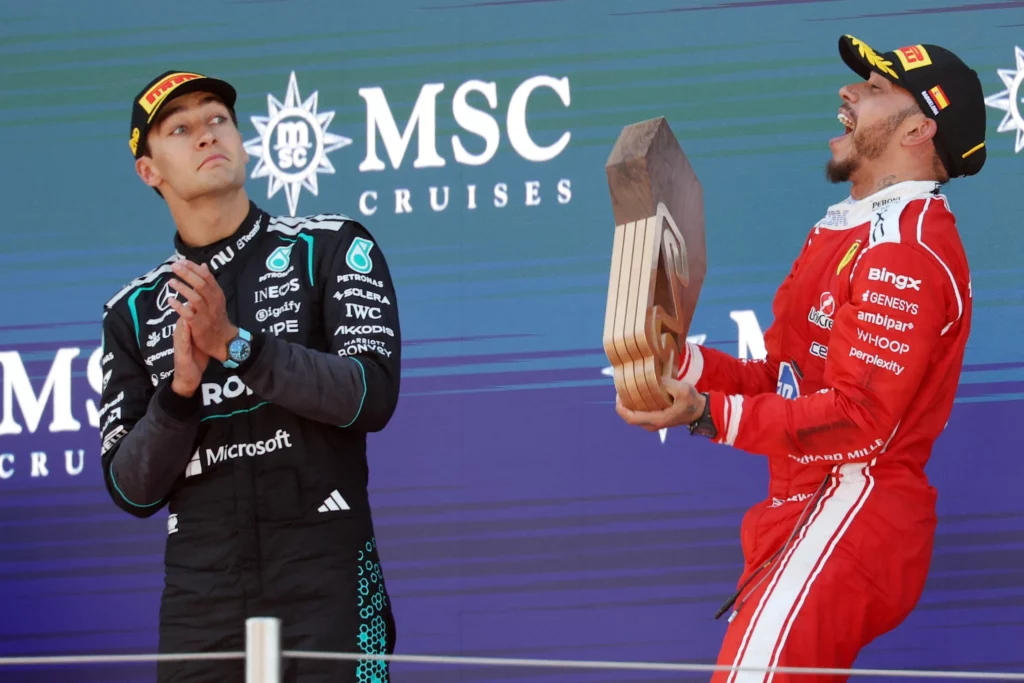
Barcelona 2025 is a weekend that translates directly into collector display culture because of what it represents visually. Three helmets on the podium tell the story of the entire 2026 season in one frame: Russell’s Mercedes silver, Hamilton’s Ferrari red, and Antonelli’s silver — the mentor, the legend, and the prodigy, stacked in an order nobody predicted after Monaco.
Russell’s race helmet for the 2025 season carries the clean, angular livery language that Mercedes introduced with the 2026 car launch — a sharper graphic identity compared to the rounded silver palette of recent years. The integration of his personal branding with the team’s identity makes the Barcelona variant particularly distinct as a standalone display object, representing a pole-and-potential-win moment from a season-defining weekend.
Hamilton’s Ferrari helmet — his first full season in Maranello red after more than a decade in silver — remains one of the most visually significant transitions in recent F1 history. A full-size 1:1 display replica of the Hamilton Ferrari helmet positioned alongside a Russell Mercedes replica captures exactly the kind of historical contrast that serious collectors build themed displays around: the changing of the guard at the sport’s two most storied teams, frozen at the moment both drivers shared a front row.
Display context: what makes a podium weekend collector-worthy
Not every podium becomes a reference point. Barcelona 2025 earns its place because of the narrative density it carries — a comeback pole from a driver written off after three difficult rounds, a team-mate rivalry that defines the 2026 championship, and a former team-mate now in rival colours qualifying within striking distance. Full-size 1:1 replica helmets from this era, displayed in exhibition-quality finish, carry the context of this moment as part of their permanent visual identity.
Championship Arithmetic After Barcelona
Antonelli’s 68-point lead entering Barcelona is significant but not terminal at this stage of a season. Russell has acknowledged that a portion of the gap is the product of misfortune rather than pace deficit — which the qualifying result now partially supports. If the reset holds through Sunday’s race distance and Russell converts pole to a win while Antonelli finishes lower on the road, the dynamic of the title fight changes meaningfully.
The five-race winning streak Antonelli brought into Spain was built on a real advantage — pace, consistency, and an instinctive feel for the 2026 car’s active aero behaviour. But qualifying gaps of 0.3 seconds on a single lap at Circuit de Barcelona-Catalunya suggest that advantage is not as structural as it appeared in the run from Melbourne through Monaco.
Russell’s comment that his approach “was a bit of a risk” underscores that the weekend could have gone the other way. Walking away from the data loop in a season defined by a radically new technical architecture — one where engineers at every team are still building understanding lap by lap — was not the obvious call. The fact that it worked, and worked immediately across every session, raises the question of whether the data was leading him in the wrong direction for several rounds, or whether the act of disengaging from it simply returned him to a mental state where his baseline speed could express itself.
Either way, Barcelona put Russell back in the conversation. The title remains Antonelli’s to lose, but the gap between them — 68 points in the standings, 0.3 seconds on a qualifying lap — now has a very different feel than it did leaving Monaco.
Why the Barcelona Weekend Lives On as a Display Moment
Collector replicas exist to preserve exactly these kinds of inflection points — the sessions and races where the narrative of a season pivots. Barcelona 2025 qualifies on multiple levels. It is the weekend Russell stopped following data and found his pace. It is the first time in six rounds that a driver other than Antonelli led a qualifying session outright. And it placed Hamilton and Russell — two drivers whose linked histories span 2022 to the present — on a front row together wearing rival colours for the first time.
A full-size 1:1 exhibition-quality replica of Russell’s 2025 Mercedes helmet, displayed in the context of this weekend, is a fixed reference to a moment when the championship season cracked open again. The helmet’s design language — silver, angular, carrying the updated Mercedes graphic identity of the 2026 era — is specific to this car, this team configuration, and this title fight. That specificity is what separates a display piece tied to a meaningful race from a generic team livery replica.
For collectors building a 2025 season display, the Barcelona pole represents one of a handful of weekends where ownership of the moment, in replica form, carries a clear story worth telling on a shelf or in an exhibition case for years to come.
“I just had a big reset going into this weekend. Every lap from the start of FP1 we’ve been in the top two positions, and that is what I was most proud and happy about.”
— George Russell, Sky Sports post-qualifying interview, Barcelona 2025
“I’ve not looked at a single piece of data the whole weekend. I’ve just driven the car and trusted my instincts, and that was a bit of a risk because these cars are so complicated and you’re always trying to find that next step of improvement.”
— George Russell, Sky Sports, 2025 Spanish Grand Prix qualifying
FAQ
Q: What did George Russell mean by a ‘big reset’ before the Barcelona Grand Prix?
Russell described deliberately stepping back from his usual data-driven approach and instead driving on instinct throughout the weekend. He said he had not looked at any telemetry data across the entire Barcelona weekend, trusting his feel for the car rather than engineering feedback — a direct reversal of the approach he had tried in the races between Melbourne and Spain.
Q: How far ahead was Kimi Antonelli in the championship before Barcelona?
Antonelli held a 68-point lead over Russell in the standings heading into the Spanish Grand Prix weekend, built on five consecutive race wins after Russell’s Melbourne opener.
Q: Where did Lewis Hamilton qualify at the 2025 Spanish Grand Prix?
Hamilton qualified second for Ferrari, placing him on the front row alongside Russell’s pole-sitting Mercedes — the first time the two former team-mates shared a front row since Hamilton moved to Ferrari.
Q: How far back was Antonelli from Russell in qualifying at Barcelona?
Antonelli qualified third, 0.3 seconds off Russell’s pole time — his largest gap to the front in the 2025 season and a notable reversal from his dominant form in the five rounds before Spain.
Q: Are the George Russell and Lewis Hamilton 2025 helmet replicas available as full-size display pieces?
Yes. The 123Helmets range includes full-size 1:1 scale collector replicas of current-season helmets including Russell’s 2025 Mercedes and Hamilton’s 2025 Ferrari liveries. These are exhibition-quality display items only, not certified for any protective or road use.
Shop Mercedes Helmets — full-size 1:1 display replicas of George Russell’s 2025 livery, exhibition quality, built for collectors who follow the championship lap by lap.
Display and collector replicas only. Not certified for protective use. Full-size 1:1 scale.