
Blog
Piastri Blasts Sainz Over ‘Dumbest’ Hungarian GP Clash
 123Helmets Editorial Team
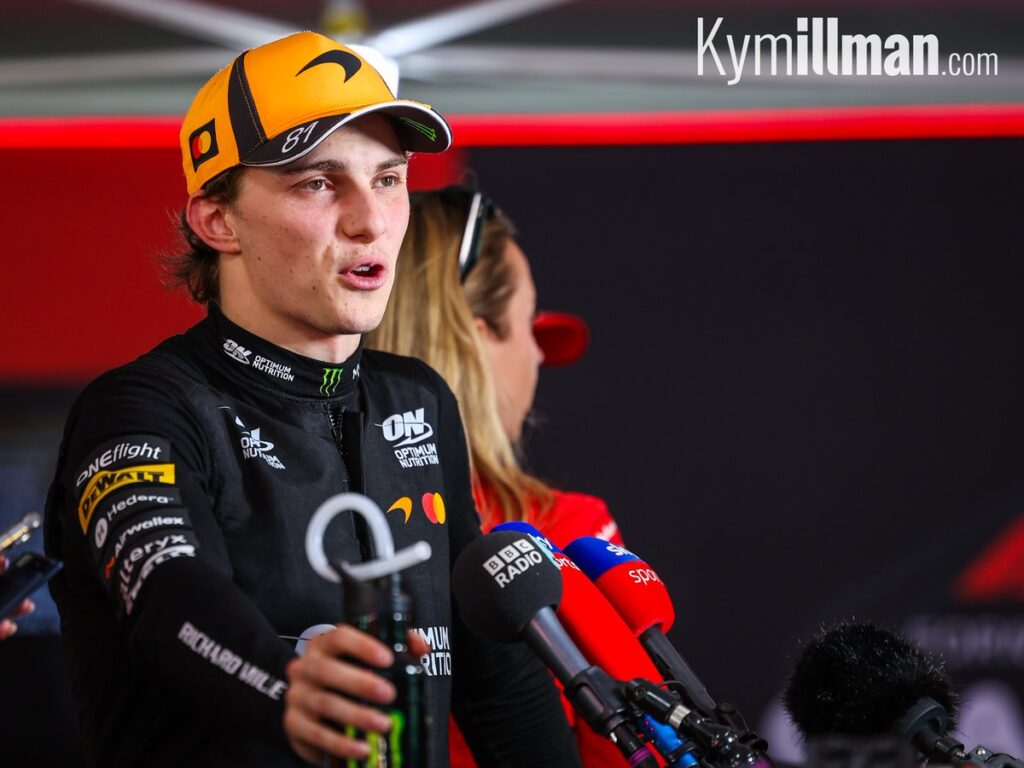
Oscar Piastri called his lap-38 collision with Carlos Sainz “one of the dumbest things I’ve ever seen on a race track” after the Ferrari driver’s blue-flag mistake cost him the lead of the 2026 Hungarian Grand Prix and handed team mate Lando Norris the race.
Key Takeaways
On lap 38, at turn three, Carlos Sainz’s Williams collided with Oscar Piastri’s McLaren while Sainz was fighting Fernando Alonso for position.
Stewards ruled Sainz wholly responsible but reduced the penalty from the standard 10 seconds to 5 seconds due to limited visibility of Piastri’s car.
The contact allowed Lando Norris to complete his second pit stop and emerge ahead of Piastri, reshaping the McLaren team battle at the front.
The Hungaroring podium and helmet visuals from this clash make the 2026 Hungarian GP a standout weekend for collectors tracking the McLaren rivalry.
What Happened at Turn Three
Carlos Sainz’s Williams made contact with Oscar Piastri’s McLaren at turn three on lap 38 of the 2026 Hungarian Grand Prix, and the stewards ruled Sainz wholly responsible for the collision. Sainz had been informed by his team that blue flags were being shown for the approaching Piastri, who was on a much faster lap and attempting to pass the Williams while Sainz was locked in his own fight with Fernando Alonso’s Aston Martin. As Piastri went for the move, the two cars made contact, and while Piastri kept his McLaren pointed the right way and avoided a spin, he lost enough time to change the outcome of the race at the front.
The stewards’ report noted that Sainz’s positioning relative to the circuit and the other cars meant Piastri’s McLaren was not visible to him before the attempted overtake, even though the team had already warned him blue flags were out. That single detail became the difference between a standard 10-second penalty and the reduced five-second sanction the stewards ultimately applied.
The Penalty Decision Explained
The stewards handed Carlos Sainz a five-second time penalty for causing the collision, down from the standard 10-second sanction for at-fault contact. The reduction was based on a specific mitigating factor: at the moment of the incident, Sainz’s car was positioned in a way that meant Piastri’s McLaren simply wasn’t visible to him in the seconds before he committed to his move on Alonso’s Aston Martin.
Crucially, the stewards were clear that Piastri bore no blame for the contact. Sainz himself pointed to a problem with the flag marshalling system that occurred during the race as a factor in his lack of awareness, but the stewards’ own findings show his team had already relayed the blue-flag warning to him before the incident took place. That distinction — informed but unable to see the car — is what separated this ruling from a harsher one, even as it did nothing to soften Piastri’s reaction after the race.
Piastri’s Blunt Reaction
Oscar Piastri dismissed Sainz’s explanation outright, telling Viaplay: “That’s got to be one of the dumbest things I’ve ever seen on a race track. I don’t really care what excuse he gave.” His frustration was less about the penalty itself and more about the timing — the contact cost him the time he needed to hold position through the pit stop sequence.
Piastri had been fighting his own team mate, Lando Norris, for the race lead when the Sainz incident occurred while he was trying to lap the Williams. The delay caused by the collision allowed Norris to complete his second pit stop and rejoin ahead of Piastri, turning what had been a straight fight between the two McLaren drivers into a result decided in part by a backmarker collision. For a driver already deep in a title-length battle with his team mate, losing the lead to a lapped car incident is the kind of moment that stings well beyond the five-second penalty applied to Sainz.
Podium Helmets and Livery Detail Worth Collecting
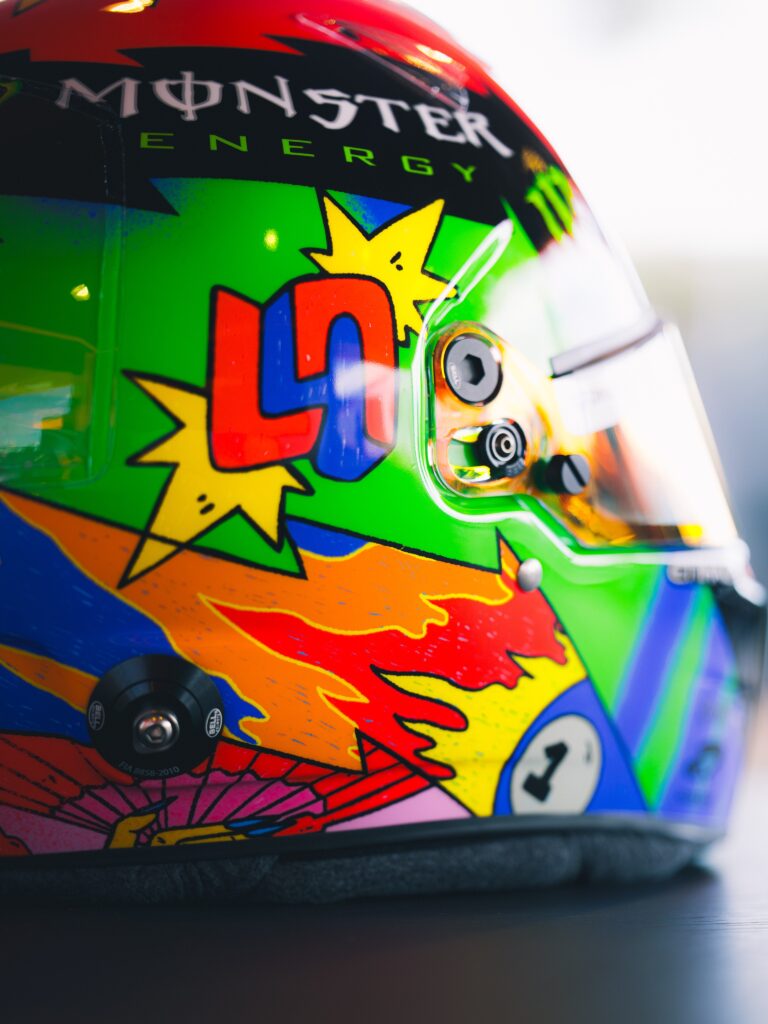
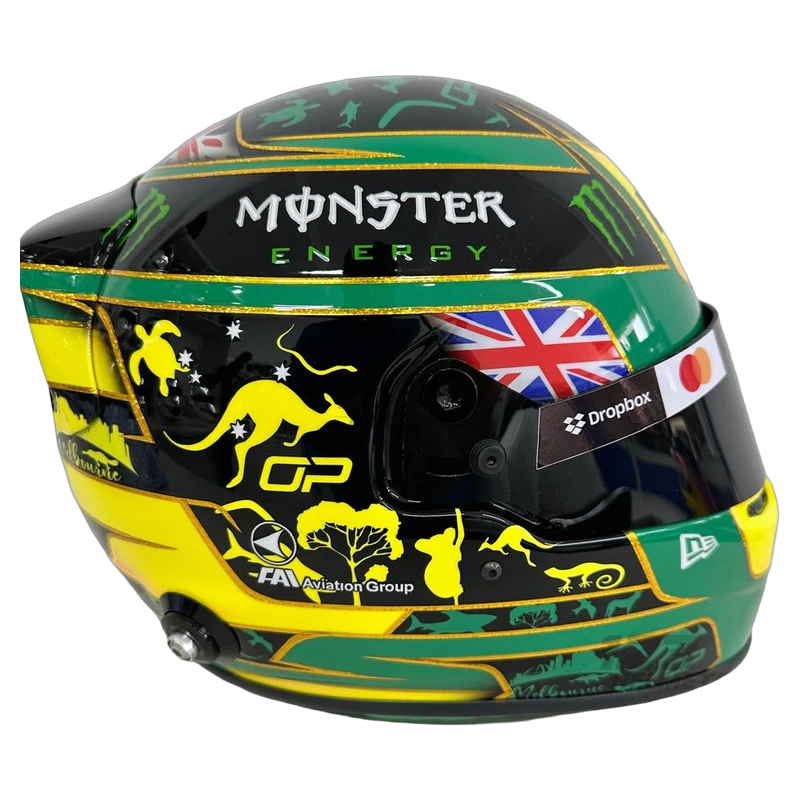
The 2026 Hungarian Grand Prix produced a McLaren-defined podium narrative, with the Norris–Piastri order flipped by circumstance rather than pure pace, and that storyline is exactly the kind of race weekend collectors look to commemorate. Both McLaren drivers ran their 2026-season lids at the Hungaroring, and a weekend where a five-second penalty and a lap-38 clash rewrite the finishing order is the sort of detail that gives a full-size 1:1 replica helmet its story.
Display-grade replicas built for this era of McLaren orange-and-papaya liveries carry the same graphic language seen on track — sharp sponsor blocking, matte-to-gloss panel transitions, and the driver-specific number and crest placement that distinguish Piastri’s shell from Norris’s. For anyone building a shelf around this rivalry, a Hungarian GP-era piece tied to a race where the lead changed hands through a stewards’ decision rather than a straight pass is a genuinely distinctive addition, not just another race-weekend souvenir.
Why This Race Matters for the Season
The Hungarian Grand Prix incident tightened the on-track and off-track narrative of the 2026 McLaren intra-team fight, since a five-second penalty applied to a third party effectively decided who left Hungary with the stronger result. Sainz’s afternoon, already complicated by his battle with Alonso, ended with a time penalty that dropped him back further in the classification, while Piastri’s frustration highlighted how fine the margins are when two title contenders from the same garage are separated by pit-stop timing rather than pure speed.
For Ferrari and Williams-watchers, the Sainz-Alonso fight itself — the contest Sainz was absorbed in when the contact happened — is worth remembering too, since it shows how a midfield battle can reach into the story of the race leaders. It’s the kind of weekend where the full picture, blue flags, stewards’ notes and all, matters as much as the chequered flag.
“That’s got to be one of the dumbest things I’ve ever seen on a race track. I don’t really care what excuse he gave.”
— Oscar Piastri, to Viaplay
FAQ
Q: What caused the Piastri-Sainz collision at the Hungarian Grand Prix?
Carlos Sainz’s Williams collided with Oscar Piastri’s McLaren at turn three on lap 38 while Sainz was fighting Fernando Alonso and Piastri attempted to pass the Williams under blue flags. The stewards ruled Sainz was wholly responsible for the contact.
Q: What penalty did Carlos Sainz receive?
Sainz received a five-second time penalty, reduced from the standard 10-second sanction because the stewards found Piastri’s car was not visible to him at the moment he attempted his move on Alonso.
Q: How did the collision affect the race result?
The contact cost Oscar Piastri time that allowed team mate Lando Norris to complete his second pit stop and emerge ahead, changing the order between the two McLaren drivers at the front of the field.
Q: Did the stewards blame Oscar Piastri for the incident?
No, the stewards explicitly ruled that Piastri was not to blame for the collision and placed full responsibility on Sainz despite the mitigating visibility factor.
Q: Are the McLaren helmet replicas from this race weekend true 1:1 scale?
Yes, the display replicas are built to full-size 1:1 scale as collector and exhibition pieces, not for protective or on-track use, matching the shell dimensions and livery detail of the drivers’ 2026-season helmets.
Shop Oscar Piastri Collection
Display and collector replicas only. Not certified for protective use. Full-size 1:1 scale.