Blog
The Real Reason Max Verstappen Is Drawn to GT3 Racing
 123Helmets Editorial Team
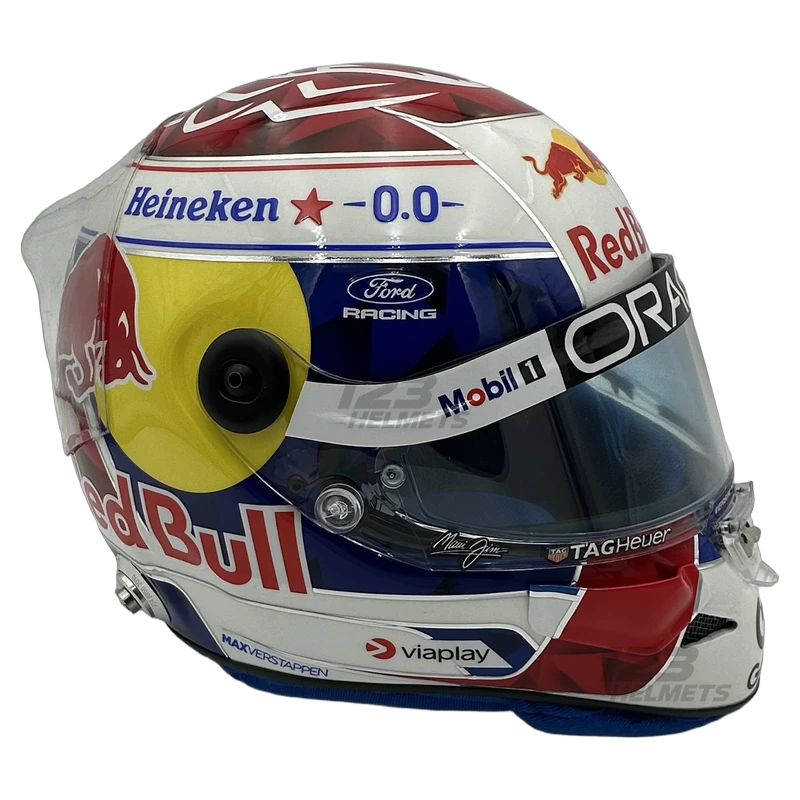
The Real Reason Max Verstappen Is Drawn to GT3 Racing
Between Formula 1 weekends, Max Verstappen has been quietly building a parallel career in GT3 endurance racing. Far from a publicity stunt, this is a deeply personal pursuit — and the helmets, liveries, and podium imagery from those outings are becoming some of the most distinctive visuals of his career.
Key Takeaways
Verstappen’s GT3 outings are driven by pure passion, not commercial obligation, giving his alternate helmets a uniquely authentic feel
Endurance racing has produced some of the most striking helmet liveries in his portfolio, distinct from his F1 design language
The Nürburgring Nordschleife remains the spiritual home of Verstappen’s GT3 ambitions and a key reference for display collectors
Full-size 1:1 replica helmets from these GT3 appearances are distinctive exhibition pieces for serious Verstappen collectors
A Champion Who Refuses to Stop Driving
When you have already secured multiple Formula 1 World Championships, the conventional wisdom suggests you should protect your legacy, manage your workload, and focus exclusively on the prize that matters most. Max Verstappen has, characteristically, ignored that advice entirely.
Across the past two seasons, the Dutchman has built an increasingly serious side project in GT3 endurance racing, appearing under pseudonyms, racing through the night on the Nürburgring Nordschleife, and competing in iRacing’s most demanding virtual endurance events with the same intensity he brings to a Grand Prix Sunday. For collectors and enthusiasts of full-size 1:1 replica helmets, this parallel career has produced a fascinating expansion of his visual identity — a second wardrobe of helmet designs and team liveries that sit alongside his F1 archive as a distinct chapter of his visual story.
The question that fans keep asking is simple: why? Why would the most dominant driver of his generation spend his rare weekends off strapped into a 500-horsepower sports car, racing strangers on one of the most dangerous circuits in the world? The answer reveals a great deal about who Verstappen really is — and why his GT3 helmets are becoming some of the most authentic exhibition pieces a collector can own.
The Pure Driver Beneath the Champion
Racing as identity, not occupation
To understand Verstappen’s pull toward GT3, you have to understand that he was racing long before he was famous. Karting from the age of four, schooled relentlessly by his father Jos, Max grew up viewing driving not as a profession but as an extension of himself. Formula 1, with its political overlay, media obligations, and engineering complexity, is the apex of that craft — but it is not the entirety of it.
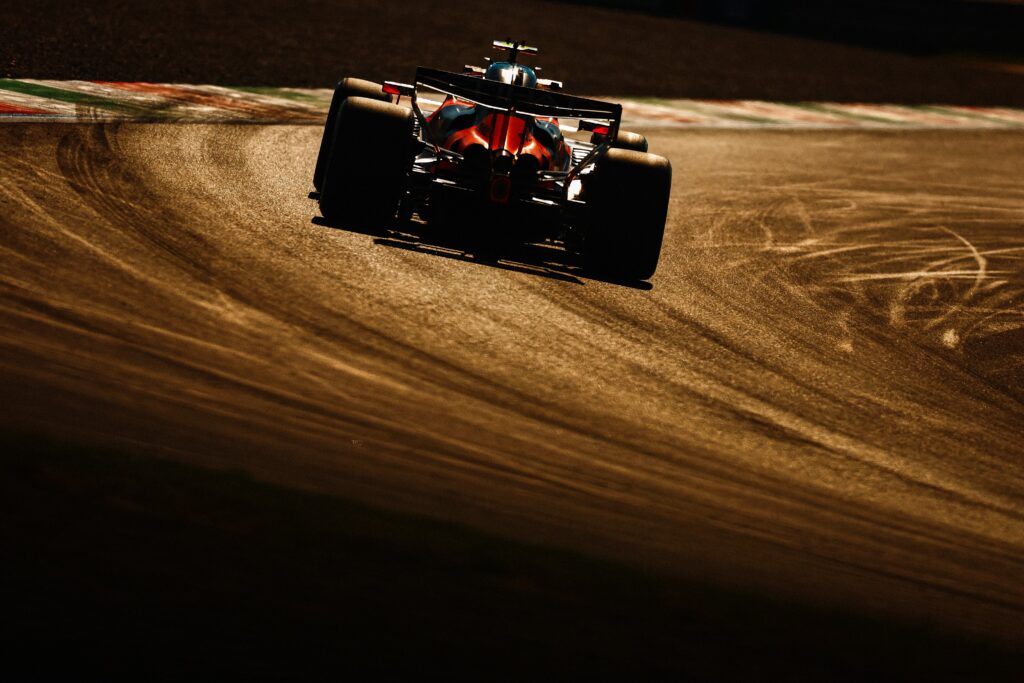
GT3 racing strips the experience back down to its essentials: a heavy car, a long race, traffic management, tyre conservation, and the kind of mechanical sympathy that World Endurance veterans spend decades cultivating. For Verstappen, it is racing in its rawest form. There is no DRS, no battery deployment strategy, no team radio choreography. There is only the driver, the car, and the circuit.
The Nordschleife factor
The Nürburgring Nordschleife — 20.832 kilometres of forest-lined asphalt with no margin for error — is the geographical and emotional centre of his GT3 obsession. Verstappen has spoken publicly about his ambition to race the 24 Hours of the Nürburgring, and his preparation laps in a Ferrari 296 GT3 and a Porsche have already produced some of the most circulated onboard footage in modern endurance racing. The helmets he has worn during these tests — often subtly modified versions of his standard Schuberth design with reduced sponsor presence and additional tear-off provisions — represent something very different from his Red Bull Racing identity.
Helmets and Liveries Built for a Different Stage
A second visual language
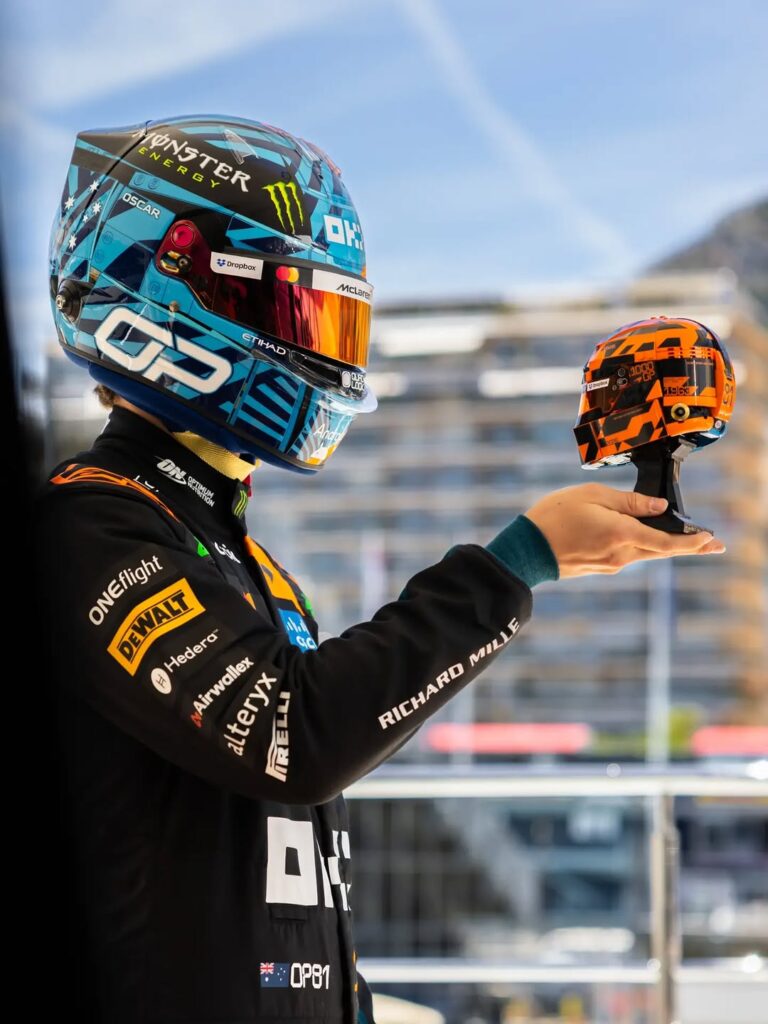
One of the most fascinating aspects of Verstappen’s GT3 work, from a collector’s perspective, is how the helmet aesthetics shift. His F1 helmets have evolved into a tightly controlled brand exercise — the lion crest, the orange and dark navy palette, the precise placement of partner logos. They are unmistakably Verstappen, but they are also unmistakably commercial.
His GT3 helmets, by contrast, breathe. Liveries appear with looser sponsor footprints, more matte finishes, and occasionally more experimental colour blocking. When he tested at the Nordschleife in a Ferrari run by a private team, the visual identity sat closer to that of a gentleman driver than a global superstar. For a display collector, this distinction matters enormously: a full-size 1:1 replica helmet from a GT3 appearance carries a different storytelling weight than a standard F1 piece. It speaks to the driver, not the championship.
Podium visuals worth framing
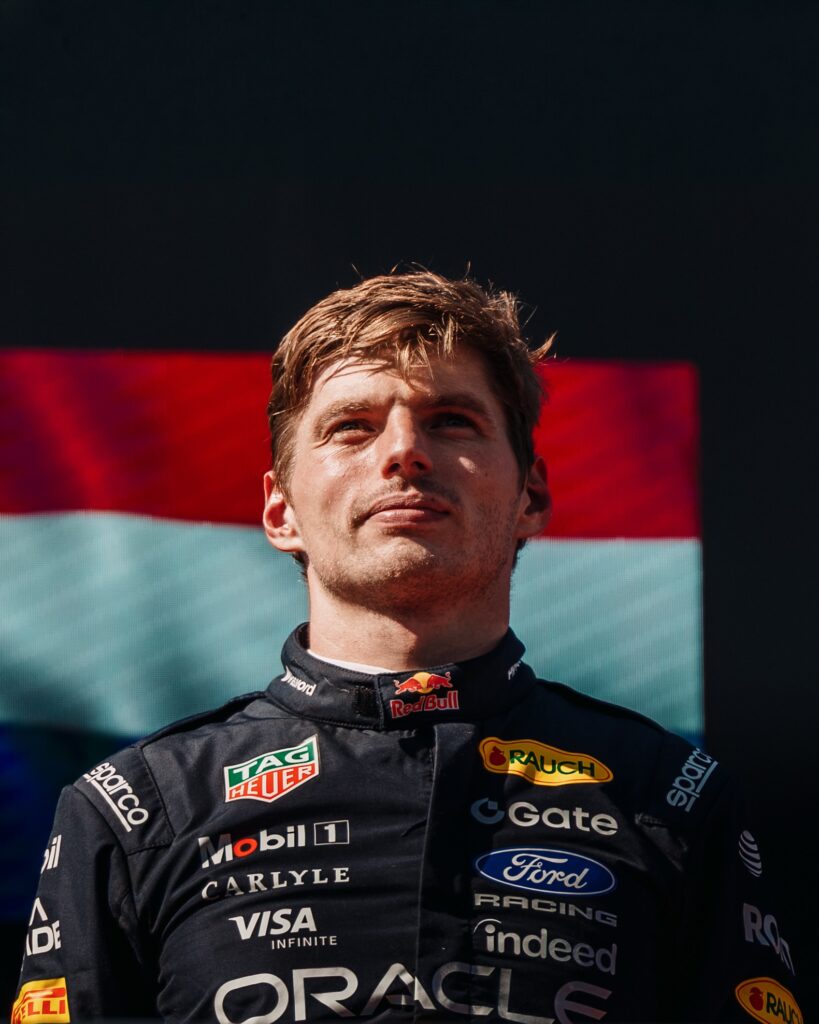
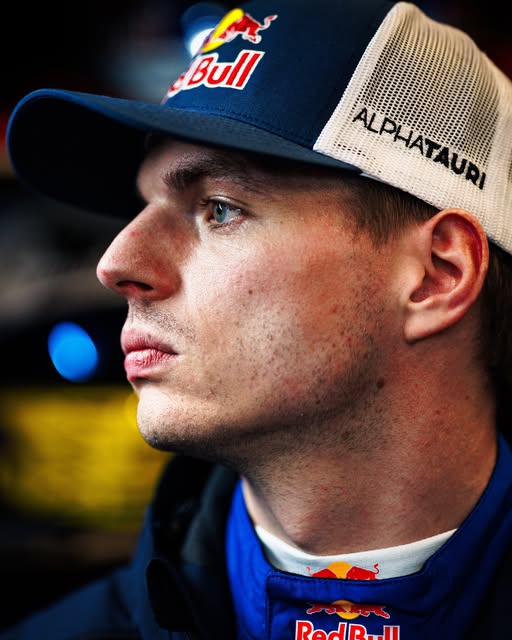
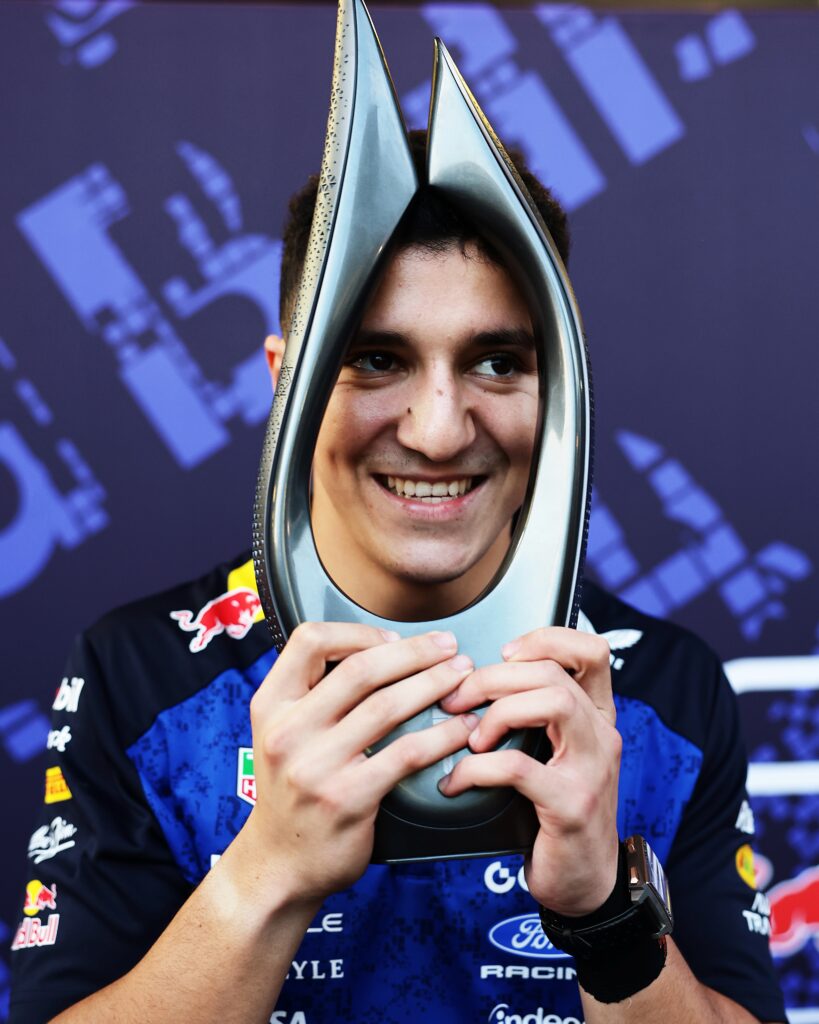
The podium imagery from his recent endurance outings has been particularly striking. Lower podium structures, simpler trophies, the smell of two-stroke smoke from support categories, drivers in three-layer suits rather than F1’s slimline kit — every visual cue underlines that this is a different world. Photographs of Verstappen on a GT3 podium, helmet in hand, hair flattened from hours under fireproof balaclava, have a candid quality that his F1 portraits rarely match. These are the images that hardcore collectors are already printing, framing, and pairing with replica helmets in their display rooms.
The Mental Reset That Makes Him Faster
Why GT3 sharpens his F1 weekends
There is a school of thought within Formula 1 that any serious extracurricular racing is a distraction — additional risk, additional fatigue, additional opportunity for embarrassment. Verstappen and his camp have repeatedly pushed back against this view, and the on-track evidence supports them. His F1 form has remained at championship level even as his GT3 commitments have grown.
The reason, according to those close to him, is psychological as much as physical. F1 is increasingly a sport of preparation, simulation, and millimetric refinement. GT3 — particularly on the Nordschleife — demands improvisation. You cannot pre-programme a response to a GT4 car suddenly appearing through the mist at Adenauer Forst. You have to think, react, and trust the car. That kind of driving rebuilds instinct in a way that no amount of factory simulator work ever will.
The community he has chosen
Verstappen’s GT3 environment is also, by Formula 1 standards, refreshingly unpretentious. He races with friends, with sim racing colleagues from his Team Redline operation, and with privateer crews who treat him as a driver first and a celebrity a distant second. The pseudonyms he has used for some entries — including the now-famous “Franz Hermann” appearance — were not affectations but practical attempts to reduce attention so he could simply race. That cultural fit, that sense of belonging to a tribe of pure racers, is something modern F1 cannot easily provide.
The Collector’s Perspective: Why These Helmets Matter
Authenticity as the new luxury
Trophies are only one way to build a collection. Pieces with narrative depth — items that tell a story about who the driver is rather than what the driver has won — offer another.
Verstappen’s GT3 helmets belong firmly in that second category. They represent the version of him that exists outside the Red Bull machine: the driver who would race anything, anywhere, for the joy of it. A full-size 1:1 collector replica of one of these designs sits in a display case as a piece of character study, not just a trophy of dominance. It is the helmet of a champion who chose to keep being a racer.
Display considerations and exhibition value
For collectors building serious Verstappen-themed display rooms, pairing F1 and GT3 replicas creates an immediate visual narrative arc. The contrast between the highly polished, sponsor-dense F1 helmets and the cleaner, more raw GT3 designs gives any exhibition piece additional storytelling power. Lit correctly — typically with warm 2700K spot lighting from above and slightly forward — these pieces become conversation centrepieces rather than passive decoration. The matte finishes common to GT3 helmets photograph particularly well in dim, gallery-style display rooms.
Whether mounted on plinths, displayed in glass cabinets alongside scale model GT3 cars, or arranged chronologically across a feature wall, these replicas reward thoughtful curation. They are exhibition-quality pieces, intended for presentation and contemplation rather than functional use.
What Comes Next
The 24-hour ambition
The next major chapter is widely expected to be a full assault on the 24 Hours of the Nürburgring, potentially in collaboration with one of the major manufacturer programmes that have already courted him. Should that race happen, the helmet he wears will instantly become one of the most documented pieces in modern endurance memorabilia — particularly if paired with a livery designed specifically for the event.
There is also the longer-term question of what Verstappen does after Formula 1. He has spoken openly about not wanting to stay in F1 indefinitely, and GT3 — alongside potential Hypercar and Le Mans involvement — looks increasingly like the most natural second act. For collectors, that means his GT3 archive is not a curiosity. It is the foundation of his post-F1 visual identity, and the time to start building that section of a display collection is now.
The bottom line
Verstappen is drawn to GT3 racing for the simplest, most uncynical reason imaginable: he loves driving. Not driving as branding, not driving as content creation, not driving as legacy management. Just driving. That purity is exactly why the helmets and liveries from these outings carry such powerful collector appeal — they are the visual record of a champion who never stopped being a racer.
“I just like driving cars. Whatever the car is, if it is fast and it is fun, I want to be in it.”
— Max Verstappen, on his motivation for racing outside Formula 1
FAQ
Q: Why does Max Verstappen race GT3 cars between F1 weekends?
Verstappen has consistently said his GT3 outings are driven by pure love of driving rather than any commercial or contractual requirement. He values the rawer, more instinctive nature of endurance racing and the camaraderie of the GT3 paddock, which contrasts with the highly engineered environment of modern Formula 1.
Q: Are his GT3 helmets different from his Formula 1 helmets?
Yes. While the underlying Schuberth shell is similar, his GT3 helmets typically feature reduced sponsor presence, more matte finishes, and subtle livery variations tailored to each programme. This makes them visually distinct as full-size 1:1 collector display pieces.
Q: Has Verstappen raced the 24 Hours of the Nürburgring?
Not yet at the time of writing, but he has completed extensive testing on the Nordschleife in GT3 machinery and has publicly stated his ambition to compete in the full 24-hour race. Any helmet he wears for that event will become a landmark piece in his collector portfolio.
Q: Are these replica helmets suitable for actual racing or riding?
No. Every helmet we offer is a display and collector replica only, produced as a full-size 1:1 exhibition piece. They are not certified for protective use and are intended exclusively for display, presentation, and collection purposes.
Q: What makes GT3 helmets interesting for display collections?
GT3 helmets from a driver like Verstappen tell a personal story about passion and identity rather than just championship success, which gives them strong storytelling value in serious display collections.
Shop Max Verstappen Collection
Display and collector replicas only. Not certified for protective use. Full-size 1:1 scale.
This article was written with the help of AI tools. Editorial policy