Blog
Mercedes Silverstone 2026: Fastest Pit Stops, Helmet Details
 123Helmets Editorial Team
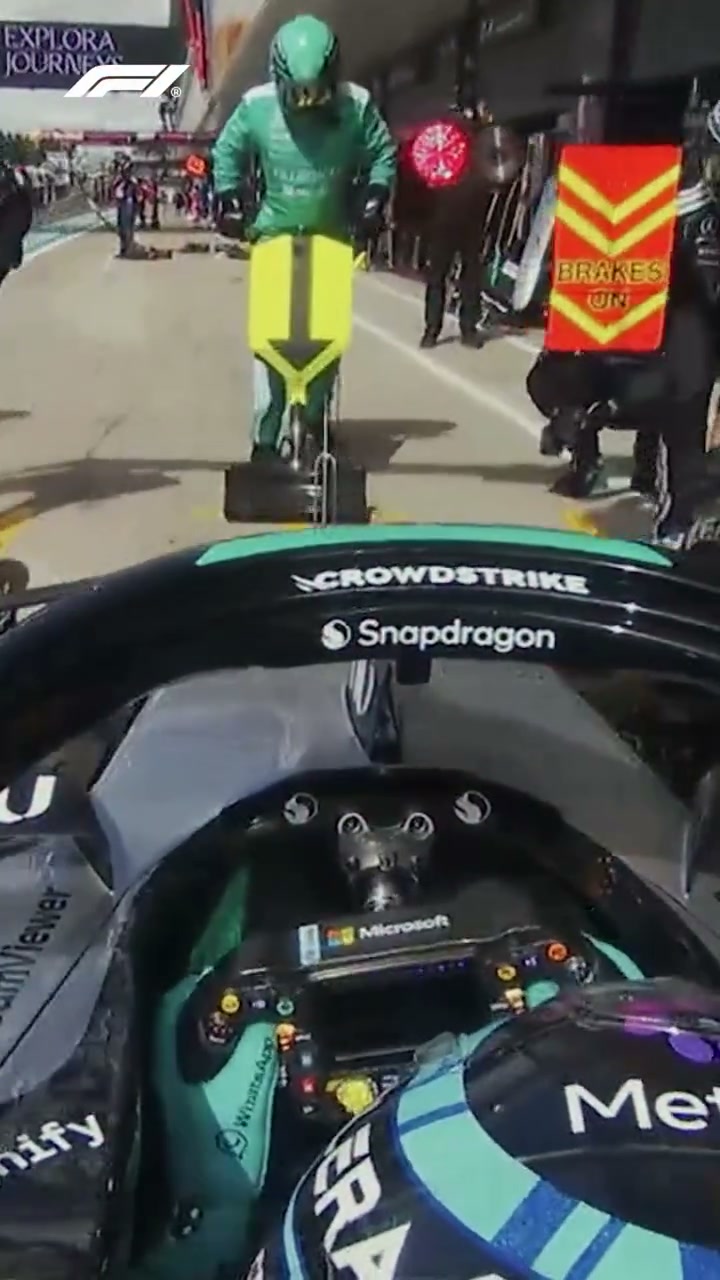
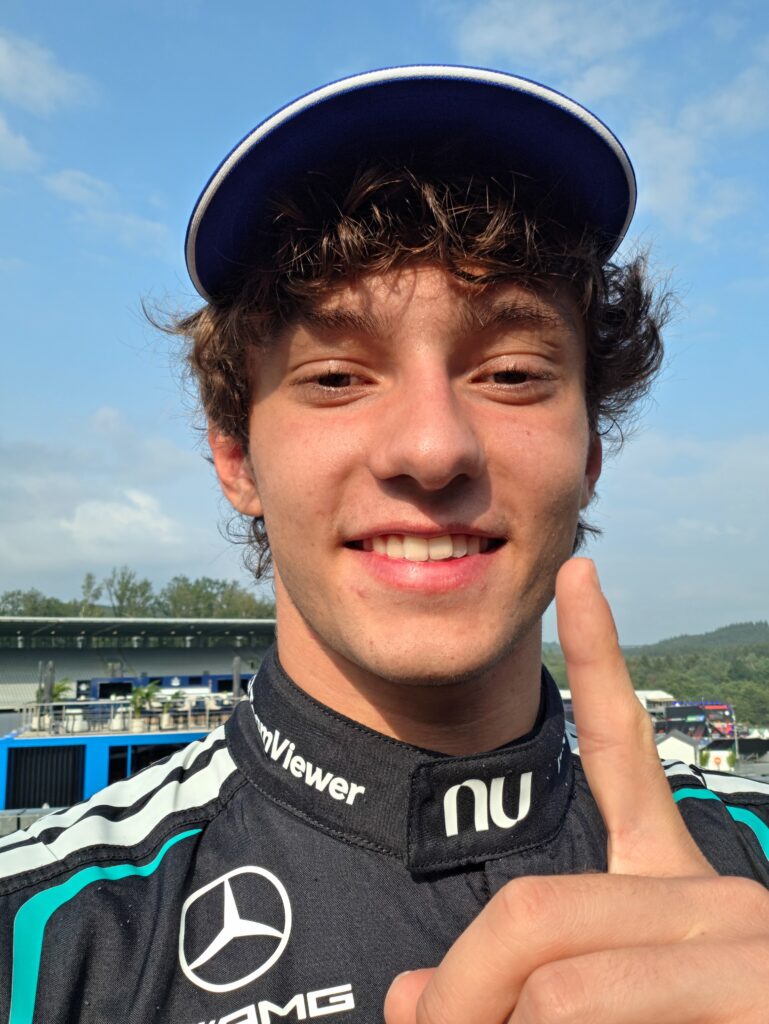
Mercedes-AMG PETRONAS closed out its 2026 British Grand Prix weekend with the quickest two pit stops of the event for George Russell and Kimi Antonelli, and the helmets both drivers wore at Silverstone tell their own story of speed, sponsorship and craft.
Key Takeaways
Mercedes-AMG PETRONAS recorded the fastest two pit stops of the 2026 British Grand Prix weekend, one for George Russell and one for Kimi Antonelli.
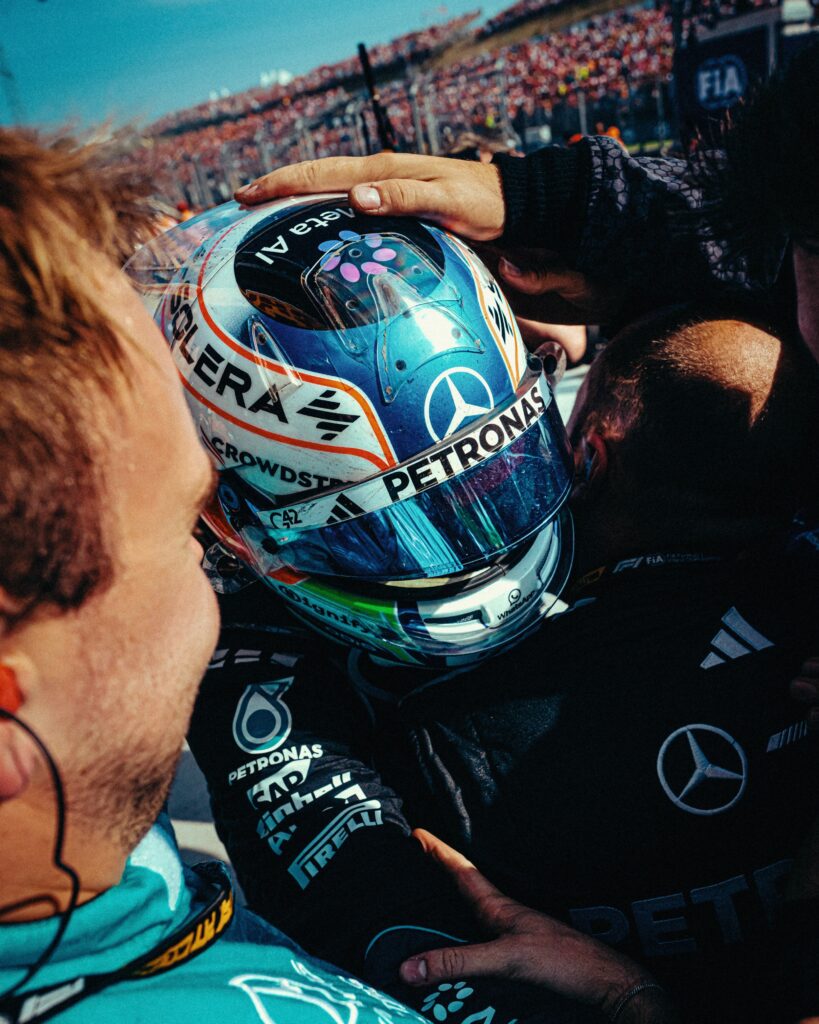
Both drivers’ Silverstone-spec helmets carry the team’s signature Petronas teal and black base with CrowdStrike and Snapdragon branding placed high on the shell.
Full-size 1:1 display replicas reproduce the exact panel layout, sponsor decals and shell geometry seen in the pit lane at Silverstone.
Race-weekend achievements like a fastest pit stop add context and story value to a helmet replica beyond the paint scheme itself.
A Pit Wall Performance Worth Framing
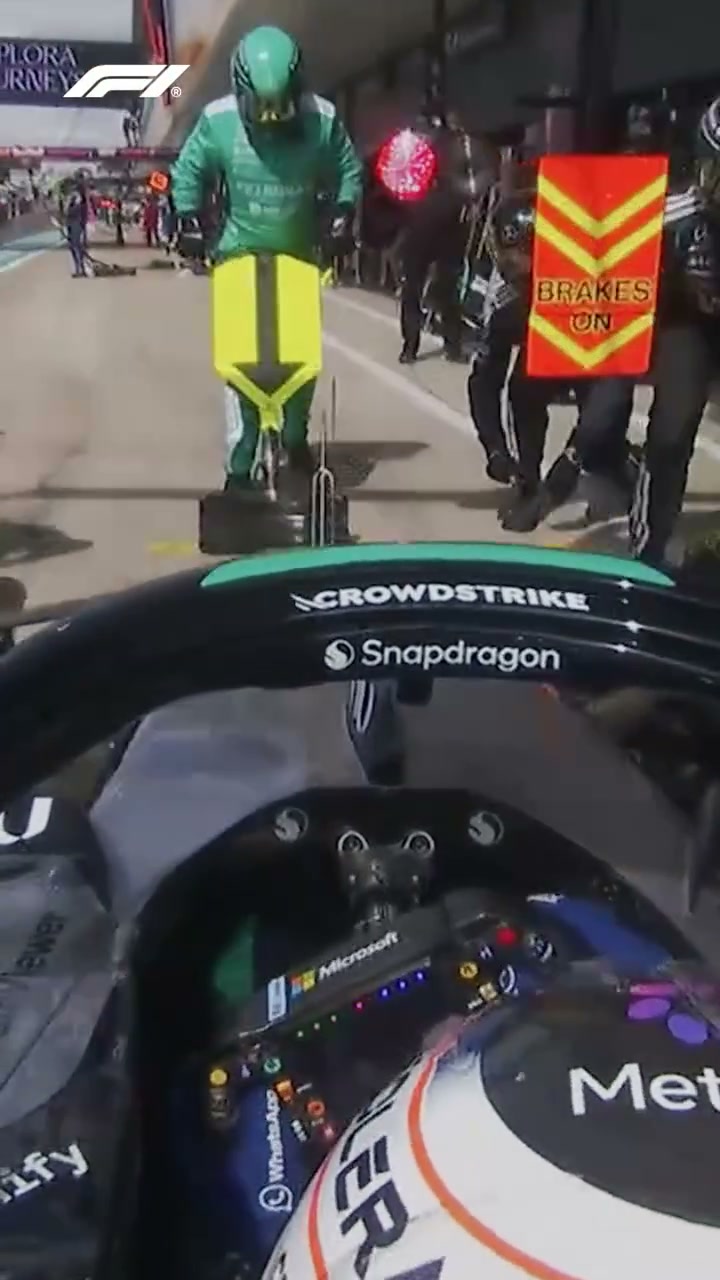
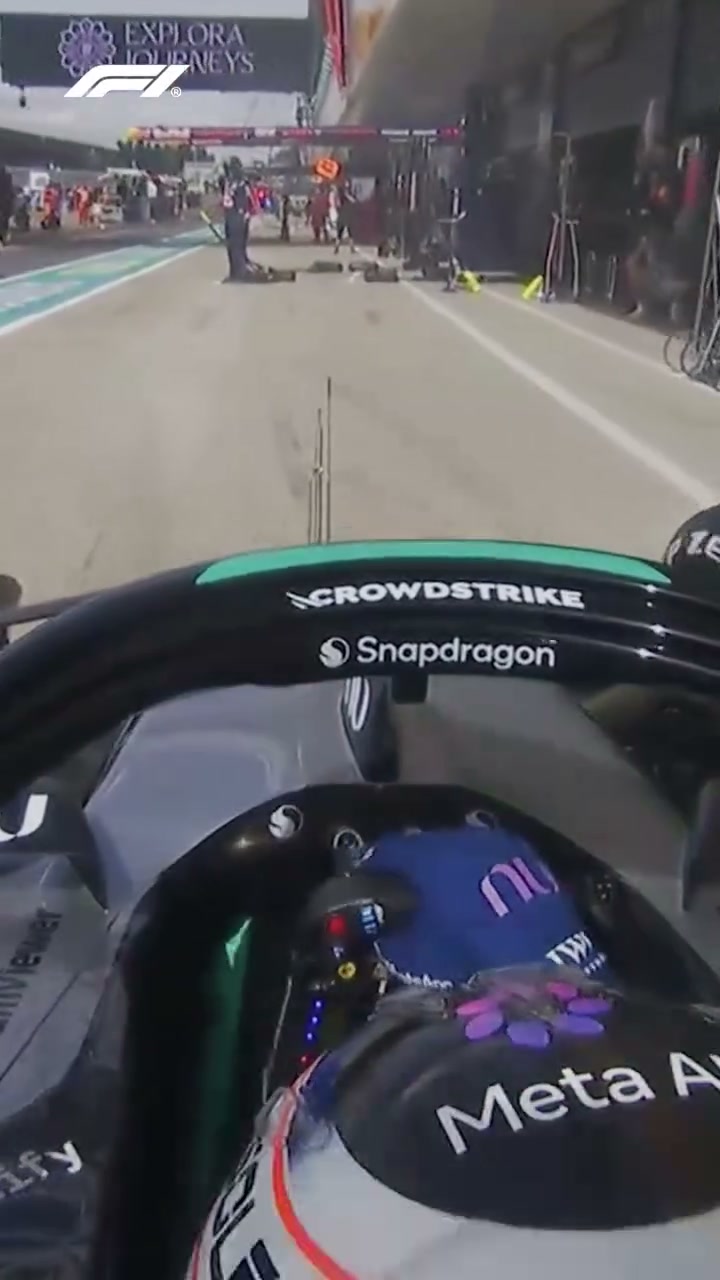
Mercedes-AMG PETRONAS F1 Team posted the two fastest pit stops of the 2026 British Grand Prix weekend at Silverstone, one for George Russell and one for Kimi Antonelli. The team shared the moment on July 10, 2026, crediting the pit crew for the effort rather than either driver individually, framing it as a collective result built on repetition and timing rather than a single lucky lap.
Pit stop speed rarely gets the same spotlight as a helmet livery reveal or a podium finish, but it is one of the clearest windows into how a team operates under pressure. A tenth of a second lost at the front jack or the rear wheel gun can undo a lap of clean racing, so when a crew delivers the fastest change on the timing sheet twice in one weekend, it says something about preparation that goes well beyond the pit box itself.
For collectors, moments like this matter because they attach a specific weekend, a specific team performance, and two specific drivers to a helmet design that would otherwise just be another shell on a shelf. The Silverstone weekend now has a marker attached to it: fastest stops, both cars, one crew.
George Russell’s Silverstone-Spec Helmet
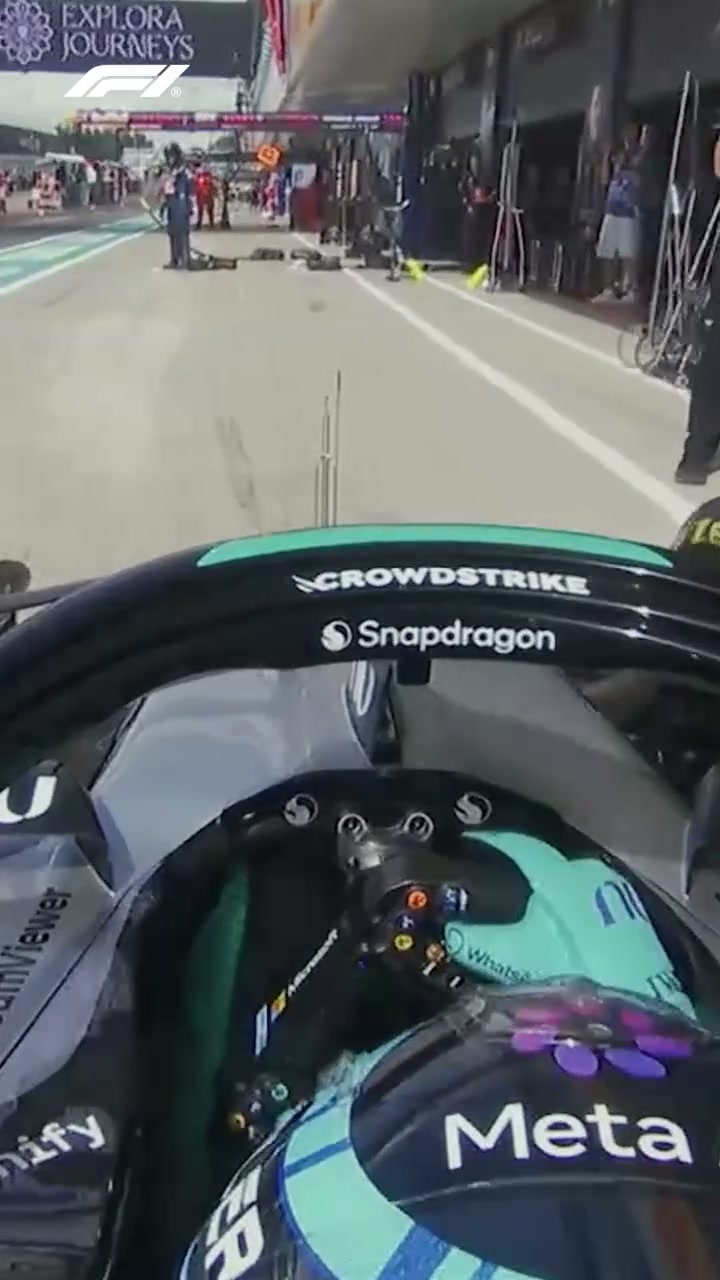
George Russell’s Silverstone helmet is built on the team’s core teal-and-black base shell with his personal graphic elements carried across the crown and sides. The design keeps the Petronas teal as the dominant tone across the top third of the shell, with black used to frame the visor opening and lower shell, a layout consistent with how Mercedes has approached Russell’s lids through the 2026 season.
Sponsor placement follows a clear hierarchy on the shell. CrowdStrike branding sits high and central, positioned for maximum visibility in TV replays and podium shots, while Snapdragon lettering runs along the side panel in a contrasting finish that separates it from the teal background. This kind of layered sponsor real estate is one of the more technical parts of any current F1 helmet design, since teams have to balance readability at speed with the driver’s personal identity.
On the full-size 1:1 display replica, that same layout is reproduced panel for panel, including the exact positioning of both partner logos relative to the visor line and the crown stripe. Collectors looking closely at the shell will find the same proportions used in the pit lane, not a simplified or resized version of the design.
Kimi Antonelli’s Silverstone-Spec Helmet
Kimi Antonelli’s helmet for the Silverstone weekend shares the same teal-and-black foundation as his teammate’s but uses a distinct pattern treatment to keep the two drivers visually separate on track. Where Russell’s design leans on broader color blocks, Antonelli’s shell carries a tighter, more angular graphic running from the rear of the helmet toward the visor opening, giving it a sharper look when viewed side-on in pit lane photography.
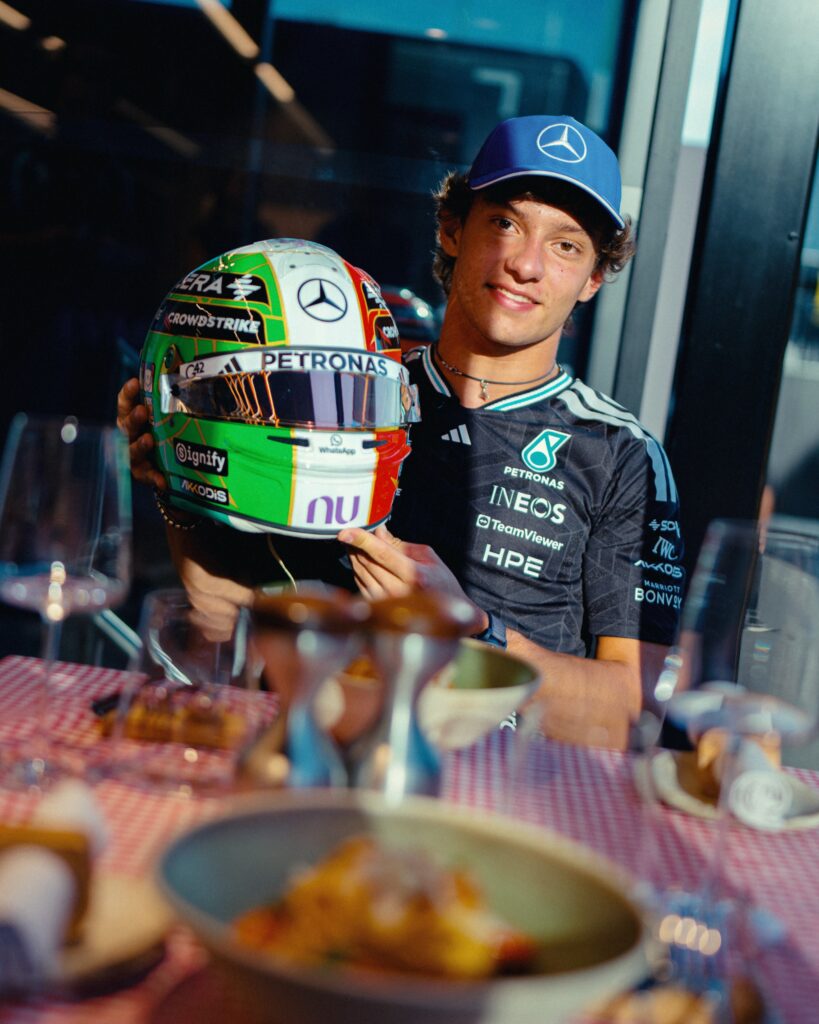
The rookie’s helmet still carries the same core sponsor package seen across the Mercedes grid, with CrowdStrike and Snapdragon branding placed in the same general zones as Russell’s shell, maintaining brand consistency for TV graphics and photography regardless of which car is closer to camera. That consistency matters for the team commercially, but it also gives collectors an easy way to identify both helmets as part of the same weekend and the same partnership package.
Because Antonelli is newer to the grid, early-career helmet designs like this Silverstone spec often carry added interest for collectors down the line, particularly when they’re tied to a specific team achievement such as the weekend’s fastest pit stop rather than just a generic race weekend.
Livery Breakdown: Colors, Logos and Layout
The 2026 Mercedes helmet livery is built around three fixed elements: Petronas teal as the primary color, black as the structural frame, and a rotating set of partner logos including CrowdStrike and Snapdragon placed in defined zones across the shell. This structure repeats across both cars, which is why Russell’s and Antonelli’s helmets read as a matched pair from a distance even though each carries its own personal graphic treatment up close.
Teal dominates the crown and upper visor surround, a direct continuation of the team’s long-running color identity tied to its title partner. Black is used functionally, framing the visor opening and running along the lower edge of the shell where scuffing and wear are most visible over a season, a practical design choice as much as a stylistic one.
Logo placement follows FIA guidelines on sponsor visibility and helmet regulations, with CrowdStrike given the more prominent central position and Snapdragon set along the side profile. Collectors examining a full-size display replica should expect to see this same three-part structure: color base, structural black framing, and layered sponsor branding, reproduced at true 1:1 scale rather than compressed to fit a smaller shell.
Why Silverstone 2026 Matters to Collectors
A helmet tied to a specific team achievement carries more story value than one tied only to a livery change. The Silverstone 2026 weekend now has a clear, documented marker attached to it, the fastest two pit stops of the event, for both Russell and Antonelli, which gives this particular helmet spec a reference point beyond just its visual design.
Collectors tend to place higher long-term value on pieces connected to a specific, verifiable moment rather than a generic season livery, and a team-wide pit crew achievement covering both cars at a home-soil round like Silverstone fits that pattern closely. It’s the kind of detail that turns a shelf display into a conversation piece rather than just a color-matched object.
For fans who follow the team closely, owning display replicas of both the Russell and Antonelli Silverstone-spec helmets side by side also captures the team dynamic of the weekend, two different personal graphic treatments built on one shared base design, delivered by the same pit crew that set the timing sheet alight.
The Craft Behind the Full-Size Replica
Full-size 1:1 display replicas of these helmets reproduce the shell geometry, panel lines and decal placement of the originals rather than working from a simplified template. Multiple paint layers are typically applied to achieve the depth of the teal base coat before the black framing and sponsor decals are set, a process that mirrors how the real shells are finished ahead of a race weekend.
Shell dimensions on a standard adult display replica generally run in the region of 27 to 35 cm depending on the mold used, with a visor opening cut to match the same proportions seen on the real Silverstone-spec helmets worn by Russell and Antonelli. This is display and collector-grade work, built for exhibition rather than any protective or on-track use.
Every stitch line, vent detail and logo placement is checked against reference photography from the actual race weekend, which is why the Silverstone spec in particular is a strong candidate for collectors who want a piece tied to a specific, documented team performance rather than a generic season-long design.
“Huge effort from our pit-stop crew to achieve the quickest two stops of last weekend for George and Kimi.”
— Mercedes-AMG PETRONAS F1 Team, July 10, 2026
FAQ
Q: What happened at the 2026 British Grand Prix pit stops?
Mercedes-AMG PETRONAS recorded the fastest two pit stops of the weekend, one for George Russell and one for Kimi Antonelli, as announced by the team on July 10, 2026.
Q: Do George Russell and Kimi Antonelli use different helmet designs?
Yes. Both share the same Petronas teal-and-black base and CrowdStrike/Snapdragon sponsor placement, but each carries a distinct personal graphic pattern that separates their shells visually.
Q: Are these Mercedes helmet replicas full size?
Yes. The display replicas discussed here are full-size 1:1 collector pieces built for exhibition, reproducing shell dimensions, decal placement and paint layering from the real race-weekend helmets.
Q: Is this replica certified for on-track or protective use?
No. These are display and collector items intended for exhibition only, not certified for protective or track use.
Q: Why do sponsor logos like CrowdStrike and Snapdragon appear on the helmet?
They reflect the team’s current partnership package, with logo placement following FIA guidelines on sponsor visibility so each brand gets a defined, consistent zone across both drivers’ shells.
Browse F1 Helmet Collection
Display and collector replicas only. Not certified for protective use. Full-size 1:1 scale.