Blog
Toto Wolff: Mercedes Won’t Sacrifice Speed for Reliability
 123Helmets Editorial Team

Toto Wolff has made clear that Mercedes’ 2026 season, built on nine pole positions and seven grand prix wins, will not be tempered for the sake of eliminating the mechanical failures that have cost Kimi Antonelli and George Russell podiums and race wins. For collectors, that raw, uncompromising approach is now etched into every helmet and livery detail carried by the Silver Arrows this year.
Key Takeaways
Mercedes has taken all nine pole positions in the 2026 season but converted only seven into grand prix wins
Toto Wolff says he would rather dial back performance slightly than sacrifice raw pace for reliability
Mercedes has covered 5,215km of a possible 5,408km in 2026 races, second only to Ferrari
Collectors can own full-size 1:1 replicas of the helmets worn during this high-risk, high-reward Mercedes campaign
Wolff’s Statement: Speed Over Reliability
Toto Wolff has confirmed Mercedes will not scale back its performance targets despite a string of reliability failures in 2026. Asked directly whether the team should ‘bring it back a little bit’ after mechanical issues cost both Kimi Antonelli and George Russell strong results, Wolff replied that Mercedes is “such a performance organisation” that it wants to “squeeze everything out” on both chassis and engine.
His exact words leave little room for interpretation: “I’d rather dial back a little bit something that is really good, and fix some of the reliability gremlins, than run behind performance.” It’s a philosophy that prioritizes outright speed even when it comes at a cost, and it says a great deal about how Mercedes is approaching every element of its 2026 campaign — including the visual identity carried into every session by its drivers.
Wolff even briefly lost track of his own win count during the exchange, initially saying “six races out of eight” before being corrected to seven wins from nine rounds. His response — “Should have been nine from nine” — captures the tension at the heart of Mercedes’ season: dominant pace undermined by mechanical gremlins that keep arriving at the worst possible moments.
The Numbers Behind Mercedes’ 2026 Campaign
Mercedes has taken all nine pole positions available so far in the 2026 season, only losing out to McLaren and Ferrari in a couple of sprint qualifying sessions. That qualifying dominance has not fully translated into results: the team has won seven of those nine grands prix, a conversion rate that frustrates Wolff even as he defends the underlying approach.
The team has still covered more ground than any rival bar Ferrari, completing 5,215km out of a possible 5,408km across 2026 grands prix — a reliability record that looks strong on paper but hides two costly retirements. An electrical issue took Antonelli out of second place at Barcelona, allowing Lewis Hamilton of Ferrari to win on merit, while a similar problem ended George Russell‘s race from the lead three weeks earlier at the Canadian Grand Prix.
At the British Grand Prix, Antonelli’s wheel shield failed, blunting what had been a credible challenge to race leader Charles Leclerc. Three separate failures, three lost results — and the gap between Mercedes’ raw pace and its finishing record is exactly the problem Wolff is now weighing against his instinct to keep pushing for outright performance.
Design Language: How the Silver Arrow’s Look Reflects Its Performance Philosophy
Mercedes’ 2026 livery and helmet designs carry the same aggressive, uncompromising visual language that Wolff describes in his approach to performance. The Silver Arrow color scheme — brushed metallic silver paired with sharp black and teal accents — is built around clean, high-speed lines that echo the team’s obsession with squeezing out every last tenth, exactly the mindset Wolff says the team refuses to abandon.
For collectors, this is what makes the 2026 season such a compelling one to preserve. Every full-size 1:1 replica helmet from this campaign captures a car and a team pushing right at the edge of what’s mechanically possible — poles taken at nine from nine, wins left on the table, and a livery that never once looks like it’s holding anything back. The visual story on the helmet shell matches the story Wolff is telling in the paddock: performance first, and reliability catching up after the fact.
Displaying a helmet from this era means owning a piece of one of the most statistically dominant qualifying campaigns in recent Mercedes history, paired with the drama of three high-profile retirements that turned a near-perfect season into a contested one.
Antonelli and Russell: Helmets Carrying the Weight of Retirements
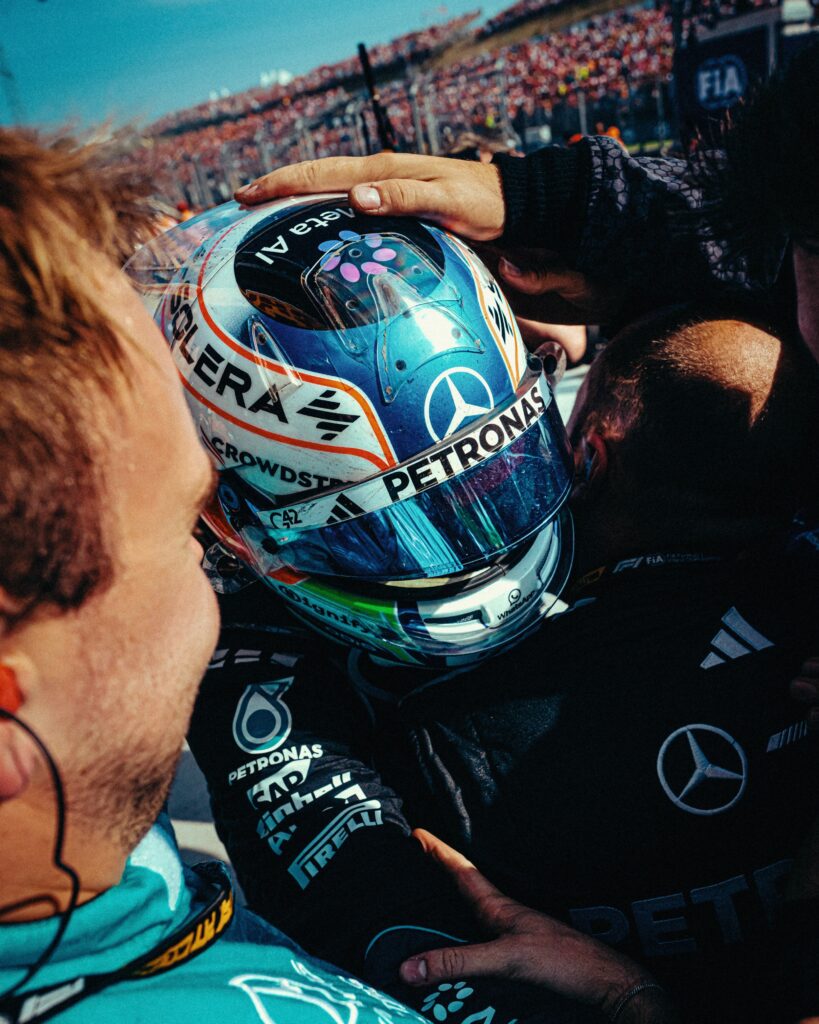
Kimi Antonelli and George Russell have each lost a race lead or podium position to mechanical failure in 2026, and their helmet designs from this season now carry that narrative for collectors. Antonelli’s Barcelona retirement from second place and his British Grand Prix wheel shield failure — which stopped him from mounting a real challenge to Charles Leclerc — are both moments frozen in the helmet he wore on each weekend.
Russell’s Canadian Grand Prix retirement from the lead, caused by an electrical issue similar to the one that struck Antonelli in Spain, adds another chapter to the same story. Two drivers, two nearly identical failures, and a shared frustration that Wolff has openly acknowledged rather than downplayed.
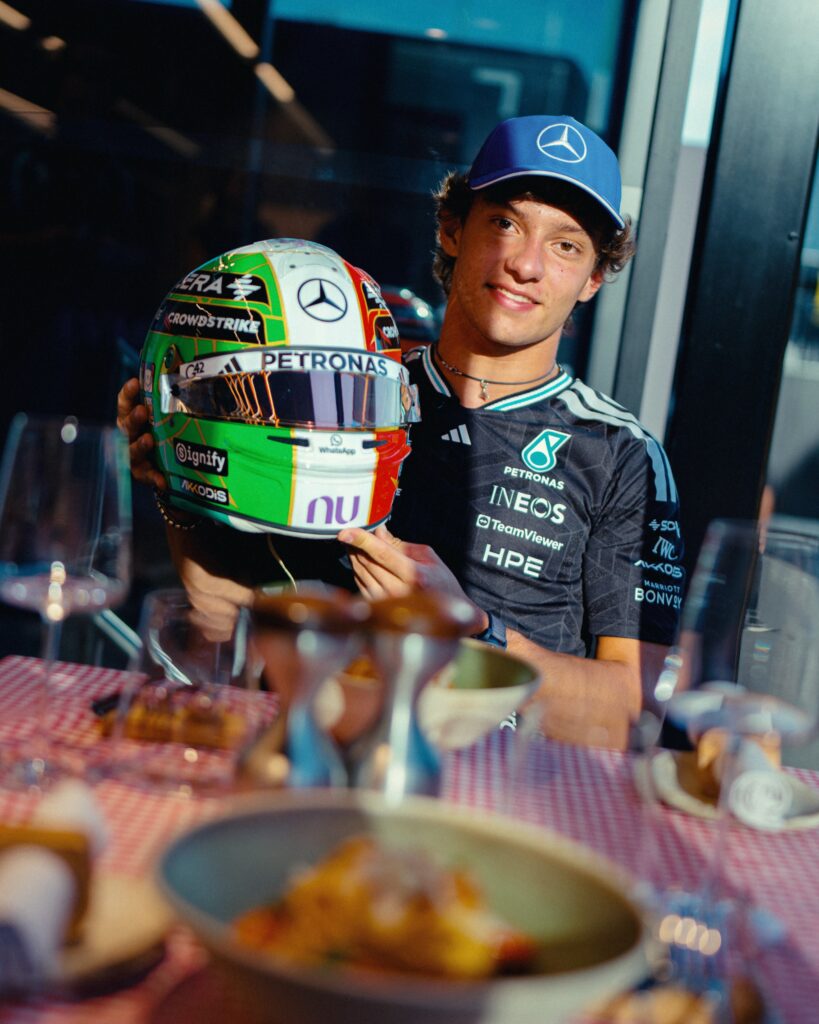
For anyone building a Mercedes display collection, pairing helmets from both drivers’ 2026 campaigns tells a more complete story than either piece alone — the highs of nine consecutive poles set against the very real cost of chasing performance without fully solving the reliability issues underneath.
Collector Angle: Owning a Piece of Mercedes’ High-Risk, High-Reward Era
A full-size 1:1 replica from Mercedes’ 2026 season represents one of the more dramatic storylines in recent team history: a squad that took every pole position on offer, won seven of nine races, and still had two race leads and a podium taken away by mechanical faults. That combination of dominance and vulnerability is rare, and it’s exactly what makes this campaign worth preserving on a display stand rather than letting it pass as just another season.
Exhibition-quality replicas of the Antonelli and Russell helmets let fans hold onto the specific moments Wolff referenced directly — the electrical failures at Barcelona and in Canada, and the wheel shield break at Silverstone — as tangible pieces rather than just numbers in a results table. Each design element on the shell, from the metallic base coat to the sponsor detailing, was present on track during those exact retirements.
Mercedes’ willingness to keep pushing rather than dial back, as Wolff confirmed, means the rest of the 2026 season is likely to keep producing exactly this kind of high-stakes storyline — which only adds to the value of collecting pieces from a campaign defined by both brilliance and breakage.
What Comes Next for Reliability
Mercedes says it will keep chasing performance while working to fix the reliability issues that have already cost it two race leads and a podium in 2026. Wolff’s comments make clear the team sees the current trade-off as acceptable for now, even as he admits the gremlins need addressing rather than being ignored.
Context from the rest of the grid underlines how much is still at stake. Aston Martin, by comparison, has completed just 3,753km this season and managed only eight official race finishes from a possible 18 — though that figure has improved to seven finishes from 12 since the April break, a sign of progress with its Honda powertrain. Mercedes’ 5,215km covered puts its reliability problems in perspective: real, but far from the biggest concern on the grid.
For collectors watching the season unfold, every remaining round is a chance for either redemption or another gremlin to strike — and either outcome adds another layer to the story behind the helmets worn by Kimi Antonelli and George Russell in 2026.
“I’d rather dial back a little bit something that is really good, and fix some of the reliability gremlins, than run behind performance.”
— Toto Wolff, Mercedes Team Principal
“So far, we’ve won seven races out of nine. Should have been nine from nine.”
— Toto Wolff, Mercedes Team Principal
FAQ
Q: How many poles and wins does Mercedes have in the 2026 season?
Mercedes has taken all nine pole positions available in the 2026 season and converted seven of those nine grands prix into wins, according to Toto Wolff’s own count after being corrected during a press session.
Q: What reliability issues has Mercedes faced in 2026?
Mercedes has suffered three notable failures in 2026: an electrical issue that took Kimi Antonelli out of second place at Barcelona, a similar problem that ended George Russell’s race from the lead at the Canadian Grand Prix, and a broken wheel shield that blunted Antonelli’s challenge at the British Grand Prix.
Q: Has Toto Wolff said Mercedes will slow down its car for reliability?
No, Wolff has said he would rather dial back performance slightly while fixing reliability gremlins than fall behind on outright pace, confirming the team’s performance-first approach remains unchanged for now.
Q: How does Mercedes compare to other teams on race distance completed in 2026?
Mercedes has completed 5,215km out of a possible 5,408km in 2026 grands prix, second only to Ferrari, while Aston Martin sits at the bottom with 3,753km and just eight finishes from 18 possible races.
Q: Are these Mercedes helmet replicas suitable for wearing or protective use?
No, these are full-size 1:1 display and collector replicas intended for exhibition purposes only, not certified for protective or on-track use.
Shop Mercedes Helmets
Display and collector replicas only. Not certified for protective use. Full-size 1:1 scale.