Blog
Red Bull Austria 2026: Verstappen’s RB22 Revival
 123Helmets Editorial Team
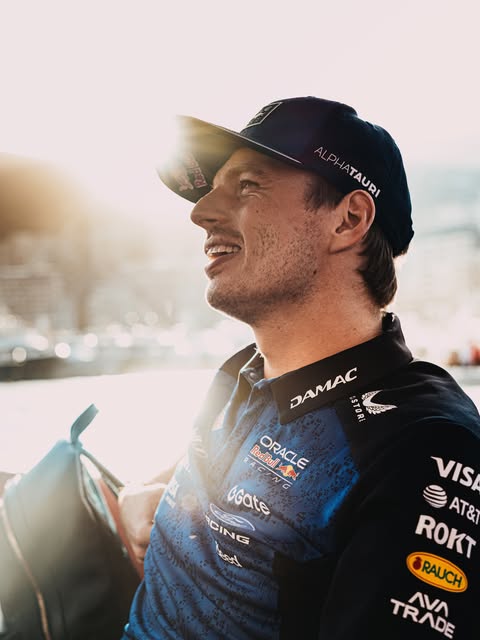
Max Verstappen put Red Bull back on the podium at the 2026 Austrian Grand Prix, finishing second behind George Russell’s Mercedes after the team arrived at the Red Bull Ring with the third major evolution of the RB22. It was the clearest sign yet that Red Bull’s long climb back to competitiveness is nearly complete.
Key Takeaways
Red Bull’s third RB22 evolution brought them from over a second off the pace at the season opener to within a tenth at Austria.
The Miami update package had already halved the gap to half a second before the Red Bull Ring upgrade landed.
Verstappen’s P2 in Austria 2026 is Red Bull’s strongest race result of the entire 2026 season to date.
George Russell and Mercedes took the Austrian Grand Prix win, with Verstappen right on the rear wing throughout the closing laps.
From a Second Back to Striking Range
Red Bull arrived at the 2026 Austrian Grand Prix having closed a gap that stood at more than 1.0 second at the start of the season down to what team boss Laurent Mekies described as “within the last tenth.” That figure — from roughly 1.0 s adrift to approximately 0.1 s — tells the story of a team that has reverse-engineered its own deficit across three distinct upgrade cycles in fewer than 12 rounds of racing.
The turnaround started at the Miami round, where a targeted aerodynamic package cut the deficit to approximately 0.5 s per lap. The third evolution of the RB22, unveiled at the Red Bull Ring, closed the remaining gap and allowed Max Verstappen to race wheel-to-wheel with the fastest car on the grid. Laurent Mekies was direct after Sunday’s race: “We started the season more than a second away from the pace. The Miami package took us to half a second and now we seem to be within the last tenth, certainly within striking range.”
Three upgrade steps, roughly 0.9 s recovered. In the context of a regulation cycle as demanding as the 2026 rules, that rate of development is rare. Red Bull’s engineering group has quietly been running parallel CFD and wind-tunnel programmes since the pre-season test, and the Austria package was the product of that dual-stream process landing at the same time.
Verstappen’s Afternoon: Hunting Russell
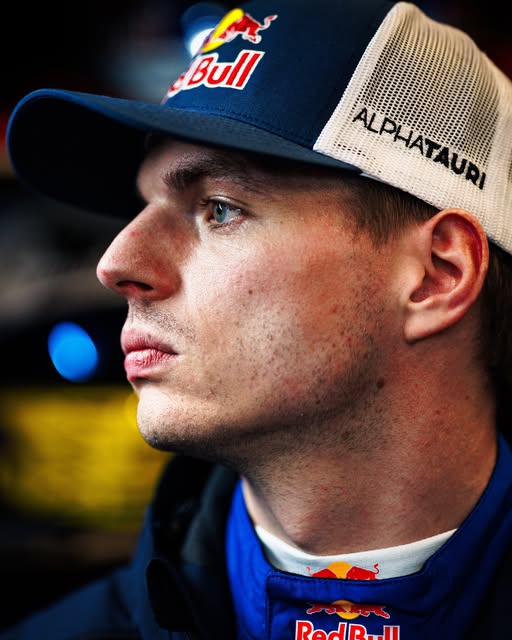
Max Verstappen crossed the line in second place on Sunday in Spielberg, pushing George Russell’s Mercedes all the way to the flag in what was Red Bull’s best result of the 2026 season by a clear margin. The gap between them at the end was narrow enough that the result felt less like a comfortable one-two and more like a race Verstappen was genuinely threatening to win.
For those watching from the grandstands at the 4.318 km Red Bull Ring circuit, the Austrian home crowd — Verstappen has been adopted as a local hero by the orange-clad fans who travel to Spielberg every summer — had real reasons to believe a last-lap lunge was possible. The DRS zones on the run to Turn 3 and along the straight toward Turn 6 gave the RB22 enough straight-line opportunity to stay within striking range lap after lap.
Russell, for his part, managed the gap with the composure that has defined his 2026 season. The Mercedes W16 proved marginally superior in traction zones, and that small but consistent advantage was enough to keep the Briton ahead. Still, the story of the afternoon was not the win but what Verstappen’s second place means for the remainder of the season.
Helmet and Livery at the Podium
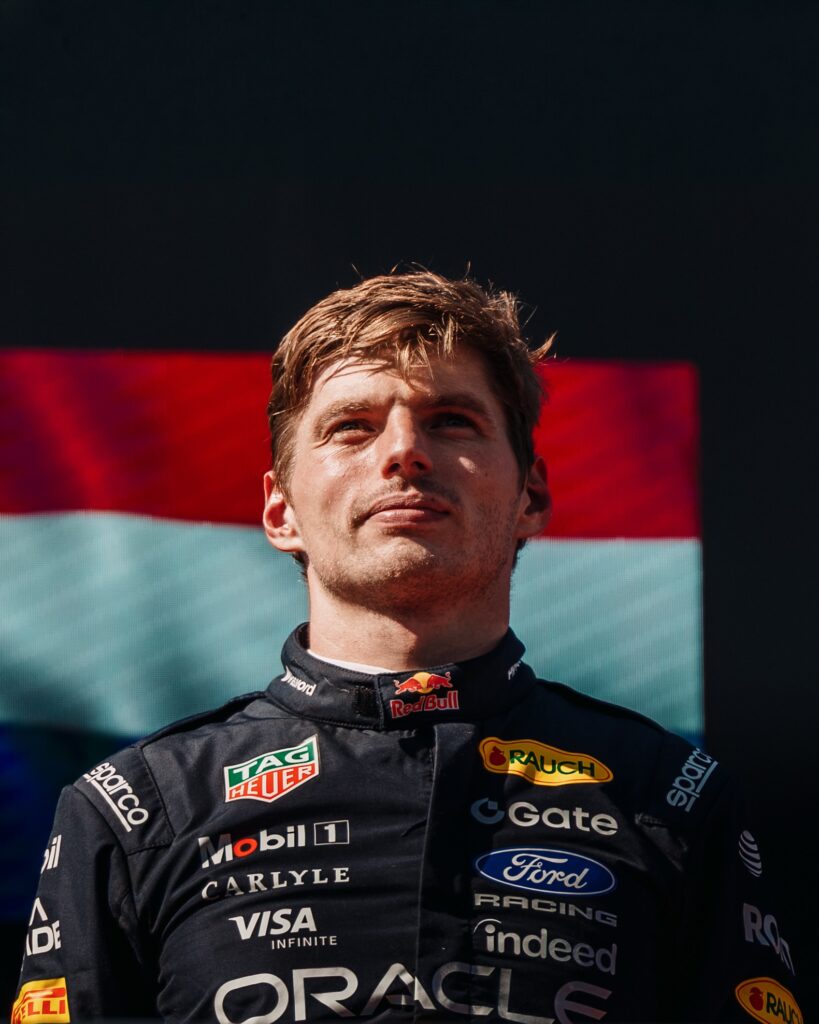
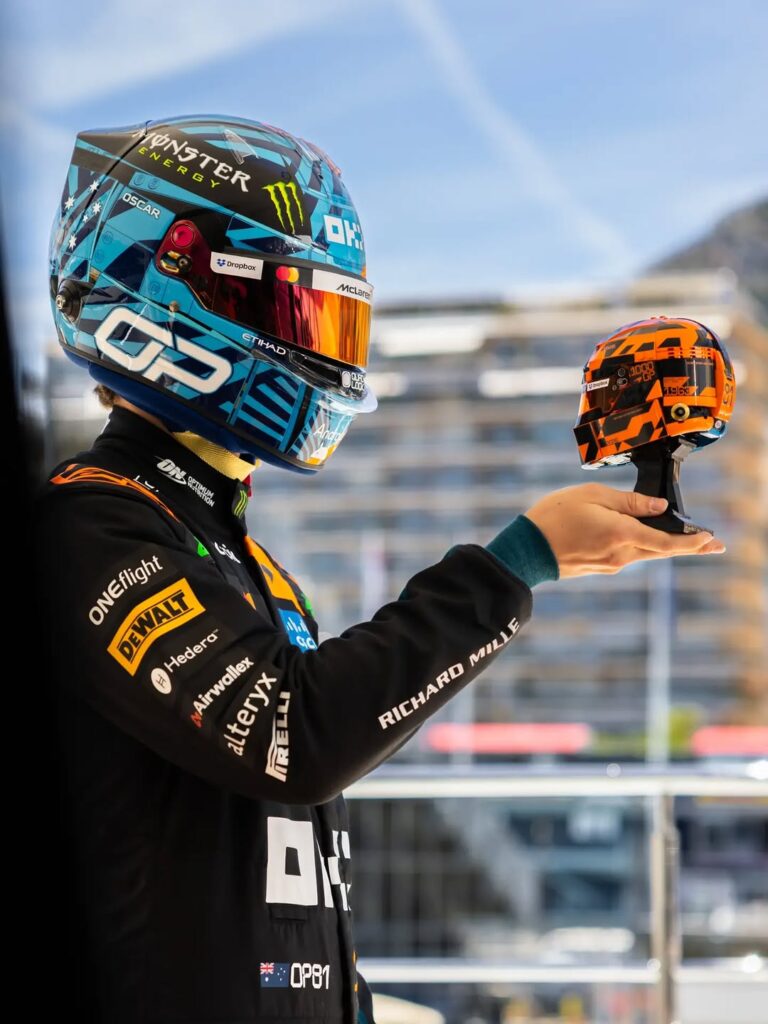
Verstappen’s 2026 Austrian Grand Prix helmet is finished in his characteristic deep blue and orange colour scheme — the same palette that has defined his personal branding since he entered Formula 1. On the podium at Spielberg, with the afternoon light catching the polished shell, the contrast against the matte silver of Russell’s Mercedes cap and overalls made for one of the more visually striking podium lineups of the season. The RB22’s livery in its third-evolution specification carries subtle aerodynamic body graphics that differ from the season-opening specification — additional detail that collectors and display enthusiasts will notice immediately when comparing replica pieces from the pre-Miami and post-Austria versions of the car.
The RB22 Third Evolution: What Changed
The third evolution of the RB22 is the most significant aerodynamic revision Red Bull has brought to a single race weekend in the 2026 season, targeting downforce balance, floor edge efficiency and front wing load distribution simultaneously. While Red Bull have not published full technical specifications, the visual changes at the Red Bull Ring were clear: a revised rear diffuser geometry, updated floor edge fences and a modified front wing endplate profile.
These are precisely the areas where the 2026 technical regulations — which introduced a ground-effect floor philosophy different from the 2022–2025 cars — have exposed the performance gaps between teams. Red Bull’s early-season RB22 suffered from inconsistent floor loading under braking, which cost lap time in sectors featuring slow-speed chicanes. The Austria package addressed that instability.
Laurent Mekies framed the development arc clearly: three stages, each measurably faster. At the season opener the gap was greater than 1.0 s. After Miami it was approximately 0.5 s. After Austria it is, in Mekies’s own words, “within the last tenth.” From a display replica perspective, the Austria-specification RB22 livery is the most collectible version of the 2026 car to date — it is the specification associated with Red Bull’s return to the podium, and that narrative carries weight for collectors building a season-specific display.
George Russell and the Mercedes Response
George Russell won the 2026 Austrian Grand Prix for Mercedes, converting pole position into a race victory despite sustained pressure from Verstappen in the closing stages. It was a result that underlined Mercedes’ status as the team to beat in the second half of the 2026 season, though the margin over Red Bull is now thin enough that the outcome at the next round is genuinely open.
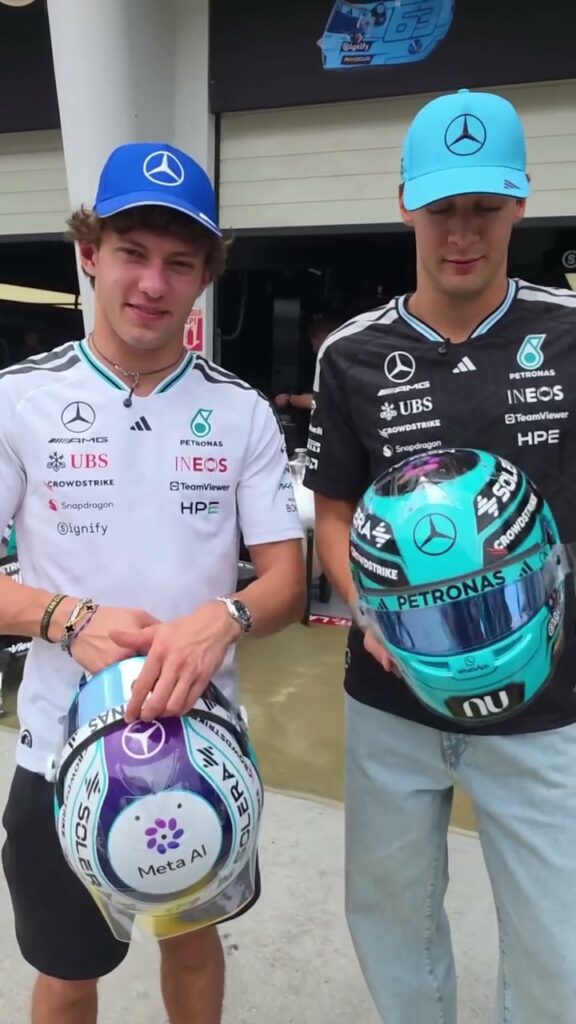
Russell’s race helmet for Austria 2026 featured his standard white-base design with teal and black geometric sections — a clean, high-contrast look that photographed sharply from the pitlane cameras and stood out on the Spielberg podium against Verstappen’s orange-blue. For display replica collectors focused on the 2026 Austrian Grand Prix podium moment, the Russell and Verstappen helmet designs from this specific weekend represent a visually complementary pairing: cool silver-teal against warm orange-blue.
From a competitive standpoint, Mercedes now hold the advantage of a development lead, but Red Bull’s rate of improvement through three consecutive upgrade packages suggests that lead could narrow further. The next two rounds — both at circuits with different downforce requirements to Spielberg — will clarify whether the RB22’s third evolution is a circuit-specific strength or a genuine all-round step forward.
Display-Worthy Moments from Spielberg 2026
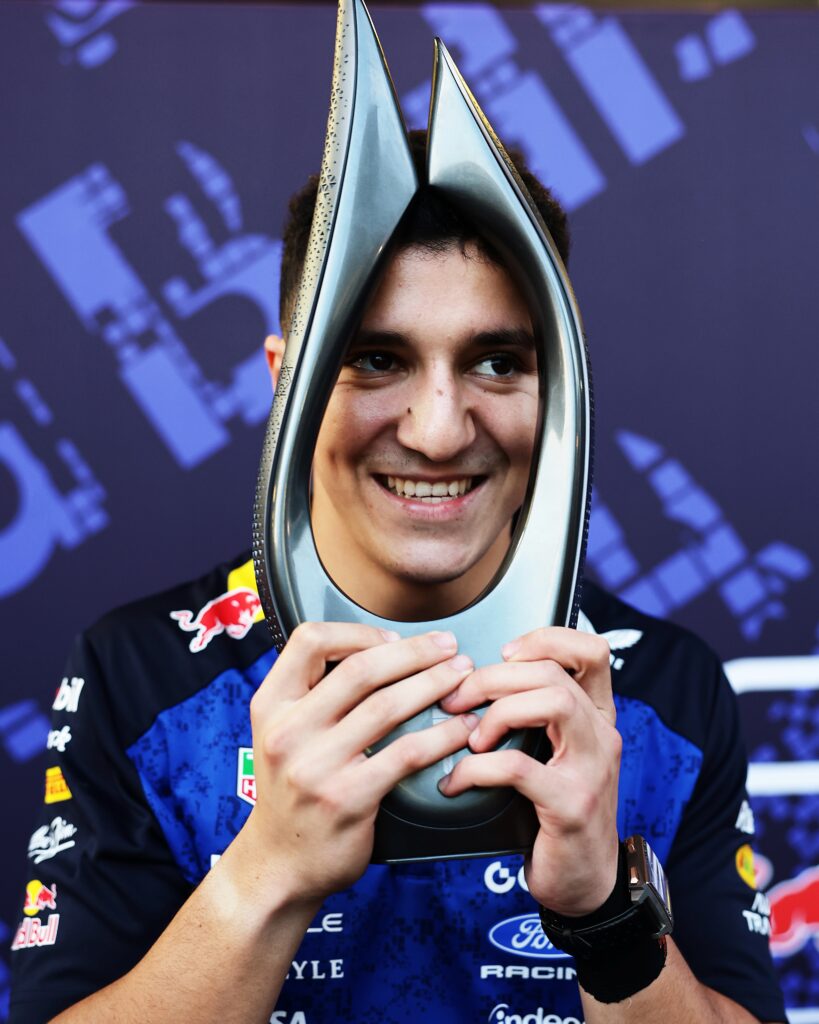
The Austrian Grand Prix weekend produced several visually defining moments that make the 2026 Spielberg race a strong reference point for display and collector replica pieces. The podium ceremony on Sunday afternoon, with Verstappen in full Red Bull Racing kit alongside Russell’s Mercedes livery under the clear Alpine sky above Spielberg, is the kind of image that defines a season chapter.
Full-size 1:1 collector replica helmets from this weekend — display pieces, not certified for any protective use — capture the exact colourways that appeared on track. Verstappen’s Austria 2026 helmet replica faithfully reproduces the deep matte blue base, the orange gradient across the top section, the dark visor band, and the sponsor graphics in their current-season positions. At 1:1 scale, a replica of this helmet measures approximately 29 × 25 × 35 cm and weighs around 1.2–1.5 kg — dimensions that allow it to sit on a standard helmet display stand without additional mounting hardware.
The significance of Austria 2026 for a display collection is straightforward: this is the race where Red Bull closed the gap to within 0.1 s of the pace-setter and stood on the podium. That is a documented, specific moment in the 2026 season. Collector pieces tied to moments of documented competitive significance hold their reference value over time precisely because the story is clear and verifiable.
Helmet Design as Season Record
A 1:1 replica helmet from the 2026 Austrian Grand Prix is, in practical terms, a physical record of where the season stood on 28 June 2026. The colourways, sponsor layouts and finish specifications on the shells are specific to this point in the season — before any further livery updates that may appear in the second half of the year. For collectors who document season history rather than simply accumulate pieces, the Austria specification is the one to acquire now, before mid-season updates alter the look of either the Verstappen or Russell helmets.
What Austria Means for the Rest of 2026
Red Bull’s Austria result means the 2026 constructors’ fight is no longer a one-team story. With Mercedes ahead but Red Bull now within approximately 0.1 s of the pace at a representative circuit, the championship standings will tighten if the RB22’s third evolution performs similarly at circuits with different corner speeds and downforce requirements.
Laurent Mekies used the phrase “striking range” after the race — and that is the key phrase. It means Red Bull believe they can fight for victories, not merely podiums, in the second half of the 2026 season. For Verstappen, who has shown throughout his career that a competitive car translates quickly into wins once the gap closes, that assessment matters. He pushed Russell for the entire final third of the Austrian race. A further 0.1 s in either direction, and the result could have been reversed.
For the display and collector replica market, the second half of 2026 now promises a genuine multi-team fight at the front — which historically produces the most collectible helmet and livery moments of any season. Podiums involving two or more teams, lead changes and close racing create the visual moments that define a year. Austria 2026 was the race that made that kind of second half possible. Verstappen’s deep-blue and orange shell, captured in a 1:1 display replica at this precise specification, is the physical marker of the moment Red Bull came back.
“We started the season more than a second away from the pace. The Miami package took us to half a second and now we seem to be within the last tenth, certainly within striking range.”
— Laurent Mekies, Red Bull Team Principal, 2026 Austrian Grand Prix
FAQ
Q: What was Max Verstappen’s result at the 2026 Austrian Grand Prix?
Verstappen finished second at the 2026 Austrian Grand Prix, making it Red Bull’s best result of the 2026 season. He pushed George Russell’s Mercedes throughout the closing stages but could not pass the Briton for the lead.
Q: What is the RB22 third evolution and what did it change at Austria?
The third evolution of the RB22 is the most comprehensive aerodynamic update Red Bull brought to a single race in 2026, featuring changes to the rear diffuser, floor edge fences and front wing endplate geometry. It reduced Red Bull’s pace deficit from approximately 0.5 s (after the Miami package) to within 0.1 s at Spielberg.
Q: Who won the 2026 Austrian Grand Prix?
George Russell won the 2026 Austrian Grand Prix for Mercedes, converting pole position into a race victory despite late pressure from Verstappen’s Red Bull.
Q: Are the 1:1 replica helmets from the 2026 Austrian Grand Prix certified for safety use?
No. These are display and collector replica pieces only — full-size 1:1 scale, exhibition quality items. They are not certified for any protective, road or racing use under any standard including FIA, Snell, ECE or DOT.
Q: Why is the Austria 2026 Verstappen helmet significant for collectors?
The Austria 2026 specification is the helmet associated with Verstappen’s podium return and Red Bull’s closure of the gap to within 0.1 s of the pace leader — a documented turning point in the 2026 season. At 1:1 scale, the replica measures approximately 29 × 25 × 35 cm and weighs around 1.2–1.5 kg, fitting standard display stands without modification.
Shop Max Verstappen Collection
Display and collector replicas only. Not certified for protective use. Full-size 1:1 scale.
This article was written with the help of AI tools. Editorial policy