Blog
Shell & Ferrari: 75 Years of F1 Innovation
 123Helmets Editorial Team
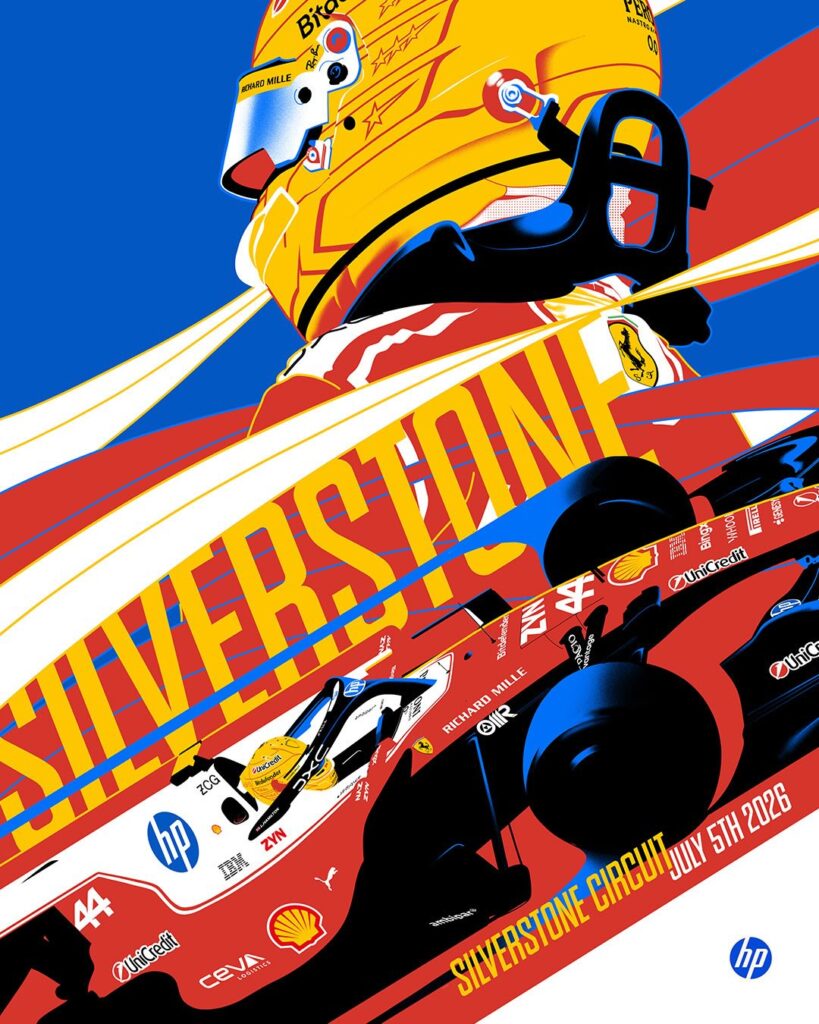
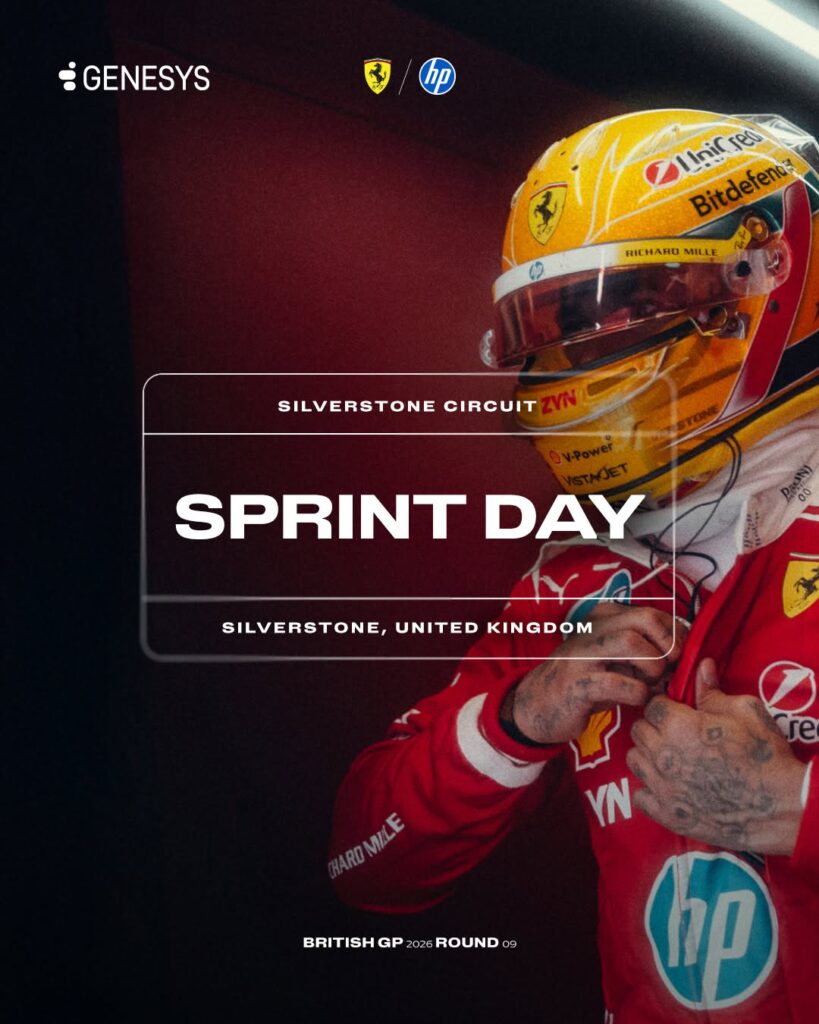
The 2026 British Grand Prix marks 75 years since Shell and Scuderia Ferrari HP won their first F1 race together — a partnership built on engineering, not just logos.
Key Takeaways
Shell and Scuderia Ferrari HP celebrate the 75th anniversary of their first race win together at the 2026 British Grand Prix.
Shell engineers based in Hamburg and across a global R&D network work directly with Ferrari’s team in Maranello and at each race weekend.
The partnership produces bespoke fuels and lubricants engineered specifically for Ferrari’s 2026 power unit — not off-the-shelf products.
Shell’s F1 programme encompasses more than 38,000 hours of development work, feeding discoveries directly into road fuel and lubricant products.
A 75-Year Milestone at the 2026 British Grand Prix
The 2026 Formula 1 British Grand Prix marks the 75th anniversary of Shell and Scuderia Ferrari HP’s first F1 race win together — a date that places this collaboration among the longest-running technical partnerships in all of motorsport. That first shared victory came in 1951, when fuel and lubricant quality were already decisive performance factors, and nothing in the decades since has changed that calculation.
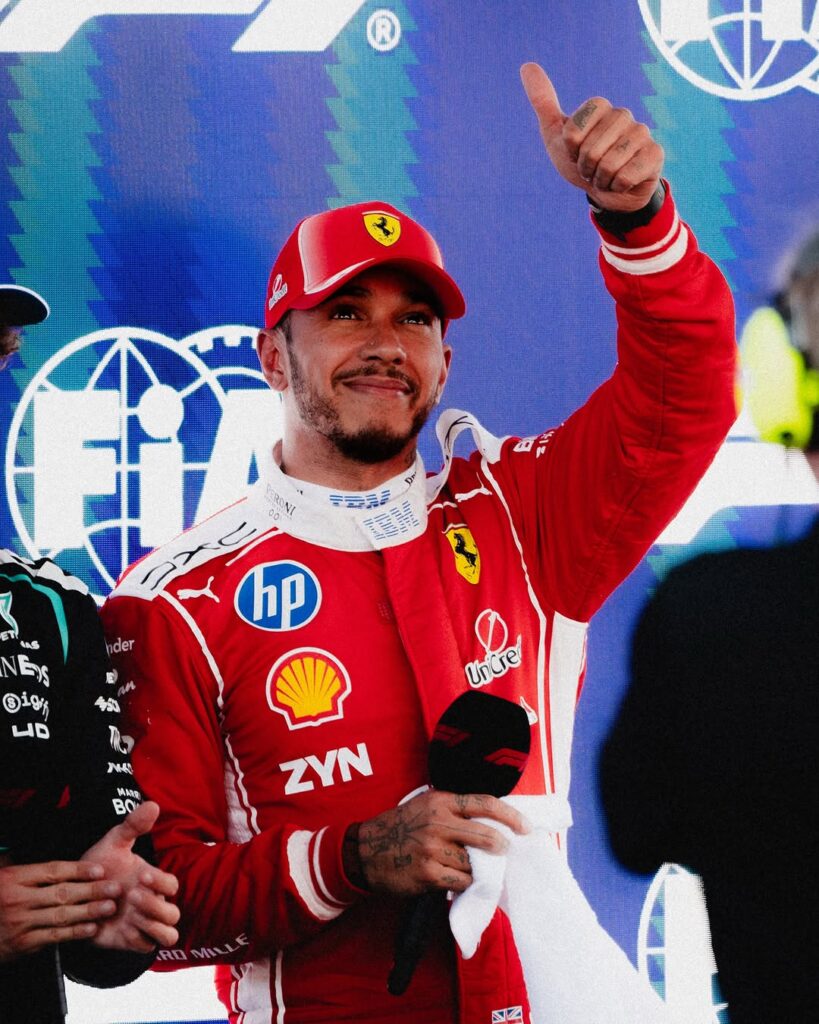
The Shell logo has appeared on Ferrari’s cars across generations of machinery, from front-engined grand prix cars to the current 2026 hybrid-era power units. For collectors and fans who own a Ferrari display helmet, that red Shell shell on the livery is a shorthand for continuity — proof that some partnerships outlast regulations, engine formulas and even entire eras of the sport.
What makes the 2026 anniversary significant is not just longevity. It is the fact that the relationship has never been static. Shell’s Principal Scientist of Motorsports, Valeria Loreti, describes it plainly: “For more than 75 years, Shell has contributed technology, expertise and research that help Scuderia Ferrari HP compete at the highest level.” That kind of statement carries weight when it is backed by 75 consecutive racing seasons of evidence.
Why Shell Calls It an Innovation Partnership
Shell describes its work with Scuderia Ferrari HP as an “Innovation Partnership rather than a sponsorship” — a distinction that reflects how deep the technical integration actually runs. Loreti is direct on this point: “The real value of the relationship lies in the technical collaboration that happens behind the scenes every day.”
The practical meaning of that phrase is specific. Shell scientists and engineers, based at the Shell Technology Centre in Hamburg and across a global R&D network, work alongside Ferrari’s engineers both at the factory in Maranello and at race weekends throughout the 2026 season. Their work covers four distinct activities: analysing performance data, running structured testing programmes, developing new fuel and lubricant formulations, and identifying reliability improvements before they become problems on track.
This is not a marketing arrangement where a logo goes on a car in exchange for a cheque. It is a continuous technical programme that has direct consequences for lap times and engine reliability every race weekend. When Ferrari’s power unit runs a qualifying lap at full power in 2026, the fuel in that engine was engineered specifically for that machine — not adapted from a general catalogue product.
What Bespoke Really Means
“Shell and Scuderia Ferrari HP work together to develop bespoke fuels and lubricants specifically engineered for the team’s power unit,” says Loreti. In practice, bespoke means the formulation accounts for Ferrari’s specific combustion geometry, operating temperatures, and the thermal demands of the 2026 hybrid architecture. A lubricant developed for a road car, even a high-performance one, is a different product from one engineered to survive the load cycles of an F1 power unit running at race pace.
What 38,000 Hours of Development Looks Like
Shell’s F1 programme encompasses more than 38,000 hours of development work — a figure that puts the scale of this technical operation into perspective. That represents thousands of individual test runs, data reviews, formulation iterations and engineering sign-offs, all directed at making Scuderia Ferrari HP faster and more reliable in the 2026 season and beyond.
Those 38,000-plus hours do not disappear into a motorsport silo. Shell’s stated model is that Formula 1 provides “an unrivalled environment to accelerate innovation, generating insights that can ultimately benefit millions of customers through the products and solutions we develop for the road.” The extreme operating conditions of an F1 power unit — sustained high temperatures, rapid load changes, minimal tolerance for lubricant degradation — create test scenarios that road-use development programmes could not easily replicate.
The direction of technology transfer runs both ways. Ferrari’s engineers bring performance targets; Shell’s scientists bring chemistry. When a new formulation improves fuel energy density or reduces friction losses inside the engine, that knowledge eventually informs the next generation of Shell’s commercial products. This feedback loop is why Shell frames the partnership as an R&D investment rather than a marketing cost.
The Hamburg–Maranello Axis
Shell’s Technology Centre in Hamburg is one of the two fixed geographical poles of this partnership, with Ferrari’s factory in Maranello, Italy, as the other. Between those two locations, a continuous exchange of data, samples and personnel keeps the programme running across the full 2026 calendar.
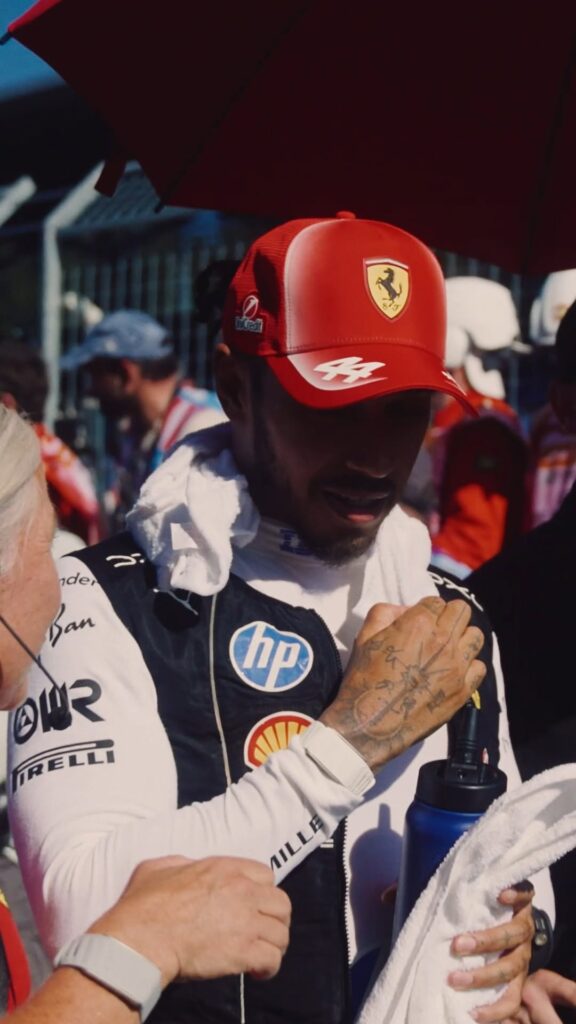
Race weekends add a third node. Shell engineers travel with the team, monitoring how fuels and lubricants perform under actual race conditions — ambient temperatures, track surface characteristics, safety car periods, race pace versus qualifying pace. The data gathered on a Saturday in qualifying at Silverstone in 2026 feeds back into Hamburg and Maranello before the following race weekend begins.
For followers of the sport who display a Scuderia Ferrari HP replica helmet at home or in an office, this geographic and logistical network is invisible. What is visible is its output: a competitive F1 car whose engine reliability and fuel efficiency reflect 75 years of accumulated engineering knowledge carried in the fuel tank and the lubrication system.
Engineering at the Race Venue
On-site engineering support at grands prix is not symbolic. Shell’s personnel at race weekends carry out real-time analysis, comparing pre-race fuel batch data against live telemetry to confirm that the fuel is performing within the parameters set during development. Any deviation is flagged immediately. This is a working technical operation, not a hospitality presence.
Collecting the Ferrari Legacy: Helmets as Historical Record
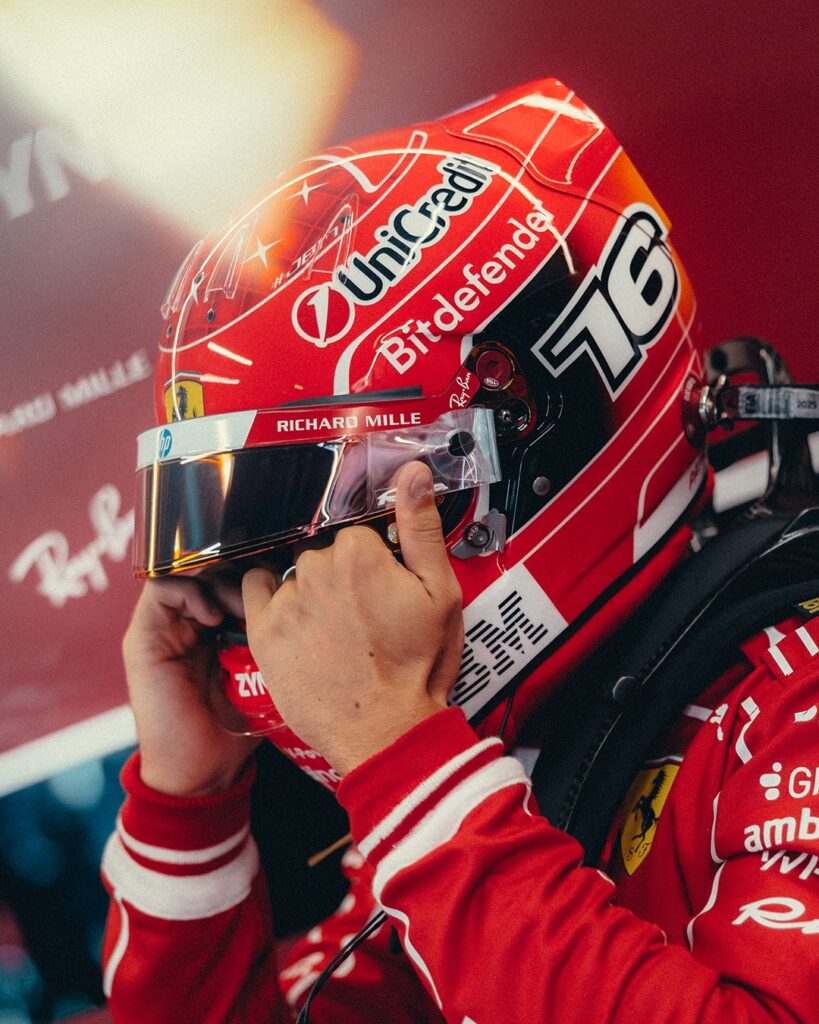
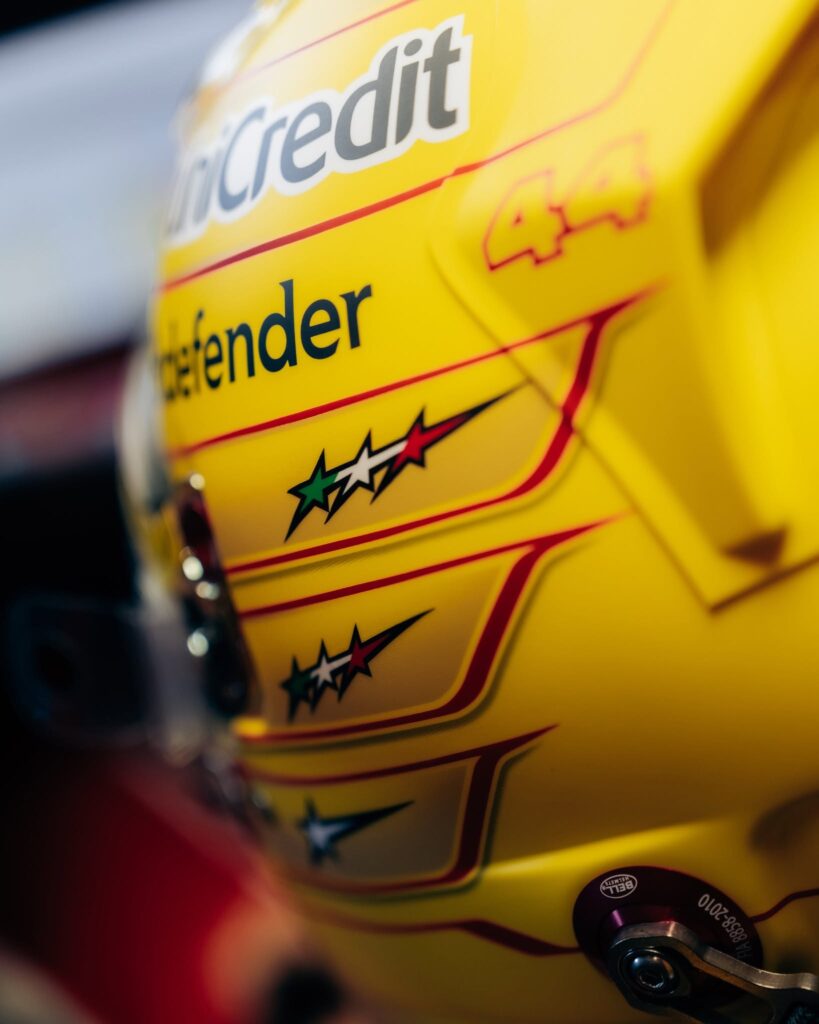
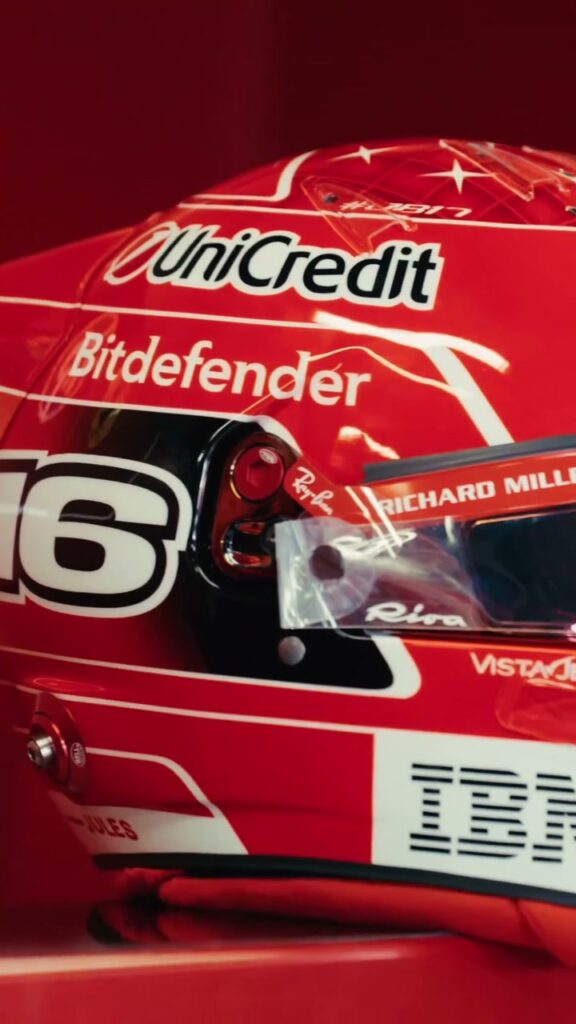
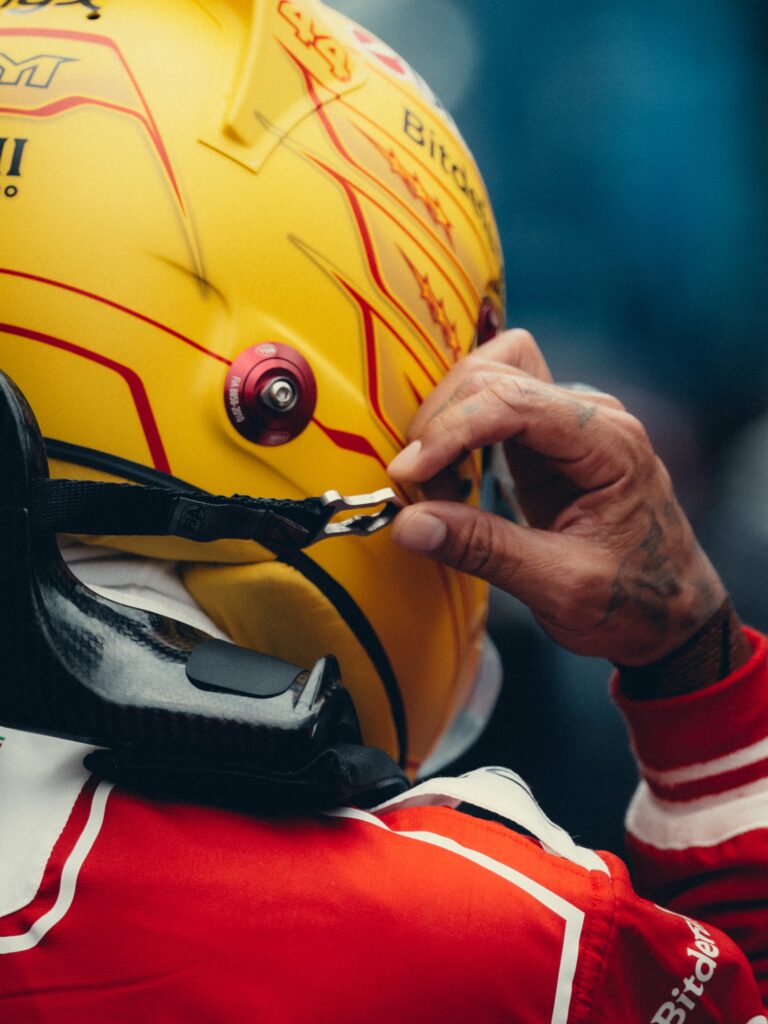
Full-size 1:1 collector replica helmets worn by Ferrari’s drivers in the 2026 season are display pieces that carry the visual record of this 75-year partnership directly into a collector’s home. The Shell branding on the car livery and on race-worn helmets is not incidental — it is part of a visual identity that has run continuously since 1951.
A display helmet from the 2026 British Grand Prix weekend is a physical reference point for the anniversary itself. Collectors who follow the technical side of Formula 1 understand that the Shell logo on a Ferrari helmet represents something beyond a commercial arrangement — it marks a partnership that has contributed to every Ferrari world championship and every race win in that 75-year span.
123Helmets.com produces exhibition-quality, full-size 1:1 scale replica helmets at display standard. These are collector items only — not certified for any protective use and not intended for road or track wear. The helmets replicate the paint schemes, sponsor graphics and visor tinting of the originals as display pieces, preserving the visual record of seasons like 2026 for the long term.
The Shell branding that appears on current Ferrari helmets in the 2026 season — alongside HP’s title sponsorship colours — reflects the most recent chapter of a partnership that predates most of the teams currently on the grid. For a heritage collector, that layering of history on a single display piece is exactly what makes a season-specific helmet worth acquiring.
Why the 2026 Season Amplifies the Anniversary
The 2026 Formula 1 season is itself a technical reset year, with new power unit regulations changing the balance between combustion and electrical energy recovery. Shell’s role in that transition is not ceremonial. Developing a fuel formulation for a 2026-spec power unit — one designed around a different combustion cycle and different hybrid architecture than its predecessor — required the full depth of the Hamburg R&D operation and the collaborative engineering process with Ferrari in Maranello.
The 75th anniversary therefore lands in a season where the technical partnership is arguably under more pressure than at any point in recent history. New regulations mean new variables in combustion chemistry, new thermal profiles and new demands on lubricant stability. The fact that Shell and Ferrari entered this regulation cycle together, with 75 years of shared engineering history behind them, is a material advantage — accumulated knowledge of how Ferrari’s power units behave under development does not have to be rebuilt from scratch.
Loreti’s framing of Formula 1 as “an unrivalled environment to accelerate innovation” is particularly relevant in a regulation-change year. The 2026 season generates more new data per race weekend than a stable-regulation season would, because every performance variable has shifted. That data feeds directly into Shell’s global R&D network — and into the continued development of Ferrari’s 2026 package as the season progresses through the second half of the year.
“The real value of the relationship lies in the technical collaboration that happens behind the scenes every day.”
— Valeria Loreti, Shell Principal Scientist of Motorsports
“Formula 1 provides an unrivalled environment to accelerate innovation, generating insights that can ultimately benefit millions of customers through the products and solutions we develop for the road.”
— Valeria Loreti, Shell Principal Scientist of Motorsports
FAQ
Q: When did Shell and Ferrari win their first F1 race together?
Shell and Scuderia Ferrari HP won their first Formula 1 race together in 1951 — 75 years before the 2026 British Grand Prix, which marks the anniversary.
Q: What does Shell actually do for Ferrari’s F1 programme?
Shell develops bespoke fuels and lubricants engineered specifically for Ferrari’s power unit, working from its Technology Centre in Hamburg alongside Ferrari’s engineers in Maranello and at each race weekend throughout the 2026 season.
Q: How many development hours does Shell’s F1 programme involve?
Shell’s F1 programme encompasses more than 38,000 hours of development work, covering data analysis, testing, new formulation development and reliability improvement across the partnership.
Q: Are the Ferrari display helmets at 123Helmets certified for racing use?
No. The Ferrari replica helmets at 123Helmets.com are full-size 1:1 scale display and collector pieces only — they are exhibition-quality items, not certified for any protective, road or track use.
Q: Why is the Shell–Ferrari partnership described as an Innovation Partnership rather than a sponsorship?
Shell uses the term Innovation Partnership because the relationship centres on active technical collaboration — developing race-specific fuels and lubricants, running shared testing programmes and exchanging engineering data — rather than a logo placement arrangement.
Shop Ferrari Helmets
Display and collector replicas only. Not certified for protective use. Full-size 1:1 scale.
This article was written with the help of AI tools. Editorial policy