Blog
McNish: Austria Was Audi’s Best Weekend of 2026
 123Helmets Editorial Team
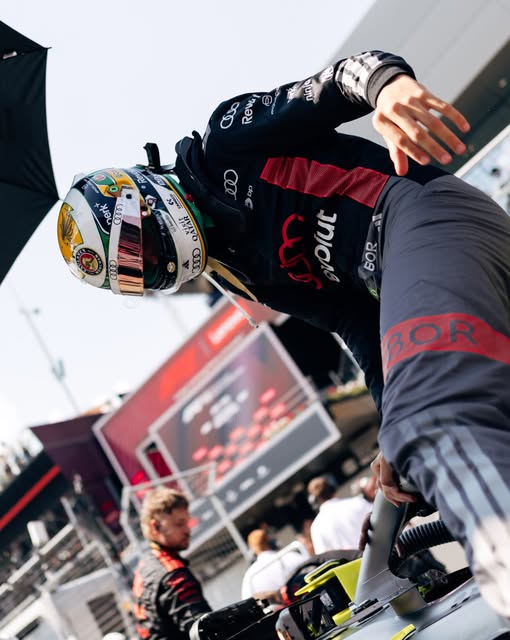
Allan McNish called the 2026 Austrian Grand Prix Audi’s best weekend of the season so far — a P11 and P12 for Gabriel Bortoleto and Nico Hülkenberg that told a story of a team finally getting everything right, even if the points column stayed empty.
Key Takeaways
Audi’s R26 ran without technical issues all weekend in Austria — the first clean run of 2026 after several non-starts and reliability problems.
Gabriel Bortoleto and Nico Hülkenberg finished P11 and P12, just outside the points for the fifth time in 2026, beaten in the midfield only by Racing Bulls.
A significant aerodynamic upgrade package arrived at the Red Bull Ring and performed as expected — strong news for circuits where power unit output matters less.
Audi’s power unit deficit is benchmarked at roughly one second per lap at power-sensitive venues — making the Red Bull Ring one of the toughest stops on the calendar for the Hinwil team.
A P11 and P12 That Felt Like a Win
Audi left Austria in 2026 without a point, yet Racing Director Allan McNish described the weekend as the squad’s strongest performance of the year. Gabriel Bortoleto and Nico Hülkenberg crossed the line in P11 and P12 respectively at the Red Bull Ring — one position short of the top ten for the fifth time in 2026. By the cold maths of the championship standings, it was nothing. By the internal measure of how a young constructor benchmarks progress, it was a step McNish was not prepared to understate.
“To be honest, I think it was our best weekend so far in terms of all the runs through Free Practice, Qualifying, race, getting the maximum out of the car,” McNish said after the race. That phrase — getting the maximum out of the car — is the lens through which the entire Austrian weekend needs to be read. Audi did not leave performance on the table. The R26s did what the R26s were capable of doing, and in a season marked by non-starts and technical gremlins, that consistency counted for a great deal inside the Hinwil garage.
The Red Bull Ring hosts one of the shortest laps on the calendar, a circuit that punishes power unit deficits more harshly than almost anywhere else. Audi entered the weekend already knowing the odds were stacked against them. The fact that both cars reached the flag, ran in close company, and split the Racing Bulls entry by only a handful of seconds was treated internally as meaningful validation rather than near-miss frustration.
The Power Unit Gap Is Real — and Understood
Audi’s power unit deficit in 2026 has been quantified publicly by Team Principal Mattia Binotto at approximately one second per lap at power-sensitive venues — a number that frames every result the team produces at tracks like Spa, Monza, and the Red Bull Ring. The Spielberg layout, with its long flat-out sections and relatively few slow corners, is precisely the kind of circuit where that gap is felt most acutely in qualifying and race trim.
McNish did not attempt to minimise the deficit. He acknowledged it directly: “Performance around this circuit was always going to be a little bit trickier.” His point, instead, was that the aero upgrade package brought to Austria worked as the engineers designed it to work. The aerodynamic gains were real, measurable during free practice, and held up across qualifying and the race distance. The upgrades, in other words, did not flatter to deceive — they delivered against their targets on a weekend when the power unit was an anchor rather than an asset.
That distinction matters. An upgrade that performs on a power-limited circuit gives the team genuine confidence for what follows. Circuits like Budapest, Singapore, and Monaco place a much higher premium on downforce and mechanical grip than on raw horsepower. If the new aero package holds its gains at those venues, Audi’s competitive picture shifts meaningfully. McNish made the logic explicit: when the team travels to tracks where horsepower is less of a determining factor, they now have a strong reason to believe the package will perform. That is a different kind of optimism from the cautious hope that defined earlier rounds of 2026.
Why Racing Bulls Were the Decisive Factor
The team that stood between Audi and a points finish at the 2026 Austrian Grand Prix was Visa Cash App Racing Bulls — formerly AlphaTauri — whose pace in the midfield proved decisive. McNish named them plainly: “The VCARBs were quicker. End of story. And once they’re ahead, it’s very difficult to race them.”
Racing Bulls benefited from a Honda power unit that is generally regarded as one of the stronger units in the field, giving them a clear natural advantage at a track as power-dependent as the Red Bull Ring. With no retirements ahead of the Audis across the full race distance, there was no opportunity for circumstance to change the order. The race ran clean, which is often the worst-case scenario for a team relying on attrition to climb from a genuine pace deficit.
What the result confirmed, however, is that Audi is firmly anchored in the midfield fight rather than running at the back of the field. The gap to Racing Bulls was not a chasm; it was the kind of margin that circuit characteristics and upgrade packages can address. For a constructor in only its second season at this level, fighting inside the top twelve on one of the toughest weekends on the calendar — without mechanical failures and without strategic errors — represents a solid baseline from which to build. Audi’s trajectory inside that midfield battle is pointing in the right direction.
Driver Performance: Bortoleto and Hülkenberg Delivered
McNish was clear that neither Gabriel Bortoleto nor Nico Hülkenberg left anything on the circuit. “They delivered everything out of it,” he said, a verdict that carries weight precisely because the two cars finished so close together. When teammates push the same package to its absolute limit independently and arrive at the same answer, it is a reasonable signal that the limit of the car — not the drivers — was the constraint.
Bortoleto, in his debut season in Formula 1, continues to demonstrate the kind of racecraft that earned him the Audi seat. His qualifying lap at the Red Bull Ring showed a driver who understands the circuit’s technical demands: the high-speed complexes in sectors one and two require a specific setup balance that differs from what works in the short, tight third sector. Managing that balance across a full race stint on Austrian tarmac, while keeping pace with a far more experienced teammate, was not a trivial task.
Hülkenberg, meanwhile, brought the accumulated experience of multiple seasons in the midfield to bear. His race management across the stint — tire conservation, defensive positioning, gap control — was exactly what the team needed. The close finishing positions of P11 and P12 suggest that both drivers extracted the same theoretical maximum from the R26, a result McNish found genuinely encouraging as a reflection of the team’s overall execution rather than individual heroics covering for mechanical shortcomings.
Helmets, Livery, and the Visual Story of Austria 2026
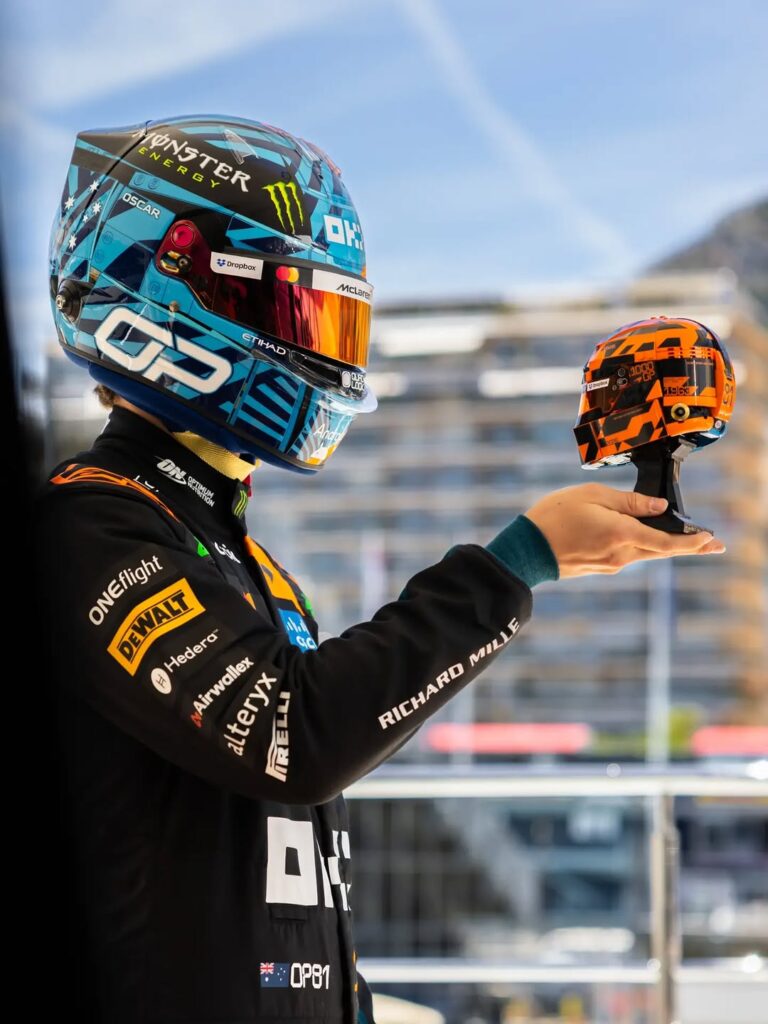
The 2026 Austrian Grand Prix produced the kind of sharp, photogenic moments that collectors and display enthusiasts notice — the kind that make a season’s helmet or livery meaningful beyond the race result alone. Audi’s 2026 colour scheme, built around a white and black base with controlled use of the brand’s signature red, reads particularly well against the backdrop of the Red Bull Ring’s grandstands and the Styrian hills behind the circuit.
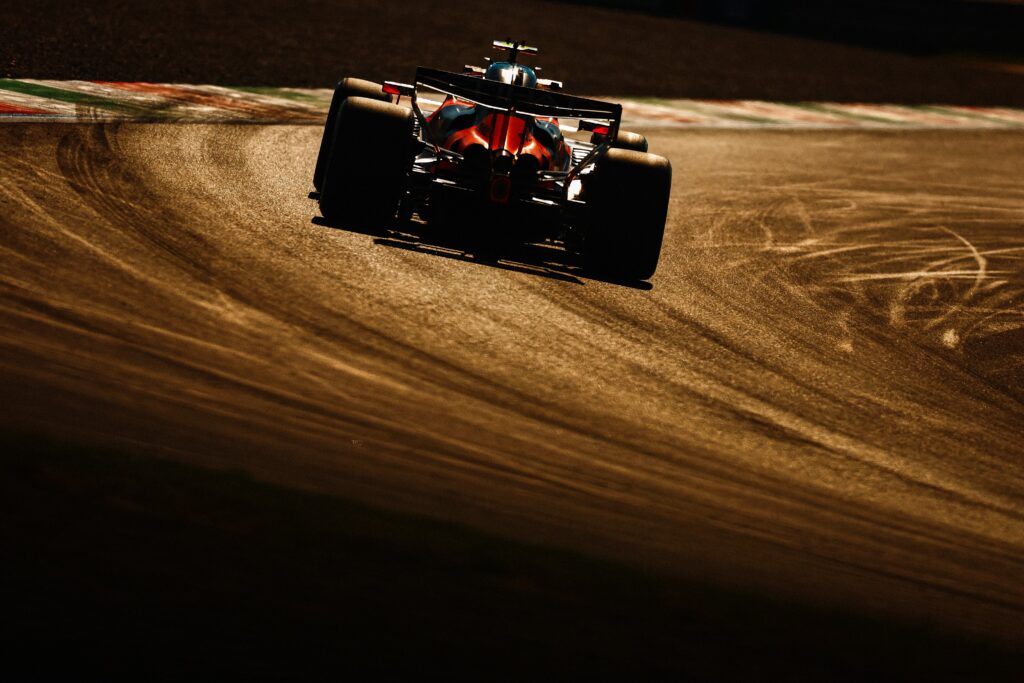
The Spielberg venue — situated at roughly 680 metres above sea level — gives photographers and broadcast cameras a quality of alpine light that is difficult to replicate at most other Formula 1 circuits. Helmets catch that light differently than at sea-level venues: the contrast is sharper, the metallics punch harder. For anyone building a display of 2026 season replicas, a full-size 1:1 collector replica of the Bortoleto or Hülkenberg Austria helmet captures a weekend that meant something inside the team’s history — the round where reliability finally matched ambition.
The R26’s livery, which uses a relatively minimal graphic language compared to some of the busier designs in the 2026 paddock, is the kind of scheme that ages well on a display shelf or in a framed exhibition context. The white panels are large enough to hold a helmet replica at 1:1 scale in visual balance — a consideration that matters when positioning a full-size display piece alongside team memorabilia. Full-size replicas at 1:1 scale reproduce every surface graphic, visor geometry, and sponsor placement exactly as the original item appeared in parc fermé, making them exhibition-quality records of a specific moment in a team’s competitive story.
Austria 2026 marks the point at which Audi stopped chasing reliability and started chasing pace — a shift that will likely define how collectors and observers frame the team’s early years in Formula 1 when looking back. A helmet from this weekend is not just a display piece; it is a fixed point on a timeline that was clearly moving forward.
What Comes Next for Audi in 2026
The 2026 season continues with upcoming rounds that include circuits better suited to Audi’s current package than the Red Bull Ring. Tracks where aerodynamic efficiency and mechanical grip dominate lap time — rather than power unit output alone — give the upgraded R26 a more level playing field against its immediate midfield rivals.
McNish’s Austria assessment was not complacency. It was a calibration. The team knows exactly what it is: a constructor with a power unit gap currently estimated at around one second per lap at sensitive circuits, armed with an aero package that has now been proven to work under race conditions. The combination of clean reliability, strong driver execution, and a confirmed upgrade trajectory gives Audi a credible argument for points finishes at the circuits ahead.
The first points score since Australia — where the team took P9 in the season opener — remains a target that shapes week-to-week decisions inside the Hinwil factory. Austria confirmed that the machine is functioning. The next step is finding the venue where the machine functions fast enough. Given the density of the midfield in 2026, one well-timed Saturday or a safety car at the right moment could be enough to flip the scoreboard. McNish knows it. Bortoleto and Hülkenberg know it. Austria 2026 was not a points finish — but it was the proof of concept the team needed before the season’s second half.
“To be honest, I think it was our best weekend so far in terms of all the runs through Free Practice, Qualifying, race, getting the maximum out of the car.”
— Allan McNish, Audi Racing Director, 2026 Austrian Grand Prix
“The VCARBs were quicker. End of story. And once they’re ahead, it’s very difficult to race them. Not very much happened in the race itself. So both Gabi and Nico, I thought, drove very, very well.”
— Allan McNish, Audi Racing Director, 2026 Austrian Grand Prix
FAQ
Q: Where did Audi finish at the 2026 Austrian Grand Prix?
Audi finished P11 and P12 at the 2026 Austrian Grand Prix, with Gabriel Bortoleto in eleventh and Nico Hülkenberg in twelfth. It was the fifth time in 2026 that the team finished just outside the points-scoring top ten.
Q: Why did Allan McNish call Austria Audi’s best weekend of 2026?
McNish called Austria Audi’s best weekend of 2026 because both cars ran without technical issues across all sessions — free practice, qualifying, and the race — and a significant aerodynamic upgrade package performed exactly as the engineers intended, despite the Red Bull Ring being one of the toughest venues for a team with a power unit deficit.
Q: How large is Audi’s power unit deficit in 2026?
Team Principal Mattia Binotto has benchmarked Audi’s power unit deficit at approximately one second per lap at power-sensitive venues in 2026. The Red Bull Ring is one of the circuits where that gap is felt most acutely.
Q: What makes a 2026 Audi F1 helmet replica display-worthy?
A full-size 1:1 collector replica of a 2026 Audi F1 helmet reproduces every surface graphic, visor geometry, and sponsor placement exactly as it appeared in the paddock — making it an exhibition-quality display piece and a precise visual record of a specific moment in Audi’s Formula 1 history. These are collector and display items only, not certified for any protective use.
Q: Which team beat Audi in the midfield at the 2026 Austrian Grand Prix?
Visa Cash App Racing Bulls (VCARB) were the team that finished ahead of Audi in the midfield at the 2026 Austrian Grand Prix. McNish acknowledged their pace advantage directly, noting that once Racing Bulls were ahead on a clean-racing circuit, it was very difficult to overtake them.
Browse F1 Helmet Collection
Display and collector replicas only. Not certified for protective use. Full-size 1:1 scale.
This article was written with the help of AI tools. Editorial policy