Blog
2026 Austrian Grand Prix: Race Recap & Helmet Guide
 123Helmets Editorial Team
The 2026 Austrian Grand Prix at the Red Bull Ring delivered another chapter in a season already defined by shifting power. Ferrari arrived in Spielberg having broken Mercedes’ unbeaten run at the Circuit de Catalunya, and the pressure on Red Bull on home soil was immediate. Here is a full race recap with a close look at the helmet and livery moments worth adding to any serious F1 display collection.
Key Takeaways
Ferrari entered the 2026 Austrian Grand Prix with momentum after ending Mercedes’ win streak at Barcelona, making the Red Bull Ring a three-way contest worth watching closely.
Red Bull Racing’s home race at Spielberg always produces distinct helmet liveries — drivers typically run special Austrian GP editions that are among the most display-worthy of the season.
US-based F1 fans can now watch all 2026 season coverage live on Apple TV, a significant shift in North American broadcast rights this year.
Full-size 1:1 replica helmets from podium finishes like the Austrian Grand Prix are display pieces, not certified protective equipment — always verify before purchase.
The 2026 Austrian Grand Prix at a Glance
The 2026 Austrian Grand Prix took place at the Red Bull Ring in Spielberg, Austria, one of the shortest and most intense circuits on the F1 calendar at just 4.318 km per lap. Red Bull Racing entered their home event under real pressure: Ferrari had already shown at the Circuit de Catalunya that they could dismantle what had looked like a comfortable Mercedes advantage, and Spielberg’s low-downforce, high-speed layout was expected to suit multiple chassis philosophies in the new 2026 regulation era.
The Red Bull Ring hosted not only the main Formula 1 race but also Formula 2 and Formula 3 support races across the weekend, giving fans a full programme of single-seater action from Friday practice through to Sunday afternoon. UK viewers had access to live coverage throughout the weekend, with Channel 4 broadcasting highlight packages at scheduled times for those unable to watch the live feed. In the United States, the 2026 season marks the first full year of Apple TV holding F1 broadcast rights, placing the sport on a streaming-first platform for North American audiences.
The Red Bull Ring’s lap count and race distance, combined with its fast sweeping corners and the altitude of the Styrian hills, typically produce tyre degradation patterns that reward strategic flexibility — a factor that shaped the 2026 race outcome significantly.
Ferrari’s Momentum and the Pressure on Red Bull at Home
Ferrari arrived at the Red Bull Ring having already ended Mercedes’ unbeaten run in 2026, giving the Scuderia clear psychological momentum heading into a circuit that Red Bull considers a fortress. The Red Bull Ring is owned by Red Bull GmbH, and the team has historically treated Spielberg as a near-guaranteed points haul — crowds dressed in Red Bull colours fill the hillside grandstands, and the atmosphere is unlike any other stop on the calendar.
That context made the 2026 Austrian Grand Prix particularly charged. Red Bull Racing needed a strong result to reassert themselves after a mid-season period in which both Ferrari and Mercedes had shown race-winning pace. The 2026 regulation changes — which introduced new power unit architecture alongside revised aerodynamic rules — had redistributed performance in ways that no single team had fully mastered by the time the paddock arrived in Austria.
Ferrari’s strategy in Spain had been executed with precision, and heading into Spielberg the team was clearly treating the Austrian Grand Prix not as a throwaway but as a genuine chance to extend their recent form. For Red Bull, any result short of a podium at their home race would intensify questions about where they stood in the 2026 constructors’ fight.
The Circuit and Its Demands
At 4.318 km, the Red Bull Ring is one of the shortest tracks on the calendar but consistently produces strategic variety because of its high-speed layout and the way it loads rear tyres through Turn 3 and the long uphill run to Turn 4. Teams typically complete between 71 and 73 racing laps, with tyre selection and pit window timing playing a defining role in the final classification.
Podium Helmets and Livery Moments Worth Displaying
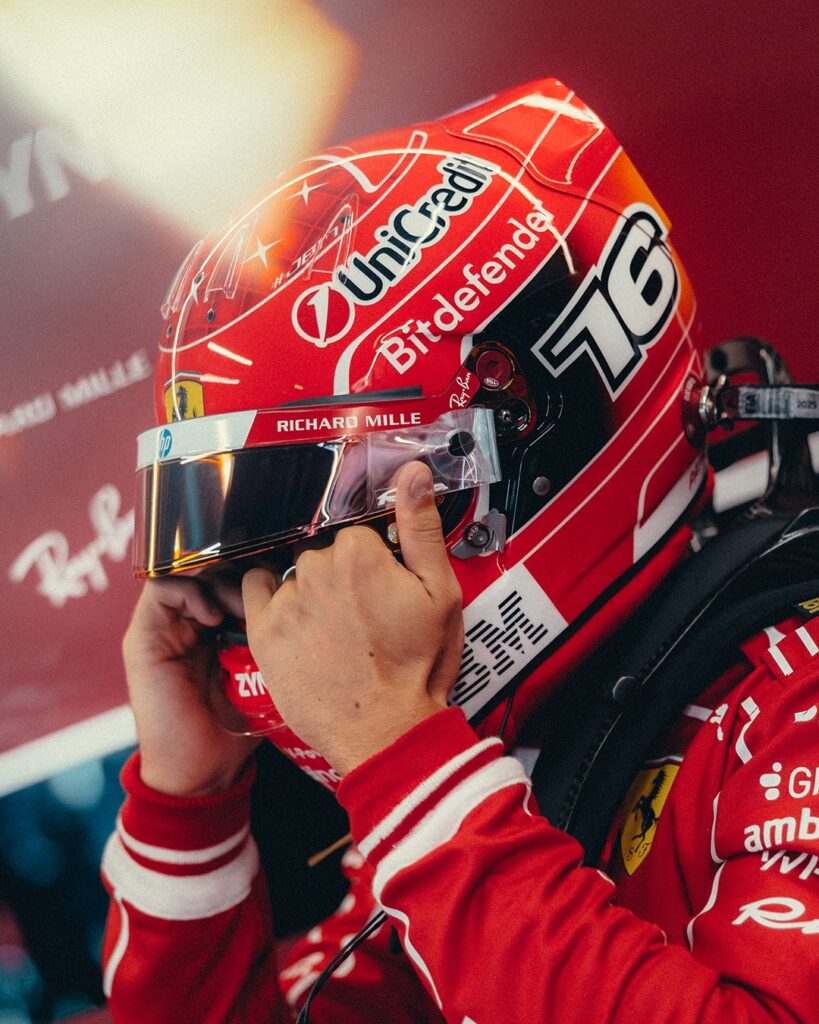
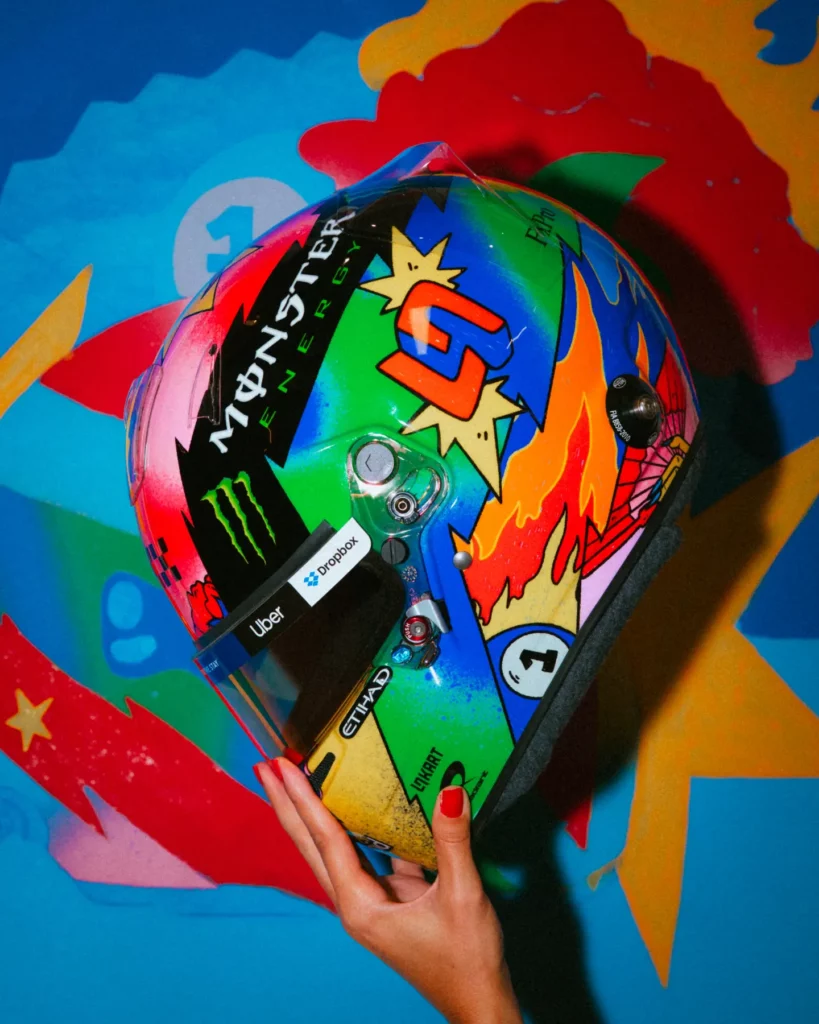
The Austrian Grand Prix podium regularly features some of the most visually striking helmet designs of the F1 season, with drivers often commissioning special Spielberg editions that reference Austrian culture, the Red Bull brand identity, or personal milestone themes. These one-off designs are exactly what drives collector demand for full-size 1:1 display replicas in the weeks following the race.
Red Bull’s home race helmets in particular carry a distinct weight for collectors. The team’s primary colour palette — dark navy, red and silver — is rendered differently at Spielberg than at any other round, with drivers historically incorporating Austrian flag details, local graphic references, or sponsor-specific artwork that does not appear on their standard-issue lids. A replica helmet from a driver’s Austrian GP podium is a standalone display object: it tells the story of a specific weekend rather than a generic season.
From a display standpoint, the Austrian GP also offers strong livery contrast. The Red Bull Ring’s green hillsides and the team’s navy cars create a visual pairing that photographs exceptionally well, and the bright Austrian afternoon light means helmet colours read vividly in both trackside and hospitality photography. Collectors who display full-size replicas in glass cases or on open mounts know that a helmet tied to a specific race tells a more complete story than a season-generic version — and Austrian GP editions consistently rank among the most sought-after of each year.
What Makes a Helmet Display-Worthy
Full-size 1:1 replica helmets — the type available as collector and exhibition pieces — typically weigh approximately 1.2–1.5 kg and measure around 29 × 25 × 35 cm on the display footprint. They are not certified for any protective use, carry no FIA, Snell, ECE or DOT rating, and are manufactured entirely for display and collection purposes. The visual detail at this scale — including painted visor surrounds at approximately 26 mm width, multilayer lacquer finishes, and printed sponsor graphics — makes them genuinely representative of the race-weekend originals at display resolution.
How UK and US Viewers Watched the 2026 Austrian GP Live
UK viewers had two routes to watch the 2026 Austrian Grand Prix: live coverage on Sky Sports F1, and Channel 4’s free-to-air highlight packages broadcast at scheduled times across the race weekend. Channel 4’s coverage included highlights of practice, qualifying, and the main race, allowing viewers without a Sky subscription to follow the weekend without missing the key moments.
In the United States, 2026 marks the first full season in which Apple TV holds live F1 broadcast rights for North American audiences. The shift to a streaming-first model represents a significant change from the previous ESPN arrangement and means US fans now access all sessions — including Formula 2 and Formula 3 support races — through the Apple TV platform rather than a traditional cable or satellite broadcaster. This change was confirmed ahead of the 2026 season and affects viewers across the continental United States.
For fans outside the UK and US, the RaceFans Google Calendar format — which lists every F1 session time with local timezone conversion — remained the most practical tool for planning viewing around the Austrian GP weekend schedule, which spanned Friday 2026-06-20 through Sunday 2026-06-22.
Formula 2 and Formula 3 at Spielberg
The Red Bull Ring hosted full Formula 2 and Formula 3 support race programmes alongside the main F1 event in 2026. These junior series races matter to helmet collectors because they occasionally surface the next generation of F1 drivers — and a podium helmet from a future champion’s F2 or F3 season at Spielberg can become one of the more interesting pieces in a long-term display collection.
Red Bull Racing’s 2026 Season in Context
Red Bull Racing entered the 2026 Austrian Grand Prix at a different point in their trajectory than in recent dominant seasons. The 2026 technical regulations — introducing new power unit architecture and revised aerodynamic rules — had created a more compressed performance window across the top teams, and Red Bull had not yet returned to the kind of race-winning consistency that defined their 2022–2024 period.
Ferrari’s win in Spain, which ended Mercedes’ early-season dominance, confirmed that the 2026 constructors’ championship would involve at least three teams in serious contention throughout the year. For Red Bull, the Austrian GP was therefore less about winning comfortably and more about demonstrating that they remained a front-running force at the circuit they call home. The psychological value of a strong result at Spielberg — in front of a crowd that travels specifically to support the team — is not negligible in a season where confidence and momentum matter as much as raw pace.
The 2026 regulations had also changed the visual identity of Red Bull’s cars and helmets. New livery elements introduced for 2026 — reflecting both the revised aerodynamic bodywork shapes and updated sponsor arrangements — meant that Spielberg fans were looking at a car that looked different from the championship-winning machinery of even two years prior. For collectors, this makes 2026 Red Bull helmets and livery-referenced display pieces a distinct category from the dominant-era items.
The Broader 2026 Championship Picture
With the Austrian Grand Prix falling on 2026-06-22, the season had passed its midpoint approach and the championship standings were tightening. Ferrari, Mercedes and Red Bull were separated by points margins that meant no team could afford to treat any race as a planning exercise. The Austrian GP result — whatever it produced on Sunday — would feed directly into the strategic decisions all three teams made heading into the second half of the calendar.
Building a Display Collection Around the Austrian Grand Prix
The Austrian Grand Prix is one of the best single-race anchors for a focused F1 display collection because of its visual identity, its emotional weight for Red Bull as a home event, and the frequency with which drivers produce special helmet artwork for Spielberg. A collector who wants to document the 2026 season through display replicas would find the Austrian GP an obvious reference point.
Full-size 1:1 replica helmets tied to specific races — rather than general season versions — carry more narrative weight on a display shelf or in a cabinet. The Austrian GP version of a driver’s helmet, if it incorporates Spielberg-specific artwork or a home-race livery variation, is immediately identifiable as belonging to a single weekend rather than a generic period in a career. That specificity is what separates a display collection from a simple accumulation of merchandise.
The practical aspects of displaying such replicas are worth considering. A standard full-size helmet on a stand occupies a footprint of approximately 29 × 25 × 35 cm and sits at a height of around 28–30 cm including the mount. In a glass-fronted display case, two or three helmets from a single season — for example, a Red Bull Austrian GP edition alongside a Ferrari Spanish GP edition — tell the story of the 2026 championship battle in a compact, visually coherent format.
These are display pieces only — not certified for any protective use, not rated by any motorsport safety body, and not intended to be worn. They exist to document and celebrate the visual history of Formula 1 seasons, and the 2026 Austrian Grand Prix has already produced material worth preserving in that context.
“Ferrari ended Mercedes’ unbeaten streak at the Circuit de Catalunya, and the question heading into Spielberg was whether they could sustain that pressure at a circuit Red Bull treat as home ground.”
— 2026 Austrian Grand Prix preview analysis
“F1 coverage in the USA is now available on Apple TV — marking a significant shift in how North American audiences access the sport in 2026.”
— 2026 broadcast rights update
FAQ
Q: Where is the 2026 Austrian Grand Prix held?
The 2026 Austrian Grand Prix is held at the Red Bull Ring in Spielberg, Austria. The circuit is 4.318 km per lap and is owned by Red Bull GmbH, making it the home race for Red Bull Racing.
Q: How can UK viewers watch the 2026 Austrian GP?
UK viewers can watch the 2026 Austrian Grand Prix live on Sky Sports F1, with Channel 4 broadcasting free-to-air highlight packages of practice, qualifying and the race at scheduled times across the weekend.
Q: Where can US viewers watch the 2026 Austrian Grand Prix?
US viewers can watch the 2026 Austrian Grand Prix live on Apple TV, which holds North American F1 broadcast rights for the full 2026 season — a change from the previous ESPN arrangement.
Q: Are the F1 helmet replicas sold at 123Helmets safe to wear?
No — the replica helmets at 123Helmets.com are full-size 1:1 display and collector pieces only. They carry no FIA, Snell, ECE or DOT certification and are not intended for any protective, road or track use whatsoever.
Q: Why are Austrian Grand Prix helmets particularly popular with collectors?
Austrian Grand Prix helmets are popular with collectors because drivers frequently produce Spielberg-specific artwork for their home-race lids — especially Red Bull drivers — creating one-off designs that are visually distinct from standard-season versions and tied to a single, identifiable weekend.
Browse F1 Helmet Collection
Display and collector replicas only. Not certified for protective use. Full-size 1:1 scale.
This article was written with the help of AI tools. Editorial policy