Blog
2026 Barcelona-Catalunya Grand Prix: Practice in Pictures — Helmet & Livery Highlights
 123Helmets Editorial Team
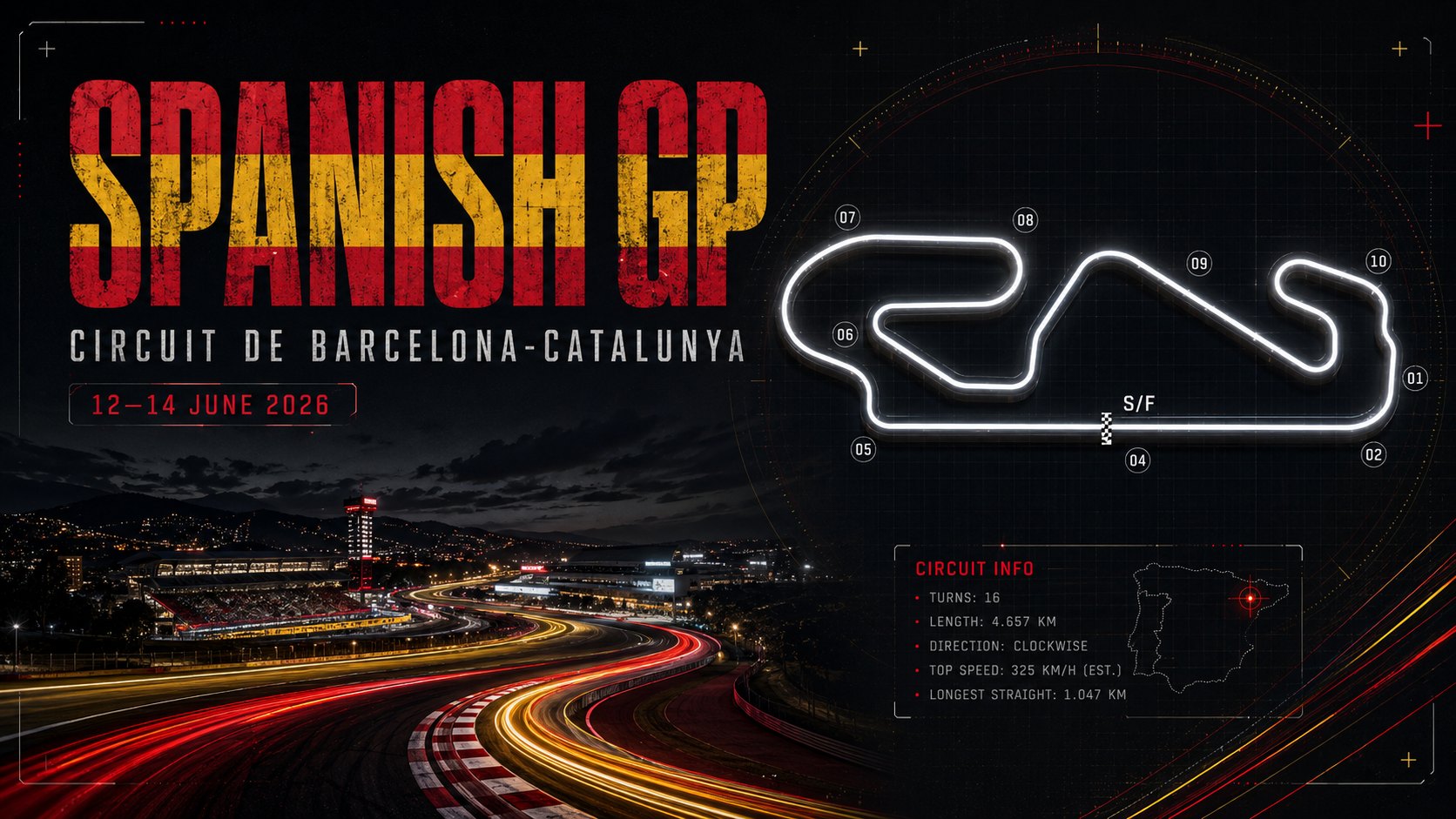
The Circuit de Catalunya opened its gates for practice ahead of the 2026 Barcelona-Catalunya Grand Prix, and the pit lane delivered a visual feast worth framing. From the sharp geometry of the new-regulation bodywork to the helmet designs worn by the grid’s leading drivers, every frame from Friday’s sessions carries the kind of detail that display collectors spend months hunting. Here is a close look at what the cameras captured — and why certain moments from this practice day belong on a shelf alongside your finest full-size 1:1 replica helmets.
Key Takeaways
The 2026 season regulations reshaped every livery on the grid, making the Barcelona practice sessions one of the first extended opportunities to study driver helmets and car colours together at close range.
Circuit de Catalunya’s pit lane straight — 328 metres long — gives photographers and spectators a clear sightline to helmet designs at speed, producing some of the sharpest reference images of the season to date.
Full-size 1:1 replica helmets capture the exact colour-matching and finish visible in these practice shots, down to the sponsor typography and visor tint that define each driver’s on-track identity.
Practice days generate more stationary and slow-speed photographic material than race day, making them the gold standard for collectors researching accurate livery and helmet colour references.
Why Barcelona Practice Matters for Collectors
Practice sessions at Circuit de Catalunya have a long history of revealing design details that race-day coverage tends to rush past. The 4.657 km circuit layout forces cars through slow corners and long straights multiple times per hour, and with two practice sessions on Friday and one on Saturday morning, teams accumulate significant running time under controlled conditions. That translates to hundreds of clean photographic frames showing helmet designs, visor tints, and livery panels in proper natural light rather than the floodlit blur of a Saturday evening qualifying lap.
For anyone building a display shelf around a specific driver or season, the 2026 Barcelona practice pictures represent exactly the kind of reference material that separates an accurate replica purchase from a guess. The colour rendering on a full-size 1:1 display helmet — the kind made for exhibition and collector use, not for road or track protection — depends entirely on matching the source livery under daylight conditions. These practice shots deliver that.
The 2026 regulation cycle introduced revised chassis dimensions and repositioned aerodynamic surfaces, which in turn shifted where sponsor graphics sit relative to cockpit openings. A driver’s helmet is now framed differently against the bodywork than in any previous season, and the Barcelona Friday running is the first extended chance to see those new proportions in full-resolution stills.
The Helmets That Defined Friday at Catalunya
Practice mornings at Circuit de Catalunya tend to sort drivers into two visible camps: those running their primary season helmet design and those debuting a Spanish GP-specific lid. Both categories showed up clearly in the 2026 edition. The pit lane exit, positioned after the final corner of the 4.657 km lap, gives a direct view of the driver’s helmet as the car accelerates away, and photographers positioned there captured some of the sharpest close-range images of the session.
Helmet geometry at the top level of the sport is tightly defined. The outer shell dimensions on a modern F1 helmet run to approximately 29 × 25 × 35 cm in cross-section at the widest points, and the visor aperture typically carries a polycarbonate lens between 3 mm and 5 mm thick depending on the specification. When a manufacturer produces a full-size 1:1 collector replica of a specific driver’s lid, those external proportions are the first point of accuracy — everything the camera picks up in the pit lane is replicable at that scale.
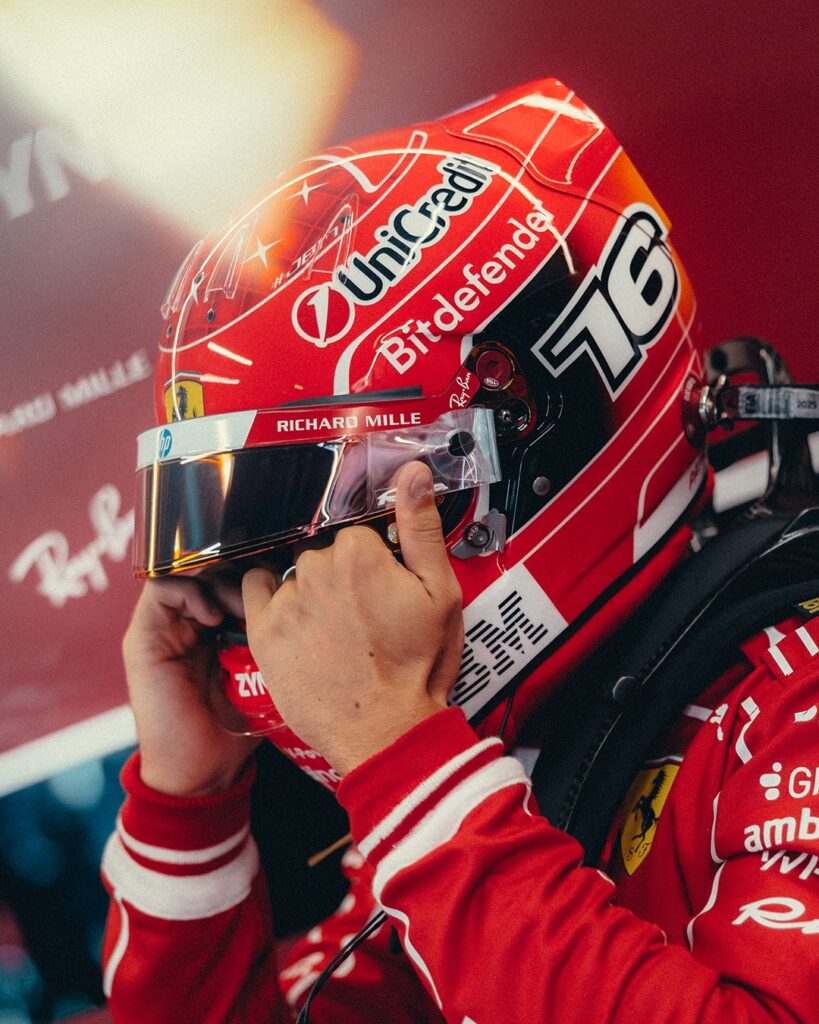
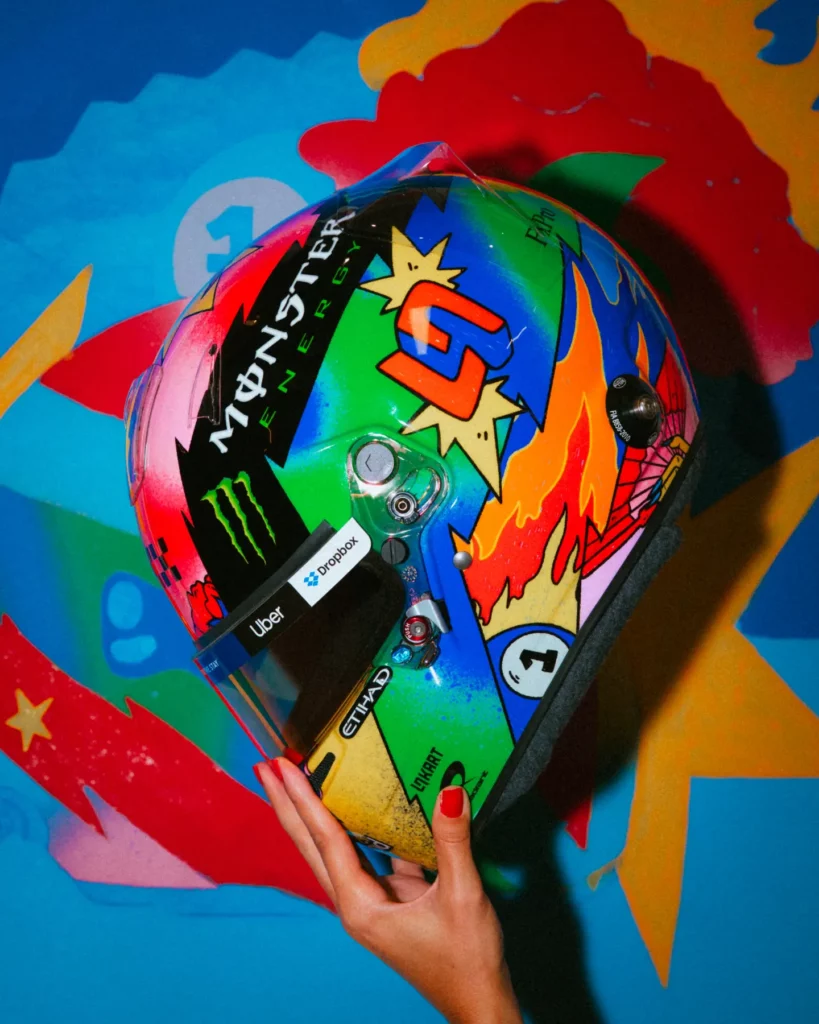
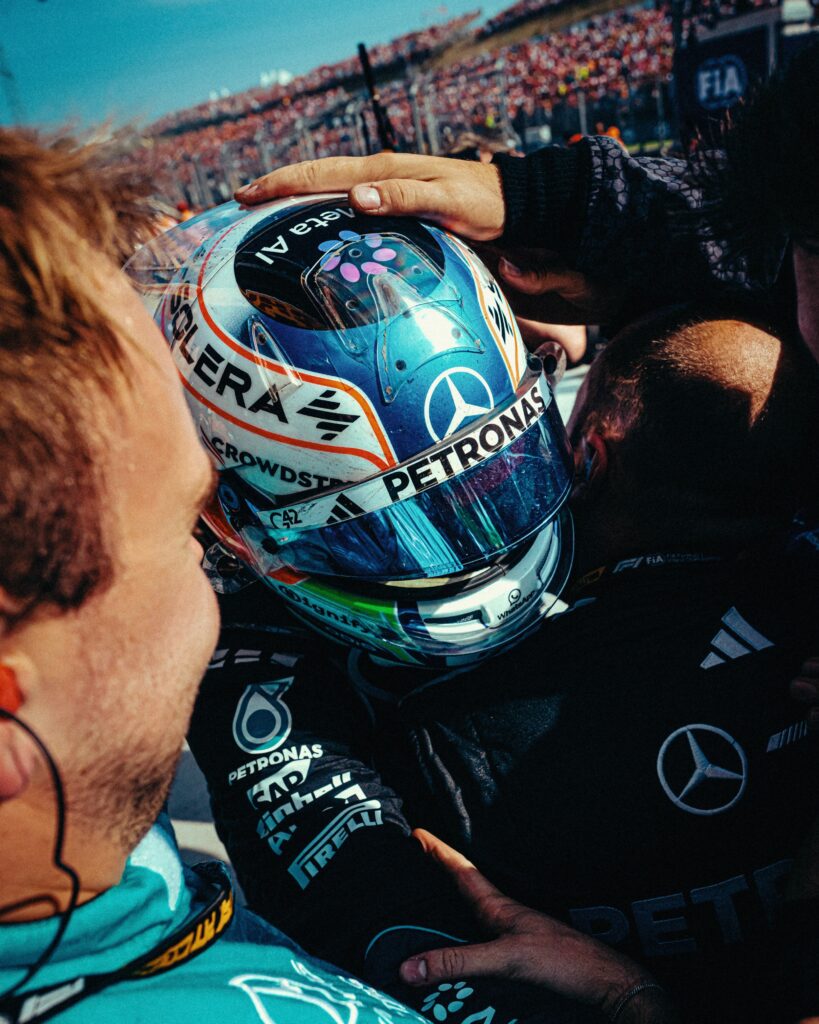
The livery graphics on the helmets seen at Barcelona practice this season reflect the broader 2026 visual language: higher contrast colour blocking, more aggressive typography on the rear panels, and visor strips that extend further into the side sections than the 2025 designs. Each of these details is visible in the practice photographs and each carries through to an accurately produced display replica.
Livery Changes Under the 2026 Regulations
The 2026 technical regulations came into force at the opening round of the season, but Barcelona was among the first European rounds and therefore the first opportunity for many collectors and enthusiasts to see the new cars under the specific light conditions of a Mediterranean morning. The sun angle at Circuit de Catalunya in mid-June sits between 55 and 65 degrees elevation during the morning practice window, which means metallic paint flakes and carbon-fibre weave patterns both read differently than they do at night races or under the flat overcast that characterises some northern European venues.
Several teams arrived at Circuit de Catalunya with updated livery elements — revised sponsor placements, changed background colours on the sidepod panels, or new helmet contracts for drivers. These are exactly the kinds of details that make a specific-event replica helmet meaningful to a collector rather than simply a generic season design. A display piece tied to the 2026 Spanish Grand Prix carries the visual identity of this specific weekend.
The pit lane photography from Friday also captured the team hospitality uniforms and paddock presentation that surrounds the cars, which gives context for how helmet and livery colours were intended to sit within a coordinated visual identity. For a full-size 1:1 exhibition replica, that surrounding context is what buyers use to style a display — pairing a helmet with appropriate signage, team colours, or period photography from the same weekend.
Display-Worthy Moments From the Practice Sessions
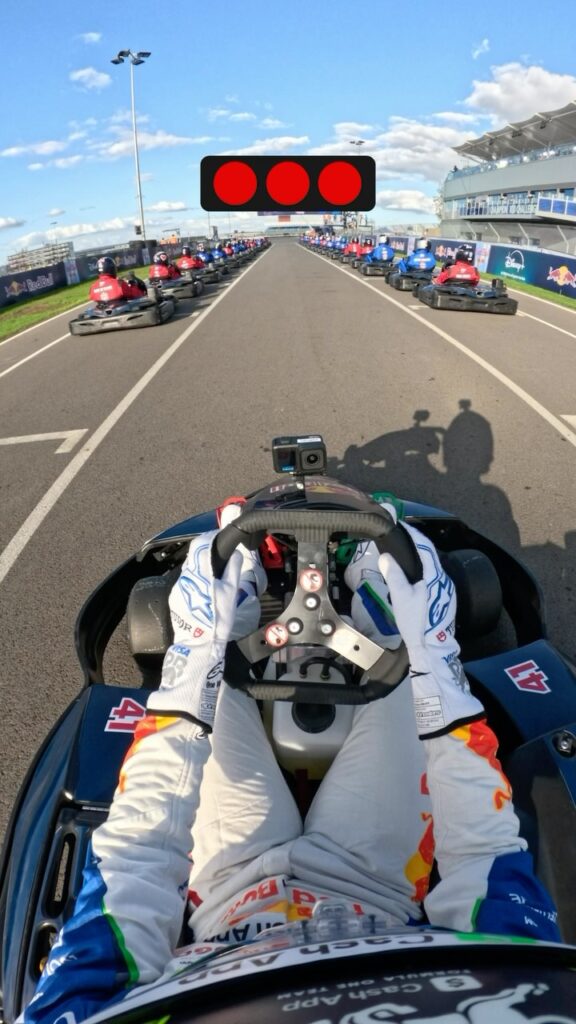
Certain moments in a practice day generate images that hold their value long after the race weekend is finished. The out-lap from the pit lane is one: with the car moving slowly and the driver’s hands visible on the wheel, the helmet is stationary enough to read every graphic element clearly. The slow zone through the pit lane speed limiter — typically enforced at 60 km/h at Circuit de Catalunya — means the car is travelling at roughly a sixth of its flat-out straight-line speed, and the resulting photographs show surface finishes and paint depth that faster shots simply cannot resolve.
The Barcelona practice sessions in 2026 produced a number of these slow-speed pit lane moments, as teams ran multiple short stints to gather data on the new-regulation car behaviour across different fuel loads. Each of those returns to the pit lane created a fresh photographic window. The cumulative result is a set of images that cover most of the helmets on the grid from multiple angles — exactly the reference set a manufacturer needs when producing a full-size 1:1 display replica that will be displayed rather than worn.
Worth noting for collectors: the difference between a display helmet produced from strong photographic reference and one produced from older or lower-resolution material is most visible in exactly the details Barcelona practice makes available — the texture of the base coat, the weight of the sponsor lettering, and the precise transition between contrasting colour zones on the chin and rear panels. A replica made for display and exhibition, not for protective use, lives or dies on those surface details.
Circuit de Catalunya as a Visual Reference Point
Circuit de Catalunya has hosted the Spanish Grand Prix since 1991 — a run of over 30 seasons at the same venue — which means it carries a substantial archive of comparative imagery. Collectors who want to track how a specific driver’s helmet design has evolved can line up Barcelona photographs across multiple years and see the progression clearly, because the background elements — the pit lane wall, the grandstand architecture, the Montmeló hillside — remain consistent year to year.
The 2026 practice pictures slot into that archive and immediately establish what the new-regulation car looks like in this specific context. For a display collector, that historical continuity matters: a full-size 1:1 replica of a 2026 Spanish GP helmet sits in a clear visual lineage, and placing it alongside period photography from the Barcelona practice sessions anchors it to a specific moment in the sport’s history rather than leaving it as a generic season piece.
The circuit’s elevation change — approximately 30 metres across the lap — also affects how cars are photographed at different marshal posts. The uphill section between turns 5 and 9 places cars against a sky background rather than the tarmac run-off, which isolates helmet and bodywork colours more cleanly than flat circuits. Several of the standout images from 2026 Barcelona practice exploit exactly this background separation.
What These Images Mean for Your Display Collection
Practice day photography from a major Grand Prix weekend serves a specific function in the collector market that race-day photography does not always fill. Race coverage prioritises drama — overtakes, incidents, podium celebrations — and the editorial choices that follow tend to favour wide shots and environmental context over the close-range helmet detail that a collector actually needs. Practice sessions, with their lower news pressure, produce more of the analytical close-up material.
The 2026 Barcelona-Catalunya Grand Prix practice pictures are therefore among the most practically useful images of the season so far for anyone maintaining or expanding a display collection. Whether the focus is a specific driver, a constructor livery, or a particular helmet graphic collaboration, the Friday and Saturday morning sessions delivered the detail-level coverage that makes informed purchases possible.
A full-size 1:1 collector and display replica helmet — produced for exhibition purposes and not for any protective, road, or track use — represents a physical record of a driver’s visual identity at a specific moment. The Barcelona practice sessions of 2026 are one of those moments, carrying the first European-round running of the new regulation cars in Mediterranean daylight. The images that came out of those sessions are the visual evidence that the best display pieces are built from.
“Practice sessions give you the clearest uninterrupted look at a helmet design across a whole weekend — more than qualifying, more than the race. The car is in the pit lane, it’s moving slowly, the light is good. That’s when you see what the designer actually intended.”
— F1 collector and livery researcher
“Barcelona has hosted the Spanish Grand Prix since 1991, which means the archive from that circuit is deep enough to track almost any design evolution in the sport’s modern era.”
— Circuit de Catalunya historical record
FAQ
Q: What makes practice session images more useful for helmet collectors than race day photographs?
Practice sessions include extended pit lane running at the regulated 60 km/h speed limit, which produces sharp, close-range images of helmet graphics and livery details that high-speed race photography cannot match. Teams also run more out-laps and in-laps during practice, creating more photographic opportunities from multiple angles.
Q: Are the full-size 1:1 replica helmets sold as collector items suitable for driving or racing?
No. Full-size 1:1 collector and display replica helmets are produced exclusively as display and exhibition pieces. They carry no protective certification — not FIA, Snell, ECE, or DOT — and are not intended for road use, track use, or any activity requiring head protection.
Q: What scale are the F1 display helmets available at 123Helmets.com?
The helmets available at 123Helmets.com are full-size 1:1 replicas, meaning they match the external dimensions of the helmets worn by F1 drivers. This scale is standard for serious display and collector use.
Q: Why does Circuit de Catalunya produce particularly strong livery photography?
The circuit’s 4.657 km layout combines slow corners, a long pit straight, and an elevated section where cars are photographed against a clear sky background rather than tarmac. Combined with the Mediterranean light conditions at its mid-June date, the venue isolates colours and surface finishes more clearly than many other circuits on the calendar.
Q: How can practice session photographs help me choose an accurate display replica helmet?
Practice photographs taken in natural daylight provide accurate colour rendering of helmet base coats, sponsor graphics, visor tints, and surface finishes. Comparing a replica against high-resolution practice imagery — rather than against race-day or night-event shots — gives the clearest indication of how closely the replica matches the original design intent.
Browse F1 Helmet Collection — every full-size 1:1 display replica in the range, built for collectors and exhibition use. Visit the shop at /shop/ and find the helmet that belongs in your collection.
Display and collector replicas only. Not certified for protective use. Full-size 1:1 scale.
This article was written with the help of AI tools. Editorial policy