
Blog
Hamilton’s Three-Stop Masterclass: 2026 Barcelona GP Race Recap & Helmet Display Guide
 123Helmets Editorial Team
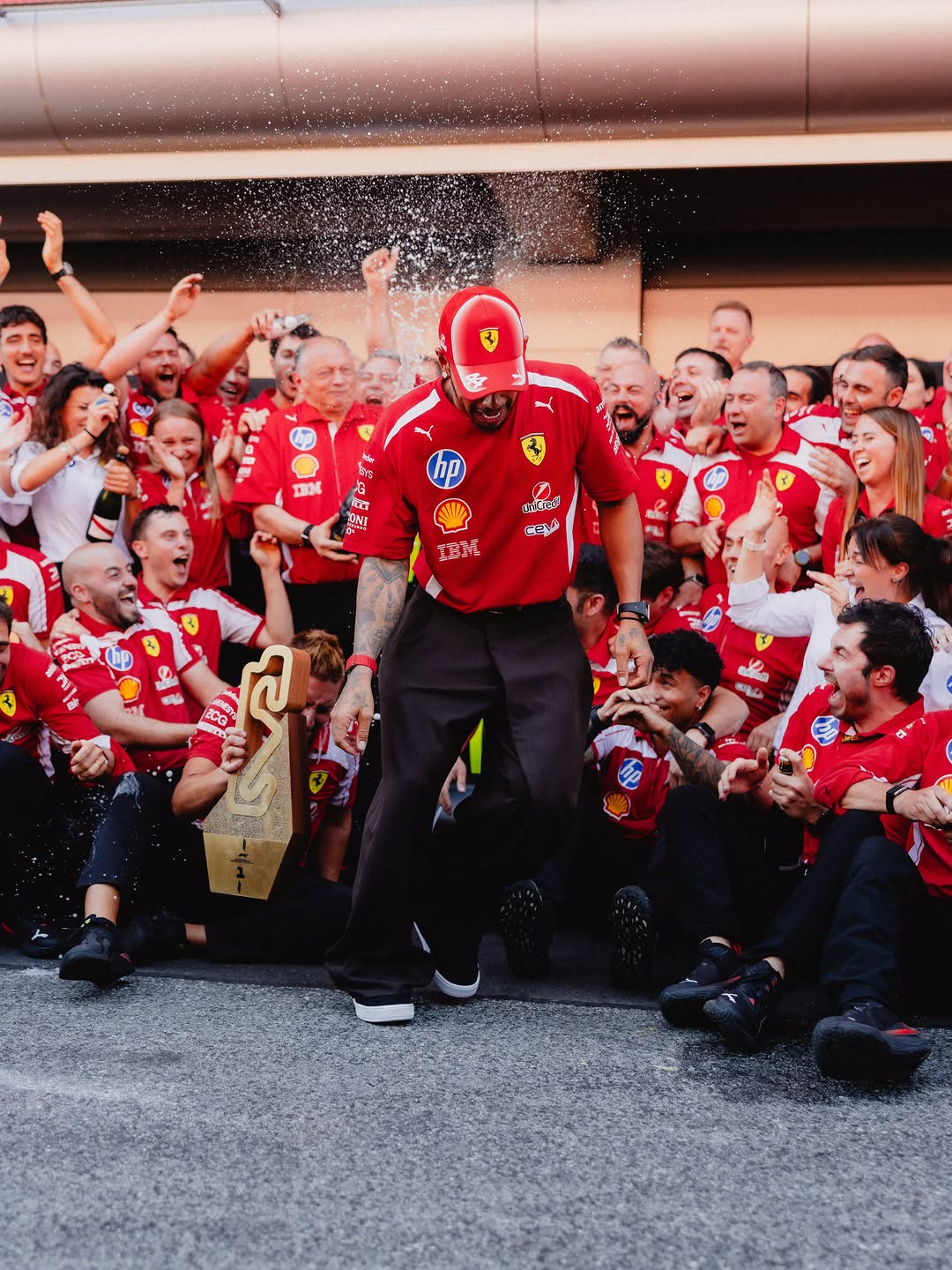
Lewis Hamilton turned a worn set of soft tyres into a strategic weapon at the 2026 Spanish Grand Prix, forcing Mercedes into a tyre dilemma that defined the entire race. Here is a full recap of the lap times, tyre calls, and the podium visuals worth preserving in a full-size 1:1 display replica.
Key Takeaways
Hamilton pitted after just 11 laps, signalling a three-stop plan that immediately forced Russell to react and reconsider Mercedes’ two-stop strategy.
Russell out-launched Hamilton off the line across a 565-metre sprint to Turn 1 despite Hamilton being on softer rubber — a clear sign of Mercedes’ improved standing-start procedure.
Hamilton entered the race with an untouched stock of two hard sets and one medium, giving him full flexibility that Russell lacked after using a new medium set at the start.
The Circuit de Catalunya’s high tyre-degradation conditions in 2026 made Hamilton’s worn soft opening stint a calculated gamble that paid off by preserving his new rubber inventory.
The 565-Metre Sprint That Set the Race Tone
George Russell beat Lewis Hamilton to the first corner of the 2026 Spanish Grand Prix across one of the longest standing-start sprints on the Formula 1 calendar: a 565-metre run from the grid to Turn 1. That single statistic framed everything that followed. Russell was on a fresh set of medium compound tyres; Hamilton lined up on worn softs — a distinction that appeared to hand the advantage to the seven-time champion before the lights went out, yet Russell’s launch was clean and decisive.
Mercedes had clearly made progress on its standing-start procedure across the opening months of the season. Earlier in the year, a pole-sitting Mercedes holding off a second-placed Ferrari on the same or softer tyre compound over that kind of distance would have seemed unlikely. Ferrari drivers had been launching from the second row into the lead in the opening rounds. At Barcelona, that pattern reversed.
Hamilton’s worn soft rubber was always going to struggle against Russell’s new mediums at a venue notorious for its heat and surface abrasiveness. The Circuit de Catalunya earned its reputation as a tyre-torturing circuit long before the 2026 regulations arrived, and the conditions on race day only reinforced that reputation. The launch alone, however, was only the opening move in a much longer strategic chess match between the two silver cars.
Tyre Inventory: Why Hamilton Held the Strategic Cards
Hamilton carried a decisive tyre-inventory advantage into the race: his allocation of new rubber — two sets of hard compound and one set of medium — remained completely untouched after the opening stint, while Russell had already consumed his single new medium set at the start. That asymmetry was the foundation on which Hamilton built his three-stop plan.
Russell’s situation was more constrained. Having used his new mediums off the line, a three-stop strategy for him would have required running a used set of soft tyres at some point — a choice the team regarded as unattractive given the track’s degradation rate in 2026. His realistic path was a two-stop strategy, but executing it well demanded running longer than 12 laps on the opening medium set to build enough of a gap over Hamilton before his rival’s first stop. Staying out that long, though, risked surrendering track position.
Hamilton’s team called him in after lap 11, and Russell immediately identified what was happening, alerting Mercedes that his team-mate was committing to three stops. That call after just 11 laps was not a tyre emergency — it was a declaration of strategic intent. By stopping early, Hamilton retained clean air and fresh rubber, and placed the decision burden squarely on Russell and the pit wall.
The Two-Stop Compromise
Mercedes attempted to thread a difficult needle with Russell: maintain a two-stop strategy but with an earlier first stop than originally planned, aiming to preserve track position over Hamilton while staying in clean air. It was a response born of limited options rather than a proactive plan. The 565-metre sprint to Turn 1 had handed Russell the physical lead, but Hamilton’s tyre inventory had handed him the strategic lead before the first safety car board was ever shown.
Lap Chart and Gap Data: Reading the Race Through Numbers
The lap chart at Barcelona in 2026 tells a story of two strategies playing out in parallel, with the gap chart showing the precise moments Hamilton’s three-stop plan began to compress or extend his deficit to the race leader. Every pit-stop window opened a new chapter in the data.
Hamilton’s lap-11 stop was the first inflection point on the gap chart. Coming out on fresh rubber while Russell was still managing his mediums, Hamilton’s sector times improved immediately. The lap-time delta between the two drivers — visible in the raw timing data — widened in Hamilton’s favour during the laps immediately after his undercut attempt. At a circuit where a single set of tyres can lose a significant chunk of pace across 20-plus laps, the timing of each stop mattered as much as the compound chosen.
The Circuit de Catalunya’s long Sector 1, which feeds into the high-speed Turns 3 and 4 complex, is where tyre condition shows most clearly in lap-time data. A driver on degraded rubber will lose time progressively through that section. Tracking Hamilton’s lap times against Russell’s in those specific sectors gives the clearest picture of when each set of tyres was truly spent and when the strategic decisions were forced rather than chosen.
Tyre Stint Lengths and Compound Rotation
Hamilton’s three-stop rotation used his fresh rubber inventory efficiently, cycling through compounds in a sequence his untouched allocation made possible. Russell’s two-stop path, adjusted to an earlier first stop, reduced his flexibility for the final stint. The lap-time traces from the closing laps of the race — available in Formula 1’s official timing data — show the pace differential that resulted from those different end-of-race tyre ages.
Podium Visuals and the Helmet Design Worth Displaying
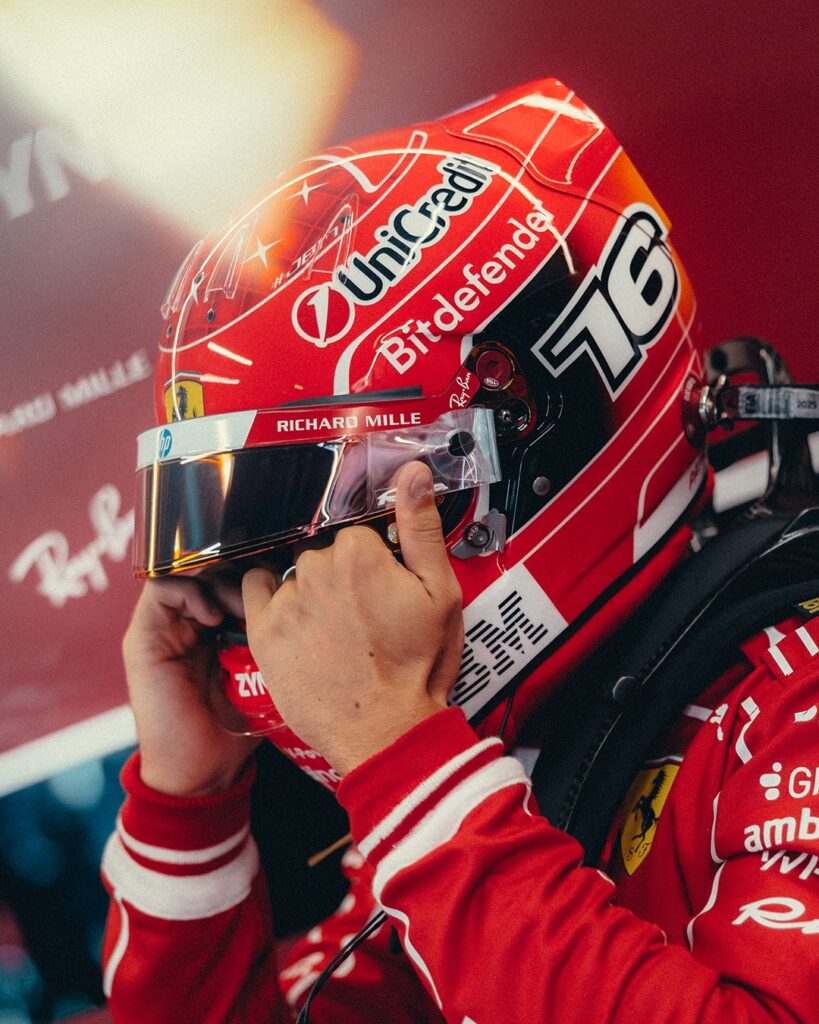
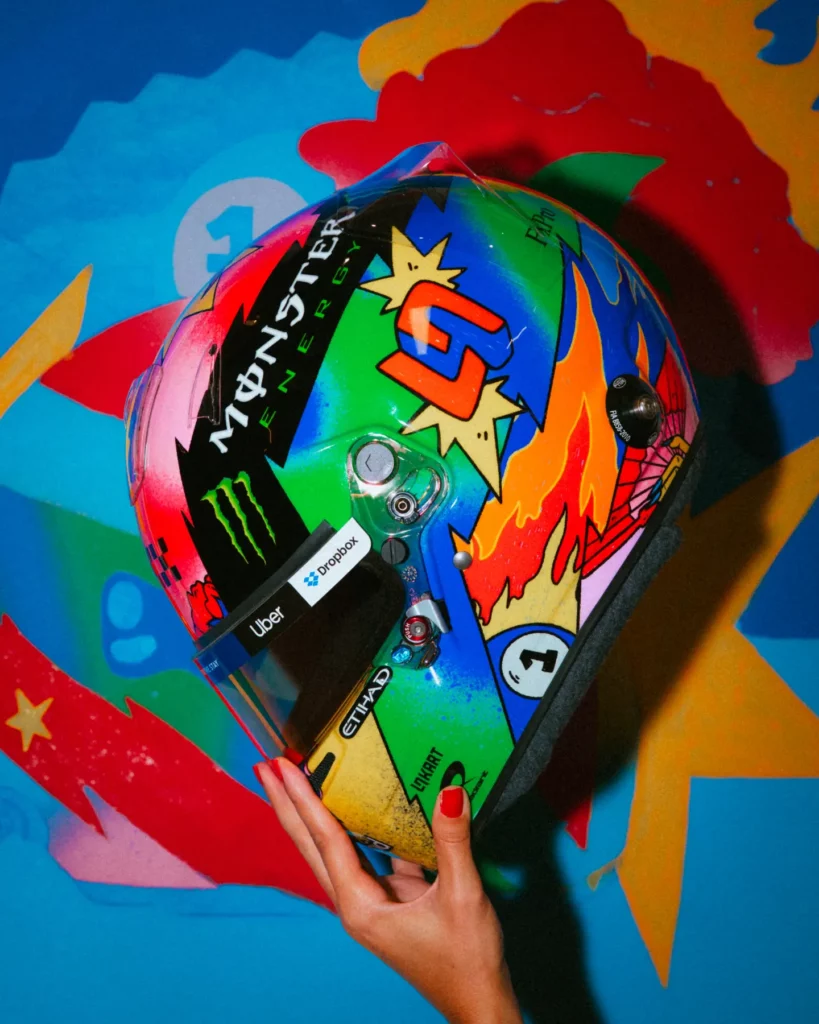
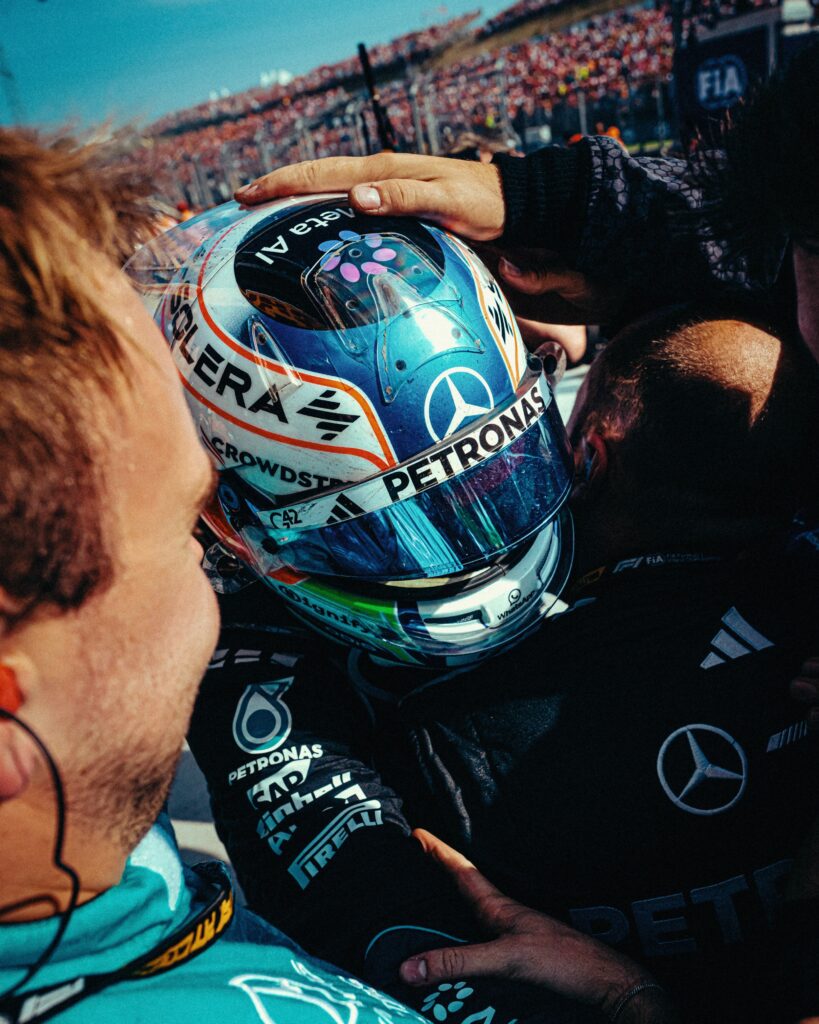
Hamilton’s 2026 Spanish Grand Prix helmet stands as one of the most display-worthy designs of his Ferrari-era transition season — a full-size 1:1 collector replica that captures the colour language he brought to the paddock when he joined the Scuderia. The podium at Barcelona, with its Mediterranean light and the Circuit de Catalunya backdrop, produced some of the most photographed helmet close-ups of the 2026 calendar so far.
A full-size 1:1 display replica of Hamilton’s Barcelona helmet reproduces the shell geometry, visor tint, and livery markings at true scale, making it a genuine exhibition-quality collector item rather than a scaled-down souvenir. The replica’s outer shell mirrors the aerodynamic profile of the race-used lid, and the finish — whether in gloss or satin depending on the specific edition — reflects the same surface treatment visible on broadcast footage from the podium ceremony.
For collectors focused on race-specific provenance, the 2026 Barcelona edition is notable because it coincides with one of Hamilton’s most tactically active races of the season. A display piece tied to a specific strategic story — lap 11 first stop, three-stop masterclass, tyre-inventory advantage — carries more context for any dedicated Formula 1 collection than a generic season helmet. The podium moment at Catalunya adds a precise date anchor: 2026-06-13, the afternoon the two-stop versus three-stop debate became the talking point of the entire paddock.
Livery Details on the W17 and SF-6
The contrast between the Mercedes W17’s silver-and-black livery and the Ferrari SF-6’s red was particularly sharp under the Barcelona sun. For display collectors interested in team livery accuracy, both cars’ 2026 colour schemes are reproduced across the helmet replica range available at 123Helmets.com. The W17’s livery markings, carried over to Russell’s helmet at that race, and the SF-6’s red carried by Hamilton before his mid-season switch, offer two distinct display options from the same Grand Prix weekend.
What the 2026 Barcelona Data Tells Us About Mercedes’ Progress
Mercedes’ improved standing-start performance at the 2026 Spanish Grand Prix is a measurable sign of the team’s development trajectory across the first half of the season. Russell’s ability to out-drag Hamilton over 565 metres, despite Hamilton being on a nominally faster soft compound, reflects both car setup work and driver technique refinement under the 2026 regulation framework.
At the opening rounds of 2026, Ferrari drivers on the SF-6 were converting second-row grid positions into race leads through launch performance alone. That pattern did not repeat at Barcelona. Whether that shift came from Mercedes closing a launch-phase deficit or from Ferrari’s own performance fluctuating across different circuit types is a question the full-season data will eventually answer. At Catalunya specifically, the evidence from the standing start pointed toward genuine Mercedes progress.
Hamilton’s strategy, meanwhile, demonstrated that the team’s racecraft — as opposed to its outright pace — remained at the highest level. Converting a worn soft tyre at the start into a three-stop strategic advantage requires precise communication between driver and engineers across every stint. The lap-11 stop was not reactive; it was planned and executed with the kind of precision that only comes from a team and driver operating with full understanding of each other’s intentions.
For anyone building a collection around the 2026 Formula 1 season, the Barcelona race represents one of the defining strategic moments of the year. A 1:1 scale display replica of Hamilton’s race helmet from Circuit de Catalunya is a collector item tied to a specific, documented moment in the sport’s data record — not simply a likeness of a driver, but a physical reference point for an afternoon that reshaped the championship conversation.
“Russell got his medium-shod W17 off the line superbly and out-dragged Hamilton on one of the longest sprints to the first corner on the calendar, notwithstanding the fact his rival was on soft rubber.”
— Formula 1 Race Analysis, 2026 Spanish Grand Prix
“When Hamilton pitted for the first time after 11 laps, Russell immediately spied his plan, pointing out to Mercedes that his rival was three-stopping.”
— Formula 1 Race Strategy Report, 2026 Barcelona-Catalunya Grand Prix
FAQ
Q: What tyre strategy did Lewis Hamilton use at the 2026 Spanish Grand Prix?
Hamilton ran a three-stop strategy at the 2026 Spanish Grand Prix, pitting for the first time after lap 11. He started on worn soft tyres but held an untouched inventory of two new hard sets and one new medium set, which gave him the compound flexibility to sustain a three-stop plan while George Russell was limited to two stops.
Q: How long is the sprint to the first corner at the Circuit de Catalunya?
The run from the starting grid to Turn 1 at the Circuit de Catalunya is 565 metres, making it one of the longest standing-start sprints on the Formula 1 calendar. George Russell used that distance to out-launch Hamilton at the 2026 Spanish Grand Prix despite Hamilton being on the softer tyre compound.
Q: Why did Mercedes struggle with a two-stop strategy at the 2026 Barcelona GP?
A two-stop strategy for Russell was complicated by his tyre inventory: he had used his only new medium set at the start, meaning a three-stop alternative would have required a used soft tyre stint — an unattractive option at a high-degradation venue. Staying out longer than 12 laps on the opening medium set risked losing track position to Hamilton, so Mercedes opted for an early two-stop compromise.
Q: What makes a 1:1 replica helmet from the 2026 Barcelona GP worth collecting?
A full-size 1:1 display replica helmet from the 2026 Spanish Grand Prix is a collector item with a specific race date — 2026-06-13 — tied to one of the most strategically significant Formula 1 races of the season. It reproduces the shell geometry, visor profile, and livery markings at true scale, making it an exhibition-quality piece that documents a precise moment in the championship rather than a generic seasonal design.
Q: Is the Hamilton 2026 Barcelona helmet replica suitable for wearing or racing?
No. The 2026 Barcelona Hamilton helmet replica available at 123Helmets.com is a display and collector piece only. It is not certified for any protective use, does not carry FIA, Snell, ECE, or DOT certification, and is not intended for road or track use. It is produced at full 1:1 scale exclusively for exhibition and collection display.
Shop Lewis Hamilton Collection
Display and collector replicas only. Not certified for protective use. Full-size 1:1 scale.
This article was written with the help of AI tools. Editorial policy