
Blog
McLaren ‘Surprised’ by Revived Mercedes Engine Trick at Silverstone
 123Helmets Editorial Team
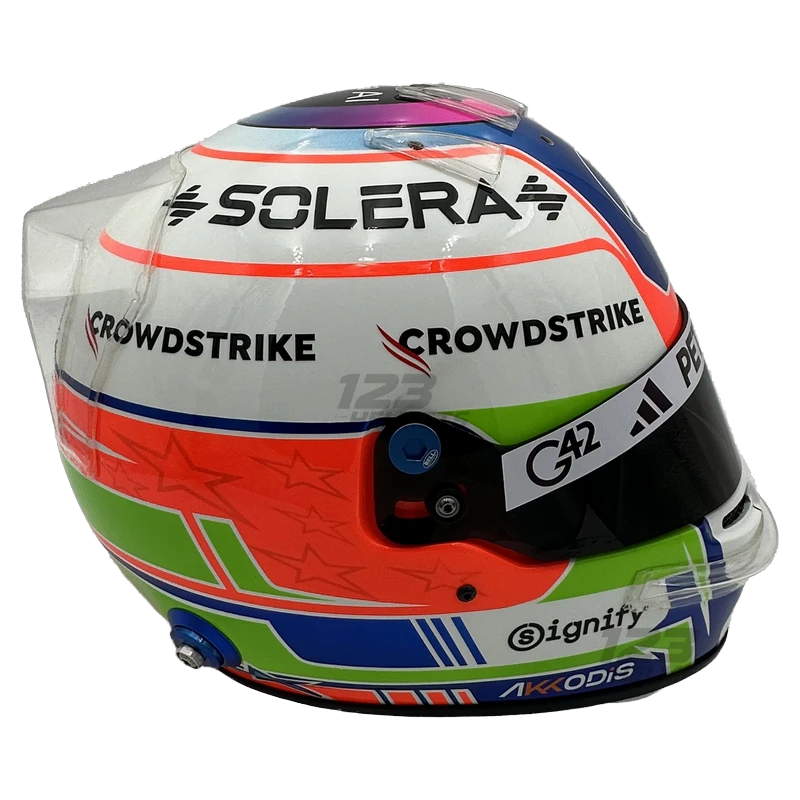
Kimi Antonelli’s pole position lap at Silverstone on 2026-07-04 was built on a revived Mercedes engine trick that caught customer team McLaren off guard, and it gives collectors another reason to look closely at the Italian rookie’s helmet on pole day.
Key Takeaways
Mercedes found a legal way to revive a throttle-lift engine trick banned by the FIA earlier in the 2026 season, using it to help Kimi Antonelli take pole at Silverstone on 2026-07-04.
The technique involves drivers lifting off the throttle just before the timing line to avoid the mandated 50kW-per-second ramp-down rate on the run to the finish.
McLaren, a Mercedes power unit customer, said it was surprised by the trick’s return, highlighting how fine engineering margins decide pole position at Silverstone.
Antonelli’s pole-day helmet and Mercedes livery are now a display highlight for collectors following his rookie campaign.
Antonelli’s Silverstone Pole Lap Explained
Kimi Antonelli took pole position for the British Grand Prix at Silverstone in qualifying held on 2026-07-04, and the margin at the final chicane came down to a technical detail rather than raw pace alone. Data from GP Tempo showed very little separating Antonelli’s Mercedes from its closest rival on the run out of the last corner, with the gap opening up almost entirely on the sprint to the timing line.
That final stretch of track is where a revived Mercedes engine trick did its work. Antonelli described the driving adjustment required to exploit it as genuinely difficult to internalise, even with a season of Formula 1 experience behind him. His pole lap was less about a single dramatic moment and more about a string of small gains stacked through the lap, with the biggest coming right at the line.
For a rookie building his first full season in Formula 1, a pole position at a circuit as demanding as Silverstone is a marker moment — one that collectors of his 2026 helmet livery will want represented in any display case built around his season.
What Is the Revived Mercedes Engine Trick?
The revived Mercedes engine trick is a legal method of maximising power delivery on the run to the timing line by having drivers lift off the throttle just before crossing it. The Race revealed the detail on Saturday at Silverstone, confirming that Mercedes had found a way to bring back the benefits of a wider engine mode that the FIA had banned earlier in the 2026 season.
The mechanism centres on the ramp-down rate that power units must follow once a driver comes off full throttle — power has to be reduced by 50kW every second rather than cut instantly. By timing a brief lift just ahead of the line, both Antonelli and teammate George Russell could stay out of that ramp-down window at the exact moment it mattered most, keeping peak power available for the run to the beam.
Antonelli explained the driving change required to exploit this:
It was not easy. It’s tricky because with this power unit you need to sometimes drive in a certain way that feels a bit unnatural. Sometimes going on throttle later, so in high-speed you carry more speed, then you go on throttle later. Then you may lose a little bit on exit, but then you regain it because by delaying your throttle point, then you get more energy and a bit later into the straight as well.
He added that the counterintuitive nature of the technique made simulator preparation essential before the team could rely on it in a live qualifying session at Silverstone.
Why McLaren Was Caught Off Guard
McLaren was surprised by the trick’s reappearance because it runs Mercedes power units as a customer team without the same internal visibility into how Mercedes’ factory squad prepares its throttle mapping. Mercedes had been planning the counterintuitive driving method before the Silverstone weekend even began, working through it on the simulator so that it felt closer to natural by the time Antonelli and Russell needed it in qualifying.
That preparation gap is exactly why the trick worked as a surprise. A customer team can access broadly similar power unit hardware, but the specific throttle-lift timing and the driver coaching behind it are decisions made inside the works team, not shared in advance with McLaren or other Mercedes-powered outfits.
Antonelli was candid about how strange the technique felt at first, even to those executing it:
Because in the first place, you’re even like, ‘Why do I need to lift?’ So it’s just tricky at times, but with the team we’ve done a lot of preparation and luckily these kinds of things have become kind of second nature.
The episode is a reminder that pole position margins at circuits like Silverstone are frequently decided by details invisible from the outside — the kind of story that gives extra weight to a Silverstone pole-day helmet in any serious F1 display collection.
Antonelli’s Pole-Day Helmet and Livery
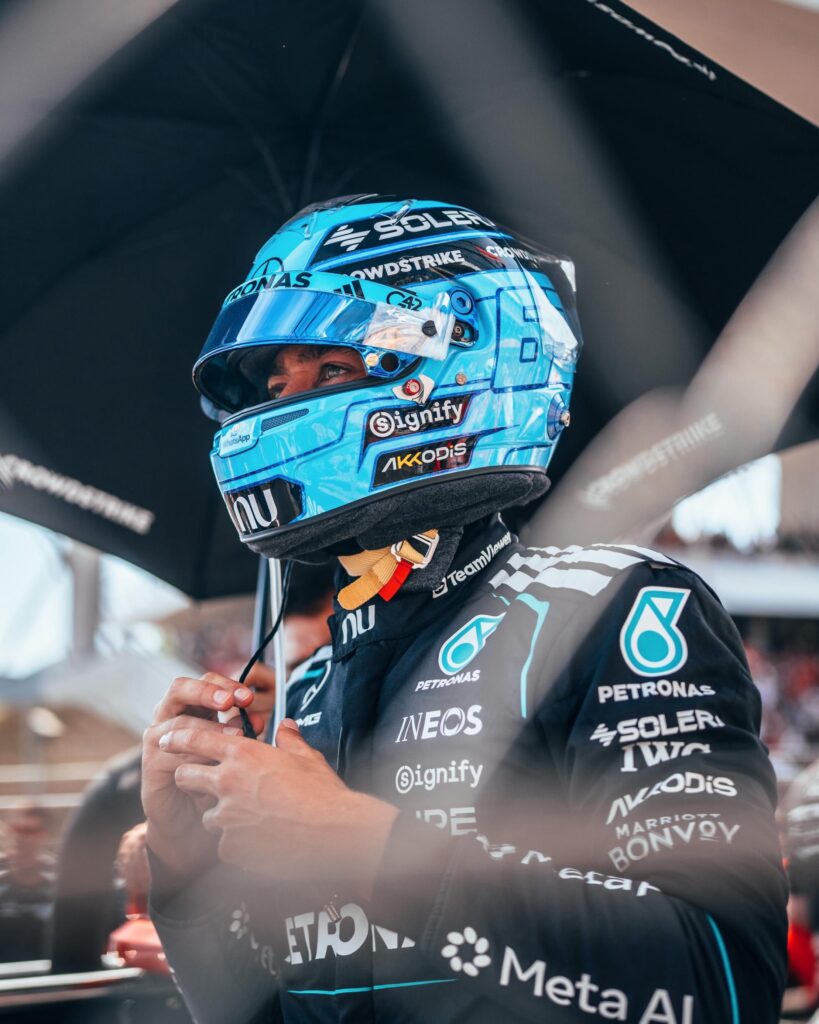
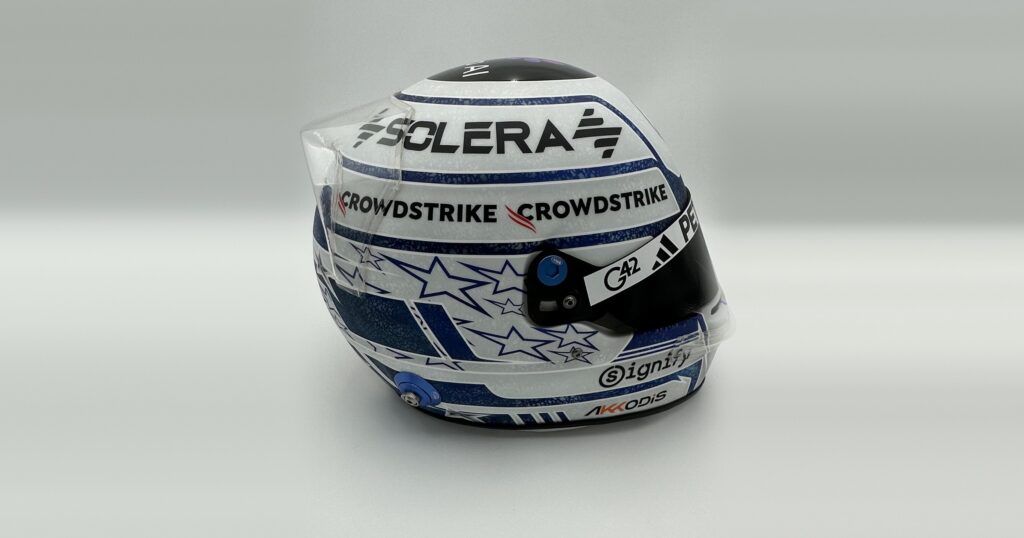
Antonelli’s pole-day helmet at Silverstone carries his established 2026 Mercedes design, worn through the qualifying session on 2026-07-04 that produced his front-row lockout effort. For collectors, a pole-position weekend at a circuit with Silverstone’s history adds context that turns a full-size 1:1 display replica into more than a livery study — it becomes a marker of a specific technical and competitive moment in his rookie year.
The Mercedes garage has treated the throttle-lift technique as a genuine performance differentiator this weekend, and that context sits naturally alongside a display piece built to exhibition quality. A replica finished to match the pole-lap helmet gives a fan or collector a tangible link to the exact session where the revived engine trick was first exposed publicly.
Because the detail only became public on the Saturday of the race weekend, interest in Antonelli’s Silverstone-specific helmet finish has sharpened quickly among those following the sport closely, making it a natural centerpiece for a rookie-season display alongside pieces from teams such as McLaren and drivers like Lewis Hamilton.
What Comes Next for the British Grand Prix
The British Grand Prix itself follows the pole-setting qualifying session, with Antonelli starting from the front row after his Silverstone lap on 2026-07-04. Race day brings its own variables — tyre strategy, the run down the Wellington Straight into Turn 1, and whether McLaren can find an answer to the throttle-lift technique before lights out.
McLaren’s engineers will now be studying the same GP Tempo data that exposed the trick, looking for any adjustment they can make within their own Mercedes power unit customer agreement. Whether that closes the gap before the race start remains to be seen, and nothing about the outcome of the Grand Prix itself can be assumed from the qualifying result alone.
What is clear is that Silverstone 2026 has already produced one of the more technically interesting storylines of Antonelli’s rookie campaign — the kind of detail that makes a qualifying-day helmet worth preserving in a display case regardless of how the race itself unfolds.
“It was not easy. It’s tricky because with this power unit you need to sometimes drive in a certain way that feels a bit unnatural.”
— Kimi Antonelli, Mercedes
“Because in the first place, you’re even like, ‘Why do I need to lift?’ So it’s just tricky at times, but with the team we’ve done a lot of preparation.”
— Kimi Antonelli, Mercedes
FAQ
Q: What is the revived Mercedes engine trick at Silverstone?
It is a legal driving technique where Mercedes drivers lift off the throttle just before the timing line to avoid the mandated 50kW-per-second power ramp-down rate, maximising power at the exact moment they cross the line. The Race revealed the detail on 2026-07-04, the Saturday of the British Grand Prix weekend.
Q: Why was McLaren surprised by the trick?
McLaren is a Mercedes power unit customer without direct visibility into how the Mercedes works team prepares its throttle mapping and driver coaching, so the revived technique’s reappearance in qualifying caught the team off guard.
Q: Did the trick help Antonelli take pole position?
Yes, GP Tempo data showed the gap to his closest rival opening up specifically on the run to the timing line, the exact zone where the throttle-lift technique is applied, contributing to his Silverstone pole on 2026-07-04.
Q: Is the engine trick banned by the FIA?
An earlier version of the engine mode behind this benefit was banned by the FIA earlier in the 2026 season, but Mercedes found a legal method to recreate a similar effect through driver throttle timing rather than a banned engine setting.
Q: Is the Antonelli Silverstone helmet available as a display replica?
Yes, full-size 1:1 scale display replicas based on Kimi Antonelli’s 2026 Mercedes helmet livery are available as collector items, built to exhibition quality for display rather than protective use.
Shop Kimi Antonelli Collection
Display and collector replicas only. Not certified for protective use. Full-size 1:1 scale.
This article was written with the help of AI tools. Editorial policy