
Blog
Audi F1 Reliability Woes Called “Embarrassing” by David Croft After Miami GP Letdown
 123Helmets Editorial Team
Audi F1 Reliability Woes Called “Embarrassing” by David Croft After Miami GP Letdown
The Miami Grand Prix weekend should have been a showcase of progress for the project that will soon become Audi’s full works team. Instead, the Sauber garage left Florida nursing wounded pride after a double mechanical drama that prompted Sky Sports commentator David Croft to brand the reliability situation “embarrassing” on the live broadcast. For young Brazilian rookie Gabriel Bortoleto, the disappointment was sharpened by what could have been: a clean weekend, a striking helmet design under the Miami sun, and a livery that, in different circumstances, might have been photographed crossing the line inside the points.
Key Takeaways
David Croft publicly labeled the Sauber/Audi reliability run “embarrassing” during the Miami GP broadcast.
Gabriel Bortoleto’s Miami helmet remained a visual highlight despite the team’s mechanical setbacks.
The black-and-green Sauber livery continues to be one of the grid’s most photogenic display subjects.
Reliability, not pace, is now framed as the central obstacle ahead of the Audi works era.
A Miami weekend that promised more than it delivered
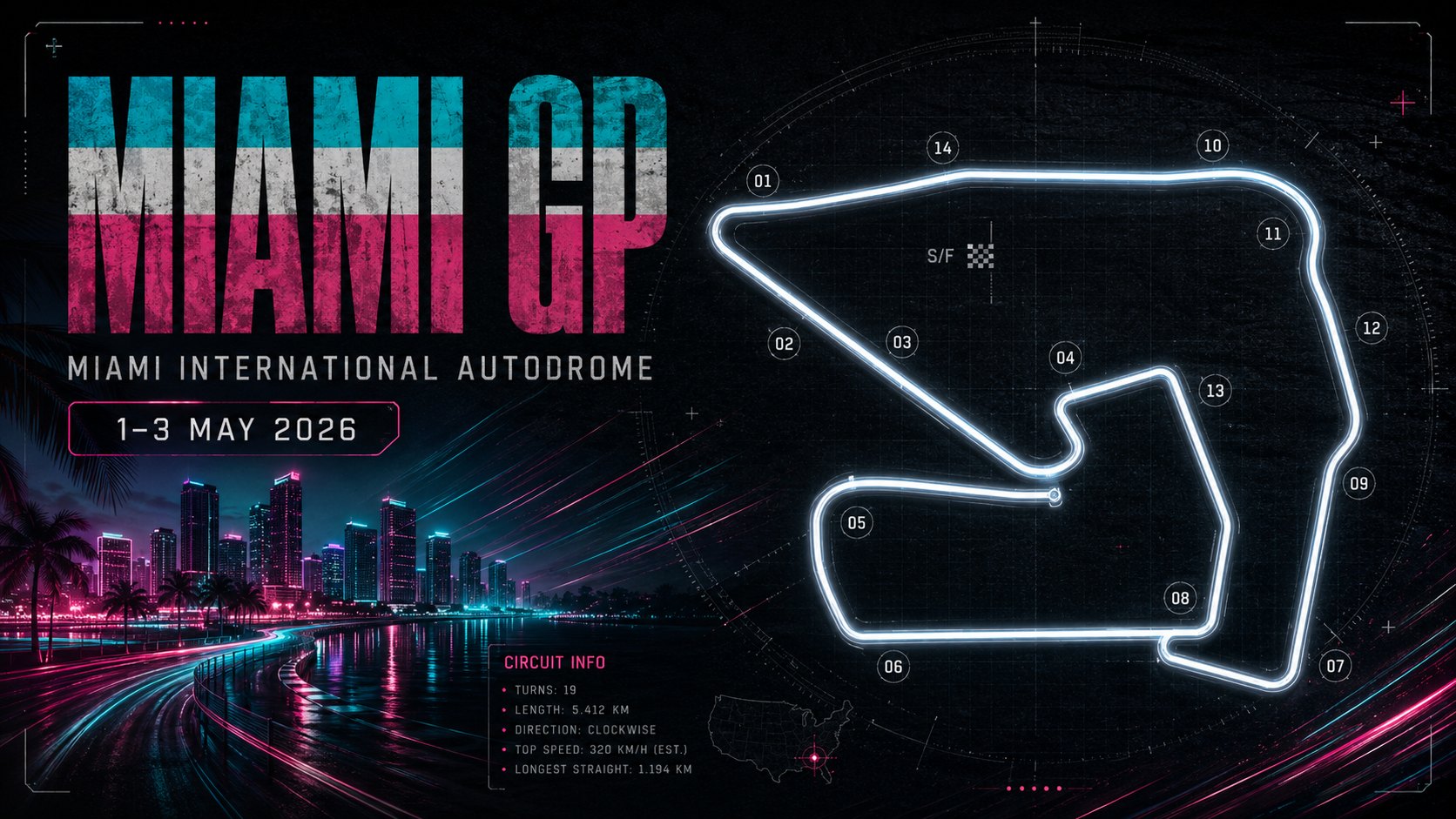
Miami International Autodrome arrived on the calendar with its usual mix of pastel paddock branding, celebrity grids and brutal asphalt temperatures. For Sauber, the team carrying the soul of the incoming Audi factory effort, the weekend was billed internally as a chance to consolidate small but encouraging signs of progress from the European rounds. Instead, what unfolded in Florida was a sequence of mechanical interruptions that turned a hopeful narrative into a damage-control exercise.
Gabriel Bortoleto, the Brazilian rookie tasked with carrying part of the long-term Audi identity, navigated practice with the measured rhythm of a driver still cataloguing the circuit. He worked through traffic, learned the bumps over the Turn 17 chicane, and progressively trimmed his sector times. Yet every step forward seemed to be answered by a step back from the garage: a sensor here, a hydraulic check there, the kind of small interruptions that, accumulated, ruin a rookie’s already limited mileage.
The moment Croft lost patience on air
When the broadcast cut to a slow-motion replay of the Sauber rolling to a halt, David Croft did not hide his frustration. “Embarrassing” was the word that landed, and it landed hard. Coming from a commentator usually careful to balance criticism with context, the verdict felt like a public marker — a reminder that the countdown to Audi’s full works arrival is no longer abstract, and that headlines like this one cannot become routine.
Bortoleto’s helmet: the visual story of the weekend
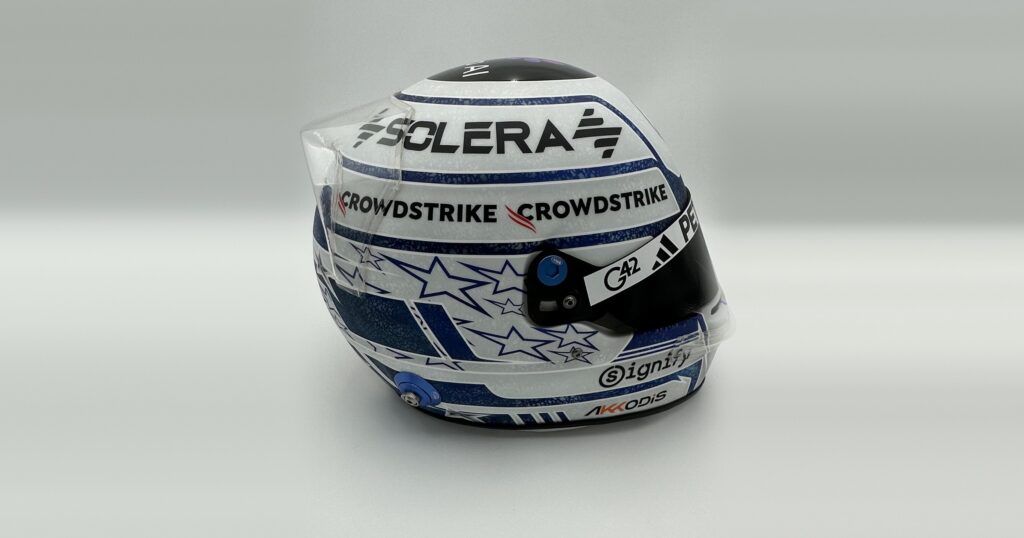
Even in a difficult weekend, the camera always finds the helmet. And Bortoleto’s Miami lid was a piece worth lingering on. The Brazilian’s design language continues to evolve around a confident interplay of dark base tones, sharp metallic accents and the unmistakable green-and-yellow nod to his home country, woven into the side panels rather than splashed across the dome.
Why this helmet works as a display piece
From a pure collector’s standpoint, Bortoleto’s Miami helmet ticks several boxes that matter to anyone curating a serious shelf. The graphic composition reads cleanly from across a room, which is the real test of a display helmet: not how it looks in a press close-up, but how it looks at three metres, lit by a single spotlight, sitting on a plinth.
Key visual elements for collectors
- Balanced contrast: dark base with controlled bright highlights, avoiding the busy clutter that ages quickly.
- National identity, subtly placed: Brazilian colours used as accents rather than headline graphics.
- Top-down readability: the crown design holds up in overhead pit-lane shots, which is exactly the angle most owners replicate at home.
- Sponsor integration: logos sit within the geometry rather than fighting it.
For a full-size 1:1 collector replica, that disciplined design is gold. It is the kind of helmet that does not need a story to justify its place on a shelf — though Miami, in retrospect, has now given it one.
The black-and-green livery under the Miami sun
If the helmet was the close-up, the livery was the wide shot. The current Sauber colour scheme — deep matte black contrasted against acid green — is arguably one of the most photogenic on the grid, and Miami’s saturated light pushed it to its best. In the harsh midday sessions, the green almost glowed; in the softer late-afternoon qualifying light, the matte black absorbed shadows and gave the car a sculptural, almost concept-like silhouette.
A transitional livery with collector appeal
What makes this era of Sauber visually interesting, from a collector’s perspective, is precisely its transitional status. This is the last chapter before the four rings take over the bodywork. Every photograph, every broadcast frame, every helmet-and-car composition captured this season carries a built-in nostalgia tag for the future. Display pieces from this period — full-size 1:1 helmet replicas in particular — are likely to be remembered as artefacts of “the year before Audi”.
Bortoleto’s helmet against that livery, parked in the Miami pit lane with palm trees in the background, was the kind of image that exhibition curators dream about. The fact that the on-track result did not match the visual quality only sharpens the contrast.
Reliability: the conversation Audi cannot avoid
Croft’s blunt assessment was not a one-off frustration. It echoed a broader concern that has been building quietly in paddock conversations: the gap between Sauber’s design intent and its on-track execution. Pace, in isolated stints, has occasionally hinted at progress. But pace means nothing if the car does not finish — and in Miami, finishing felt like an aspiration rather than a baseline.
Why this matters for the Audi transition
The Audi works programme is not just a rebrand. It is an industrial and cultural pivot, and every grand prix between now and the full transition is being read as a barometer. Reliability stories like Miami feed a narrative that the new ownership era inherits unresolved problems rather than a polished foundation.
The areas under scrutiny
- Power unit integration: persistent small failures suggest systemic rather than isolated issues.
- Cooling under high-temperature races: Miami’s heat is a known stress test, and the car visibly struggled.
- Operational consistency: repeated interruptions across sessions erode rookie development time.
- Communication clarity: the public framing of failures will matter more as Audi branding takes over.
None of this is unfixable. But Croft’s use of the word “embarrassing” on a global broadcast is the kind of soundbite that lives long after the chequered flag, and it adds urgency to a transition that is already on a tight clock.
Bortoleto’s response: the rookie posture that matters
What stood out, almost as much as the mechanical drama, was Bortoleto’s composure. Pulled in front of microphones after a weekend that any rookie would be entitled to vent about, he chose a measured tone. He acknowledged the frustration, refused to amplify it, and pivoted toward what he could control: data review, simulator preparation, and the next weekend on the calendar.
The long game of a rookie season
From a display and collector standpoint, the helmets and liveries of a rookie’s debut season acquire a specific kind of value — the value of “firsts”. First grand prix helmet. First Miami helmet. First helmet worn in a season that ended in a major team transformation. None of that is lost on collectors who curate full-size 1:1 replicas as historical markers rather than impulse purchases.
Bortoleto’s handling of Miami, more than the result itself, is the kind of behaviour that turns a rookie helmet from a souvenir into a chapter. And chapters, eventually, become the backbone of a serious collection.
What to watch in the next rounds
The Miami weekend leaves the Sauber-Audi project with a clear, uncomfortable, and ultimately useful diagnosis. The pace exists in pockets. The visual identity is strong. The driver pairing has potential. What is missing is the boring, fundamental virtue of finishing races without incident.
Markers for the upcoming grands prix
- Consecutive clean finishes for both cars, regardless of position.
- Stable long runs in Friday practice without sensor or hydraulic interruptions.
- Helmet and livery continuity as the team approaches its rebrand window — collectors will be watching for any design hints.
- Tone from senior figures, including how publicly the team addresses reliability between now and the Audi era.
For followers building a curated display around this transitional period, Miami will be remembered less for what happened on track and more for the editorial pivot it triggered. Croft’s word lingers. The helmet, however, lingers too — and on a shelf, it tells a quieter, more enduring story.
“Embarrassing.”
— David Croft, Sky Sports F1 commentator, on the Sauber reliability situation during the Miami GP broadcast
FAQ
Q: Why did David Croft call the Sauber/Audi situation “embarrassing” in Miami?
Croft used the word on the live Sky Sports broadcast in reaction to a recurring pattern of mechanical interruptions affecting the team across the Miami weekend, framing it as a credibility issue ahead of the Audi works transition.
Q: How did Gabriel Bortoleto perform at the Miami Grand Prix?
Bortoleto navigated the weekend with measured composure as a rookie, working through limited running caused by the team’s mechanical setbacks and responding to media questions in a calm, forward-looking tone.
Q: What makes Bortoleto’s Miami helmet interesting for collectors?
The design balances a dark base, sharp metallic accents and subtle Brazilian colour cues, making it highly readable as a display piece on a shelf or plinth. As a full-size 1:1 collector replica, it captures a meaningful moment in his rookie season.
Q: Why is the current Sauber livery considered visually significant?
The matte black and acid green combination is one of the most photogenic on the grid, and because the team is on the verge of transitioning into Audi’s full works era, this livery period carries built-in historical and exhibition value.
Q: Are the helmets discussed here suitable for actual use?
No. The pieces referenced are display and collector replicas only — full-size 1:1 scale items intended for shelves, plinths and exhibition setups. They are not certified for protective or on-track use.
Bring the visual story of this F1 season into your own display space. Explore curated full-size 1:1 collector helmet replicas, including pieces inspired by the drivers and liveries shaping the road to the Audi era.
Display and collector replicas only. Not certified for protective use. Full-size 1:1 scale.
This article was written with the help of AI tools. Editorial policy