Blog
Barcelona-Catalunya GP: Facts, Stats and Display-Worthy Helmet Moments
 123Helmets Editorial Team
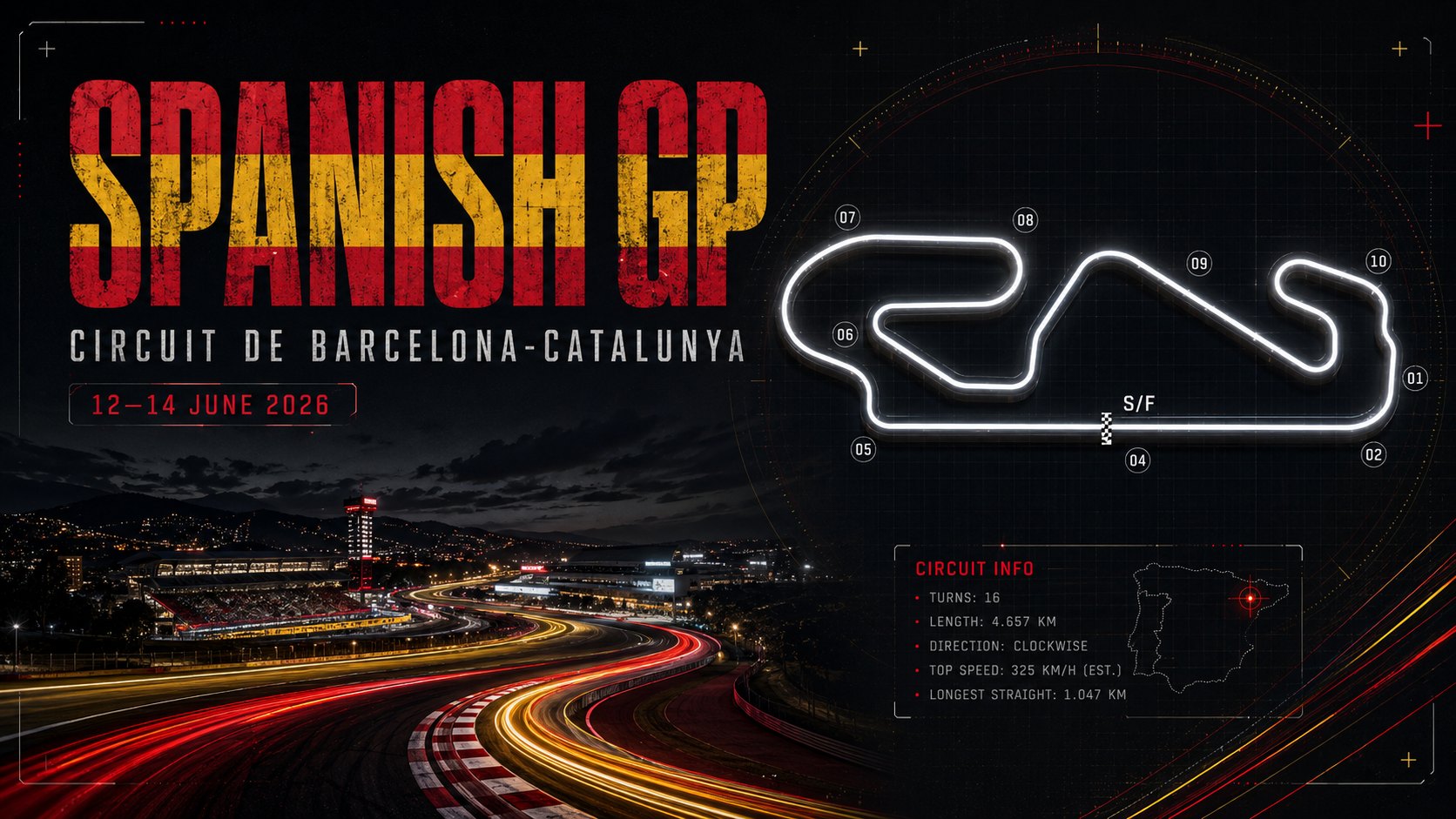
Round 7 of the 2025 season brought Formula 1 back to one of its most familiar testing grounds. The Barcelona-Catalunya Grand Prix delivered a weekend of long-corner punishment, front-left tyre management and a fresh softer Pirelli compound mix — all framed by some of the most photogenic helmet liveries of the European leg. For collectors tracking podium visuals and exhibition-quality replica candidates, the Catalan paddock offered plenty.
Key Takeaways
Race weekend ran from Friday June 12 through Sunday June 14, 2025, with FP1, FP2, FP3, Qualifying and the Grand Prix across three days.
Pirelli brought a softer-than-usual trio: C2 hard, C3 medium and C4 soft, aimed at encouraging more pit stops and bringing the hard compound back into strategy windows.
The reprofiled final sector (in use since 2023) replaced the old chicane, changing helmet camera angles and podium photography backdrops.
Turn 1 remains the main overtaking zone, while Turns 3-4 and Turn 9 produce the long-load corners that stress the neck — and produce the most dramatic helmet shots of the weekend.
Weekend schedule and circuit character
The Barcelona-Catalunya Grand Prix occupied the standard three-day European format. Free Practice 1 and Free Practice 2 ran on Friday, June 13, 2025. Free Practice 3 and Qualifying followed on Saturday, June 14, 2025, with the Grand Prix on Sunday, June 15, 2025. The Circuit de Barcelona-Catalunya remains one of the most-driven layouts on the calendar, with decades of pre-season testing baked into every driver’s muscle memory.
Former Renault driver Jolyon Palmer summed up the paddock view: “Barcelona is a nice circuit, but everyone knows it like the back of their hand, which kind of makes it feel like home.” That familiarity makes the lap times tight and the qualifying margins razor-thin — the kind of session where the helmet-cam footage often shows steering inputs measured in millimetres.
Long-load corners and the neck test
Turns 3 to 4 and Turn 9 are the signature long-radius corners. They load the driver’s neck for several seconds at a stretch, and the abrasive tarmac chews through the front-left tyre faster than almost any other circuit on the calendar. For helmet photographers and collectors, these are the corners that produce the iconic side-profile shots — the ones that end up framed in display cabinets next to a 1:1 replica.
Pirelli tyre selection and strategy windows
Pirelli’s compound choice was the headline technical story of the weekend. The Italian supplier brought C2 as the hard, C3 as the medium and C4 as the soft — one step softer than the usual Barcelona allocation.
From Pirelli’s weekend preview: “The compounds selected for this round are C2 for the hard, C3 for the medium and C4 for the soft. This is therefore a softer trio than the usual selection for Barcelona. Given the characteristics of the current compounds, the aim is to encourage a greater number of pit stops and also the inclusion of the hard tyre in race strategies.”
Why the softer trio matters for strategy
Barcelona’s abrasive surface combined with three long corners typically produces a one-stop race. By moving down one step on each compound, Pirelli pushed teams toward two-stop windows and gave the C2 hard a genuine race role rather than a backup function. The front-left wear pattern dictated almost every strategy call, and the pit-wall radio traffic reflected it.
Turn 1 — the only real overtaking spot
Palmer again: “Overtaking can be tricky, with Turn 1 pretty much the only spot you can pass at — it’s also the trickiest corner.” The long DRS straight feeding into a heavy braking zone produced the bulk of on-track moves, and the helmet-cam onboards from those passes are the kind of footage that drives replica demand the following week.
Turn 4-5 braking zone and the reprofiled final sector
The Turn 4 to Turn 5 sequence is one of the most demanding braking zones on the calendar. It runs downhill, has subtle camber, and tempts drivers into braking late. Miss the apex and the camber actually saves you a fraction — one of the rare corners where a small error doesn’t cost a full tenth.
Goodbye to the old chicane
The old final sector, reworked from 2023 onwards, removed the tight chicane that drivers universally disliked. Palmer described the previous layout bluntly: “You had to balance your tyre performance in the first and final sector, it felt really slow, and you squirmed your way around the final chicane trying to compete the lap. But that’s all gone since 2023.”
For helmet collectors, the change matters beyond lap times. The new high-speed final sector means podium-celebration camera angles, slow-motion onboard shots and post-race cooldown laps all play out against a different visual backdrop than pre-2023 footage. Replica liveries photographed at modern Barcelona have a distinct sweep through that final section that older display photos don’t share.
Helmet and livery moments worth displaying
Barcelona’s bright Catalan sunlight is unkind to dull paint and brutal on metallic finishes — which is exactly why the weekend produced strong helmet photography. The combination of overhead sun on the main straight and shadow patterns through Turns 7 and 8 creates the kind of high-contrast images that collectors hunt for when sourcing reference photos for a 1:1 display piece.
What makes a Barcelona helmet shot collectible
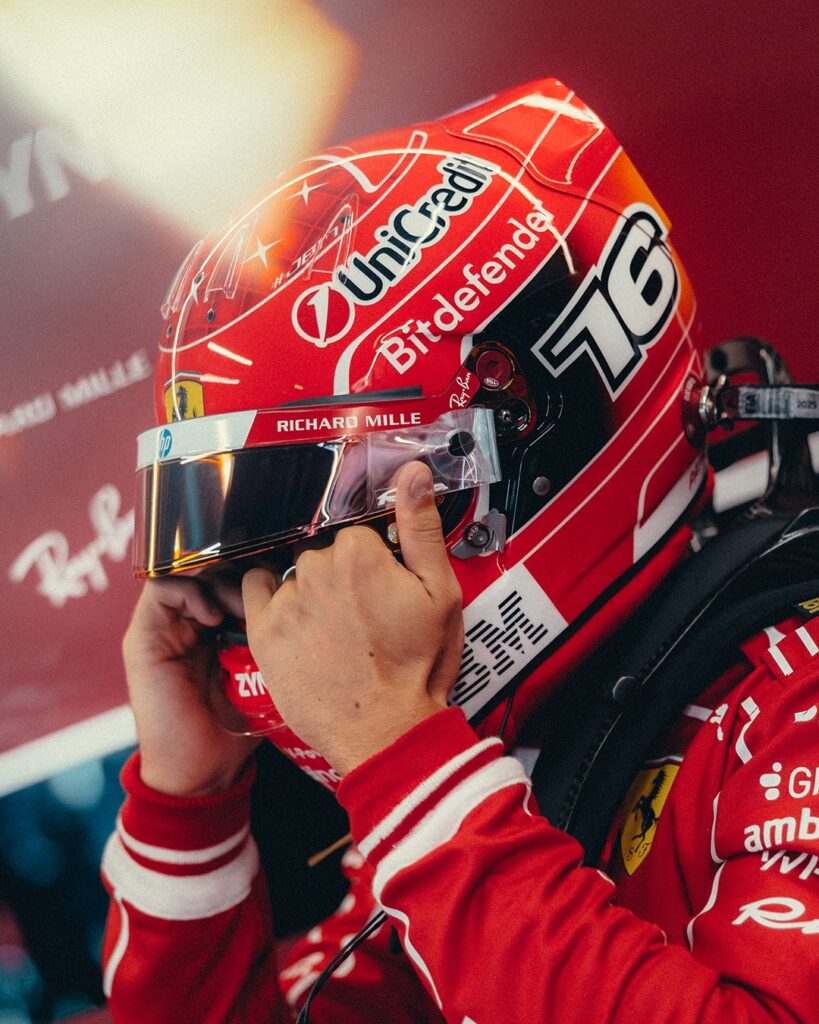
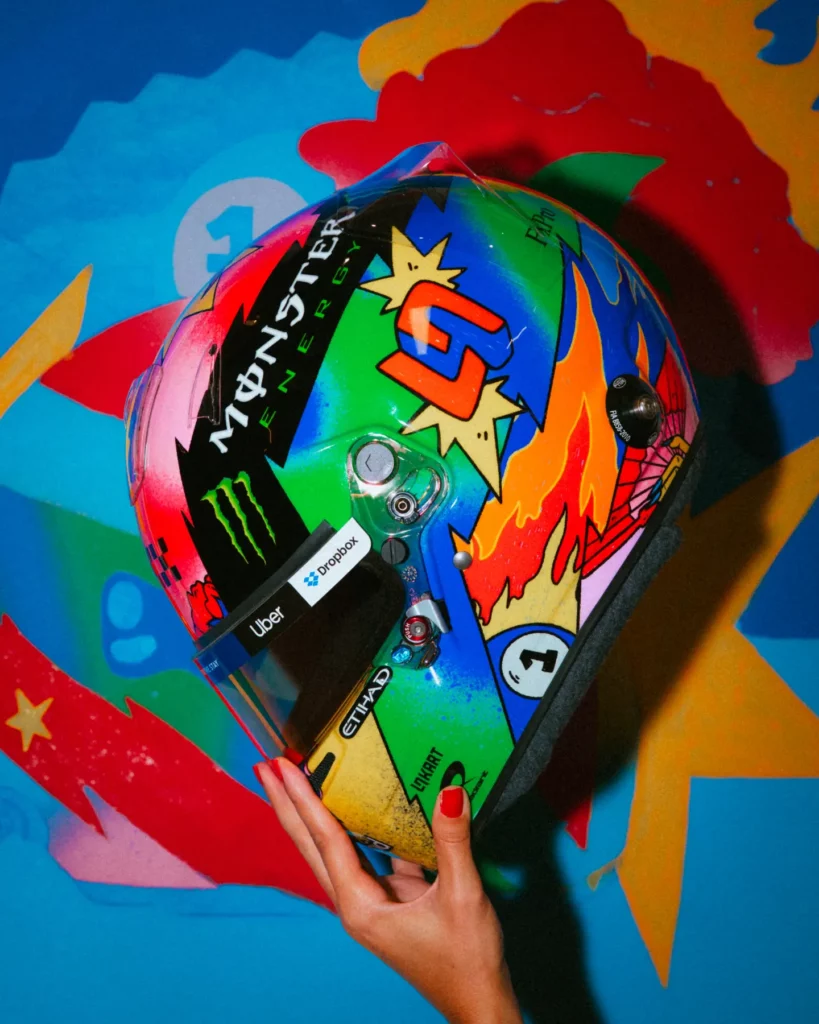
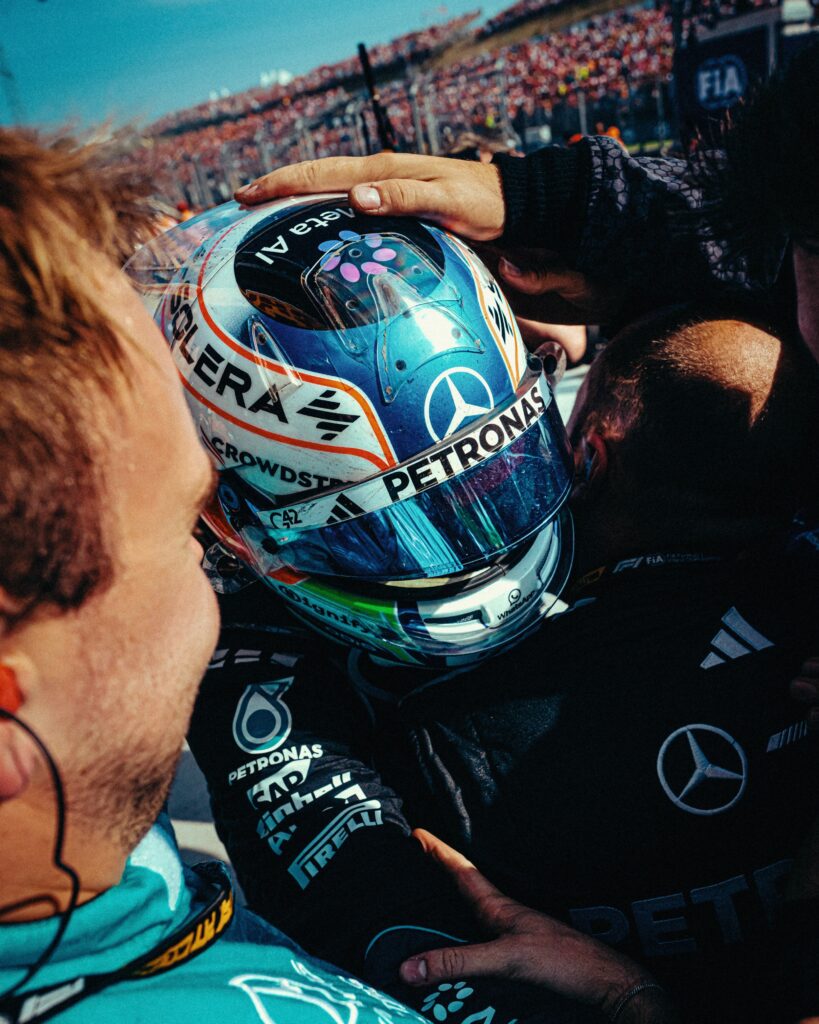
Three angles dominated the weekend’s photo output: the Turn 1 braking-zone front-three-quarter, the Turn 9 long-radius side profile, and the podium overhead. Each one frames the helmet differently. The Turn 1 shot captures the visor strip and top crown. The Turn 9 profile shows the full side panel and any sponsor placement on the chin bar. The podium overhead emphasises the top plate — historically the most heavily customised area of any modern F1 lid.
Exhibition-quality reference material
Full-size 1:1 collector replicas live or die on paint accuracy, and Barcelona’s lighting conditions are about as honest a colour test as any circuit offers. If a livery looks correct under Catalan sun, it will look correct under display-cabinet LED lighting. That’s why reference photographers and replica painters pay close attention to the weekend’s media output — particularly the post-qualifying parc fermé shots, where helmets sit static under direct light for several minutes.
Stats, numbers and the weekend in figures
A few hard numbers framed the weekend:
- Round number: 7 of the 2025 calendar.
- Race days: June 13-15, 2025 (Friday practice through Sunday race).
- Pirelli compounds: C2 hard, C3 medium, C4 soft — one step softer than the standard Barcelona allocation.
- Layout era: reprofiled final sector in use since 2023, replacing the previous chicane.
- Primary overtaking zone: Turn 1, fed by the main straight.
- Primary tyre wear point: front-left, driven by long-radius Turns 3-4 and Turn 9.
Why the numbers matter to collectors
For anyone building a display collection around a specific season, race-weekend metadata is part of the provenance. Knowing that a particular helmet design was raced at Round 7, 2025, on the C2-C3-C4 compound weekend, on the post-2023 layout, gives a 1:1 replica a documented context. It’s the difference between a generic display piece and a dated, sourced exhibition item.
“Barcelona is a nice circuit, but everyone knows it like the back of their hand, which kind of makes it feel like home, because it’s the one that we have historically spent a lot of time driving at.”
— Jolyon Palmer, former Renault F1 driver
“The compounds selected for this round are C2 for the hard, C3 for the medium and C4 for the soft. This is therefore a softer trio than the usual selection for Barcelona.”
— Pirelli weekend preview
FAQ
Q: When did the 2025 Barcelona-Catalunya Grand Prix take place?
The weekend ran from Friday, June 13 through Sunday, June 15, 2025, with FP1 and FP2 on Friday, FP3 and Qualifying on Saturday, and the Grand Prix on Sunday. It was Round 7 of the season.
Q: What Pirelli compounds were used at Barcelona?
Pirelli brought C2 as the hard, C3 as the medium and C4 as the soft — a softer-than-usual trio designed to encourage more pit stops and bring the hard compound into genuine race strategies.
Q: Why is Barcelona so hard on the front-left tyre?
The circuit’s abrasive tarmac combines with long-load corners — particularly Turns 3-4 and Turn 9 — to put sustained lateral load on the front-left. That combination produces some of the highest front-left wear rates on the calendar.
Q: What changed in the final sector at Barcelona?
From 2023 onwards, the previous tight final chicane was removed and replaced with a faster, flowing sequence. Drivers preferred the new layout, and the change altered the visual backdrop for podium and onboard footage.
Q: Are these Barcelona helmet replicas available as display pieces?
123Helmets.com supplies full-size 1:1 collector and display replicas. These are exhibition-quality items intended for static display only — not certified for protective use. Reference photography from circuits like Barcelona helps source accurate paint and livery detail.
Looking for a full-size 1:1 collector replica inspired by the European leg of the F1 season? Browse F1 Helmet Collection and find exhibition-quality display pieces ready for your cabinet.
Display and collector replicas only. Not certified for protective use. Full-size 1:1 scale.
This article was written with the help of AI tools. Editorial policy