Blog
Barcelona-Catalunya GP Tyre Selection: Pirelli’s Softer Trio and the Display-Worthy Helmets on Show
 123Helmets Editorial Team
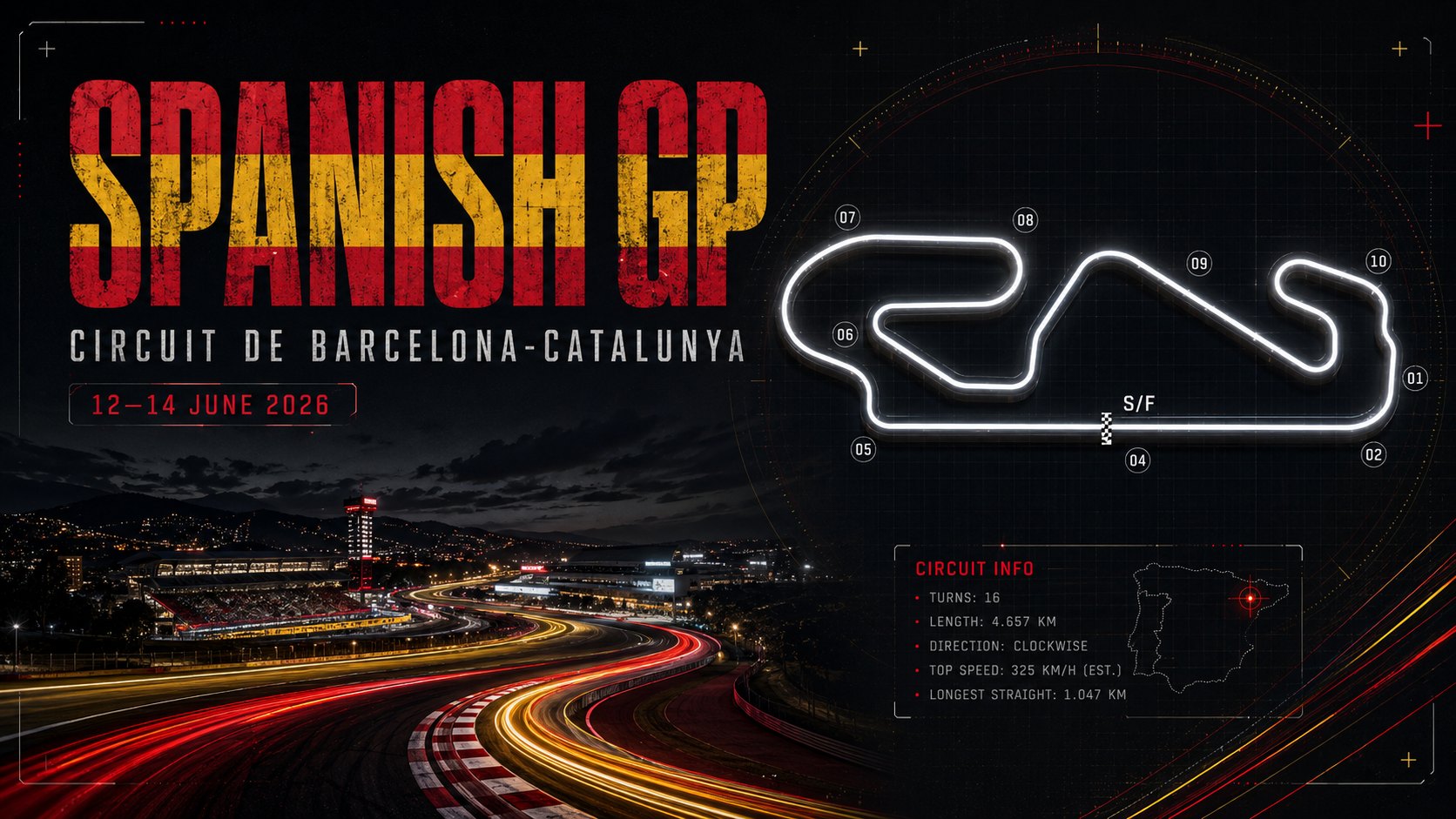
Pirelli has gone one step softer than usual for the seventh round of the season at the Circuit de Barcelona-Catalunya, bringing the C2, C3 and C4 compounds. Beyond the strategic puzzle, the paddock at Montmeló offered a parade of collector-grade helmet liveries worth studying in detail.
Key Takeaways
Pirelli chose C2 (hard), C3 (medium) and C4 (soft) — one step softer than the usual Barcelona allocation.
Each driver received 2 sets of hards, 3 sets of mediums and 8 sets of softs for the weekend.
The Circuit de Barcelona-Catalunya hosted 5 days of pre-season testing in January before this race return.
Helmet liveries at Montmeló offered some of the cleanest podium visuals of the season for collectors.
Q3 finishers earned an extra set of softs, and at least 2 different slick compounds were mandatory in dry conditions.
Pirelli’s softer trio explained
For the Barcelona-Catalunya Grand Prix, Pirelli stepped away from its traditional conservative approach at Montmeló. The Italian supplier selected the C2 as the hard (white sidewall), C3 as the medium (yellow sidewall) and C4 as the soft (red sidewall) — a full step softer than the C1-C2-C3 line-up usually picked for this abrasive layout.
The reasoning behind the softer trio is strategic. Pirelli wants to encourage a higher pit-stop count and push teams to integrate the hard compound into their race plans rather than ignoring it. With track temperatures expected to climb sharply across the three days, the C4 was the wildcard — a tyre likely to grain or blister if pushed too long on stints of more than 15 laps.
Allocation per driver
Each of the 20 drivers received the following Pirelli allocation for the weekend:
- 2 sets of C2 hard tyres (white)
- 3 sets of C3 medium tyres (yellow)
- 8 sets of C4 soft tyres (red)
- Green-marked intermediate wets on standby
- Blue-marked full wets on standby
An extra set of softs was reserved for any driver progressing to Q3, and at least 2 different slick compounds had to be used during the race itself, provided the track stayed dry.
The Montmeló layout and why compound choice matters
The Circuit de Barcelona-Catalunya is one of the most demanding venues on the calendar for tyres. The combination of long, loaded corners — Turn 3, Turn 9 and the high-speed Turn 12 — generates lateral forces that punish soft-compound rubber. Historically, teams have relied on the hardest end of the Pirelli range to make one-stop strategies viable.
By dropping a step softer, Pirelli effectively pushed the field toward two-stop races. The hard C2 became the tyre of choice for long middle stints, while the C4 soft was the qualifying weapon and a short-stint racing option only.
A track the cars already knew
This was not new territory for the 2025-spec cars. The current season began at Montmeló in January with 5 days of pre-season testing, giving teams an exhaustive baseline of data on tyre degradation and aero balance. That January data informed almost every race-stint simulation run across the weekend.
The Spanish round itself was postponed by a couple of weeks compared with its original calendar slot. The ‘Spanish Grand Prix’ national designation has now moved to the new Madrid race scheduled for September, with this round officially carrying the Barcelona-Catalunya name.
Helmet liveries worth a closer look
Beyond the strategic chess of the tyre allocation, the Barcelona paddock is always a showcase for helmet design. The home Grand Prix for Spanish drivers Fernando Alonso and Carlos Sainz routinely produces special editions — and those are the lids collectors track most closely.
Alonso’s home-race tradition
Alonso has used Barcelona as a canvas for special liveries throughout his career. The Asturian flag colours, the bull motif, the metallic blue base — these are recurring elements that translate beautifully to a 1:1 display replica. The matte-versus-gloss contrast on his recent designs is the kind of detail that only reads properly on a full-size collector piece sitting at eye level under directed lighting.
Sainz’s evolving palette
Carlos Sainz’s Spanish-flag-inspired top stripe has become a signature. The red-and-yellow flash across the crown, paired with his number 55, sits well on a display shelf alongside other home-race specials. Collectors with a Spanish-driver focus will note the continuity of the design language across his career.
Podium visuals
A Barcelona podium offers some of the cleanest backdrops in F1 — the bright Catalan sun, the white podium structure, and the helmets held aloft on the cool-down lap. These are the exact moments that 1:1 replicas are designed to commemorate, captured at a scale that lets every paint layer and decal placement read true.
Strategy patterns and what the tyres delivered
With the softer compound step, the expected strategic pattern was a two-stop race for most of the field. The C4 soft was viable for stints of around 12 to 18 laps depending on track temperature and fuel load, while the C3 medium offered a useful 20-to-25-lap window. The C2 hard, often dismissed at Barcelona, became the strategic anchor — capable of stints over 30 laps if a team needed to stretch.
Front-row qualifying typically rewards a clean lap on the C4 soft with full slipstream-free running. The undercut into the first stop window was always going to be punishing, given how aggressive the Turn 1 entry punishes any tyre still warming up.
Why this matters for the title fight
Barcelona historically separates cars that work and cars that don’t. The high-load corners expose understeer, oversteer balance issues, and any aero weakness in fast sweepers. A strong result here is a reliable indicator of championship pace through the European summer.
Display-worthy moments from the weekend
For collectors and display-piece curators, three moments from the Barcelona weekend stood out as worth commemorating with a 1:1 replica helmet on the shelf:
The Saturday qualifying lap
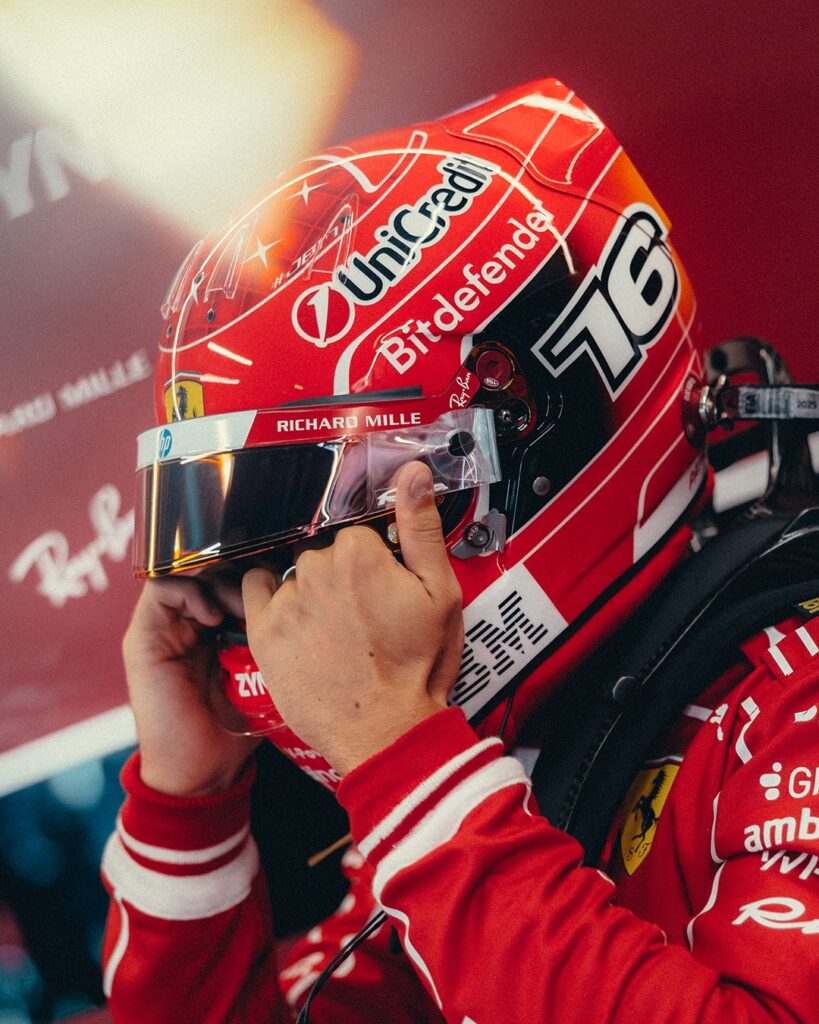
The pole lap is the cleanest representation of a driver-and-car combination in qualifying trim. The helmet, the visor tear-off, the steering input — captured in still images that become reference photos for collector-grade reproductions.
The podium celebration
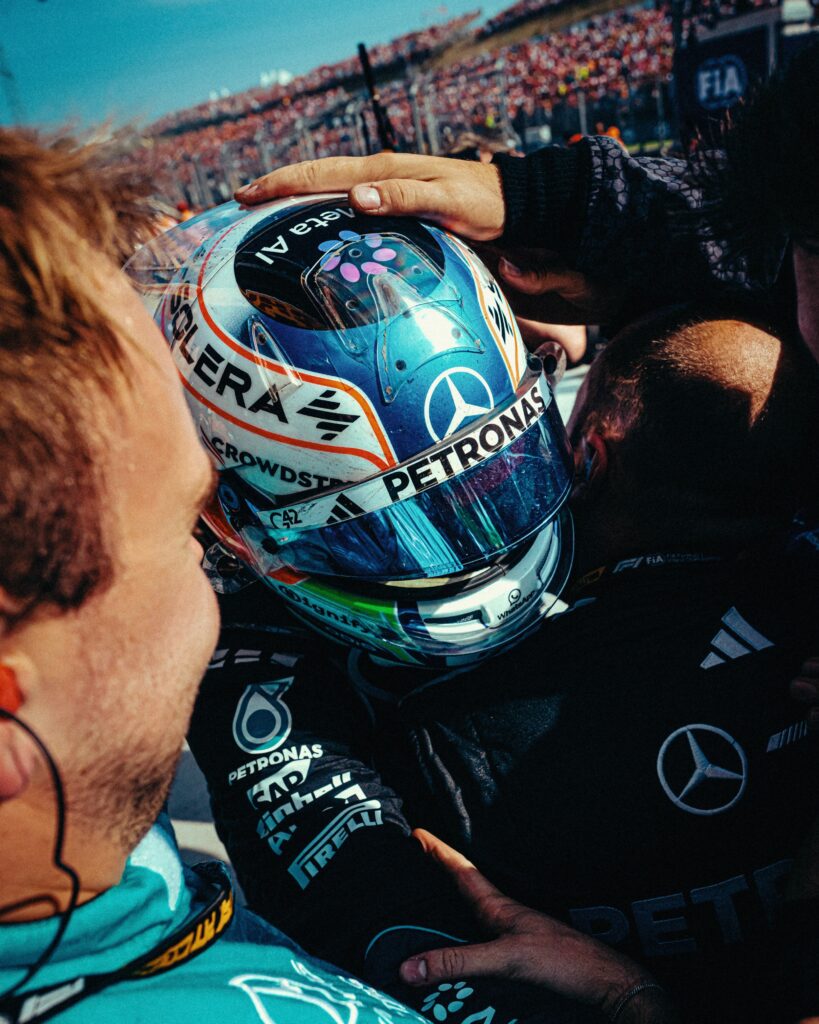
Helmets raised, champagne caught mid-air, the Catalan sun overhead. These are the photographs that define a season in retrospect, and the helmet livery becomes the single most identifiable element of the image.
The cool-down room
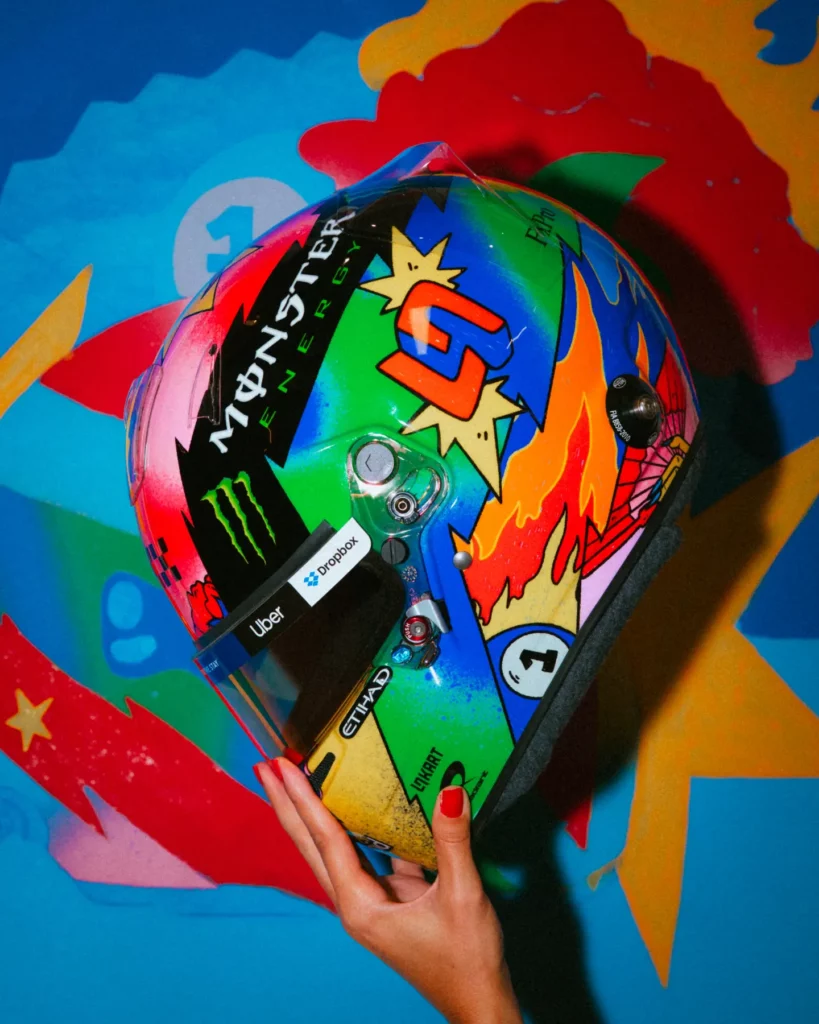
Often overlooked but a goldmine for helmet design analysis. The top-down angles in the cool-down room reveal crown graphics that are invisible from trackside camera positions. For anyone curating a display, these are the reference shots that confirm whether a replica gets the details right.
Building a collection around the Spanish round
If you collect 1:1 replica F1 helmets and want to build a display around the Barcelona-Catalunya weekend, the natural anchors are the Spanish drivers’ special editions and the podium-finisher liveries. A full-size 1:1 collector helmet, mounted at eye level on a clear acrylic stand under directional LED lighting, captures the painted layers, the metallic flakes, and the sponsor decal placements exactly as they appeared on track.
The strongest displays pair a helmet with a printed reference photograph from the same weekend — the cool-down lap shot, the podium silhouette, or the parc fermé inspection. The visual conversation between the photo and the replica is what elevates a collection from a row of objects to a curated exhibition.
“After six months, the new Formula 1 cars are set to return to the Barcelona-Catalunya circuit. The current season in fact began at the Spanish venue, with five days of pre-season testing last January.”
— Pirelli weekend preview
“The compounds selected for this round are C2 for the hard, C3 for the medium and C4 for the soft. This is therefore a softer trio than the usual selection for Barcelona.”
— Pirelli technical statement
FAQ
Q: Which tyre compounds did Pirelli bring to the Barcelona-Catalunya GP?
Pirelli selected the C2 as the hard compound (white sidewall), the C3 as the medium (yellow), and the C4 as the soft (red). This was one step softer than the usual Barcelona allocation.
Q: How many sets of each tyre did each driver receive?
Each driver received 2 sets of hard tyres, 3 sets of medium tyres and 8 sets of soft tyres, with intermediate and full-wet tyres available if conditions required.
Q: Why did Pirelli choose softer tyres for Barcelona this year?
The softer C2-C3-C4 trio was selected to encourage more pit stops and push teams toward using the hard compound in their race strategy, rather than running easy one-stop races.
Q: Are 1:1 replica helmets safety certified?
No. The helmets featured at 123Helmets.com are full-size 1:1 replicas designed as collector display pieces and exhibition items only. They are not certified for protective use of any kind.
Q: What makes a Barcelona helmet livery a good display piece?
Spanish drivers like Alonso and Sainz traditionally run special home-race liveries with national flag elements, metallic finishes and crown-area detail work that translates beautifully to a full-size 1:1 collector replica displayed under directed lighting.
Browse F1 Helmet Collection
Display and collector replicas only. Not certified for protective use. Full-size 1:1 scale.
This article was written with the help of AI tools. Editorial policy