Blog
Canadian Grand Prix Qualifying: Best Bets and the Helmets That Lit Up Montreal
 123Helmets Editorial Team
Canadian Grand Prix Qualifying: Best Bets and the Helmets That Lit Up Montreal
Saturday at the Circuit Gilles Villeneuve is always a chess match between the wall of champions and the betting markets. From low-downforce setups to twilight sky reflections on glossy carbon shells, qualifying in Canada delivers some of the most display-worthy helmet visuals of the season. Here is our editorial recap of the best qualifying bets, paired with the livery and helmet details that make this race a collector favourite.
Key Takeaways
Montreal qualifying historically rewards drivers with strong braking confidence and traction off slow chicanes.
Mercedes, Red Bull and McLaren remain the most reliable pole-position markets in recent Canadian editions.
Helmet livery upgrades for North American rounds make the Canadian GP a key date for collector replicas.
Twilight light in Montreal creates uniquely photogenic podium visuals, ideal references for display pieces.
Why Canadian Qualifying Is a Bettor’s Playground
The Circuit Gilles Villeneuve is a low-downforce, stop-and-go layout built on a former Expo 67 island. It punishes hesitation and rewards drivers who can attack kerbs and brake deep into the hairpin without unsettling the rear. For qualifying markets, that combination historically produces a narrow set of contenders rather than a wide-open field, which is exactly why this session attracts so much pre-Saturday analysis.
Track evolution is another defining factor. Because the circuit is used so rarely outside the F1 weekend, grip levels climb dramatically between FP1 and Q3. The drivers and teams who time their final runs best — usually those with a clean Q2 exit and fresh sets of softs banked — tend to dominate the pole-position market. From a collector’s perspective, that final flying lap, helmet centred in the cockpit, visor down, is the image that defines the weekend.
The Three Markets That Matter Most
When approaching Canadian qualifying analytically, three markets stand out for editorial discussion: pole position, fastest Q1 driver, and top-six finishing positions. Each tells a different story about car balance, tyre management and driver confidence. Pole rewards single-lap brilliance; Q1 fastest often reveals which team has the cleanest low-fuel package; and top-six markets capture the midfield battle that frequently reshuffles between Friday and Saturday.
Pole Position Bets: The Usual Suspects and the Outliers
In recent editions of the Canadian Grand Prix, pole position has rotated between a small group of teams. Mercedes has a strong historical record at Montreal, with Lewis Hamilton’s repeated front-row appearances making the silver-and-black helmet imagery a staple of the weekend’s posters. Red Bull’s recent dominance adds Max Verstappen to any short list, and McLaren’s resurgence has made Lando Norris a credible market entry whenever the car finds rhythm through the chicanes.
The Outlier Play
The Canadian Grand Prix has a habit of producing surprise qualifying performances. Wet-to-dry transitions, mid-Q3 yellow flags and gusting wind across the back straight can flip the order. Ferrari’s package, when balanced for low-drag circuits, has historically produced sneaky front-row laps from Charles Leclerc. Aston Martin and Williams have also flashed pace in Canada during recent seasons, particularly in cooler ambient conditions where their tyre warm-up profile becomes an advantage.
What to Watch in Practice
FP3 long-run pace is less relevant here than in most rounds because the qualifying simulation is so different from race pace. Instead, focus on FP2 single-lap deltas through the final chicane and the speed-trap readings before the start-finish line. A driver carrying notable straight-line speed without compromising rotation through the hairpin is the prime pole candidate.
Helmet Liveries: Montreal’s Visual Showcase
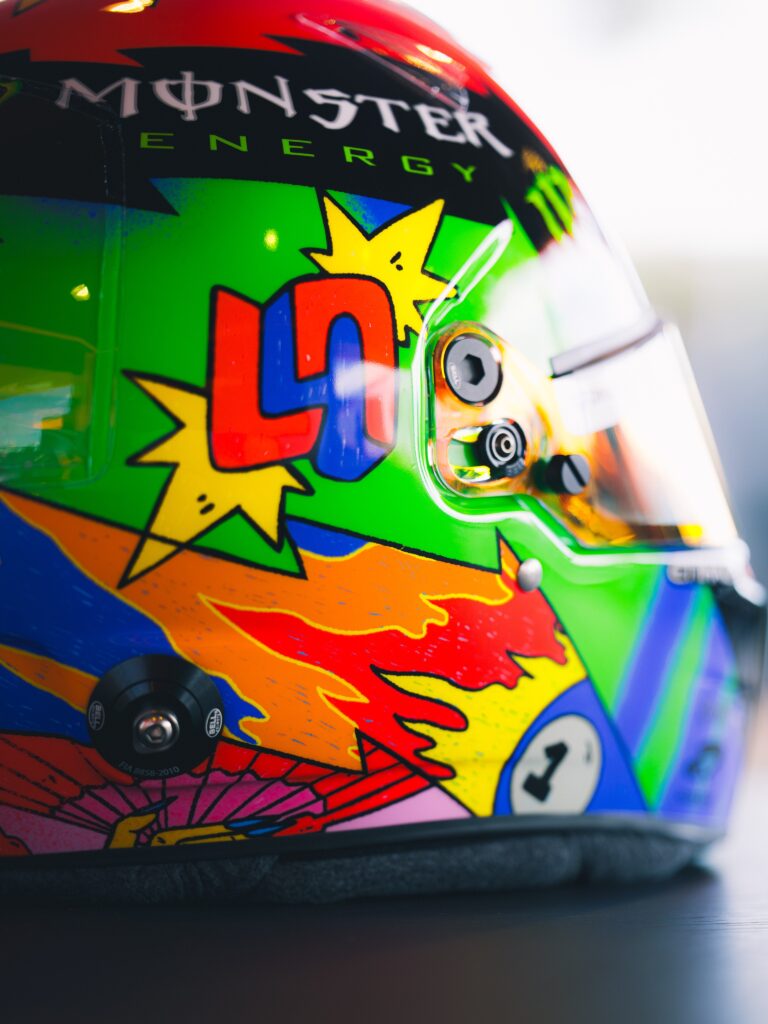
For collectors, the Canadian GP is one of the most rewarding rounds on the calendar. Many drivers reserve special edition helmet designs for the North American swing, knowing the global broadcast attention and the iconic podium backdrop will give the design maximum visibility. The full-size 1:1 replica market reflects this — Montreal special editions consistently rank among the most requested display pieces of the year.
Lewis Hamilton’s Montreal Connection
Hamilton has used the Canadian Grand Prix as a personal milestone weekend throughout his career, and his helmet choices for Montreal often nod to that history. Whether through gold-leaf accents, tribute motifs or chrome-effect detailing, his Canadian-round helmets translate beautifully into exhibition-quality replicas. Placed beside a Senna replica — the driver Hamilton has openly referenced in his Canadian wins — the visual pairing becomes a collector centrepiece.
Verstappen, Leclerc and the Modern Era
Max Verstappen’s helmet program tends to favour bold, high-contrast graphics that photograph extremely well under Montreal’s mixed lighting. Charles Leclerc’s red-and-white Ferrari-era helmets also pop against the Canadian podium backdrop, and his occasional tribute designs for the North American rounds are particularly sought after as full-size 1:1 replicas. These pieces work especially well as display items because the lighting conditions in which they were originally photographed translate directly into how they appear on a shelf or in a cabinet.
Why Display Lighting Matters
A 1:1 replica helmet is only as good as the environment it sits in. The Canadian GP’s twilight qualifying sessions are a useful reference: warm overhead light, slight shadow under the visor, and a clean reflection across the top crown. Recreating that lighting at home — using a single warm LED above the display piece — brings out the same depth and finish quality that made the original visuals memorable.
Top-Six and Q3 Appearance Markets
Beyond pole, the most interesting Canadian qualifying markets sit in the midfield. The Q3 appearance market is particularly volatile here because the circuit’s narrow margin of error means a single error in Q2 — a clipped kerb at the final chicane, a missed apex at Turn 8 — can drop a top-ten contender out entirely. That volatility creates value for editorial analysis.
Teams to Watch in the Midfield
Aston Martin, Williams and Alpine have all delivered surprise Q3 appearances in recent Canadian editions. The common thread is straight-line efficiency: cars that minimise drag without sacrificing the front-end bite needed to attack the hairpin tend to over-perform here. From a helmet-collector perspective, midfield drivers also tend to run more creative livery designs, making their Q3 photographs unusually rich source material for replica display references.
The Rookie Factor
Montreal is a circuit where rookies frequently surprise. The wall of champions is intimidating, but the lap itself rewards a clean, committed style rather than years of experience. Watch for first-year drivers who post strong FP1 times — they often translate that confidence into a Q2 appearance that catches the wider market off-guard.
Podium Visuals and the Collector’s Eye
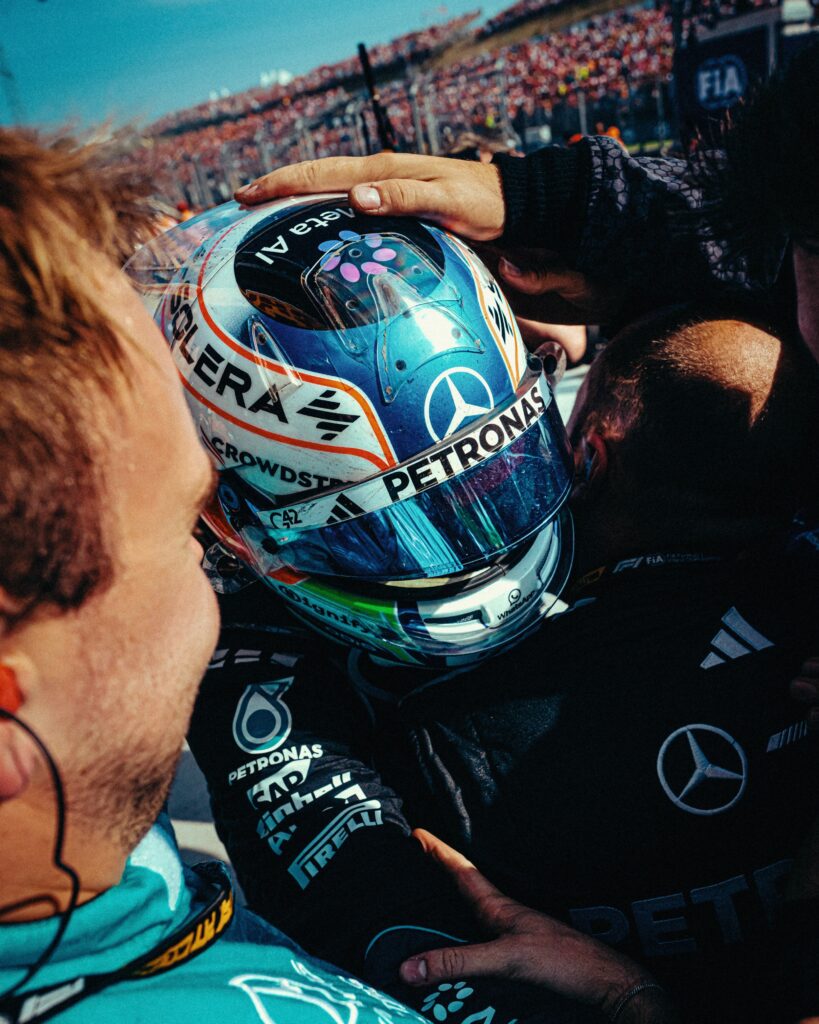
The Montreal podium is one of the most photogenic in Formula 1. The St. Lawrence River backdrop, the bilingual signage and the late-afternoon light combine to produce images that feel cinematic rather than purely sporting. For collectors building a display around the Canadian GP, the podium photograph is the natural anchor.
Building a Canadian GP Display
An exhibition-quality display centred on the Canadian Grand Prix benefits from a clear hierarchy. A full-size 1:1 replica helmet sits as the visual focal point, ideally lit from above and slightly forward. Around it, framed podium photographs, a small plaque with the date and circuit name, and perhaps a scale model of the winning car complete the composition. The goal is to recreate the emotional weight of Saturday qualifying and Sunday’s podium in a single curated arrangement.
Material and Finish Considerations
Collector-grade replicas use the same shell shapes, visor profiles and aerodynamic appendages as the originals seen on Saturday in Montreal. The painted finish, the decal placement and the trim around the eyeport are what separate a casual reproduction from an exhibition piece. When evaluating a replica, the Canadian GP’s broadcast close-ups — particularly the helmet-cam reveal shots before qualifying runs — are an excellent reference for judging accuracy.
Editorial Verdict: The Smart Qualifying Narrative
Approaching Canadian qualifying as an editorial exercise rather than purely a betting one yields the richest perspective. The pole battle is usually a two- or three-way affair between Red Bull, Mercedes and McLaren, with Ferrari as the credible disruptor. The Q3 appearance market opens up genuine midfield drama. And the helmet-livery showcase makes Montreal one of the most rewarding rounds on the calendar for collectors of full-size 1:1 display replicas.
The drivers who win here tend to combine three qualities: braking precision, kerb confidence and the mental composure to ignore the wall of champions on the final flying lap. The helmets that emerge from those moments — photographed at the apex of the final chicane, visor catching the last of the daylight — become the reference images for the next generation of collector pieces.
“Montreal punishes the smallest hesitation, but rewards the bravest braking — that’s why qualifying here is always a story worth telling.”
— 123Helmets Editorial Desk
FAQ
Q: Which team has the strongest Canadian GP qualifying record in recent years?
Mercedes has historically performed exceptionally well in Montreal qualifying, particularly during the Hamilton era. In the most recent seasons, Red Bull and McLaren have joined the front-running conversation, making the pole market a three- or four-team contest.
Q: Why are Canadian GP helmet designs so popular with collectors?
Many drivers reserve special edition helmet liveries for the North American rounds, knowing the global broadcast attention guarantees visibility. These one-off designs translate beautifully into full-size 1:1 replicas and rank among the most requested display pieces each year.
Q: What makes Circuit Gilles Villeneuve unique for qualifying?
It is a low-downforce, stop-and-go layout with significant track evolution across the weekend. Brake stability, traction off slow chicanes and the mental discipline to ignore the wall of champions define a successful qualifying lap.
Q: Are the helmet replicas you offer suitable for actual use on track?
No. All pieces in our collection are full-size 1:1 display and collector replicas, designed as exhibition-quality items for cabinets, studios and themed rooms. They are not intended for any form of protective or wearable use.
Q: How should I display a Canadian GP helmet replica at home?
Use a single warm overhead light to recreate Montreal’s twilight feel, pair the helmet with a framed podium photograph and consider adding a small dated plaque. This curated approach turns a single replica into a complete editorial display.
Browse F1 Helmet Collection
Display and collector replicas only. Not certified for protective use. Full-size 1:1 scale.