Blog
Colapinto Penalised at Barcelona: Yellow Flag Infringement Costs Him Eighth Place
 123Helmets Editorial Team
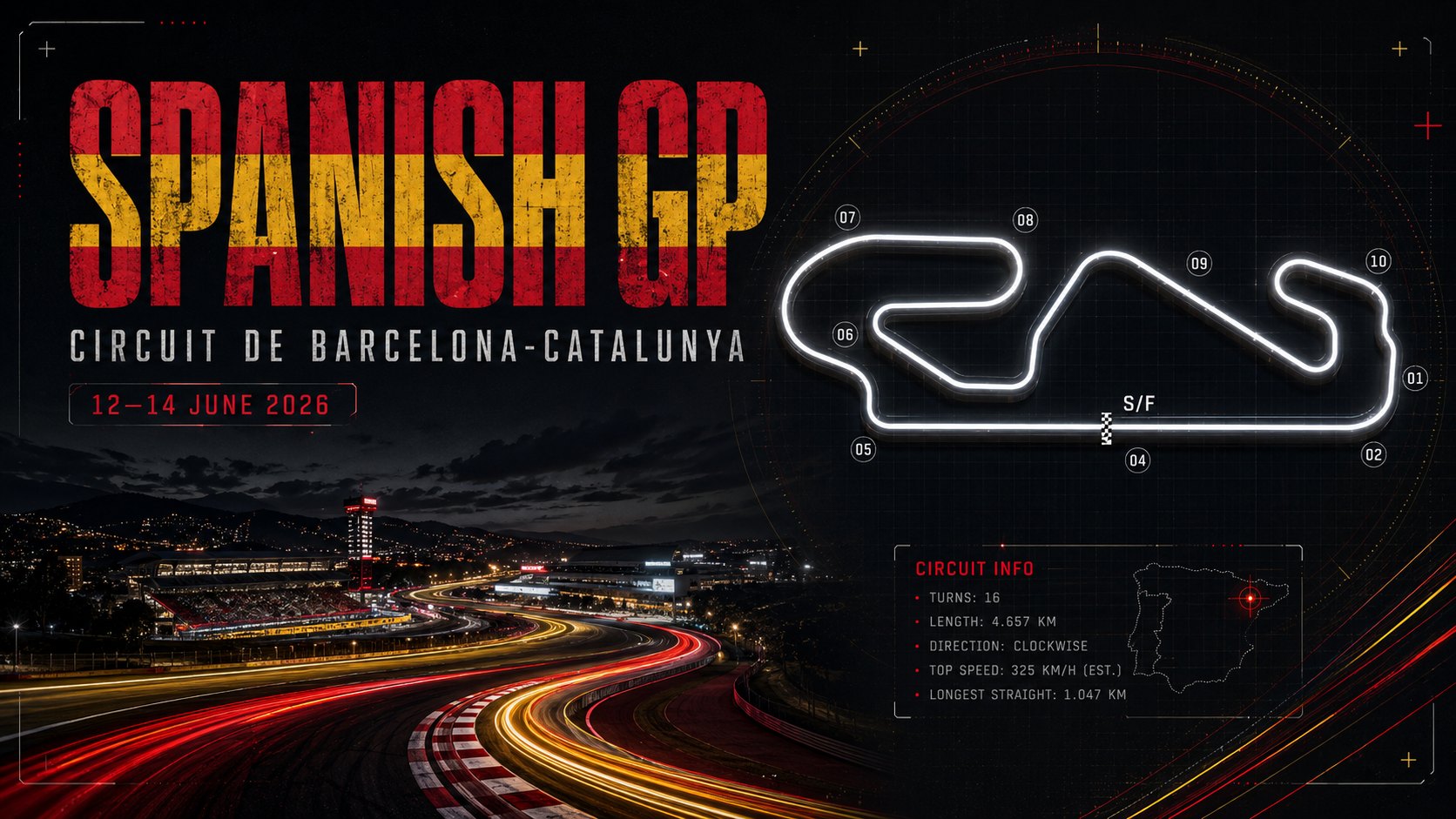
Franco Colapinto dropped two positions in the final Barcelona-Catalunya Grand Prix classification after stewards handed him a 10-second time penalty for failing to reduce speed sufficiently under yellow flags. The Racing Bulls driver, who crossed the line in eighth, was demoted to tenth — and picked up a penalty point in the process.
Key Takeaways
Colapinto received a 10-second time penalty for insufficient speed reduction in a yellow flag sector at the 2026 Barcelona-Catalunya Grand Prix.
He was classified tenth after the penalty, dropping two places from his original eighth-place finish.
The stewards issued him 1 penalty point — the first penalty point awarded to any driver in the 2026 season — bringing his total licence tally to 2.
Racing Bulls team-mates Liam Lawson and Arvid Lindblad were promoted to eighth and ninth respectively as a direct result of the stewards’ decision.
The Penalty That Changed Colapinto’s Barcelona Result
Franco Colapinto lost eighth place at the 2026 Barcelona-Catalunya Grand Prix after stewards issued a 10-second time penalty for a yellow flag infringement during the race. The penalty demoted him two positions in the final classification, from eighth to tenth, gifting his Racing Bulls team-mates Liam Lawson and Arvid Lindblad eighth and ninth place respectively.
The stewards’ verdict was precise: although Colapinto did slightly reduce speed before entering the single yellow flag zone, he did not discernibly reduce speed in the relevant yellow flag sector. In the stewards’ own words, Colapinto reacted to the flag but the reaction was not sufficient to comply with the regulations — a distinction that matters enormously in post-race adjudication. Because the breach sat at the lower end of the penalty scale, the stewards chose a 10-second time penalty rather than a drive-through or a harsher sanction.
For a driver who crossed the finish line with what looked like a solid points-scoring result, losing 2 places in a single stewards’ document is a painful reminder of how narrow the margins are in modern Formula 1. Points at this stage of a championship campaign can separate a driver from a contract extension, a team from a Constructors’ position, or a sponsor from a bonus clause.
How the Stewards Reached Their Decision
The stewards found that Colapinto’s speed reduction was measurable but not meaningful enough to meet the yellow flag standard required by the regulations. Their written ruling acknowledged a slight speed reduction before the zone but concluded no discernible reduction occurred inside the yellow flag sector itself — a two-part test that Colapinto passed on the first element and failed on the second.
Yellow flag rules require drivers to reduce speed and be prepared to stop. In high-speed qualifying and race conditions, the exact threshold of what constitutes a sufficient reduction is monitored via telemetry. The stewards can compare a driver’s speed trace through the flagged sector against their representative speed on earlier laps, making it effectively impossible to argue the case on subjective grounds alone.
Because the stewards treated this as a lower-end infringement — acknowledging that some reaction did occur — a 10-second time penalty was applied rather than a more punitive outcome. A drive-through penalty, for reference, typically costs a driver around 20 to 25 seconds depending on pit lane length and traffic, so the 10-second sanction reflects the mitigating factor the panel recognised in Colapinto’s partial compliance.
The ruling was also accompanied by 1 penalty point on Colapinto’s super licence — the first penalty point issued to any driver in the 2026 Formula 1 season. Combined with the 1 penalty point he already carried from a 2025 infringement, his total now stands at 2. A driver accumulates a race ban at 12 penalty points within any rolling 12-month period.
Colapinto’s Helmet and Race Livery: A Display-Worthy Moment Overshadowed
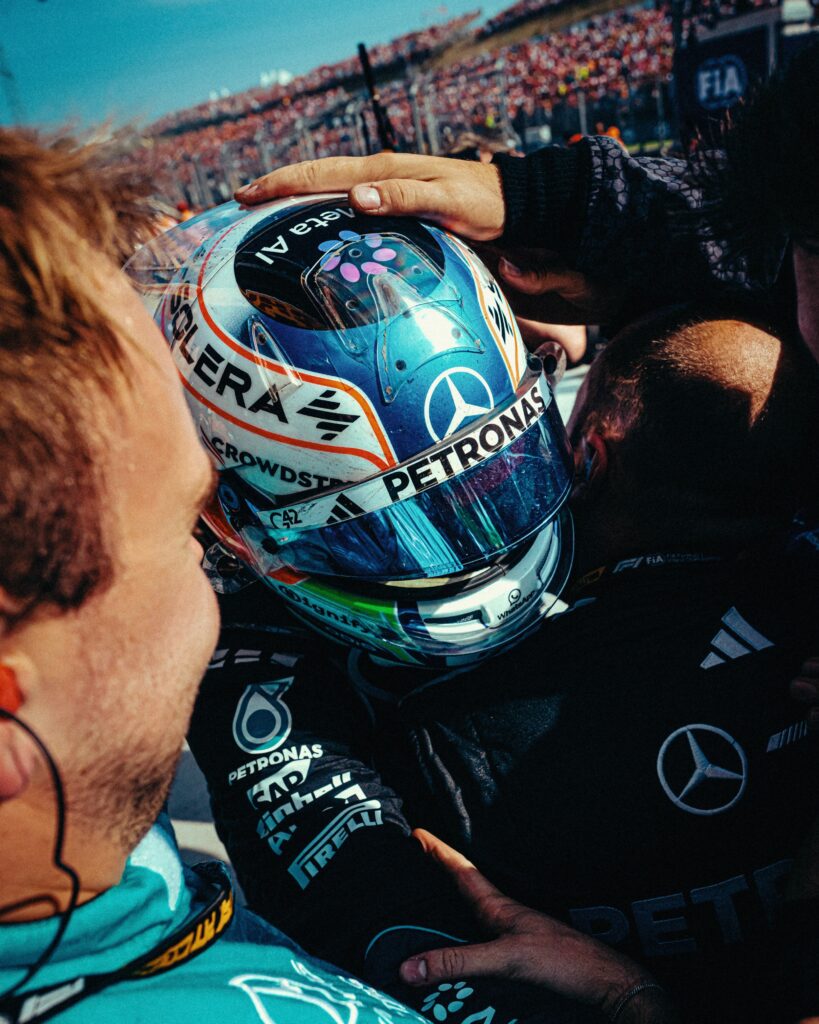
Colapinto ran his distinctive Racing Bulls livery at Barcelona-Catalunya, one of the season’s most visually striking circuits when cars are caught on camera through the high-speed third sector sweepers. The Argentine’s helmet graphics — bold angular lines in Racing Bulls’ deep blue and red palette — have made him one of the most recognisable figures in the paddock since his debut season.
For helmet collectors and F1 memorabilia enthusiasts, Barcelona-Catalunya race rounds always produce strong visual records. The Circuit de Barcelona-Catalunya’s long straights and tight infield complex mean cameras linger on cars long enough to capture full-face detail on drivers’ lids — the kind of footage that feeds the reference archive collectors use when sourcing full-size 1:1 replica helmets for display. The circuit’s harsh Catalan sunlight at race start (typically scheduled for 15:00 local time in summer) creates the high-contrast lighting conditions that show off a helmet’s paint layering and visor tinting at their most dramatic.
A display-quality replica of a Colapinto Barcelona-specification helmet represents a specific moment in a career that has already seen significant momentum — a debut season with Williams in 2024, a move to Alpine’s sister team Racing Bulls, and now a post-race controversy at the Circuit de Barcelona-Catalunya in 2026 that ensures this particular round will be remembered. Full-size 1:1 collector replicas of race-specification helmets capture exactly these narrative-rich moments: not just the podium finishes, but the contested classifications, the telemetry arguments, and the post-race paddock tension that defines a Formula 1 weekend at its most unfiltered.
Lawson and Lindblad Promoted: A Racing Bulls Points Swing
Liam Lawson and Arvid Lindblad were elevated to eighth and ninth place respectively following Colapinto’s post-race penalty. Both Racing Bulls drivers gained the positions without completing an additional racing lap — a rare situation where a team’s points tally adjusts entirely in the stewards’ office rather than on track.
For Lawson, the promoted result adds meaningful Constructors’ Championship points to Racing Bulls’ tally. For Lindblad, ninth place in what is still the early portion of his Formula 1 career marks a result that will sit in the record books as a finished position, regardless of its administrative origin. In Formula 1’s points system, eighth place is worth 4 points and ninth place is worth 2 points — the same values that now transfer from Colapinto’s original scoring position to his team-mates.
The outcome underlines a particular dynamic unique to multi-car team structures: a penalty on one car can simultaneously benefit two others in the same garage. For collectors tracking the visual narrative of the 2026 season, Lawson’s and Lindblad’s helmets and Racing Bulls liveries from the Barcelona round carry the additional context of a points finish that arrived in unexpected fashion — the kind of detail that adds historical texture to any display piece tied to this specific race weekend.
Williams Fined Separately: A Costly Pre-Race Moment
Williams were fined a total of €10,000 (£8,630) by the stewards at Barcelona for failing to remove all team equipment from the grid before the 15-second signal. The infringement involved two separate incidents with the team’s 2 cars.
When Alexander Albon’s car — running as number 23 — was released from its jacks ahead of the formation lap, part of the right front tyre blanket became caught underneath the chassis. The team attempted to free the material before the formation lap began, but could not do so in time. Albon’s car left the grid with a cable still hanging from it, meaning Williams had not cleared all equipment as required. Separately, a plastic box was left on the grid floor beside Carlos Sainz Jr’s car, compounding the team’s regulatory exposure for that single 15-second window.
The €10,000 fine is a financial penalty rather than a sporting one — no positions were lost and no championship points were affected. However, for a team like Williams, which is in direct competition with Alpine for Constructors’ Championship standings, even administrative penalties carry a reputational cost. The incident also serves as a pointed reminder that Formula 1’s pre-race window is governed with the same precision as the race itself, and that the 15-second signal is an absolute, not an advisory.
What the Barcelona Verdict Means for the 2026 Season Narrative
Colapinto being the first driver in the 2026 season to receive a penalty point signals how cleanly the field had raced to this point in the calendar. A penalty point total of 2 on his super licence is not yet alarming — the ban threshold sits at 12 — but it places him in a position where accumulation over the remaining rounds requires monitoring.
From a racing standpoint, the Barcelona stewards’ decision reinforces that yellow flag compliance is one of the most consistently enforced standards in the sport. Drivers and teams know that partial compliance — slowing before the zone rather than inside it — does not satisfy the regulation. Colapinto’s case will almost certainly be studied by engineering teams across the paddock as a reference point for how precisely telemetry is read against the exact sector boundaries of a yellow flag zone.
For those who follow Formula 1 through its visual and material culture — the helmets, the liveries, the race-specific graphics that change circuit by circuit — the 2026 Barcelona round now carries a clear identity: a weekend of contested classifications, penalty points, team fines, and promoted finishes that reshaped the result sheet after the chequered flag had already fallen. Full-size 1:1 exhibition-quality replica helmets tied to drivers like Colapinto, Lawson, and Lindblad from this particular round will carry that specific narrative weight for any serious collector building a display around the 2026 season.
Display and collector replicas only. Not certified for protective use. Full-size 1:1 scale.
“The driver of car 43 slightly reduced speed before entering the single yellow flag zone, [but] did not discernibly reduce speed in the relevant yellow flag sector. The stewards acknowledge that the driver reacted to the yellow flag but do not consider the reaction to be sufficient to comply with the regulations. Therefore a penalty on the lower end of the applicable scale of penalties is imposed.”
— FIA Stewards, 2026 Barcelona-Catalunya Grand Prix Verdict
“Although the team tried to remove the parts before the start of the formation lap, these attempts were unsuccessful and the car left with a cable still hanging off the car and the team thereby did not take all of their equipment with them after the 15-second signal.”
— FIA Stewards, 2026 Barcelona-Catalunya Grand Prix — Williams Infringement Finding
FAQ
Q: Why did Colapinto receive a 10-second penalty at the 2026 Barcelona-Catalunya Grand Prix?
Colapinto received the penalty because he did not sufficiently reduce his speed inside a yellow flag sector during the race. The stewards found he slowed slightly before the zone but failed to discernibly reduce speed within the flagged sector itself, which is where the regulation requires compliance.
Q: How many penalty points does Colapinto now have on his super licence?
Colapinto has 2 penalty points on his super licence after Barcelona. He received 1 penalty point at the 2026 Spanish Grand Prix — the first penalty point issued to any driver in the 2026 season — which combined with the 1 point he already held from a 2025 infringement.
Q: Who moved up to eighth and ninth after Colapinto’s penalty?
Liam Lawson was promoted to eighth place and Arvid Lindblad was promoted to ninth place following Colapinto’s post-race demotion. Both are Colapinto’s team-mates at Racing Bulls.
Q: Why were Williams fined at the 2026 Spanish Grand Prix?
Williams were fined €10,000 (£8,630) for failing to clear all team equipment from the grid before the 15-second signal. A tyre blanket became trapped under Alexander Albon’s car and a cable remained attached when it left the grid, while a separate plastic box was left beside Carlos Sainz Jr’s car.
Q: Are Colapinto helmet replicas from the 2026 season available as collector display pieces?
Full-size 1:1 collector replica helmets tied to Colapinto’s 2026 season livery and designs are available as display and exhibition-quality pieces. These are collector items only — not certified for any protective use — and capture the visual identity of his Racing Bulls race specification at a 1:1 scale.
Browse F1 Helmet Collection — explore full-size 1:1 display replicas from the 2026 season and beyond, built for collectors and exhibition display. Visit our shop to find the piece that belongs in your collection.
Display and collector replicas only. Not certified for protective use. Full-size 1:1 scale.
This article was written with the help of AI tools. Editorial policy