Blog
No Breakthrough on 2026 F1 Engine Rules — Extra Test Day Added for 2027
 123Helmets Editorial Team
The F1 Commission left its latest meeting without a deal on softening the 2026 power-unit rules, but did sign off on an extra day of winter testing for the 2027 season. For collectors tracking the helmet and livery story of this transition era, the decision keeps the current engine formula — and its visual identity — locked in for longer than some teams hoped.
Key Takeaways
No agreement reached on adjusting the 2026 power-unit regulations during the latest F1 Commission meeting
An additional day of pre-season testing has been confirmed for 2027, extending the winter program
The deadlock keeps current livery and helmet design cycles intact through the 2026 transition
Display collectors should watch for new helmet liveries tied to the expanded 2027 test schedule
A Commission meeting that changed less than expected
The F1 Commission gathered with one headline item on the agenda: whether to revisit the 2026 power-unit regulations before the new formula even hits the grid. The answer, after hours of discussion, was no. No breakthrough. No softening. No reversal. The 50/50 split between internal combustion and electrical energy stays as written, and the cars due on track in early 2026 will run to the rules already published.
For a sport that often signals change through paint and presentation, that matters. Teams have been preparing 2026 liveries, sponsor packages and driver helmet programs around the assumption that the new engine era arrives on schedule. A late rule rewrite would have forced design teams back to the drawing board. Instead, the visual identity work continues — and the helmets being painted right now for 2026 testing will land on track exactly as planned.
What was actually on the table
The discussions centered on the energy deployment balance, the role of the MGU-K, and concerns from at least one manufacturer that the 2026 cars could end up lifting and coasting on long straights. None of those concerns translated into a written rule change. The technical working groups will continue meeting, but the door to a major rewrite before the season opener is now effectively shut.
The 2027 test day that quietly slipped through
The more concrete outcome was the addition of one extra day to pre-season testing in 2027. That takes the planned winter program to a longer block than the compressed three-day tests of recent seasons. For teams, it is mileage. For collectors, it is an extra date on the calendar where new helmet designs, fresh liveries and shakedown specifications appear in public for the first time.
Why an extra day matters for display pieces
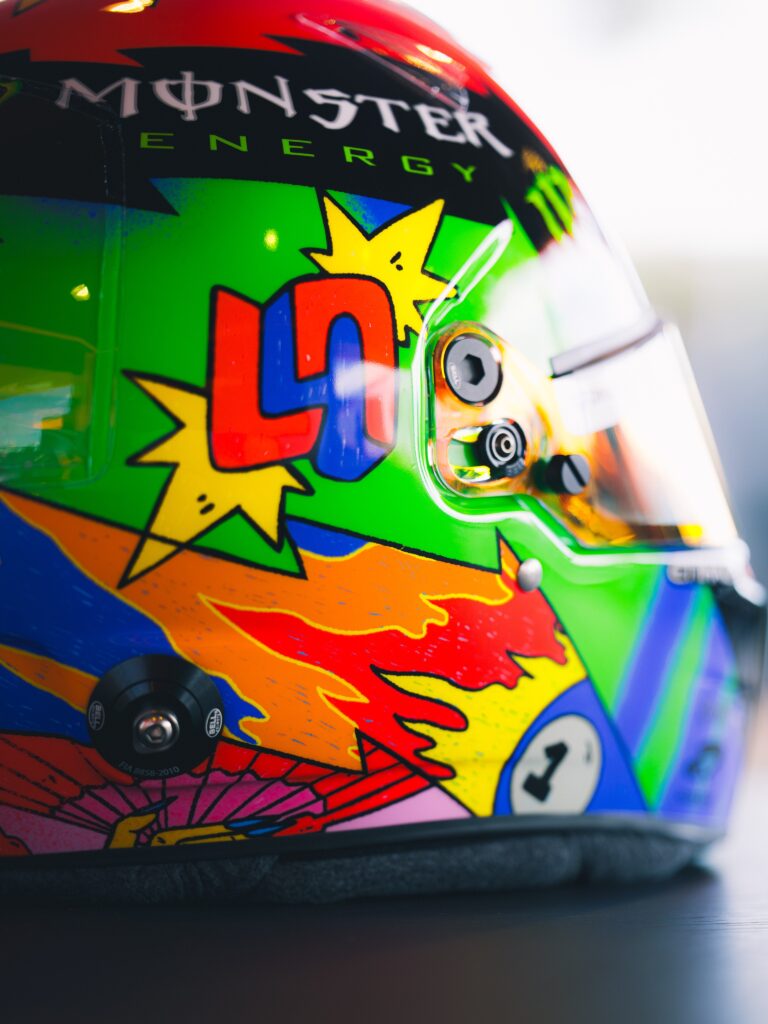
Pre-season testing is where one-off helmet designs often surface. Drivers frequently run a test-only lid before switching to the season livery for round one. An additional 8 hours of track time in 2027 increases the chance that a unique test helmet — the kind that becomes a sought-after replica years later — appears on camera. Recent examples include matte black shakedown helmets, retro tribute designs, and sponsor-specific one-offs that never returned after the lights went out in Melbourne.
The expanded schedule also gives photographers more access. Better reference images mean more accurate 1:1 replicas for display, with cleaner shots of crown graphics, visor strip detailing and rear plate sponsor placement.
What the deadlock means for 2026 helmet design
With the 2026 rules locked, helmet designers at the major painters can finalize their programs. The new car silhouettes — narrower, lighter by roughly 30 kg compared to the current generation, and running active aerodynamics — change the photographic framing of the driver in the cockpit. Helmet crowns become more visible from above, and the rear of the lid sits in a different airflow pattern. Painters have already started adjusting top-down graphics to suit broadcast camera angles.
Livery cycles stay intact
Several teams launch their 2026 cars in January and February, with helmets revealed at the same events. The Commission’s decision means none of those launches need to be delayed or reworked. Sponsor logos already committed to specific helmet zones — typically the chin bar, the visor surround and the rear quarter — stay where the contracts placed them.
For collectors ordering full-size 1:1 display replicas based on 2026 launch liveries, this is good news. The designs revealed at launch are the designs that will run, with only the usual race-by-race tribute variations layered on top.
The 2027 test as a collector calendar event
Adding a fourth day to winter testing changes the rhythm of the off-season. Under the previous three-day format, teams ran tight programs with limited helmet variation. Drivers typically wore one lid across all three days to keep sponsor exposure consistent. With a fourth day available, the calculation shifts.
What to watch for
Expect at least one team to use the extra day for a dedicated filming or marketing session, which historically produces one-off helmet designs. Tribute helmets for retired drivers, charity auction lids and sponsor activation designs all tend to appear at these sessions. The 2027 winter test now offers a 25% larger window for these moments to occur.
For the replica market, a single day of additional running can generate two or three new helmet designs worth documenting. A standard 1:1 display helmet shell measures roughly 27 × 35 cm and requires reference images from at least four angles — front, both profiles and rear — to reproduce accurately. More track time means more reference material.
Reading the Commission’s silence
The absence of a 2026 rule change is itself a signal. It tells teams that the engine manufacturers who invested heavily in the new formula — some committing budgets well above 100 million euros over the development cycle — have held the line. It tells drivers that the cars they tested in the simulator over winter are the cars they will drive in anger. And it tells the visual identity teams that the work shipped is the work that runs.
A quieter outcome with louder consequences
Sometimes the most significant Commission meetings are the ones where nothing visible changes. The 2027 extra test day is a small administrative line item. The failure to reopen the 2026 rules is a much larger story dressed in quieter language. Both matter for anyone tracking the helmet and livery cycle of the next two seasons.
The 2026 grid will look the way it has been promised. The 2027 winter test will run a day longer than 2026’s. Between those two facts sits a meaningful stretch of helmet design history waiting to be documented.
“No agreement on the 2026 engine balance, but a fourth day of winter testing added for 2027 — the off-season just got longer.”
— 123Helmets Editorial Desk
FAQ
Q: Did the F1 Commission change the 2026 engine rules?
No. The Commission discussed potential adjustments to the 2026 power-unit regulations but reached no agreement. The published 2026 rules stay as written.
Q: What was actually agreed at the meeting?
The confirmed outcome was an additional day of pre-season testing for the 2027 season, extending the winter test program.
Q: Does this affect 2026 helmet and livery launches?
No. With the rules locked, teams can proceed with planned launch designs. Helmets revealed at 2026 car launches will run as shown.
Q: Why does an extra test day matter for collectors?
Pre-season testing often features one-off helmet designs, shakedown liveries and tribute pieces. An additional day in 2027 increases the chance of unique display-worthy designs appearing.
Q: Are 123Helmets replicas suitable for track use?
No. All pieces are full-size 1:1 display and collector replicas built for exhibition. They are not certified for protective use of any kind.
Browse F1 Helmet Collection
Display and collector replicas only. Not certified for protective use. Full-size 1:1 scale.