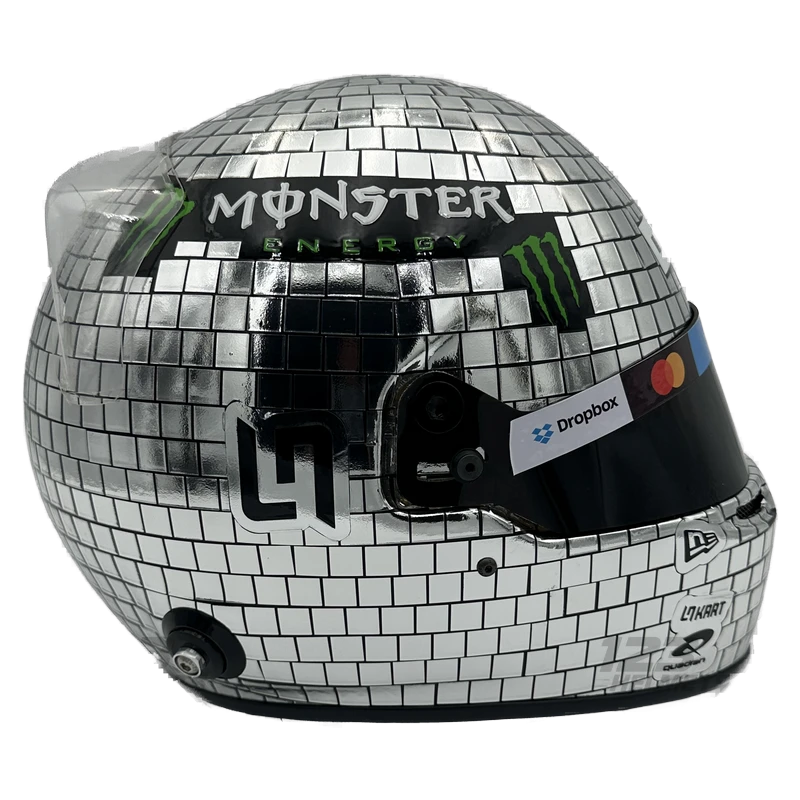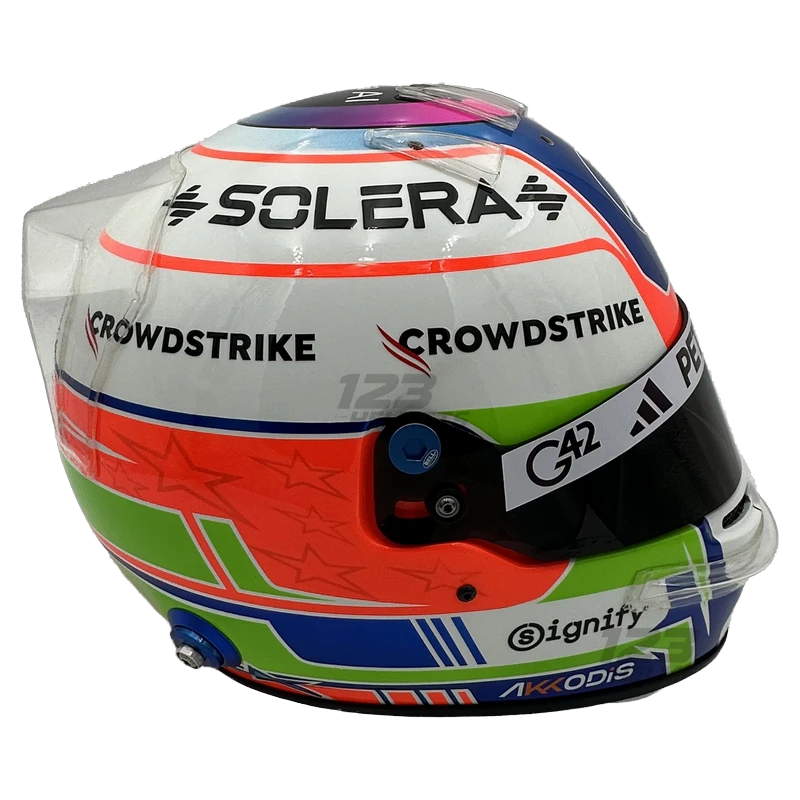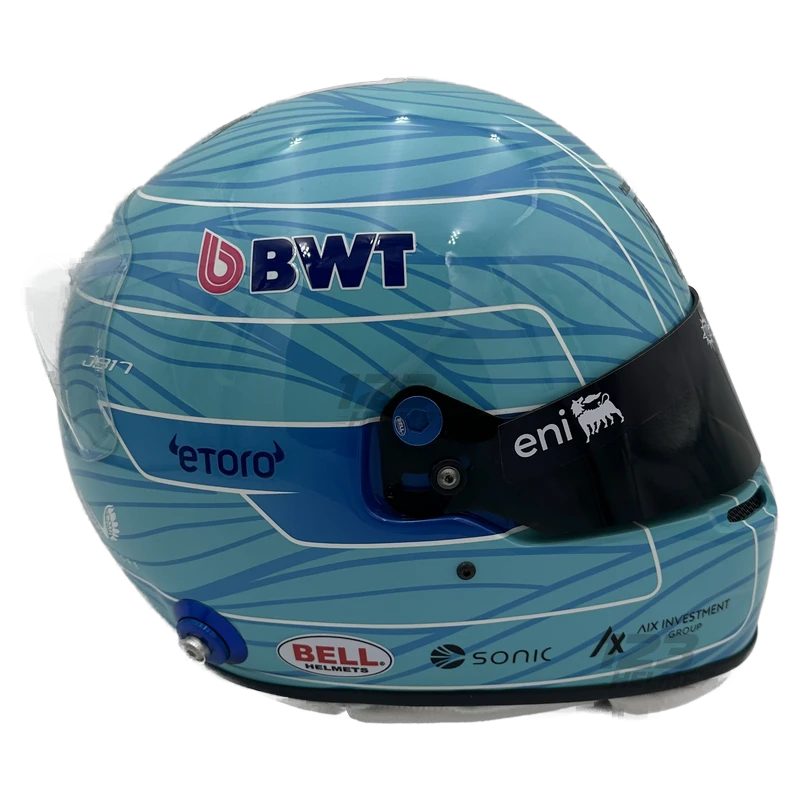
- Keke Rosberg
- Nigel Mansell
- Jenson Button
- Nico Rosberg
- Gilles Villeneuve
- Mika Hakkinen
- Jackie Stewart
- Charles Leclerc
- Lewis Hamilton
- Max Verstappen
- Lando Norris
- Ayrton Senna
- Michael Schumacher
- Fernando Alonso
- Oscar Piastri
- George Russell
- Kimi Antonelli
- Nico Hülkenberg
- Gabriel Bortoleto
- Pierre Gasly
- Franco Colapinto
- Carlos Sainz
- Oliver Bearman
- Sergio Pérez
- Valtteri Bottas
- Isack Hadjar
- Alain Prost
- James Hunt
Ferrari’s Barcelona Surprise: How Tyre Degradation Could Hand the SF-26 a Race-Day Advantage
Posted by
 123Helmets Editorial Team
123Helmets Editorial Team
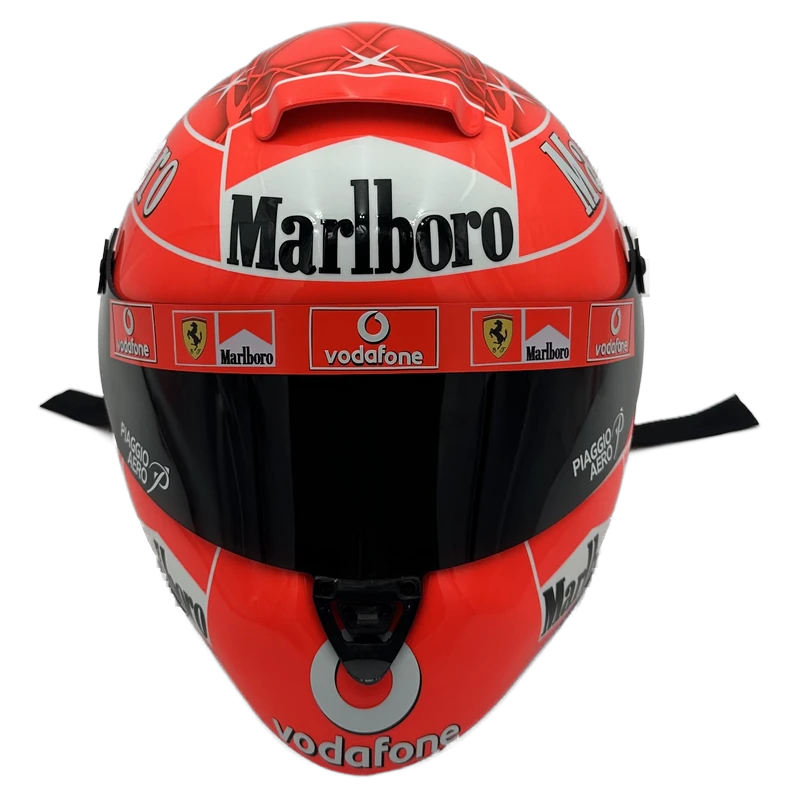
2025 Spanish GP
Charles Leclerc topped Ferrari’s long-run charts at the Circuit de Barcelona-Catalunya with a 0.16 s/lap margin over Kimi Antonelli, while the Scuderia’s eight SF-26 upgrades and a low-degradation tyre window are turning one of Ferrari’s traditionally difficult venues into a potential race-day stronghold. Here is why this weekend’s podium visuals could be dressed in Rosso Corsa — and why that makes the SF-26 replica helmet a collector piece worth owning.
Key Takeaways
Charles Leclerc led Ferrari’s long-run pace at Barcelona, recording 0.16 s/lap faster than Mercedes’ Kimi Antonelli after accounting for stint length and compound differences.
Ferrari brought eight SF-26 upgrades to Spain — a car that has historically struggled with tyre warm-up but shows markedly lower degradation once in its window.
McLaren averaged 0.39 s/lap slower than Ferrari in long-run simulations and suffered severe tyre degradation despite looking sharp over a single qualifying lap.
Drivers across the field lost up to five seconds of pace within ten laps on the C3 compound, making race strategy and tyre management the defining variable of the Spanish GP weekend.
A Barcelona Weekend Turned Upside Down by Tyres
The Circuit de Barcelona-Catalunya has a reputation for sorting the competitive order early. Long, fast corners load the front tyres, and the abrasive asphalt chews through rubber at a rate that punishes any car unable to manage heat build-up. Through many recent seasons that dynamic has worked against Ferrari and in favour of Mercedes and McLaren. This weekend, data from Friday’s second free practice session suggests the usual script has been torn up.
Across the entire Formula 1 field, tyre degradation reached what engineers described as exceptionally high levels — in some cases drivers dropped as much as five seconds of lap time within ten laps even on the C3 compound, the designated medium tyre for the Spanish weekend. A swing of that magnitude in a single short stint compresses normal pace gaps between teams into near-irrelevance; the car that holds on to its tyres, rather than the car that posts the fastest single lap, becomes the one that wins on Sunday afternoon.
That is the environment Ferrari walked into at Barcelona, and on the long-run evidence it is an environment that suits the SF-26 better than almost any observer predicted.
Leclerc’s Long-Run Numbers and What They Mean
When the dust settled on FP2, Charles Leclerc was at the top of Ferrari’s long-run charts. After the data team corrected for differences in stint length and tyre compound — adjustments that level the playing field between cars that ran more or fewer laps on fresh versus used rubber — Leclerc’s pace was 0.16 seconds per lap quicker than Mercedes rookie Kimi Antonelli. In a tyre-degradation race, where every tenth compounds over thirty-plus laps, a gap of 0.16 s/lap is not a small number.
The contrast with Hamilton and Russell made the picture even starker. Lewis Hamilton finished his long-run stint 0.83 seconds per lap behind Leclerc on an equivalent basis, while George Russell was 1.4 seconds per lap adrift. Both drivers are experienced enough to extract the maximum from a Mercedes, which means those gaps reflect something structural about the W16’s tyre behaviour in Barcelona conditions rather than individual error.
Ferrari’s SF-26 has carried a known characteristic into 2025: the car is slow to bring its tyres up to the operating window, which hurts it in qualifying simulations and on circuits with short laps where a single flying lap is everything. Barcelona’s 4.655 km layout and its long, sweeping Turn 3 complex still demand meaningful tyre temperature — but once the SF-26 is in that window, the team’s data indicates it sheds grip more slowly than several of its rivals. At a circuit that is suddenly imposing five-second degradation swings per ten laps, that characteristic is worth far more than a quick single-lap setup.
Eight Upgrades and a Different Kind of Ferrari
The SF-26 that arrived in the Catalunyan paddock was not identical to the car that raced in Monaco or Imola. Ferrari brought eight distinct upgrades to Spain — a meaningful package by any mid-season standard. The team has not broken down each component publicly, but the scale of the update signals that Maranello identified Barcelona as a target circuit for development rather than a round to manage through.
Eight upgrades at a single race is the kind of commitment that translates directly into collector significance. Every race where Ferrari fields a meaningfully updated livery and car configuration is a moment the replica helmet market registers. The SF-26’s Rosso Corsa shell, the Scuderia shield on the chin, the carbon-weave finish across the top — these are the visual details that define a display piece tied to a specific competitive chapter of Ferrari’s 2025 season.
From a racing standpoint, the upgrades appear to have improved the car’s aerodynamic balance in ways that help tyre loading on high-speed corners — exactly the corners that stress the front tyre most heavily at Barcelona. Whether the full benefit shows itself in qualifying or only becomes apparent in race trim is a question the team’s engineers will spend Saturday morning trying to answer.
McLaren and Red Bull: The Rivals Ferrari Must Watch
McLaren arrived in Spain as reigning constructors’ champions and with a car that has been quick across nearly every circuit profile in 2025. On a single lap in FP2, the MCL39 looked sharp and the team’s qualifying simulation pace confirmed it. But the long-run picture told a different story. On average, McLaren was 0.39 seconds per lap slower than Ferrari across comparable long-run stints and showed severe degradation on both compounds tested. That is not a gap a team overcomes easily with a strategy call; it reflects how the MCL39 loads and wears its rear tyre through the high-energy corners that characterise the second and third sectors of the Catalunya layout.
Red Bull’s position is harder to read. Max Verstappen managed only sixth place in the FP2 qualifying simulation runs, which represents an unusual deficit for the reigning four-time world champion at a circuit where Red Bull’s aerodynamic philosophy has historically been productive. Whether that reflects a deliberate fuel-load decision or a genuine setup problem will only become clear in Saturday’s qualifying session.
What the field-wide data confirms is that no team enters Sunday with a clear, comfortable advantage across both one-lap and race pace simultaneously. Ferrari may have the best race package of the weekend, but a poor qualifying position could force a recovery strategy that undoes the tyre-degradation benefit. The team that qualifies well and manages its tyres best over a race distance — likely somewhere between 55 and 66 laps — will take the trophy.
Rosso Corsa on the Podium: The Collector Angle
Moments where Ferrari defies expectation at a circuit that has historically resisted it carry a particular weight in the collector world. The 2025 Spanish GP is shaping up as exactly that kind of occasion: a race where the SF-26’s technical identity — gradual warm-up, low degradation, high-speed stability — aligns with the conditions on the ground rather than working against them.
When a Ferrari driver stands on the podium at Barcelona wearing the Scuderia’s full-face helmet — the carbon shell, the red and yellow Marlboro-era callbacks in Leclerc’s personal design, the gold-tinted visor catching the late-afternoon Spanish light — that image becomes a fixed point in the season’s visual timeline. A full-size 1:1 replica of that helmet is not a generic collectible; it is a display piece tied to a specific performance chapter, a specific circuit, and a specific set of circumstances that made the result possible.
Display and collector replicas at 1:1 scale capture the exact geometry of the original helmet: the width of the chin strap mount points, the curvature of the visor aperture, the weight distribution of the shell. These are exhibition-quality pieces built to sit in a case and hold the visual memory of a race intact. The Spanish GP — if Ferrari converts its tyre data into podium positions — will be a weekend worth having on display.
The broader livery context adds another layer. Ferrari’s red is not a single shade; the SF-26’s bodywork uses a metallic-fleck formula that shifts tone under direct sunlight versus shade, and the helmet finish is matched to that same colour reference. A collector piece built from this season’s Rosso Corsa specification carries that precision into a living-room display stand as readily as it would into a museum cabinet.
What to Watch Before Sunday’s Race
The data picture will sharpen considerably after Saturday qualifying. If Leclerc or Carlos Sainz — whose long-run numbers were not reported individually but who benefits from the same SF-26 base — can qualify inside the top three, Ferrari enters Sunday with a free strategic choice. Starting from pole or front row means the team can shadow the race leader on tyre management rather than chasing, which is exactly the scenario that allows a low-degradation car to build a gap in the final stint when rivals are coasting on worn rubber.
The teams now have Friday night and Saturday morning to recalibrate their setups against the degradation data. It is possible that Mercedes finds a compound or pressure tweak that brings the W16 closer to Ferrari’s degradation rate. McLaren’s engineers are among the best at extracting a second performance window from their car between sessions. The competitive order is not settled.
But the direction of the data is clear. After years in which Barcelona represented a circuit Ferrari managed rather than attacked, the Scuderia’s combination of eight SF-26 upgrades and a car whose tyre characteristics happen to align with extreme degradation conditions has produced a Friday long-run result that nobody anticipated. Sunday afternoon at the Circuit de Barcelona-Catalunya, the podium visuals may well be red.
“Charles Leclerc topped Ferrari’s long-run charts at the end of FP2, finishing 0.16 seconds per lap faster than Kimi Antonelli after corrections for stint length and compound differences.”
— FP2 Long-Run Data, Circuit de Barcelona-Catalunya, 2025 Spanish GP
“Drivers lost as much as five seconds of pace within just ten laps — even on the C3 compound, the medium tyre for this weekend — pointing to exceptionally high degradation across the entire field.”
— FP2 Session Analysis, 2025 Spanish GP
FAQ
Q: Why is tyre degradation so high at the Circuit de Barcelona-Catalunya?
Barcelona’s layout features long, high-speed corners — particularly the Turn 3 complex — that apply sustained lateral load to the front and rear tyres. The abrasive asphalt surface compounds this effect, and in the 2025 Spanish GP weekend drivers were losing up to five seconds of lap time in ten laps even on the C3 medium compound.
Q: How many upgrades did Ferrari bring to the 2025 Spanish GP?
Ferrari brought eight upgrades to the SF-26 for the Circuit de Barcelona-Catalunya, making Spain a significant development target for the Scuderia rather than a circuit to simply manage through.
Q: What does Leclerc’s 0.16 s/lap long-run margin over Antonelli actually mean for the race?
Over a race stint of around 20 laps, a 0.16 s/lap advantage compounds to roughly 3.2 seconds — enough to cover a pit stop undercut or to build a comfortable gap before a tyre change. At a race where degradation is the primary performance variable, that kind of consistent pace edge is more valuable than a single fast qualifying lap.
Q: Are Ferrari helmet replicas display pieces or can they be worn?
All replica helmets sold at 123Helmets.com are full-size 1:1 display and collector pieces only. They are not certified for any protective use and are intended exclusively as exhibition-quality collectibles and display items — not for road, track, or race use.
Q: What makes a Spanish GP Ferrari helmet replica worth collecting?
The 2025 Spanish GP is notable because Ferrari arrived with eight SF-26 upgrades and produced the strongest long-run pace numbers of any team in FP2, at a circuit that has historically been difficult for the Scuderia. A race where Ferrari defies expectation and challenges for the podium at Barcelona creates a specific, documented moment in the season — exactly the kind of context that gives a 1:1 collector replica its display significance.
Shop Ferrari Helmets — bring the Rosso Corsa podium moment home as a full-size 1:1 display replica.
Display and collector replicas only. Not certified for protective use. Full-size 1:1 scale.