
Blog
Gasly Monaco Podium: Court Fight Explained
 123Helmets Editorial Team

Pierre Gasly crossed the Monaco finish line in third place, lost the podium to a double five-second penalty, then had it handed back by the FIA stewards — and now McLaren and Red Bull are fighting that decision in front of the International Court of Appeal. Here is what happened, what it means for the 2026 championship standings, and why the Gasly Monaco helmet and livery from that chaotic afternoon deserve a place on any serious collector’s shelf.
Key Takeaways
Gasly was demoted from P3 to P7 at the Monaco flag after a double five-second penalty, then restored to the podium by FIA stewards at the Spanish GP weekend after a timing loop error was confirmed.
McLaren appealed stewards’ documents 99, 100 and 101 — the reinstatement decision, the updated race classification and the revised 2026 championship standings.
The core sporting argument: Piastri, Russell and Hamilton all served their erroneous penalties on track and lost time; Gasly did not, and was rewarded rather than equalised.
The Alpine livery and Gasly’s helmet design worn during those contested Monaco laps are display-worthy collector moments tied directly to one of the most disputed race results in recent F1 history.
What Actually Happened in the Monaco Pitlane
A faulty timing loop at the entry of Monaco’s unique pit lane triggered false speeding violations for five drivers on 2026-06-01, making it the root cause of the entire controversy. Pierre Gasly, Franco Colapinto, Oscar Piastri, George Russell and Lewis Hamilton were all handed time penalties for exceeding pitlane speed limits — penalties the data later showed were undeserved.
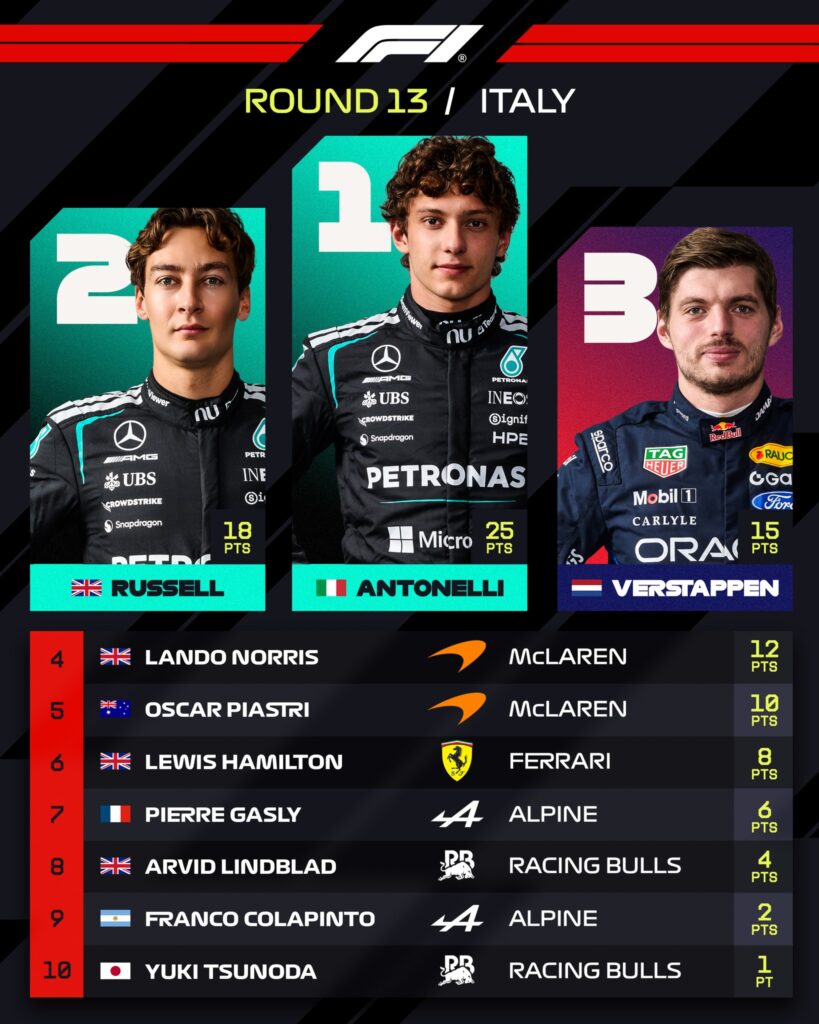
Most of those drivers absorbed their penalties during the race itself. Piastri, Russell and Hamilton each served their sanctions on track, losing real seconds in real traffic. Gasly and Colapinto did not serve during the race. At the chequered flag, the stewards applied a double five-second time penalty to Gasly, which dropped him from third place down to seventh in the final classification.
The timing loop error was not immediately obvious to anyone in the Monaco paddock. It only came to light during post-race scrutiny of the raw telemetry data from the pitlane entry sensor. Once confirmed, the mechanism for challenging the result was clear: Alpine filed a Right of Review with the FIA, arguing both of Gasly’s penalties had been issued on the basis of faulty evidence.
The Spanish GP Stewards’ Decision and Its Ripple Effect
Over the Spanish Grand Prix weekend, FIA stewards accepted Alpine’s Right of Review and rescinded both of Gasly’s penalties, restoring his third-place finish at Monaco. The decision was formalised in stewards’ documents 99, 100 and 101, dated during the Spanish GP event window in June 2026.
Restoring Gasly to P3 had an immediate cascade through the final Monaco classification. Red Bull’s Isack Hadjar, who had been classified fourth, was pushed back to fifth. McLaren’s Oscar Piastri, who had served his own erroneous penalty on track, was also displaced downward in the standings. The championship points table shifted accordingly, affecting the constructors’ battle between McLaren, Red Bull and Alpine.
The sporting tension here is precise: drivers who served penalties they should never have received lost time and positions in real racing conditions. Gasly, who also received a penalty he should never have received, did not serve it during the race. The stewards’ remedy restored his finishing position but could not give back the track time the other penalised drivers had already lost. McLaren’s official statement captured it plainly: the decision raised questions about “sporting fairness, regulatory consistency and the integrity of competition.”
McLaren and Red Bull’s Appeal: The Legal Timeline
McLaren formally announced its appeal on 2026-06-16, targeting stewards’ documents 99, 100 and 101 — the reinstatement of Gasly’s podium, the updated race classification and the revised championship standings. Red Bull filed a parallel appeal procedure, also objecting to the stewards’ reinstatement decision.
Both cases now sit with the FIA’s International Court of Appeal, which must first schedule a hearing date. The ICA operates on its own calendar; neither team controls when the hearing is set. Until the ICA rules, the stewards’ reinstated classification — Gasly P3 — stands as the provisional Monaco result. Championship points awarded under that classification remain in place for now.
The legal question the ICA will examine is not whether the timing loop error occurred — that appears undisputed — but whether the stewards’ chosen remedy was proportionate and consistent with the Sporting Regulations. McLaren’s argument rests on the idea that a Right of Review correction should not place a driver in a better position than he would have occupied had the error never happened, when other drivers were unable to recover the time they lost serving the same category of erroneous penalty.
What the ICA Can and Cannot Do
The ICA can uphold the stewards’ decision, overturn it, or refer specific questions back to the stewards for reconsideration. It cannot change Monaco lap times retroactively or restore track positions to Piastri or Russell that were lost in real racing. The realistic outcomes are either that Gasly keeps P3, or that the original post-race classification — placing him P7 — is restored. A split outcome affecting only some of the three documents is also possible but would require the ICA to draw fine distinctions between the reinstatement and the standings revision.
Gasly’s Helmet and Alpine Livery: The Collector Angle
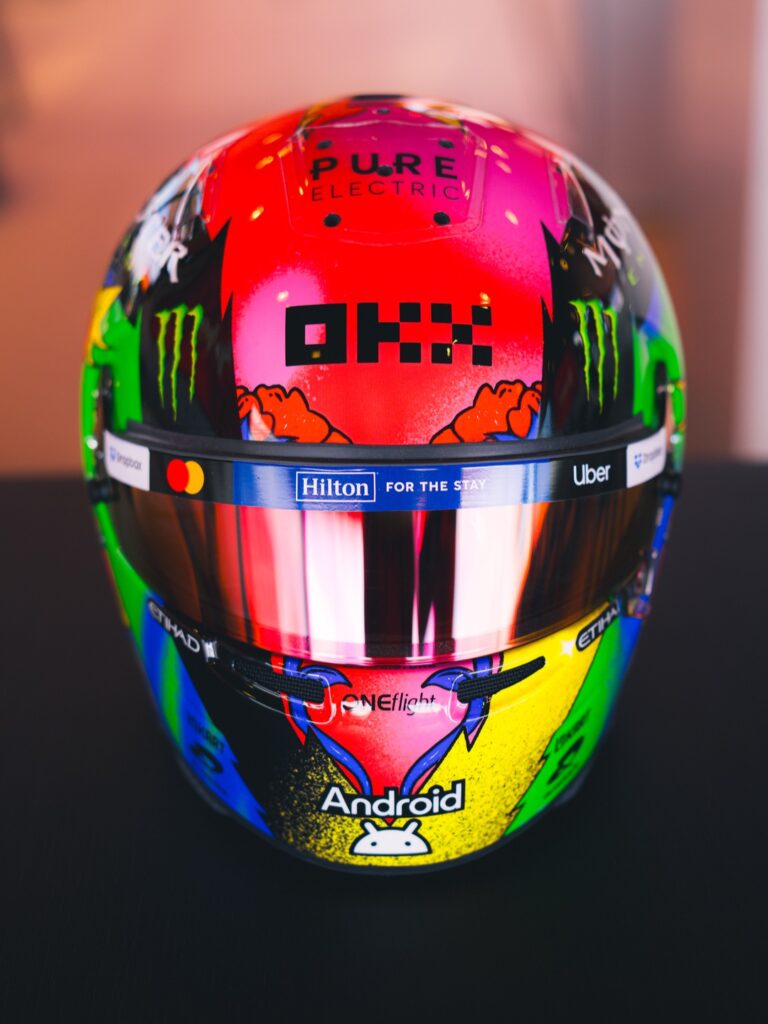
Gasly wore a distinctive 2026-spec helmet design during the Monaco Grand Prix, making it one of the most visually documented lids of the season given the race’s blanket media coverage and the controversy that followed. For display and collector purposes, the Monaco race represents a moment when a single helmet appeared on the podium rostrum, disappeared from it on paper, and then returned — a three-act story compressed into one event weekend.
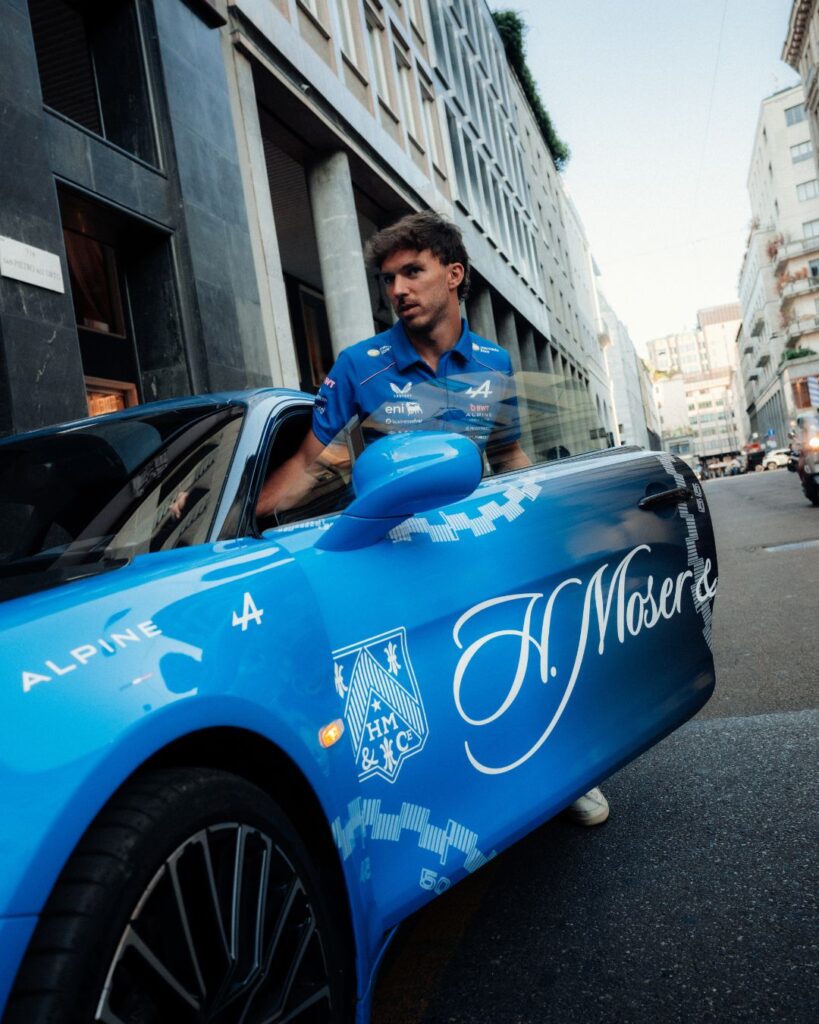
Alpine’s 2026 car livery runs a blue, pink and white colour scheme that reads exceptionally well against Monaco’s stone barriers and the principality’s afternoon light. Gasly’s personal helmet design echoes those team colours with additional graphic elements that identify the 2026 specification. A full-size 1:1 display replica of that helmet — 29 × 25 × 35 cm in standard shell dimensions — captures the exact livery worn during a race that is now the subject of international arbitration, which is the kind of historical context that gives collector pieces a story beyond the aesthetics.
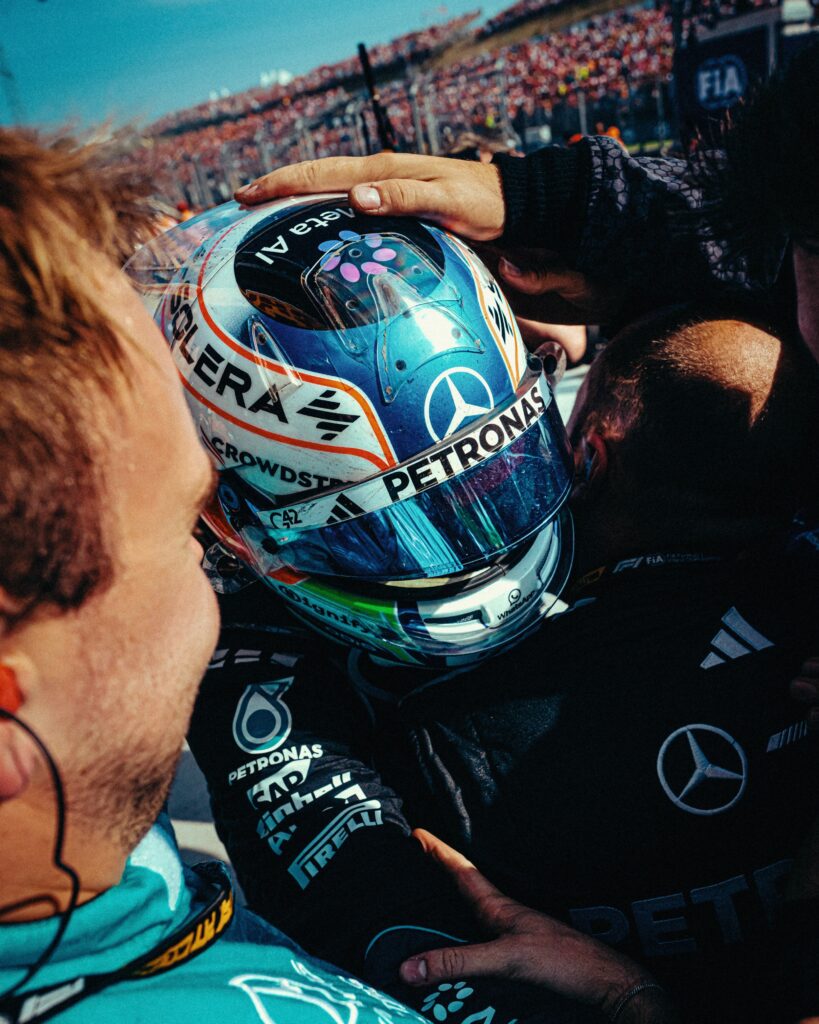
The podium moment itself, however briefly it existed in the official record, produced images of Gasly in that helmet standing in P3 at one of motorsport’s most photographed venues. Whether the ICA ultimately confirms or strips that result, the visual record of 2026-06-01 in Monaco remains intact. For display purposes, that race date and that helmet design are fixed in the season’s timeline regardless of how the legal process concludes.
Exhibition-quality replica helmets of this type are display pieces only and carry no protective certification of any kind. They are full-size 1:1 collector items built for shelf, cabinet or wall presentation, not for wear or track use.
What This Means for Gasly’s 2026 Season Narrative
Gasly’s 2026 season narrative shifted significantly the moment the stewards rescinded his Monaco penalties, because a seventh-place finish and a third-place finish carry a gap of 12 championship points under the current scoring system. Those 12 points matter in a mid-field championship battle where Alpine is competing with Red Bull and others for constructor positions that affect next season’s resource allocation.
For Gasly personally, Monaco P3 would be among his strongest results of the current campaign. The Frenchman joined McLaren — wait, the source context confirms Gasly races for Alpine in 2026, not McLaren. He is the Alpine driver at the centre of this dispute. Pierre Gasly has been with Alpine since 2023 and the 2026 Monaco result, if it stands, represents exactly the kind of points haul the team needs to remain competitive in the constructors’ standings.
The McLaren team filing the appeal represents Oscar Piastri‘s interests in this matter — Piastri served his penalty on track and lost real race positions because of a sensor error that affected every driver equally. McLaren as a constructor lost points in the reinstated classification, which explains why the team is prepared to go to the ICA rather than accept the stewards’ remedy.
The ICA hearing date has not been confirmed as of 2026-06-26. Until it is, the 2026 Monaco Grand Prix result remains officially listed with Gasly in third place.
The Broader 2026 Regulatory Debate
The Monaco timing loop failure has opened a wider discussion about how the FIA handles systemic measurement errors that affect multiple drivers differently depending on when in the race their penalties were applied. The 2026 season has already seen significant regulatory change on the technical side with the new power unit regulations, and this judicial dispute adds a procedural dimension that the ICA ruling will help clarify for future cases.
The core issue the stewards faced is that there was no clean solution. Reversing all penalties equally sounds fair in principle, but the drivers who served on track could not get their lost time back. The stewards chose to restore Gasly’s position on the grounds that his penalty was invalid; McLaren argues that this approach treats the invalid penalty as though it never existed for Gasly while treating it as a permanent cost for Piastri.
Whatever the ICA decides, the ruling will set a precedent for how the FIA handles timing and measurement errors in future seasons. A clear framework for distinguishing between penalties served during the race and penalties applied post-race — and what remedy applies to each — would prevent a repeat of the Monaco 2026 situation. The hearing, when it is scheduled, will be one of the most significant regulatory events of the 2026 season off the track.
“While we fully respect the FIA’s judicial processes and the role of the stewards, we believe this case raises important questions concerning sporting fairness, regulatory consistency and the integrity of competition.”
— McLaren F1 Team, official statement on ICA appeal, 2026-06-16
FAQ
Q: Why was Gasly’s Monaco podium taken away and then given back?
A faulty timing loop at Monaco’s pit entry triggered false speeding violations. Gasly received a double five-second post-race penalty that dropped him from P3 to P7. After Alpine filed a Right of Review and the timing error was confirmed, FIA stewards at the Spanish GP weekend rescinded both penalties and restored his third-place finish.
Q: Why are McLaren and Red Bull appealing the FIA stewards’ decision?
McLaren and Red Bull argue the stewards’ remedy was unfair because Piastri and other drivers served their erroneous penalties on track and lost real race time, while Gasly — who did not serve his penalty during the race — was fully restored to his original position. McLaren filed its appeal on 2026-06-16 against stewards’ documents 99, 100 and 101.
Q: What is the International Court of Appeal and when will it rule?
The FIA International Court of Appeal is the governing body’s highest judicial tribunal for sporting disputes. As of 2026-06-26, no hearing date has been confirmed. The ICA sets its own schedule, and the Monaco classification with Gasly in P3 stands provisionally until a ruling is issued.
Q: What does Gasly’s Monaco helmet look like as a collector display piece?
Gasly’s 2026-spec Monaco helmet features Alpine’s blue, pink and white colour scheme with personalised graphic detailing. As a full-size 1:1 display replica — standard shell approximately 29 × 25 × 35 cm — it represents a specific race date, 2026-06-01, tied to one of the most disputed results in recent F1 history. These are exhibition-quality collector items only, not certified for any protective use.
Q: Which drivers were affected by the Monaco timing loop error?
Five drivers received penalties linked to the faulty timing loop: Pierre Gasly, Franco Colapinto, Oscar Piastri, George Russell and Lewis Hamilton. Piastri, Russell and Hamilton served their penalties during the race. Gasly and Colapinto did not, and Gasly received a double five-second post-race penalty at the flag as a result.
Shop Pierre Gasly Collection
Display and collector replicas only. Not certified for protective use. Full-size 1:1 scale.
This article was written with the help of AI tools. Editorial policy