Blog
Hamilton Wins with Ferrari: 106th Career Victory
 123Helmets Editorial Team
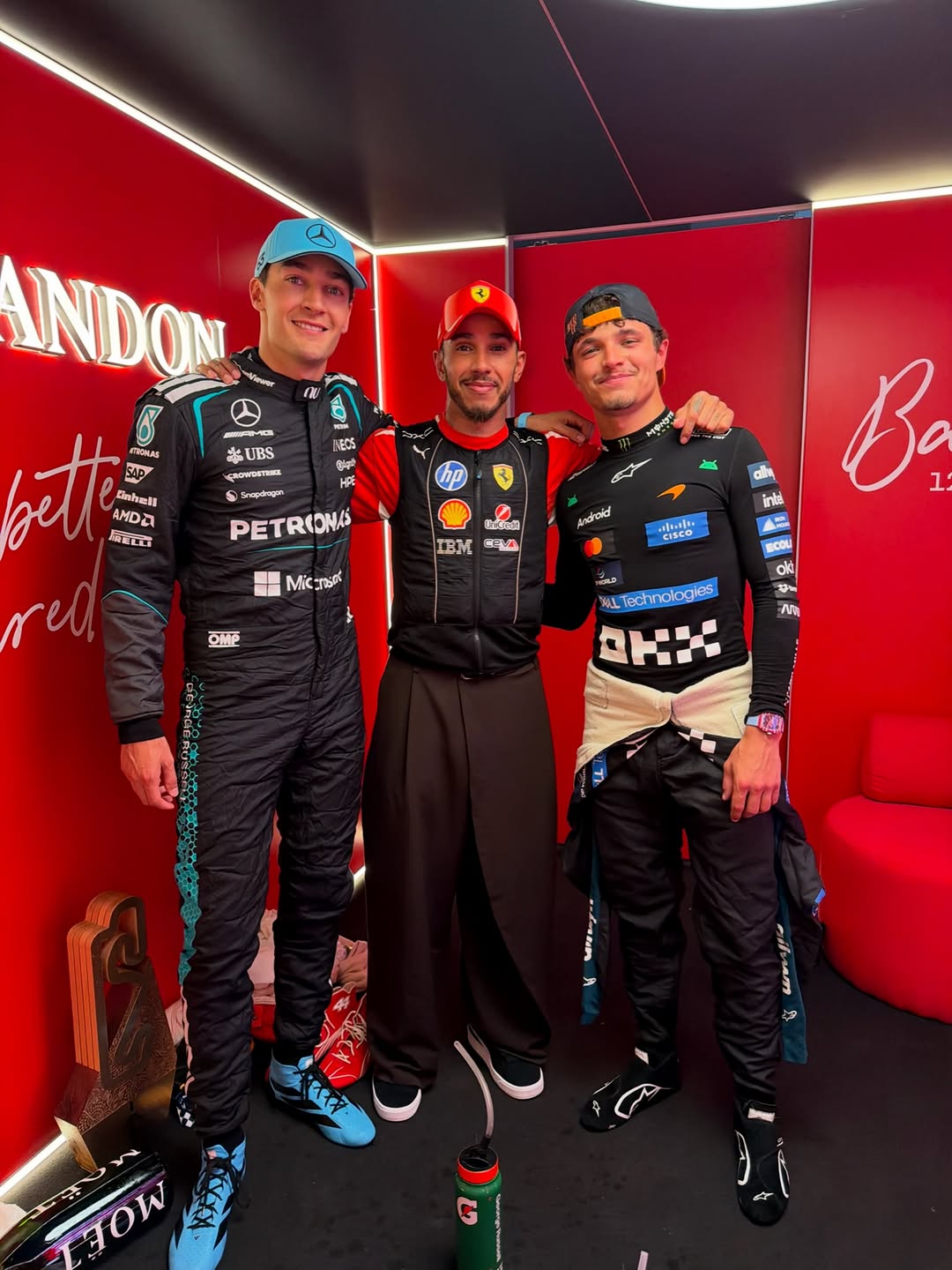
In his 31st grand prix start for Ferrari, Lewis Hamilton climbed to the top step of the podium for the 106th time in his career — his first Formula 1 win in two years and the first for this chapter of his story in red. The SF-26, a three-stop strategy, and one final obliterating stint sealed it. The tears on the cooldown lap sealed everything else.
Key Takeaways
Hamilton’s 106th career win came in his 31st grand prix start for Ferrari, ending a two-year drought at the top step.
The upgraded SF-26 ran a front-footed three-stop strategy, with a virtual safety car handing Hamilton track position over George Russell before superior pace did the rest.
Hamilton’s joy — tears on the cooldown lap, the Italian anthem, the embrace with Fred Vasseur — made this one of the most emotionally loaded podium visuals in recent F1 memory.
After a disastrous 2025 maiden season with the Scuderia, this win marks a genuine turning point: a new race engineer pairing, a new-spec car, and a driver who rediscovered who he is.
31 Starts, 106 Career Wins: The Number That Defines This Day
Lewis Hamilton’s first Formula 1 win with Ferrari arrived in his 31st grand prix start for the Scuderia — and it was his 106th career victory overall, the first in two full years. Those numbers frame everything. This was not a race that Hamilton simply inherited or stumbled into. It was earned through a front-footed three-stop strategy, a precise use of a virtual safety car window, and then a final stint pace advantage over George Russell’s Mercedes that made the outcome feel, in retrospect, inevitable.
The upgraded SF-26 played its part. Ferrari brought meaningful updates to this race weekend, and their effect showed most clearly in that closing stint, where Hamilton’s tyre management and outright speed gave his former team nothing to work with. By the time the chequered flag fell, the gap told its own story.
For a driver whose 2025 season with Ferrari had been marked by struggle, self-doubt, and a deeply uncomfortable adjustment period, the weight behind that 106th win is hard to overstate. Every statistic attached to it — the 31 starts, the two-year wait, the 106th career mark — carries its own quiet pressure, and Hamilton carried all of it across the line.
The Strategy That Won It: Three Stops and a VSC Moment
Ferrari’s race strategy was front-footed from the opening lap: three stops, with the intent of pressuring Russell rather than reacting to him. That proactive call put Hamilton in control of his own race rather than shadowing the Mercedes on a conservative two-stop, and it paid off when a virtual safety car opened a track-position window that swung the race decisively.
The VSC allowed Hamilton to make his final stop without surrendering the lead he had built. He rejoined ahead of Russell and then, critically, pulled away. This was not a case of the strategy doing the work while the driver held on — in the final stint, Hamilton’s pace was vastly superior. Ferrari had given him the platform; he delivered the margin.
Three stops in modern F1 is an aggressive call. It asks more of the driver in terms of tyre management across a longer number of working phases, and it requires confidence from the pit wall that the car can produce the stint pace to justify the extra time lost in the pits. On this day, both the car and the driver answered. The SF-26 upgrades were visibly working, and Hamilton, running in the scarlet and white livery that still felt new to many observers, looked utterly at home in it for the first time.
The Podium Moment: Why This One Lives in the Visual Record
Hamilton’s cooldown lap outburst, his tears watching the Ferrari crew sing the Italian national anthem, and his physical embrace with team principal Fred Vasseur produced some of the most emotionally raw podium imagery in recent Formula 1 history. For collectors and display enthusiasts, these are the moments that define a helmet or livery’s place in the broader story of the sport.
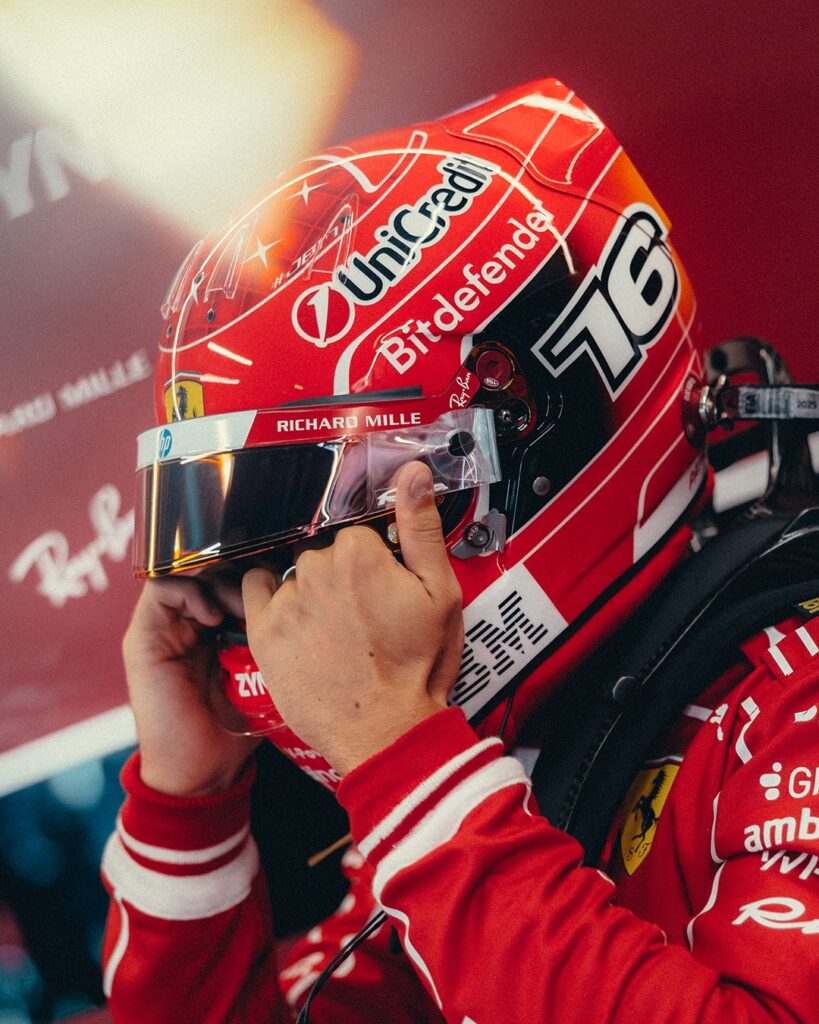
The SF-26 livery Hamilton carried to victory — the Scuderia’s deep scarlet with its white accents — appeared under full race lighting with the kind of clarity that makes a 1:1 full-size display replica genuinely worth owning. The helmet design Hamilton ran on this weekend, matched to the Ferrari colour scheme, sits in that narrow category of race-day pieces that will be referenced for years: the specific race, the specific result, the specific moment when a driver silenced every doubt.
Vasseur’s presence in that podium embrace carries its own significance. He was, as the paddock well knows, the man who took a considered risk in bringing Hamilton to Maranello in the first place — moving a seven-time world champion to a new team in the later years of a historic career is not a straightforward sporting decision. The image of those two men on the podium is the visual confirmation that the gamble was worth it.
For a display piece, context is everything. A 1:1 full-size collector replica of Hamilton’s 2026 Ferrari race helmet, finished in exhibition quality, carries with it the full weight of what happened on this day: the 106th win, the 31st start, the end of a two-year drought, and all the human detail visible in those cooldown lap tears.
2025 to 2026: How Hamilton Came Back from the Brink
Hamilton’s 2025 season with Ferrari was, by any honest measure, a difficult one. A sprint race win in China provided an early false dawn, but what followed was a prolonged struggle to adapt — to the car, to the engineering culture, to a new race engineer in Riccardo Adami after years of working with Peter Bonnington at Mercedes.
The ground-effect regulations had never been Hamilton’s natural territory, and moving to a new environment stripped away the accumulated familiarity he had built at Brackley over more than a decade. The engineering set-up language, the simulator workflow, the small daily habits of a race weekend — none of it translated cleanly. And the results reflected that, race after race, uppercut after uppercut as Hamilton himself described it.
The paddock conversation around him grew louder. Questions about whether a driver of his age and stature could still adapt, still find the edge in an unfamiliar machine, became a constant background frequency. Hamilton acknowledged that in 2025 there were moments where he questioned whether the doubters were right. That he kept going — kept working, kept believing in what Vasseur was building at Ferrari — is what makes the 2026 result mean something beyond the points.
By 2026, the relationship with his new race engineer had matured, the SF-26 had received substantive updates, and Hamilton’s own understanding of what Ferrari needed from him in terms of driving style had deepened. The win did not come from nowhere. It came from 18 months of unglamorous, often painful, adaptation work finally producing a result that the effort warranted.
The Helmet and Livery in 2026: What Collectors Are Looking At
Hamilton’s 2026 Ferrari race helmet represents a specific visual language: the Scuderia’s scarlet base, his long-established design identity, and the updated SF-26 livery colour palette all working in combination. For a full-size 1:1 display replica, the detail that matters is fidelity — the exact colour matching, the surface finish, and the structural accuracy of the shell profile at 1:1 scale.
A collector item at this level is an exhibition-quality display piece, not a piece of safety equipment. The value is in the visual record it preserves: the specific helmet a specific driver wore at the moment of a historically significant result. Hamilton’s 106th career win, his first with Ferrari, in the season where he proved his adaptation to Maranello complete — these are the facts that attach to a display piece and give it a fixed place in the story of the sport.
The scarlet and white SF-26 livery has a graphic clarity that reads well at full scale. On a display stand, the 1:1 dimensions — a standard full-size adult racing helmet shell — mean the proportions are exactly as they appeared on track, not reduced or distorted by a scale model format. For enthusiasts who want the visual weight of the real thing without the cost of a race-worn item, a full-size exhibition-quality replica is the appropriate format.
As of 2026-06-22, this win has already become a reference point in the season’s story. The helmet and livery associated with it carry that context forward into any collection.
‘Don’t Forget Who You Are’: The Line That Defines the Season
Hamilton has spoken openly about the self-doubt that crept in during 2025, describing moments where he wondered whether the critics were right — whether a driver who never fully clicked with the ground-effect era, now at a new team, could find his way back to the front. The phrase ‘don’t forget who you are’ captures the internal conversation he was having with himself through the difficult months.
What the 106th win confirmed — and what the podium visuals made visible to the entire sport — is that he hadn’t forgotten. The driver who crossed the line first in the SF-26 in his 31st Ferrari start was the same driver who had won 105 times before, who had seven world championships to his name, and who had chosen to take one of the most difficult decisions of his career by leaving Mercedes for Maranello.
Fred Vasseur gambled on that driver still being in there. Hamilton himself had to believe it through 18 months of evidence that sometimes pointed the other way. On this race weekend in 2026, both were proved right — and the image of Hamilton in scarlet, in tears, watching his crew sing, is the image that closes the doubt chapter of this story and opens whatever comes next.
For the display collector, that image — translated into a 1:1 full-size exhibition-quality helmet replica in the 2026 Ferrari race livery — is the physical object that holds all of it in place.
“Last year, there were definitely moments that I was like: ‘Sheesh, maybe it is true that when you get to a certain age…'”
— Lewis Hamilton, 2026
“He risked his own skin to bring Hamilton to Maranello in the first place.”
— On Fred Vasseur, 2026 season context
FAQ
Q: What number career win was Hamilton’s Ferrari victory?
It was Hamilton’s 106th Formula 1 career victory, achieved in his 31st grand prix start for Ferrari — and his first win in two years.
Q: What strategy did Ferrari use to win the race?
Ferrari ran a front-footed three-stop strategy, using a virtual safety car window to gain track position over George Russell before Hamilton pulled away with superior pace in the final stint.
Q: What is a 1:1 full-size Hamilton Ferrari replica helmet?
A 1:1 full-size replica is a collector and display item produced at exact adult racing helmet dimensions, finished in exhibition quality to replicate the visual appearance of the race-day piece — it is not safety equipment and is not certified for protective use.
Q: Why was Hamilton’s 2025 Ferrari season so difficult?
Hamilton struggled to adapt to Ferrari’s engineering culture after leaving Mercedes, found it hard to build the same working relationship with race engineer Riccardo Adami that he had with Peter Bonnington, and never fully clicked with the ground-effect car regulations that had always been a challenge for him.
Q: Why does the 2026 Ferrari race helmet make a strong display piece?
The 2026 Ferrari race helmet Hamilton wore to his 106th career win carries fixed historical context — the specific race, the specific result, and the end of a two-year winless run — making a 1:1 full-size exhibition-quality collector replica a meaningful display item for any serious F1 collection.
Shop the Lewis Hamilton Collection — full-size 1:1 display and collector replica helmets in exhibition quality. Every piece is a display item only, not certified for protective use.
Display and collector replicas only. Not certified for protective use. Full-size 1:1 scale.
This article was written with the help of AI tools. Editorial policy