- Keke Rosberg
- Nigel Mansell
- Jenson Button
- Nico Rosberg
- Gilles Villeneuve
- Mika Hakkinen
- Jackie Stewart
- Charles Leclerc
- Lewis Hamilton
- Max Verstappen
- Lando Norris
- Ayrton Senna
- Michael Schumacher
- Fernando Alonso
- Oscar Piastri
- George Russell
- Kimi Antonelli
- Nico Hülkenberg
- Gabriel Bortoleto
- Pierre Gasly
- Franco Colapinto
- Carlos Sainz
- Oliver Bearman
- Sergio Pérez
- Valtteri Bottas
- Isack Hadjar
- Alain Prost
- James Hunt
Hamilton’s Motorhome Reset: How a Quiet Hour Unlocked Ferrari’s Best Qualifying of 2025
Posted by
 123Helmets Editorial Team
123Helmets Editorial Team
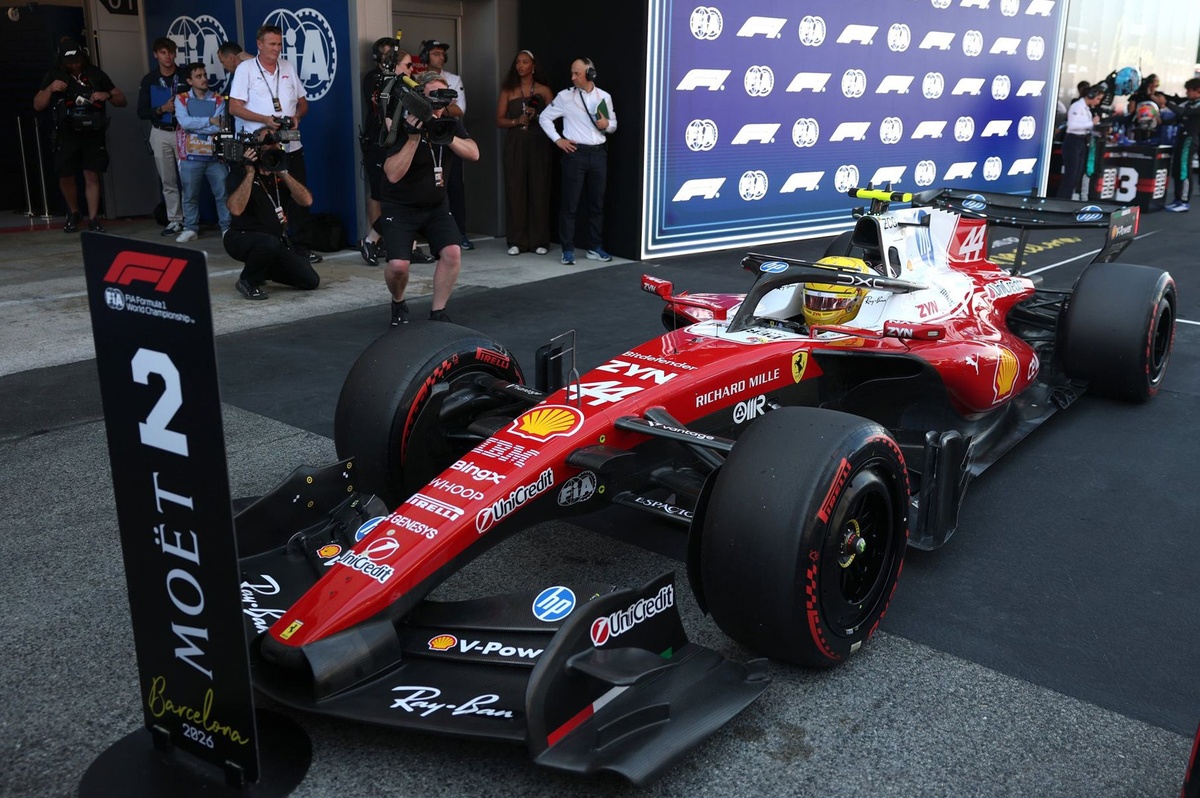
Barcelona Qualifying Breakdown
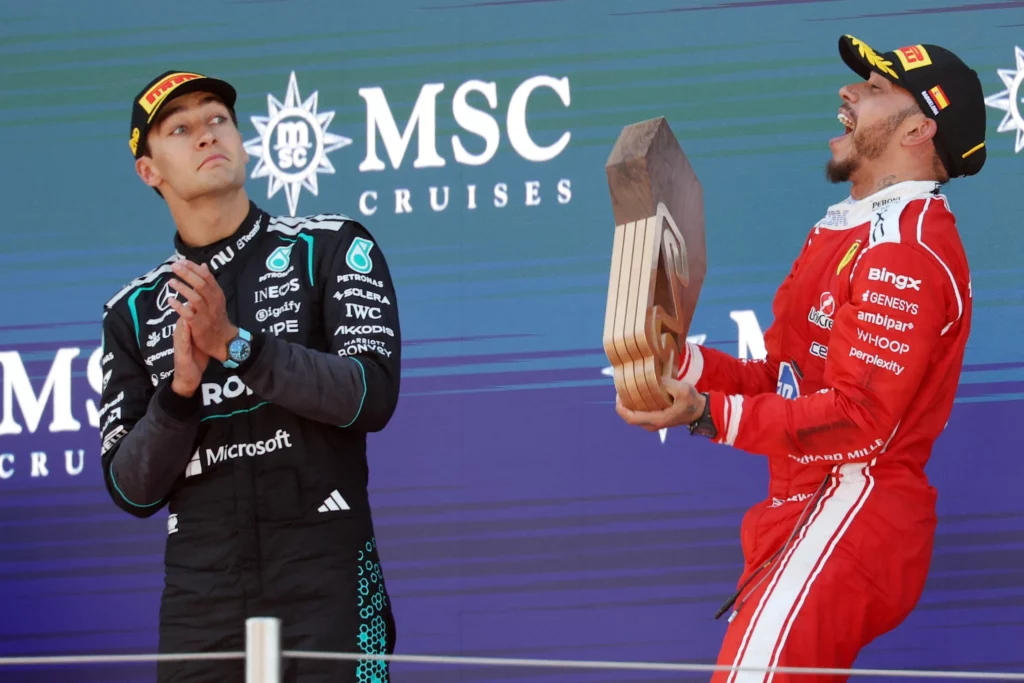
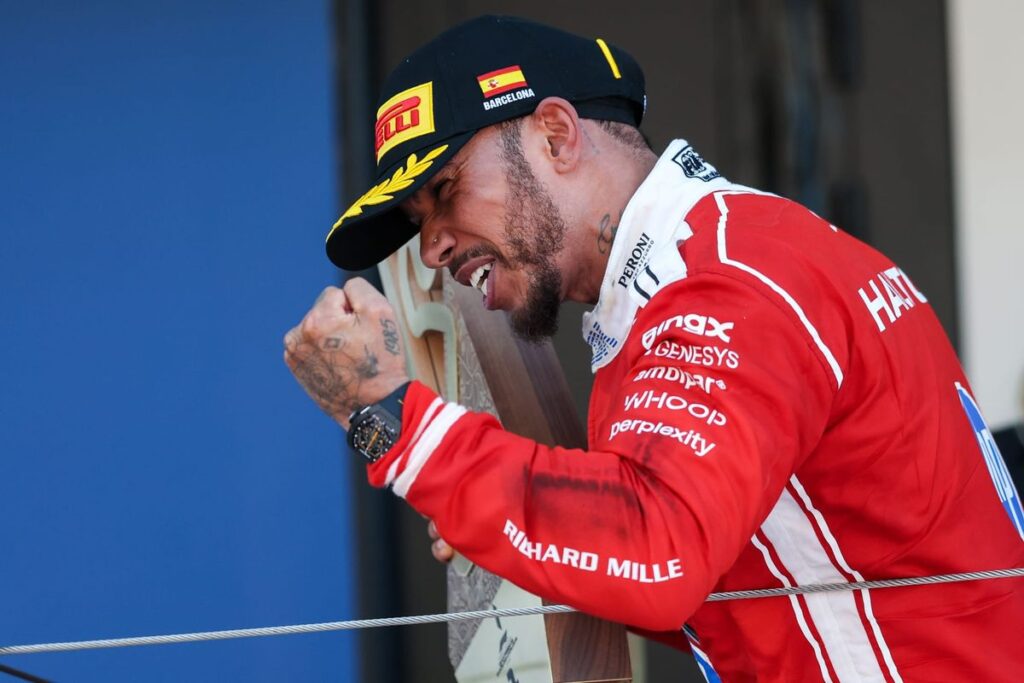
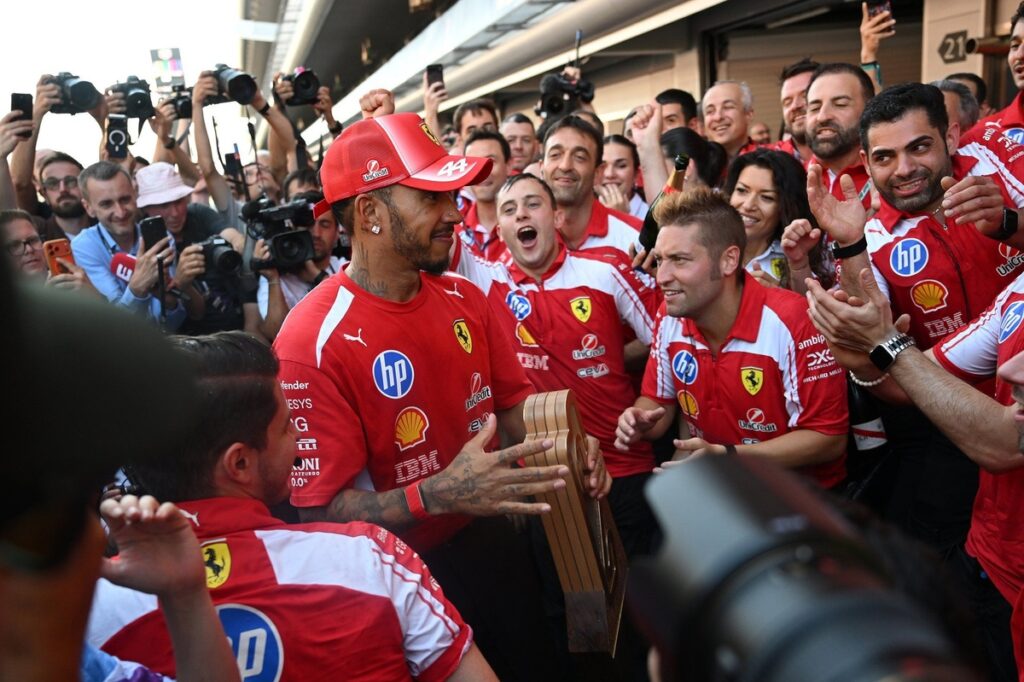
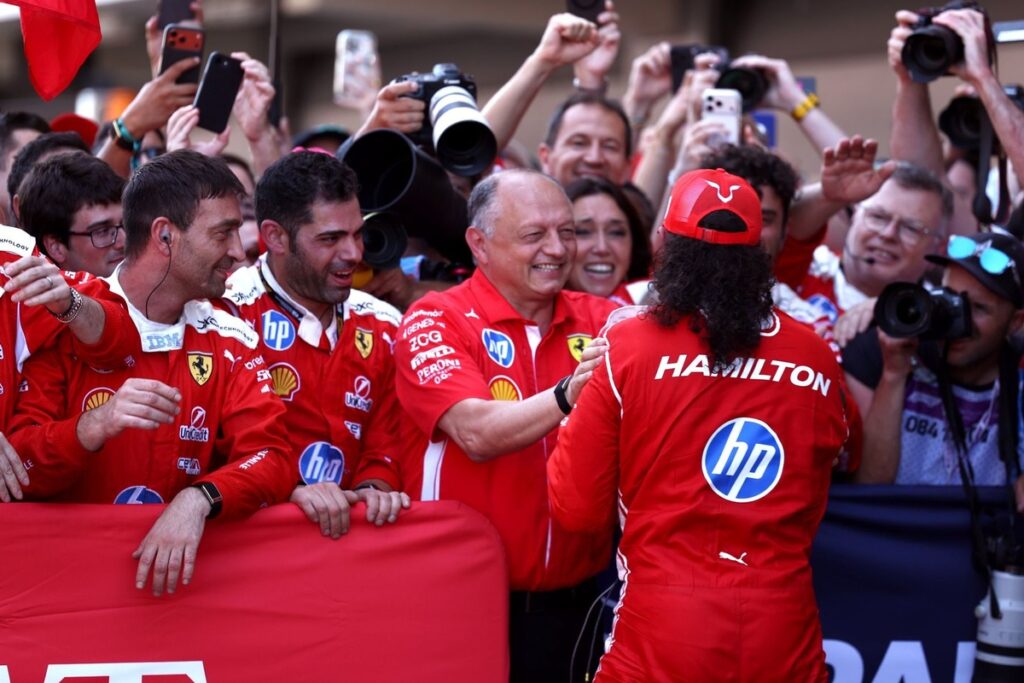
Lewis Hamilton left the Barcelona paddock between final practice and qualifying, retreated to his motorhome, and came back to put his Ferrari SF-26 second on the grid — just 0.064 seconds behind pole-sitter George Russell. It was his best qualifying result since joining the Scuderia at the start of 2025, and a moment already worth freezing in collector form.
Key Takeaways
Hamilton’s second place at Barcelona was his best qualifying result since joining Ferrari at the start of the 2025 season.
The gap to pole-sitter George Russell was just 0.064 seconds — Hamilton qualified two tenths clear of championship leader Kimi Antonelli in third.
Hamilton missed FP1 entirely, handing his seat to Ferrari junior Dino Beganovic under F1’s mandatory young driver rules, leaving him over a second off pace in FP2.
A deliberate break between P3 and qualifying — a reset Hamilton described as something he had never done before — was the turning point that brought him back to the front row.
A Weekend That Started in the Deficit
Style=”color:#fff !important” Barcelona 2025 did not open the way Lewis Hamilton would have wanted. Under Formula 1’s regulations requiring teams to give their FP1 slot to a young driver, Ferrari handed Hamilton’s car to junior Dino Beganovic for the opening session. It is a routine obligation across the paddock, but for a driver still building chemistry with a new team, missing that first hour on a new race weekend carries real cost.
When Hamilton finally climbed into the SF-26 for second practice, the numbers told a blunt story: ninth place on the timing sheet and 1.2 seconds away from the session’s pace-setter. For a seven-time world champion who has built a career on finding tenths where others find nothing, a 1.2-second deficit is not a data point — it is a problem statement.
Final practice brought modest improvement. Hamilton trimmed the gap down to 0.7 seconds, but that still left him half a second behind team-mate Charles Leclerc, who was in noticeably stronger shape on the upgraded SF-26. The heavily revised car, introduced for the Spanish round, was producing pace — just not yet for the driver who needed the most time to understand it. Hamilton’s own assessment after P3 was candid: he was looking at four to five tenths of unexplained deficit and had no immediate answer for where it was going to come from.
The Decision to Leave the Track
Between the end of final practice and the start of qualifying, Hamilton did something he had not done before in his career: he walked away from the paddock. Not metaphorically — physically. He left the circuit, went back to his motorhome, and disconnected from the noise of the garage.
“For the first time ever, I left the track between P3 and qualifying,” Hamilton explained after the session. “I said, ‘I’ve got to get out of here’, and I went back to my motorhome. I was just on the engineer’s call, just on my phone, but I kind of went where I had a bit of a reset. Came back and I was able to somehow get back on it. So yeah, whatever it did, it worked.”
The effect was immediate. Hamilton went fastest in Q1 — the driver who had been fretting over a five-tenths gap through every practice session suddenly led the timing screens the moment the pressure was highest. From there, the rhythm held. He navigated Q2 cleanly and in Q3 produced a lap that placed him second overall, splitting the two Mercedes cars of Russell and Antonelli and leaving his team-mate’s qualifying effort behind him after Leclerc crashed out.
Mental state as a performance variable
What Hamilton’s motorhome moment illustrates is something seasoned F1 engineers have long acknowledged: the cockpit is only one of the environments a driver needs to manage. Paddock noise, garage atmosphere, the visual feedback of watching team-mates and rivals post better times — all of it accumulates. Hamilton, more than most, has spoken over the years about the mental side of performance. At Barcelona 2025, he acted on it in a way he had not previously tried, and the lap time answered back within minutes.
The SF-26 Upgrade and What It Meant for the Grid
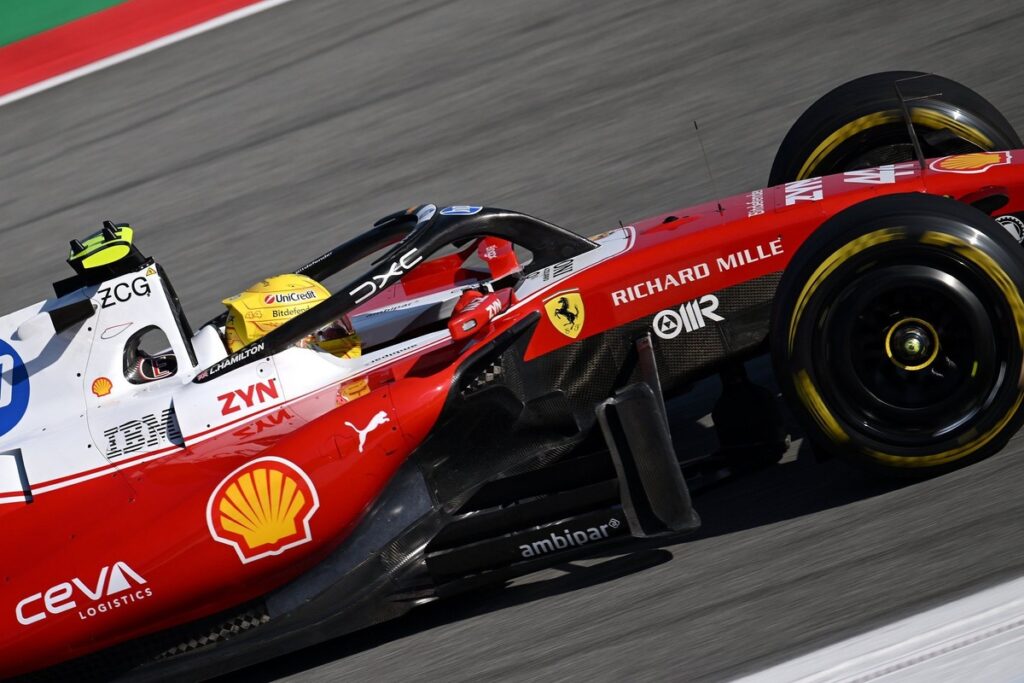
Ferrari arrived at Barcelona with a substantially upgraded SF-26, and the pace it generated in qualifying was a statement. Hamilton found himself two tenths ahead of Kimi Antonelli, the championship leader heading into the Spanish Grand Prix weekend. That margin, against a driver who had been accumulating points at the head of the field, confirmed that the upgrade package was functional — Hamilton just needed Saturday afternoon to access it fully.
The 0.064-second gap to Russell’s pole lap represents how fine the margins were at the front of the grid. At Barcelona’s Circuit de Catalunya, where cars cover over 4.6 kilometres per lap, that gap amounts to roughly three or four metres of track distance. Hamilton’s second row start in 2024 and his Mercedes years have accustomed fans to seeing him at the front, but this was his best qualifying at Ferrari, making the result significant beyond the single-lap numbers.
Leclerc’s Q3 crash added an element of fortune to Hamilton’s final grid position, but the underlying lap time was his own. The Ferrari was working, and on that Saturday he was the driver extracting the most from it.
The Helmet and Livery: A Display-Worthy Moment in Red
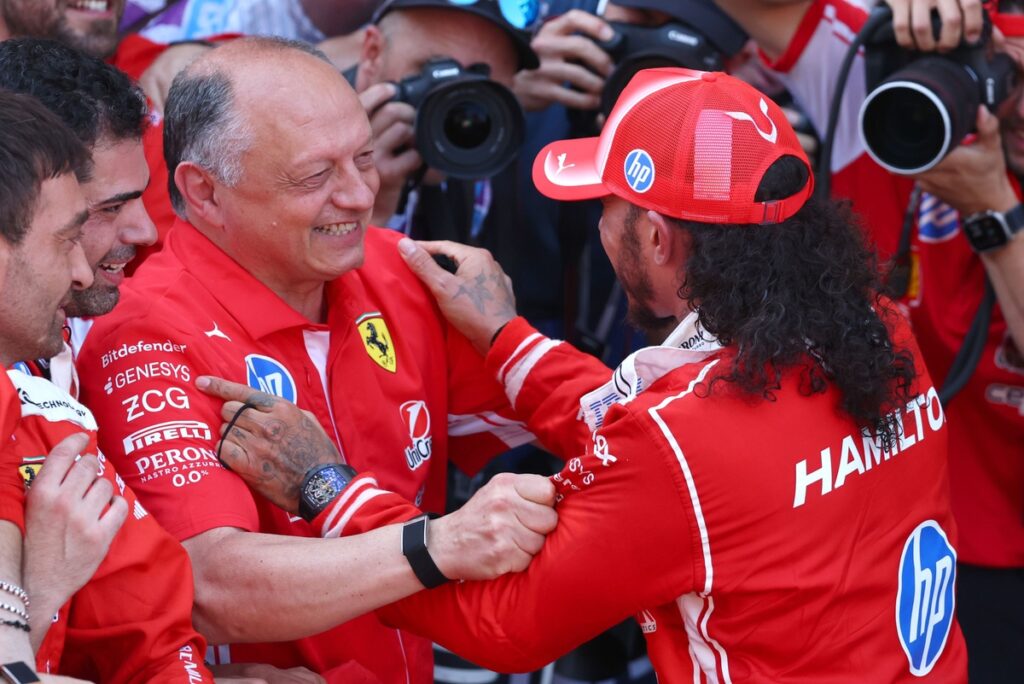
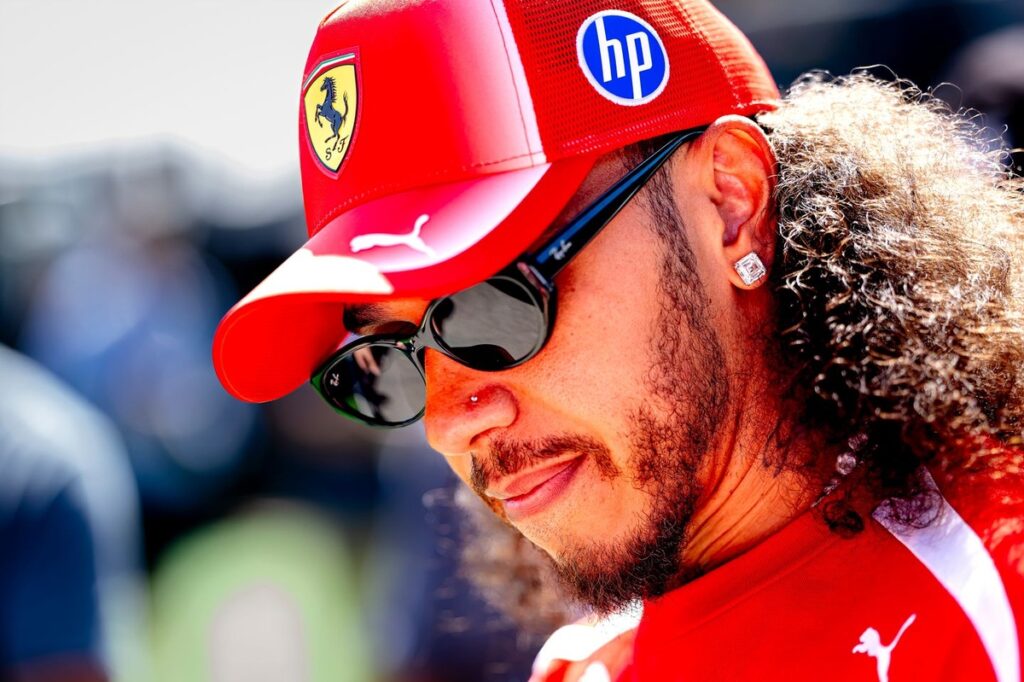
For collectors, a front-row qualifying result at a European Grand Prix carries specific visual weight. Hamilton in Ferrari red, helmet gleaming under the Spanish sun on Pit Lane, lining up alongside a silver Mercedes — the colour contrast alone frames a moment worth preserving at 1:1 scale.
The Scuderia’s 2025 visual identity on the SF-26 runs the traditional Ferrari rosso corsa alongside updated sponsor livery, and Hamilton’s personal helmet design has evolved since his arrival at Maranello. His helmet for the 2025 season features the yellow accents that have been a consistent thread through his career identity — a recognisable visual carried across from his Mercedes years into the Ferrari chapter, now paired with the prancing horse badge rather than the three-pointed star.
A full-size 1:1 display replica of Hamilton’s 2025 Ferrari-era helmet captures exactly that transition moment. The helmet’s outer shell on a collector-grade replica typically measures approximately 27 × 35 cm across its widest points, with visor thickness on high-specification display pieces running to around 3 mm of polycarbonate-style material. These are exhibition-quality pieces built for display stands, helmet mounts, and enclosed cases — not for road or track use, carrying no safety certification, and intended entirely as collector and display items.
Why the Barcelona qualifying moment matters for a collection
Context turns a replica into a reference point. A Hamilton Ferrari helmet on a display shelf means more when the owner can place it against a specific race weekend — and Barcelona 2025, with its front-row result, his first since joining the Scuderia, gives a collector exactly that kind of anchor. It is a documented milestone, which is precisely what makes display replicas tied to race-specific moments hold their meaning over time.
Reading the Numbers: What the Qualifying Sheet Showed
Pull back from the narrative and the raw qualifying data at Barcelona 2025 tells its own story. Hamilton began FP2 at 1.2 seconds off the pace. He closed to 0.7 seconds in FP3. In Q1, he went fastest. In Q3, he was 0.064 seconds from pole. That is a trajectory that moved from the edge of the top ten to the front row within a single afternoon, and the hinge point was a deliberate choice to stop, leave, and return with fresh perspective.
Qualifying two tenths ahead of Antonelli — a driver running at the front of the championship standings — gave Ferrari clear evidence that the upgraded SF-26 could challenge at the very top of the timing sheet when the driver and the car were operating in sync. Hamilton had been missing that sync for most of the weekend. He found it in under an hour, in a motorhome, away from the garage.
His comment that the weekend had been “so difficult” despite the end result is a reminder that qualifying pace emerges from a process, not just a moment. The 0.064-second final margin to Russell looked clean on paper. The path to it, from a 1.2-second FP2 gap across an abbreviated practice schedule caused by mandatory young driver running, was anything but straightforward.
A Season Milestone Worth Marking
Hamilton’s move to Ferrari at the start of 2025 was the most discussed driver transfer in the sport’s recent history. Every result since has been read against that backdrop — how is the adjustment going, is the car responding, can the partnership deliver at the front? Barcelona qualifying answered one version of that question directly: yes, when car and driver connect, the combination reaches the front row.
Best qualifying result since joining Ferrari. Second place on the grid. 0.064 seconds from pole. Two tenths clear of the championship leader. Each of those numbers is a data point, but together they describe a moment with a specific shape — a driver who arrived at a new team, navigated an imperfect weekend, found an unconventional solution in the gap between sessions, and put the car exactly where it needed to be.
For the collector, that shape is what makes a replica worth displaying. The 2025 Ferrari season, with Hamilton’s red-liveried car on the Barcelona front row, is already producing the kind of images that define a chapter. A full-size 1:1 display replica of the helmet worn on that Saturday at Circuit de Catalunya is not just a product — it is a fixed point in a story still being written.
Display and collector replicas only. Not certified for protective use. Full-size 1:1 scale.
“For the first time ever, I left the track between P3 and qualifying. I said, ‘I’ve got to get out of here’, and I went back to my motorhome. I was just on the engineer’s call, just on my phone, but I kind of went where I had a bit of a reset. Came back and I was able to somehow get back on it. So yeah, whatever it did, it worked.”
— Lewis Hamilton, Ferrari — Barcelona 2025 qualifying
“It feels great to be up here. This weekend’s been so difficult. Normally it’s okay to miss P1, but it had a huge offset.”
— Lewis Hamilton, Ferrari — Barcelona 2025 qualifying
FAQ
Q: What was Lewis Hamilton’s qualifying result at the 2025 Barcelona Grand Prix?
Hamilton qualified second on the grid, 0.064 seconds behind pole-sitter George Russell. It was his best qualifying result since joining Ferrari at the start of the 2025 season.
Q: Why did Hamilton miss FP1 at the 2025 Spanish Grand Prix?
Under Formula 1’s regulations requiring teams to run a young driver in one FP1 session per season, Ferrari gave Hamilton’s FP1 slot to junior driver Dino Beganovic. Hamilton’s first running came in FP2, where he finished ninth and was 1.2 seconds off the pace.
Q: What did Hamilton do between final practice and qualifying at Barcelona?
Hamilton left the circuit and returned to his motorhome, staying connected to his engineer by phone but removing himself from the paddock environment. He described it as a reset he had never tried before, and said it worked — he went fastest in Q1 immediately after returning.
Q: Are Lewis Hamilton Ferrari helmet replicas suitable for wearing on track?
No. The 1:1 full-size display replicas available at 123Helmets.com are collector and display pieces only. They carry no safety certification — no FIA, Snell, ECE, or DOT approval — and are not intended for road, track, or any protective use. They are exhibition-quality items designed for display stands, cases, and collections.
Q: What makes the Barcelona 2025 qualifying result a significant moment for Hamilton Ferrari collectors?
It was Hamilton’s best qualifying since joining Ferrari — a documented front-row result at a major European Grand Prix in the middle of his first Ferrari season. For collectors, that specific milestone gives a replica helmet tied to the 2025 Ferrari chapter a clear and verifiable reference point.
Shop Lewis Hamilton Collection
Display and collector replicas only. Not certified for protective use. Full-size 1:1 scale.