Blog
Leclerc Flags Ferrari Struggles at 2026 Austrian GP
 123Helmets Editorial Team
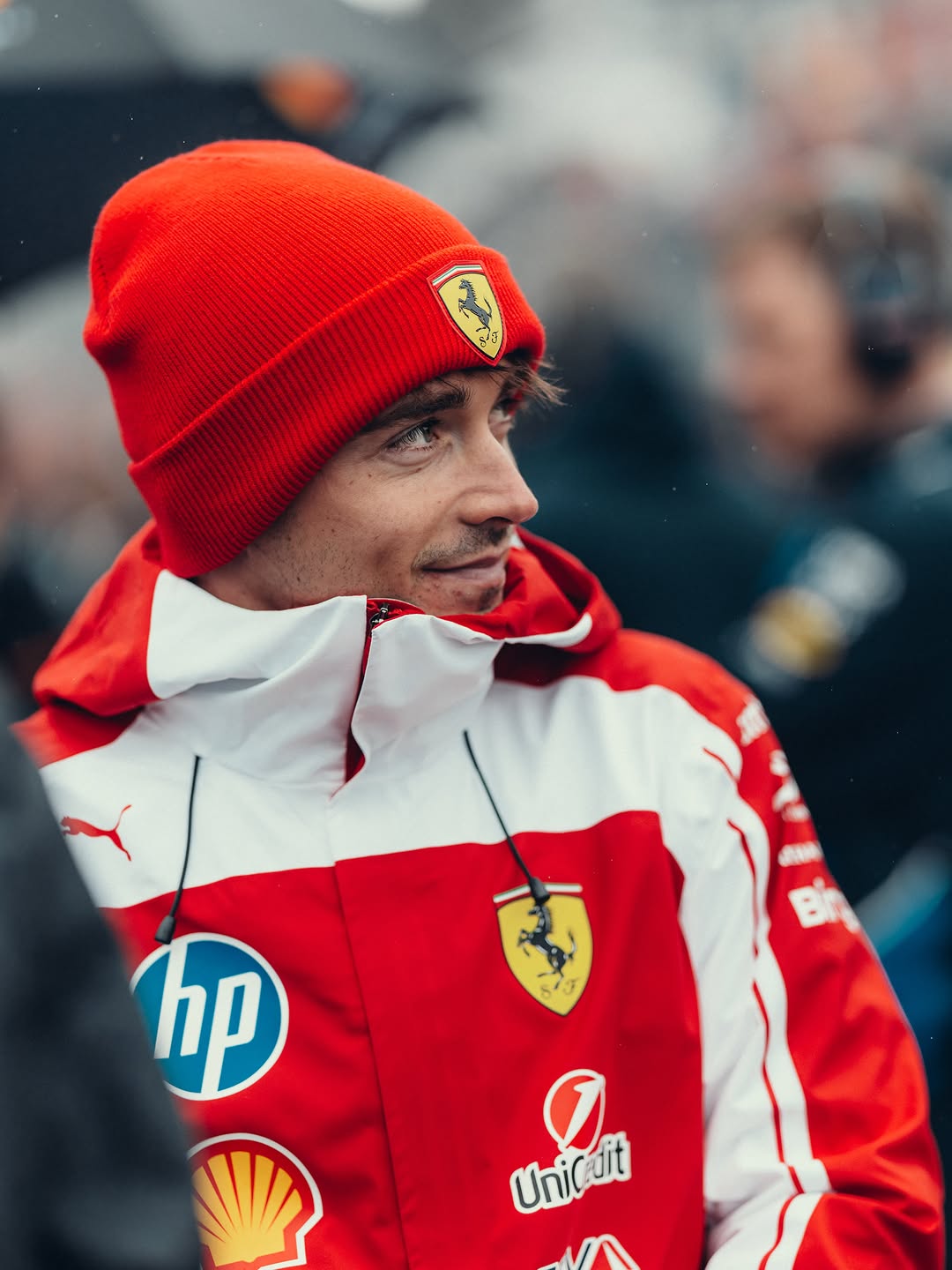
Charles Leclerc returned from a Friday absence to post P8 in FP2 with 35 laps on the board — yet his honest debrief painted a stark picture of a Ferrari squad searching for answers at the Red Bull Ring.
Key Takeaways
Leclerc missed FP1 entirely at the 2026 Austrian GP, handing the SF-26 to rookie Dino Beganovic before returning in FP2.
He logged 35 laps in FP2 — the highest tour count of the session — yet could manage only P8 on the timesheets.
Leclerc identified two separate problems: unexpected corner-speed weakness and a straight-line deficit Ferrari has no immediate fix for.
Championship leader Kimi Antonelli topped both Friday sessions, underlining how much ground Ferrari must recover before Sunday.
A Friday That Told an Uncomfortable Truth
Charles Leclerc finished Free Practice 2 at the 2026 Austrian Grand Prix in P8, logging 35 laps — the highest count of any driver in the session — yet walked away describing the day as a “particularly difficult Friday” for the whole Ferrari squad. That combination of high mileage and modest pace is its own kind of warning sign: the data was there, and it did not flatter the SF-26.
The Monegasque had been absent from Free Practice 1 altogether. Ferrari used the slot to give rookie Dino Beganovic another run in the car, a development obligation that cost Leclerc meaningful early track time at a circuit where set-up window understanding is everything. He acknowledged that missing FP1 is “never ideal” but was clear that losing those laps alone did not explain the team’s position. The deficit ran deeper than a timetable reshuffle.
Team-mate Lewis Hamilton also completed strong mileage on Friday and finished fifth in both practice hours, yet even his numbers underlined the same story: Mercedes — led by championship leader Kimi Antonelli, who topped each session — was operating in a different performance bracket. Ferrari’s Friday ended not with answers, but with a long list of questions to take into the overnight debrief.
Two Problems, One Honest Diagnosis
Leclerc identified two distinct performance gaps on Friday: unexpected weakness through the corners, and a straight-line speed deficit for which Ferrari currently has no fix. That distinction matters — one problem may yield to overnight set-up work, the other almost certainly will not before Sunday’s race.
“The straights are quite a lot and we are losing so much time down the straights,” Leclerc said after FP2. “I think maybe we are a bit negatively surprised by our performance in the corners at the moment, because in the corners normally we are competitive and we are not that competitive at the moment, so this is the part to fix.”
The Red Bull Ring’s layout amplifies both weaknesses. The Austrian venue features several long acceleration zones that expose any drag or power deficit immediately, and its fast, flowing corners — particularly the uphill Turn 3 and Turn 4 complex — demand precisely the kind of mid-corner confidence that Leclerc said was missing. With the SF-26 struggling where it normally excels, the team’s overnight simulation workload on 2026-06-27 was set to be substantial.
Hamilton’s Friday baseline in P5 gives the engineers a reference point, but Leclerc’s P8 shows the two drivers are not finding the same level of confidence from the car. That split is another variable the Scuderia must resolve before qualifying.
Context: Hamilton’s Barcelona Win and the Upward Arc That Stalled
Ferrari arrived at the 2026 Austrian Grand Prix on the back of Lewis Hamilton‘s victory in Barcelona — a result that suggested the SF-26 was moving in the right direction. That momentum made Leclerc’s Friday assessment all the more striking: the team appeared to have stalled the moment the calendar moved from a high-downforce, twisty layout to Austria’s power-sensitive circuit.
When asked whether Friday’s struggles surprised him given that apparent upward trajectory, Leclerc did not deflect. He pointed directly at the circuit type as the differentiator and accepted that the Barcelona result may have masked the car’s underlying speed profile. A win at one circuit does not automatically translate to competitiveness at the next, particularly when the architecture of the two tracks demands such different things from the power unit and aerodynamic package.
The 2026 season has been defined by exactly this kind of circuit-to-circuit variance across the whole field, with the new technical regulations redistributing performance in ways that continue to surprise teams. Ferrari’s Friday at the Red Bull Ring was a pointed reminder that the SF-26 still has a circuit-type profile, and Austria sits near the difficult end of it.
The Helmet and Livery Story Worth Collecting
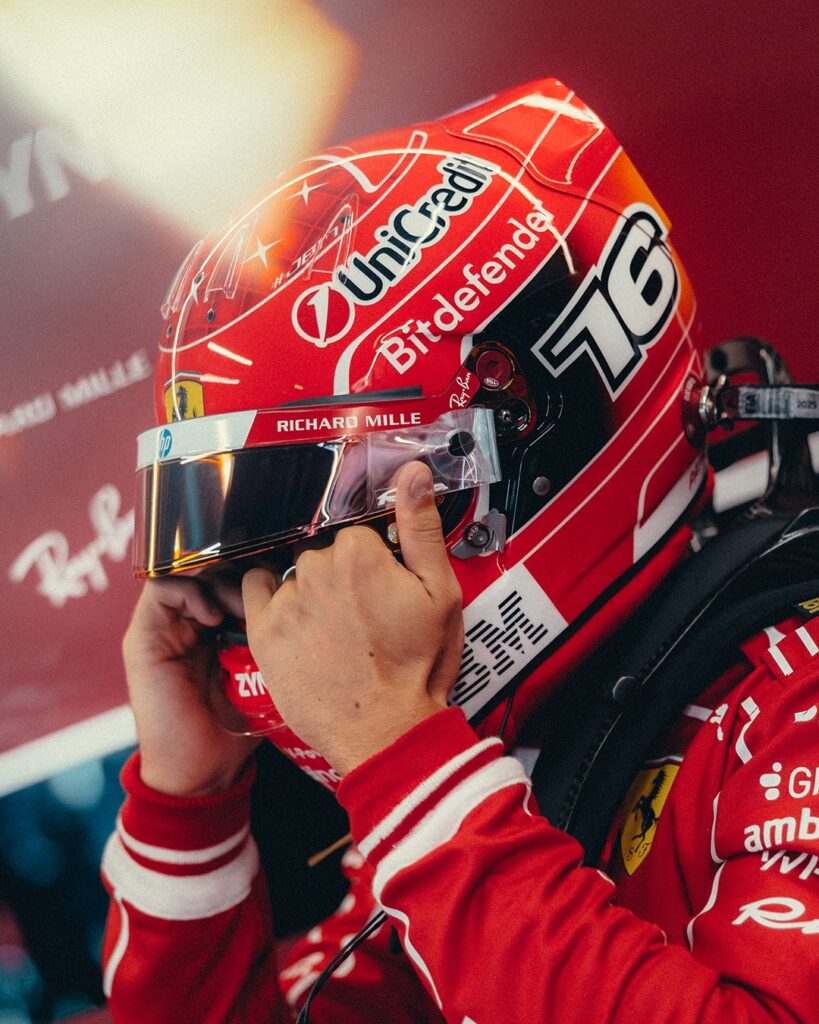
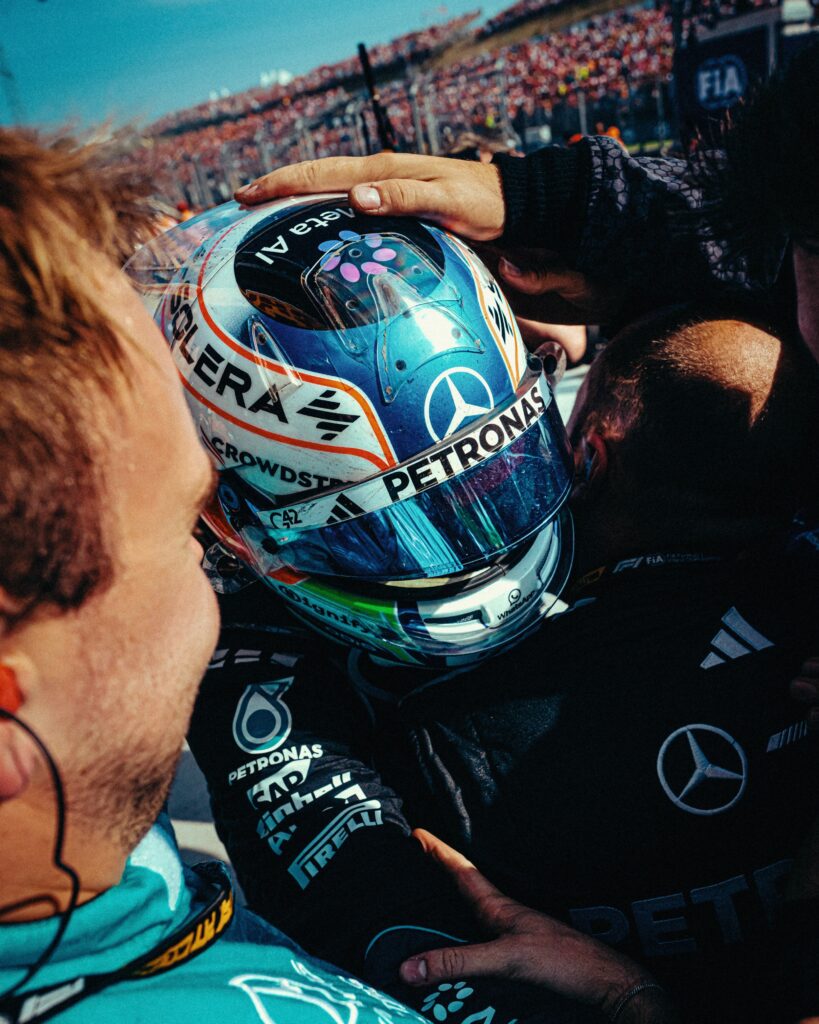
Leclerc’s 2026 Austrian GP helmet continues the visual language he has carried through this season — a design built around Ferrari’s competition red with sharp geometric detailing that photographs with exceptional clarity against the Red Bull Ring’s alpine backdrop. For collectors, the Austrian round consistently produces some of the most display-ready imagery of the calendar year precisely because the venue’s natural scenery creates contrast that indoor circuits cannot match.
The SF-26’s 2026 livery retained Ferrari’s deep competition red as its primary surface, with the sponsorship architecture reorganised relative to the 2025 car. Under the Spielberg light conditions on 2026-06-27, the car’s flanks and engine cover showed the colour’s full depth — the kind of shade that reproduces well on a full-size 1:1 display replica because the pigment has enough warmth to avoid looking flat under indoor exhibition lighting.
A full-size 1:1 collector replica of Leclerc’s Austrian GP helmet — produced at display scale with the correct proportions of the FP2-specification lid — captures the specific helmet livery he wore during those 35 laps in FP2. The visor treatment on the 2026 specification runs at 26 mm in the display replica version, matching the visual profile of the race-weekend helmet at collector scale. This is a display piece and collector item only, not certified for any protective or road use.
Moments of adversity — a difficult Friday, a frank post-session interview, a team regrouping under pressure — are exactly the kind of weekend context that gives a display replica its narrative weight. Owning a representation of the helmet Leclerc wore during a weekend where Ferrari had to fight back from difficulty tells a more complete story than a straightforward podium piece.
What Friday’s Data Means for the Race
Friday practice at the Red Bull Ring in 2026 pointed to a Ferrari race deficit on two separate axes — straight-line speed and corner pace — leaving the team with limited tools to manufacture a competitive Sunday result. Leclerc’s own read was candid: “I think just as a team we don’t seem to be very competitive for now, so there’s a lot of work to be done on the car.”
The overnight window between the end of FP2 and the start of Saturday’s running is roughly 16 hours when accounting for team debrief, simulation, and set-up preparation. Engineers can address ride height, wing angles, differential settings, and tyre strategy modelling in that time. They cannot change the fundamental power unit output or the drag profile of the bodywork. Leclerc acknowledged as much when he admitted Ferrari does not have a fix for the straight-line speed issue.
Hamilton’s P5 baseline across both Friday sessions at least gives the Scuderia a ceiling to target in qualifying. If Leclerc can match or improve on that reference using overnight set-up changes and his additional FP2 data — 35 laps’ worth of tyre and balance information — there remains a path to a respectable grid position. The race, with its long lap-one straight and DRS activation potential, will then test whether any overnight improvements hold up under race conditions.
Antonelli’s back-to-back session wins for Mercedes set the benchmark. The gap between P1 and Ferrari’s best Friday effort will only be known fully once qualifying data is published, but Friday’s narrative was clear: this is a weekend where Ferrari must recover, not control.
Why the Austrian GP Weekend Endures for Collectors
The Austrian Grand Prix at Spielberg has produced some of the most display-worthy helmet and livery moments in recent F1 history because the venue’s short lap — just 4.318 km — compresses the action and puts cars in frame repeatedly. For a collector seeking a full-size 1:1 display replica tied to a specific narrative weekend, Austria 2026 already has the ingredients: a championship battle at the front, a frontrunning team working through adversity, and one of the sport’s most photogenic backdrops.
Leclerc’s 2026 Austrian GP helmet, reproduced as an exhibition-quality display piece at full 1:1 scale, represents the visual identity he carried through a weekend that tested the Scuderia. Display replicas at this scale — weighing approximately 1.2–1.5 kg in finished form — sit naturally in a trophy cabinet, wall-mount bracket, or exhibition stand without requiring structural modification.
The collector value of a specific race weekend’s helmet design is built from exactly the kind of context this Friday delivered: a well-known driver, a team under pressure, a frank acknowledgment of difficulty, and the visual record of what was worn during it. That combination makes the 2026 Austrian GP edition a display piece with a story behind it, not simply a colour reproduction.
“I think just as a team we don’t seem to be very competitive for now, so there’s a lot of work to be done on the car in order to make sure that we get back to a more reasonable place.”
— Charles Leclerc, post-FP2, 2026 Austrian Grand Prix
“I think maybe we are a bit negatively surprised by our performance in the corners at the moment, because in the corners normally we are competitive and we are not that competitive at the moment, so this is the part to fix.”
— Charles Leclerc, post-FP2, 2026 Austrian Grand Prix
FAQ
Q: Why did Leclerc miss Free Practice 1 at the 2026 Austrian Grand Prix?
Ferrari gave Leclerc’s FP1 slot to rookie Dino Beganovic, allowing him to complete a development run in the SF-26. This is a mandatory practice allocation that teams must fulfil during the 2026 season, and it cost Leclerc early track time at a circuit where baseline set-up understanding is particularly valuable.
Q: How many laps did Leclerc complete in FP2 at the 2026 Austrian GP?
Leclerc completed 35 laps in FP2, which was the highest tour count of any driver in the session. Despite that mileage, he finished the session in P8 on the timesheets.
Q: What were the two performance problems Leclerc identified on Friday?
Leclerc flagged unexpected corner-speed weakness — an area where Ferrari normally expects to be strong — and a straight-line speed deficit. He was direct in saying Ferrari does not currently have a fix for the straight-line issue, making it the more serious of the two concerns heading into qualifying.
Q: Is the Charles Leclerc 2026 Austrian GP helmet available as a display replica?
Yes, full-size 1:1 collector replicas of Leclerc’s 2026 Austrian GP helmet are available as exhibition-quality display pieces. These are collector items only and are not certified for any protective, road, or track use.
Q: Who topped both Friday practice sessions at the 2026 Austrian Grand Prix?
Kimi Antonelli topped both FP1 and FP2 at the 2026 Austrian Grand Prix, reinforcing his championship leader status and underlining Mercedes’ pace advantage over Ferrari at the Red Bull Ring.
Shop Charles Leclerc Collection
Display and collector replicas only. Not certified for protective use. Full-size 1:1 scale.
This article was written with the help of AI tools. Editorial policy