
Blog
Leclerc’s Monaco Heartbreak: Three Brakes Gone at Antony Noghes
 123Helmets Editorial Team
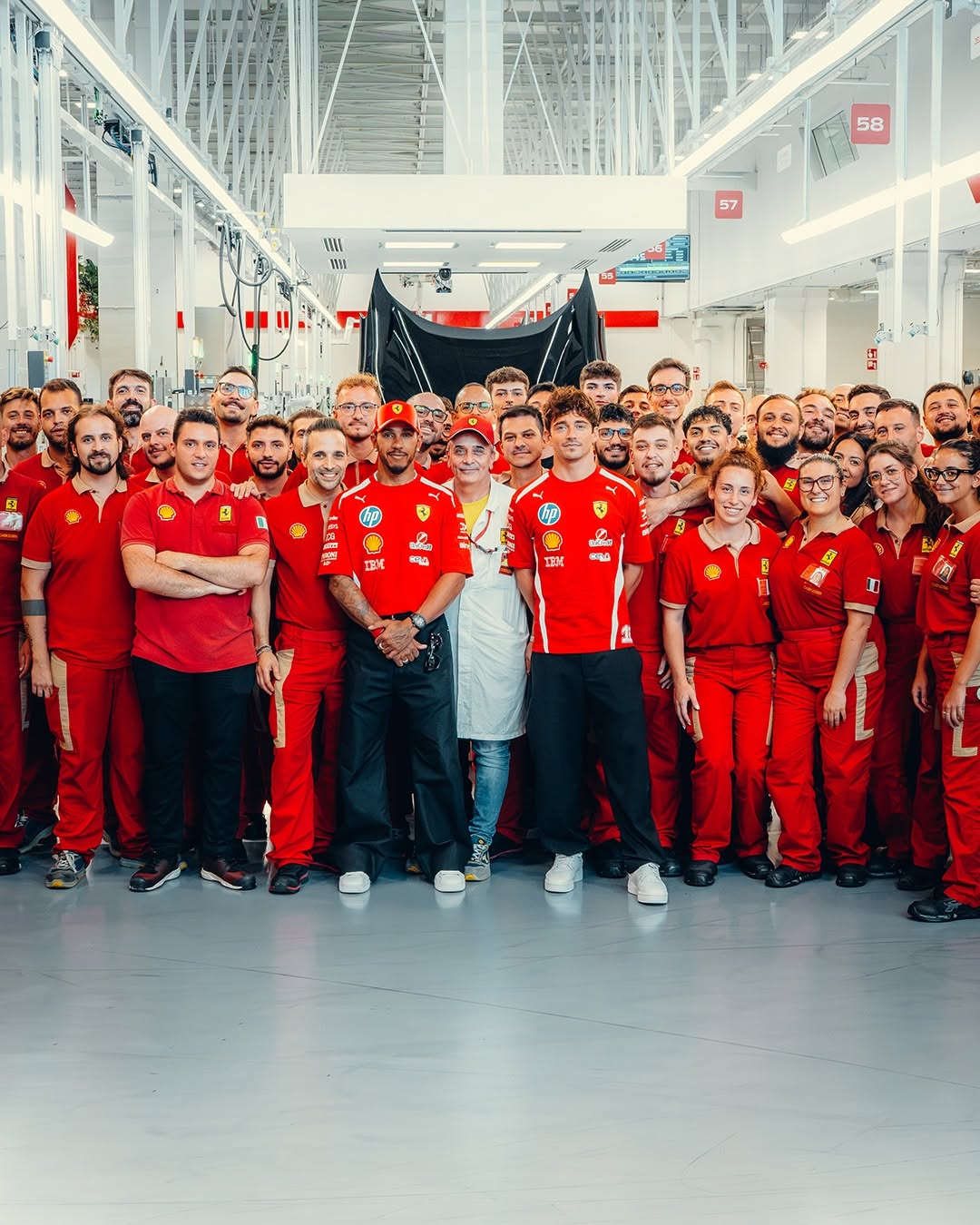
Charles Leclerc’s home race ended against the barriers at Antony Noghes with the SF-25 essentially undriveable — three of four brakes silent on the data trace. For collectors tracking the 2025 Ferrari livery story, the Monaco weekend produced one of the most visually striking and emotionally loaded helmet appearances of the season.
Key Takeaways
Leclerc was running P3 when the SF-25 lost three of four brakes at Antony Noghes after the safety car period.
The front-left was the only fully functional brake; the front-right was at 50%, both rears registered zero deceleration on data.
Ferrari has identified an in-house fix — Leclerc switches to Hamilton’s brake configuration from the next round.
The 2025 Monaco helmet livery remains one of the most collectible 1:1 display pieces of Leclerc’s home-race catalogue.
The Antony Noghes Moment
Leclerc was holding third place when the SF-25 refused to slow at the final corner of the Monaco street circuit. The radio call was immediate and unusually direct: “I’m not even going to take the blame.” Within seconds the car was in the barriers at Antony Noghes, ending what had looked like a clean podium run on home asphalt.
The data later confirmed what the Monegasque already knew through the steering wheel. Of the four brakes on the car, only the front-left was operating normally. The front-right was working at roughly 50% capacity. The two rear brakes produced no measurable deceleration whatsoever — a reading Leclerc described as if “the calipers were not even in the car.”
Why the Last Corner Mattered
Leclerc explained afterwards that lifting and coasting through Antony Noghes was the only option left, because any attempt to brake there would have stranded him with no stopping power for Turn 1 on the following lap. “There was just no solution,” he said. The crash, in his view, was the controlled outcome of an uncontrollable problem.
The Technical Picture
According to Leclerc, the failure appeared right after the safety car intervention and then deteriorated lap by lap. “As soon as I did the safety car, three of my four brakes stopped working,” he told reporters in Monaco. “I could never switch them on again, nothing was working anymore.”
He tried multiple in-cockpit adjustments — brake balance shifts, brake-by-wire toggles, mapping changes — none of which restored function. Ferrari’s engineers have not yet published the root cause, but Leclerc himself pointed to brake wear as a likely factor, a recurring headache around the 3.337 km Monte Carlo layout where cars spend a disproportionate amount of each lap on the pedal.
The Hamilton Configuration Switch
The most notable line from Leclerc’s debrief was the confirmation that he will move to team-mate Lewis Hamilton’s brake specification from the next race onward. “We have the solution in-house, and I’ll go to the Lewis configuration from next race onward, which hopefully will be a step,” he said. Two Ferrari drivers running different brake packages at Monaco is not unusual in itself — driver preference often dictates caliper, duct and disc choices — but the failure has forced a convergence sooner than planned.
The 2025 Monaco Helmet — Display Notes
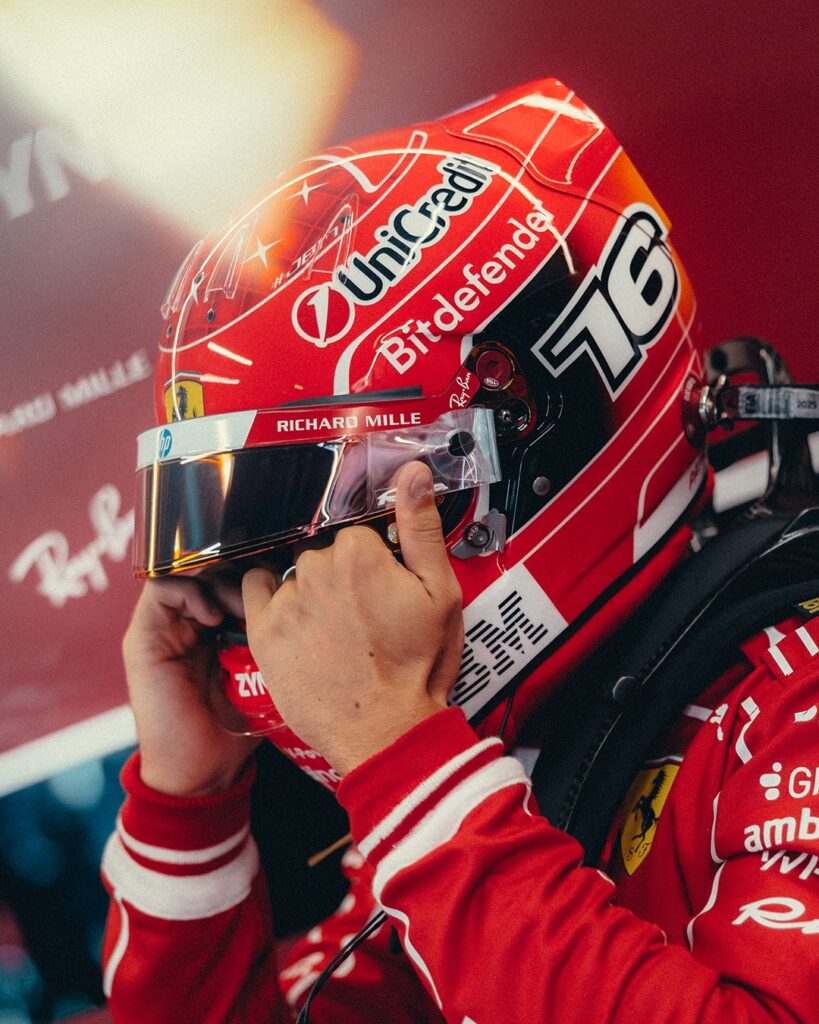
Leclerc’s Monaco helmets remain among the most sought-after items in the modern collector market. The home-race lid traditionally carries heavier paint layering than his standard season design, with the 2025 version continuing the tradition of red, white and gold detailing referencing the Monégasque flag and the Principality’s heraldic motifs.
For a full-size 1:1 display replica, the key visual reference points include:
- The central red spine running crown to chin bar
- The white side panels with gold pinstripe borders
- The chequered detail above the visor aperture
- The #16 numerals positioned at the rear shell
Build Detail for Collectors
A premium 1:1 collector replica of this design typically presents at around 29 × 25 × 35 cm overall shell dimensions, weighing roughly 1.2–1.5 kg with the trim hardware fitted. The visor panel on a quality exhibition piece runs in the 3 mm acrylic range with a tinted finish replicating the on-track look. These are display pieces and collector items — not protective equipment — and the value to collectors lies in paint accuracy, decal sharpness and shell symmetry under gallery lighting.
What the Crash Tells Us About Ferrari’s Monaco Weekend
Stripping out the brake failure, Leclerc’s pace through the weekend had been strong enough to convert into a genuine podium fight. Running third when the incident occurred, he was managing the gap behind and protecting position rather than attacking — the SF-25 was on a controlled rhythm when the system gave up.
The Hamilton Comparison
Hamilton’s side of the garage had been running a different brake specification all weekend and did not report the same symptoms. That gives Ferrari a clear reference baseline for the investigation and explains why Leclerc’s switch to the “Lewis configuration” is presented as a low-risk move rather than an experimental gamble.
The Wider Title Picture
Losing a Monaco podium is painful in points terms and even more painful in narrative terms. For a driver whose career-long pursuit of a home win has become one of the defining storylines of the modern era, ending the race in the barriers at the final corner — through no driving error of his own — adds another chapter to the Monaco-Leclerc saga that collectors and historians will track closely.
Display-Worthy Moments From the Weekend
Even with the crash, the weekend produced several moments worth preserving for a Leclerc display shelf:
- The grid-walk shots of the 2025 Monaco helmet under Mediterranean daylight
- The opening laps with the Ferrari running in clean air in third
- The radio exchange following the incident, now part of the season’s documented quotes
- The post-race paddock interviews where Leclerc broke down the brake data in unusual technical detail
Why Monaco Helmets Hold Their Display Value
Home-race specials from Leclerc have historically held their position as anchor pieces in collector cabinets because they are produced in limited annual variants — one design per season, used across a single weekend. The 2025 Monaco lid joins the 2021, 2022, 2023 and 2024 designs in a sequence that collectors increasingly buy as a continuous set rather than as individual items.
“Out of the four brakes, I had three brakes not working. So in a Formula 1 car, it’s never a good thing.”
— Charles Leclerc, post-race media
“The only solution I had was to not brake in the last corner, but I would have crashed in Turn 1. There was just no solution.”
— Charles Leclerc
“We have the solution in-house, and I’ll go to the Lewis configuration from next race onward.”
— Charles Leclerc
FAQ
Q: What caused Leclerc’s Monaco GP crash?
Three of the four brakes on his Ferrari SF-25 stopped working after the safety car period. The front-left was functional, the front-right was at roughly 50%, and both rear brakes produced zero deceleration on data.
Q: Where in the car position was Leclerc when he crashed?
He was running in third place at Antony Noghes, the final corner of the Monaco circuit, immediately before the planned safety car restart.
Q: What is Ferrari doing to fix the issue?
Ferrari has identified an in-house solution. Leclerc will switch to the brake configuration used by team-mate Lewis Hamilton from the next race onward.
Q: Are the 2025 Monaco Leclerc helmets safety-certified?
No. The replicas offered for collectors at 123Helmets are full-size 1:1 display pieces and exhibition-quality collector items. They are not certified for protective use of any kind.
Q: What are the typical dimensions of a 1:1 Leclerc Monaco display helmet?
A premium 1:1 collector replica presents at approximately 29 × 25 × 35 cm overall shell size and weighs around 1.2–1.5 kg with all trim and visor hardware fitted.
Shop Charles Leclerc Collection
Display and collector replicas only. Not certified for protective use. Full-size 1:1 scale.
This article was written with the help of AI tools. Editorial policy