
Blog
McLaren Appeals Gasly Monaco Penalty Reversal: The Helmet & Podium Story Behind the Controversy
 123Helmets Editorial Team
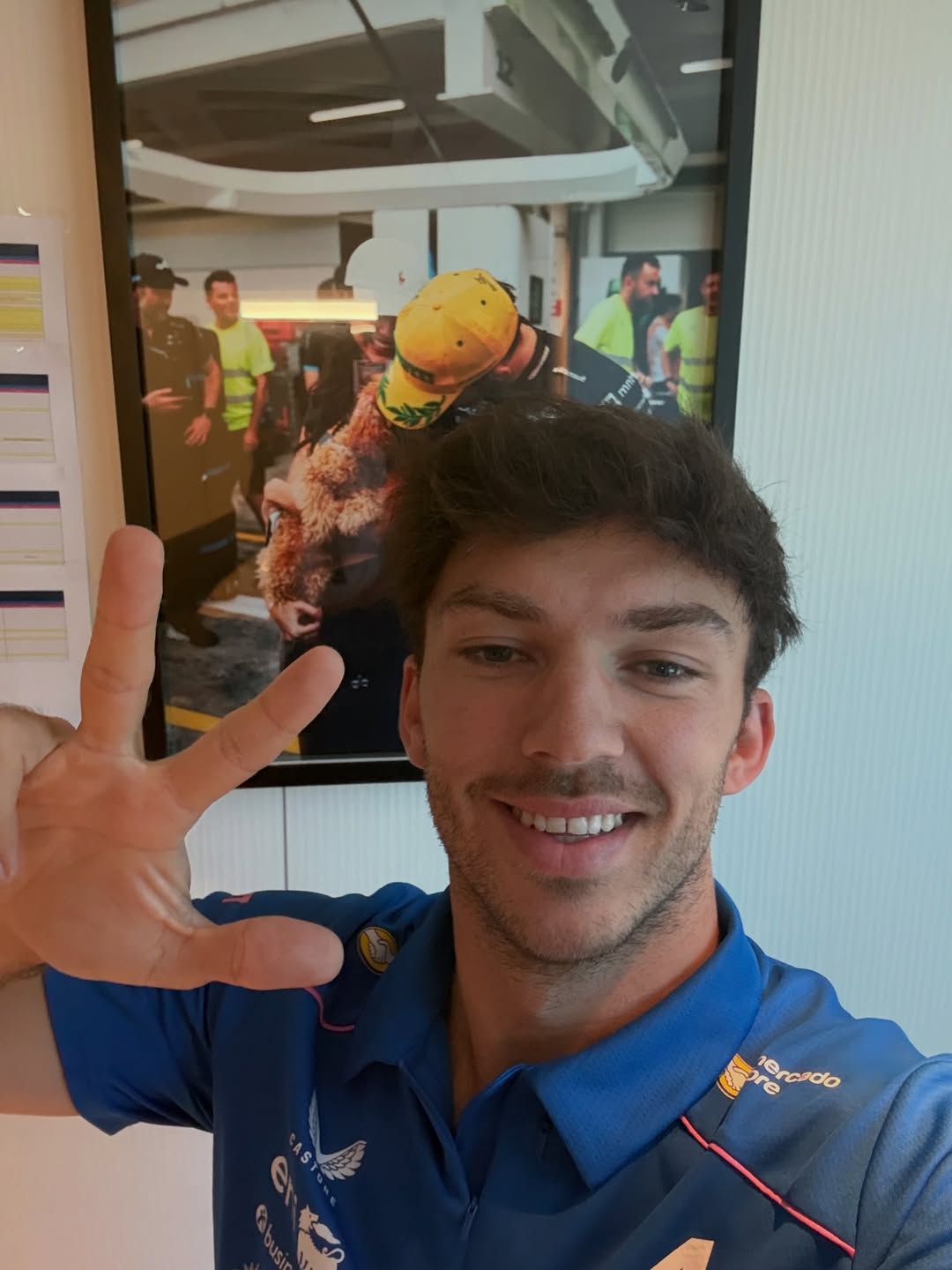
McLaren has formally appealed the stewards’ decision to cancel Pierre Gasly’s two five-second time penalties at the Monaco Grand Prix — a ruling that dropped Oscar Piastri from fourth to fifth in the final standings and handed Gasly a third-place finish. The dispute cuts to the heart of sporting fairness, and the podium visuals from Monaco’s iconic pit lane now carry an asterisk that collectors and fans alike cannot ignore.
Key Takeaways
Gasly received two five-second time penalties for exceeding the Monaco pit lane speed limit; both were cancelled after Alpine’s Right of Review hearing found the pit lane length was incorrectly measured.
The cancellation moved Gasly from outside the top three to third place and dropped Piastri from fourth to fifth — Piastri had served an identical five-second penalty during the race and could not have it rescinded.
McLaren’s appeal targets the revised race results and the championship points awarded under those results, not Gasly or Alpine personally.
The case now goes to the FIA’s judicial process, meaning the Monaco final classification and its associated collector moment — Gasly’s podium livery — remains officially disputed.
What Happened in the Monaco Pit Lane
Pierre Gasly was issued two separate five-second time penalties during the Monaco Grand Prix for exceeding the pit lane speed limit — a combined ten-second penalty that, at the time of the original results, cost him a podium finish. The penalties were applied under the same regulations and measurement standards used for every team that weekend.
Several other drivers, including McLaren’s Oscar Piastri, also received a five-second penalty for the same infringement. Piastri served his penalty in real time during the race. Because he absorbed the sanction while the race was live, there was no mechanism to remove it after the fact. Gasly’s penalties, by contrast, were applied to his finishing time rather than served on track, which left them open to a post-race judicial challenge.
Alpine requested a Right of Review hearing, presenting evidence that the official measurement of the Monaco pit lane length was incorrect. The stewards agreed: the incorrect distance figure had caused Gasly’s pit lane speed to be overstated, meaning the sensor data, read against the wrong baseline, produced a false positive infringement. On that basis, both of Gasly’s penalties were cancelled.
The immediate consequence was stark. Gasly moved up to third place — a Monaco podium and a visually historic moment in the sport’s most prestigious street circuit. Piastri, who had done everything the regulations required of him and taken his medicine on track, dropped from fourth to fifth with no remedy available.
McLaren’s Formal Appeal: What It Covers
McLaren’s appeal is directed at three specific outcomes: the stewards’ decisions rescinding Gasly’s penalties, the revised race classification that followed, and the championship points reassigned under that classification. The team is not contesting Alpine’s right to request a review, nor is it directing its challenge at Gasly personally.
In its official statement, McLaren said: “While we fully respect the FIA’s judicial processes and the role of the stewards, we believe this case raises important questions concerning sporting fairness, regulatory consistency and the integrity of competition.” The team went further, arguing that competitors who accepted and served their penalties — acting in good faith according to the rules as applied at the time — are now penalised for their compliance, while a competitor who did not serve a penalty has benefited from a retroactive correction.
The core legal and sporting question McLaren is putting to the FIA’s judicial system is whether a measurement error discovered after the race can legitimately undo a penalty that other drivers, held to the same measurement standard, had no option to challenge in the same way. The outcome of that question will determine whether Monaco 2025 goes into the record books with Gasly on the podium or with the pre-review classification restored.
Until the appeal is resolved, the Monaco Grand Prix result remains officially in dispute. For collectors and fans who track the sport’s documented history, that matters: any replica or display piece commemorating Gasly’s Monaco podium represents a result that is still subject to change by the FIA’s Court of Appeal.
The Podium Livery Freeze: Why Monaco Always Delivers Display-Worthy Moments
Monaco produces the most visually concentrated podium images in Formula 1 — the combination of the harbour backdrop, the narrow pit lane, and the circuit’s compact 3.337 km lap distance means cars and helmets are in frame almost constantly, making livery and helmet design more prominent here than at any other round on the calendar.
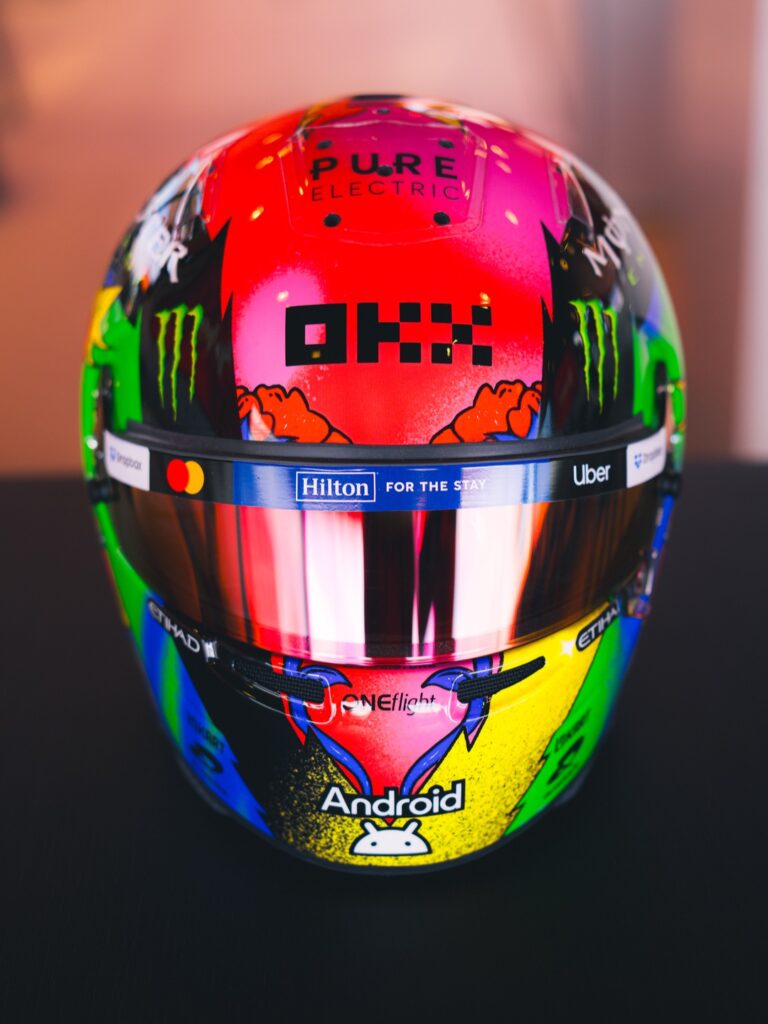
Gasly’s Alpine helmet at Monaco 2025 sat within a livery story that already had significant collector interest. The blue-and-pink Alpine colour scheme, applied to a full-size 1:1 display replica helmet, captures the precise visual identity that appeared on the podium rostrum — whatever the final judicial outcome. For display purposes, the Monaco moment is frozen in time: the helmet design, the race number, and the circuit context are fixed regardless of where the points eventually land.
Piastri’s papaya McLaren lid, meanwhile, represents the other side of this controversy. His helmet — also available as a full-size 1:1 collector replica — marks a race in which he drove to a result that was altered through no fault of his own, a circumstance that adds a specific documentary layer to any display piece from this event. Collector replicas of both drivers’ Monaco helmets carry the weight of one of the most debated stewarding decisions in recent seasons.
At exhibition quality, a full-size replica helmet replicates the graphic design, colourway, and sponsor placement of the race-used original at 1:1 scale — the same proportions worn on the grid, displayed without compromise. These are collector and display pieces only, not certified for any protective use.
Sporting Fairness and the Pit Lane Speed Limit Debate
The sporting fairness argument in this appeal rests on a single, uncomfortable asymmetry: two drivers committed the same measured infringement, both received penalties, one served his immediately and one did not, and only the one who did not serve his penalty could have it removed. That asymmetry is not the result of any wrongdoing by any party — it is a structural consequence of how pit lane penalties are applied in Formula 1.
Pit lane speed limits at Monaco are enforced by timing sensors positioned along the lane. The sensors record the time taken to travel between fixed reference points, and the legal speed limit — typically 60 km/h in the pit lane during a race — is calculated from those measurements. If the reference distance is logged incorrectly in the system, every speed calculation derived from that distance is skewed. In this case, the stewards accepted that the incorrect measurement produced a speed reading that exceeded 60 km/h when Gasly’s actual speed did not.
McLaren’s statement acknowledges the stewards’ finding but argues that the consequence of correcting it creates a situation that undermines confidence in the consistent application of the FIA Sporting Regulations. The team’s position is that Piastri, who served a penalty under the same flawed measurement, had no access to the same remedy — and that is the inequity the appeal seeks to address.
The FIA’s judicial process will now determine whether there is a mechanism to provide any relief to drivers who served penalties under the same conditions, or whether the correction can only flow in one direction. The answer will shape how future post-race Right of Review hearings are handled when measurement errors are at issue.
Gasly Monaco Helmet as a Collector Display Piece
A full-size 1:1 replica of Gasly’s Monaco 2025 helmet captures one of the most contested podium moments in recent Formula 1 history — making it a display piece with a documented story attached, regardless of how the appeal concludes. The helmet’s graphic design reflects the Alpine identity worn across the 2025 season, with the specific colourway and sponsor layout present at the Monaco Grand Prix.
At 123Helmets.com, collector replica helmets are produced at 1:1 full scale — matching the geometry of a race helmet without any structural safety certification. These are exhibition-quality display items designed to be mounted, exhibited, or kept as part of a collection. They are not wearable, not road or track certified, and carry no FIA, Snell, ECE, or DOT approval. Their purpose is visual and documentary: to preserve the exact livery of a specific race moment in a format that can be displayed permanently.
For a race as visually loaded as Monaco 2025 — with a podium result under active appeal, a pit lane measurement controversy, and two team statements on the public record — the collector context around both the Gasly Alpine helmet and the Piastri McLaren helmet is unusually rich. Each piece documents a different position in the same dispute, from the same afternoon on the same circuit.
Display replicas from contested race results have historically drawn stronger collector interest than those from straightforward finishes. The Monaco 2025 story, still unresolved at the time of publication, adds exactly that kind of documented complexity to any piece from this event.
What Comes Next: The FIA Court of Appeal Process
McLaren’s appeal goes to the FIA International Court of Appeal, the body that hears challenges to stewards’ decisions at the highest level of the sport’s judicial structure. The Court can uphold the stewards’ ruling, overturn it, or modify the outcome — including potentially restoring the pre-review classification or finding an alternative remedy for the championship points implications.
The timeline for an FIA Court of Appeal hearing varies depending on the procedural steps required, but decisions in high-profile cases have historically taken weeks to months from the formal filing of an appeal. In the interim, the Monaco Grand Prix standings — including Gasly’s third place and Piastri’s fifth — remain as published following the Right of Review, subject to the appeal outcome.
For the 2025 Constructors’ and Drivers’ Championships, the difference between fourth and fifth at Monaco, and between third and a position outside the top three, carries a specific points value that could prove relevant as the season progresses. McLaren’s statement is careful to frame the appeal as a matter of principle and process rather than pure points calculation, but the sporting and mathematical stakes are real.
The Monaco Grand Prix, run over 78 laps on the 3.337 km Circuit de Monaco, remains one of the sport’s most points-efficient events for teams in the midfield and upper midfield — every position matters. The appeal outcome will determine whether the record books close on this race with the post-review result or with a further revision, and with it, which helmet livery from Monaco 2025 carries the definitive podium story.
“While we fully respect the FIA’s judicial processes and the role of the stewards, we believe this case raises important questions concerning sporting fairness, regulatory consistency and the integrity of competition.”
— McLaren Official Statement on Monaco GP Appeal
“In our view, the subsequent removal of penalties creates a situation in which some competitors are disadvantaged by having acted in accordance with the rules and the Stewards’ decisions. Such an outcome risks creating sporting inequity and undermining confidence in the consistent application of the FIA Sporting Regulations.”
— McLaren Official Statement on Monaco GP Appeal
FAQ
Q: Why did the Monaco stewards cancel Gasly’s penalties?
The stewards cancelled Gasly’s two five-second penalties because Alpine’s Right of Review hearing demonstrated that the official pit lane length measurement used to calculate his speed was incorrect, causing his speed to appear higher than it actually was. With the correct distance applied, his pit lane speed did not exceed the limit.
Q: Why couldn’t Piastri’s penalty be removed in the same way?
Piastri served his five-second penalty in real time during the race, which means it was already absorbed into his on-track performance and could not be separated from the final result. Gasly’s penalties were applied as time additions to his finishing time, which left them open to post-race judicial revision in a way that a served penalty is not.
Q: What is McLaren specifically appealing?
McLaren is appealing the stewards’ decisions to rescind Gasly’s penalties, the revised Monaco Grand Prix race classification that followed, and the championship points distributed under that revised classification. The appeal is a matter of process and sporting fairness, not a personal challenge to Gasly or Alpine.
Q: Is Gasly’s Monaco podium helmet available as a collector display piece?
Yes — full-size 1:1 replica helmets representing Gasly’s Monaco 2025 livery are available as exhibition-quality collector display pieces. These replicas are not certified for protective use, not wearable, and carry no FIA, Snell, ECE, or DOT approval; they are display and collector items only.
Q: How long is the Monaco Grand Prix circuit and how many laps did the race cover?
The Circuit de Monaco measures 3.337 km per lap, and the 2025 Monaco Grand Prix was run over 78 laps. The compact circuit and its iconic pit lane are the setting for the speed measurement dispute at the centre of McLaren’s appeal.
Shop Pierre Gasly Collection — own a full-size 1:1 display replica helmet from one of Formula 1’s most debated race results. Exhibition quality. Collector piece. Not for protective use.
Display and collector replicas only. Not certified for protective use. Full-size 1:1 scale.
This article was written with the help of AI tools. Editorial policy