Blog
Bearman: Ferrari Move Built My F1 Maturity (2026)
 123Helmets Editorial Team
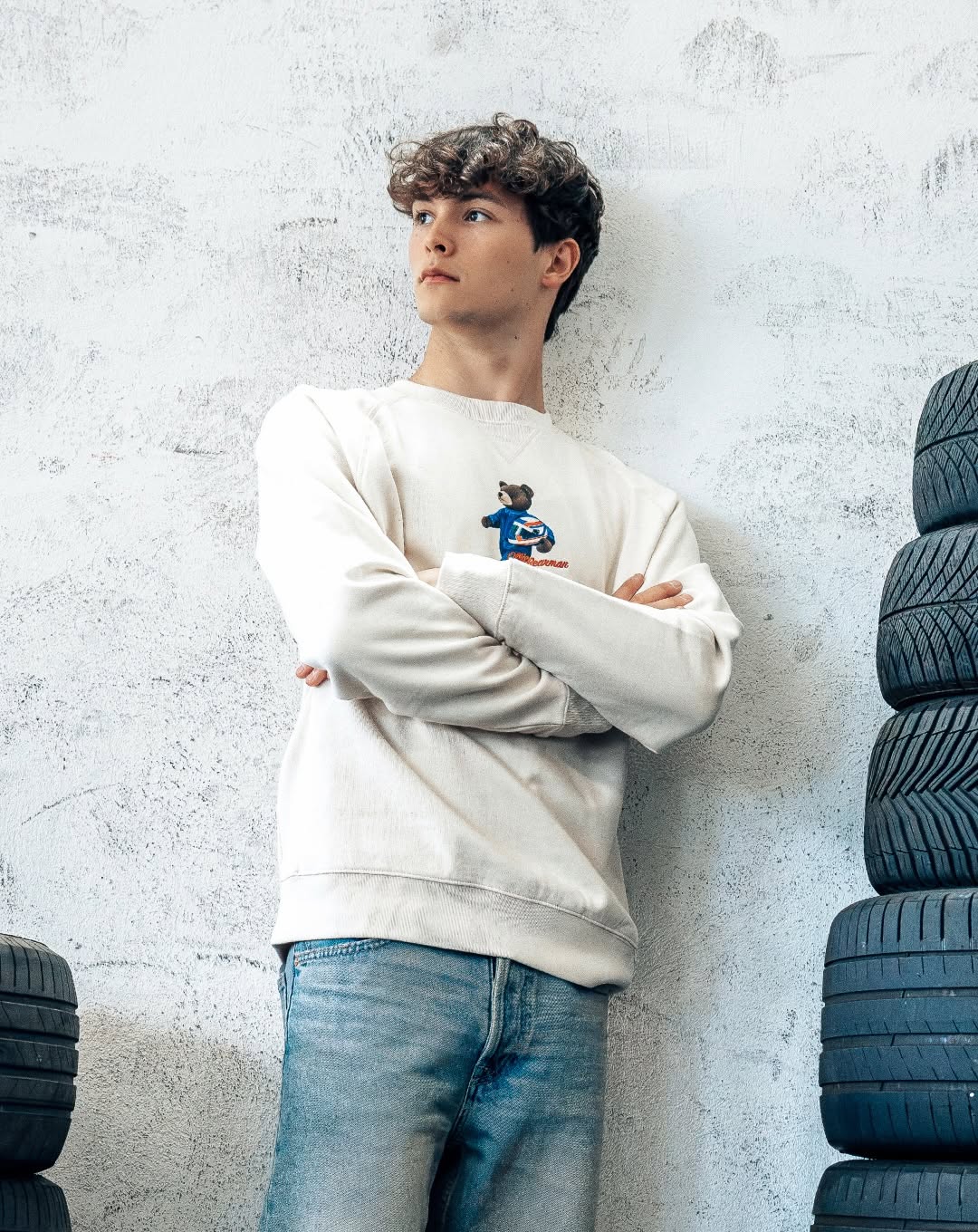
Oliver Bearman says the decision to relocate to Maranello as a teenager — leaving the UK at just 16, learning Italian from scratch, and being surrounded daily by engineers and mechanics decades older than him — is what forged the racecraft and composure he carries into the 2026 F1 season. His Ferrari-era helmets and race suits have become some of the most sought-after display pieces in the collector market, and it is easy to see why.
Key Takeaways
Bearman relocated to Italy at approximately 16 years old to join the Ferrari Driver Academy, an environment that forced rapid personal and professional growth.
His shock debut at the 2024 Saudi Arabian Grand Prix — at just 18 years old — came only six months after his first official F1 test, a timeline that underlines how fast his development accelerated.
Bearman spent his early Maranello years surrounded almost exclusively by adults: engineers, mechanics, and his personal trainer, which he says pushed him to mature well beyond his age.
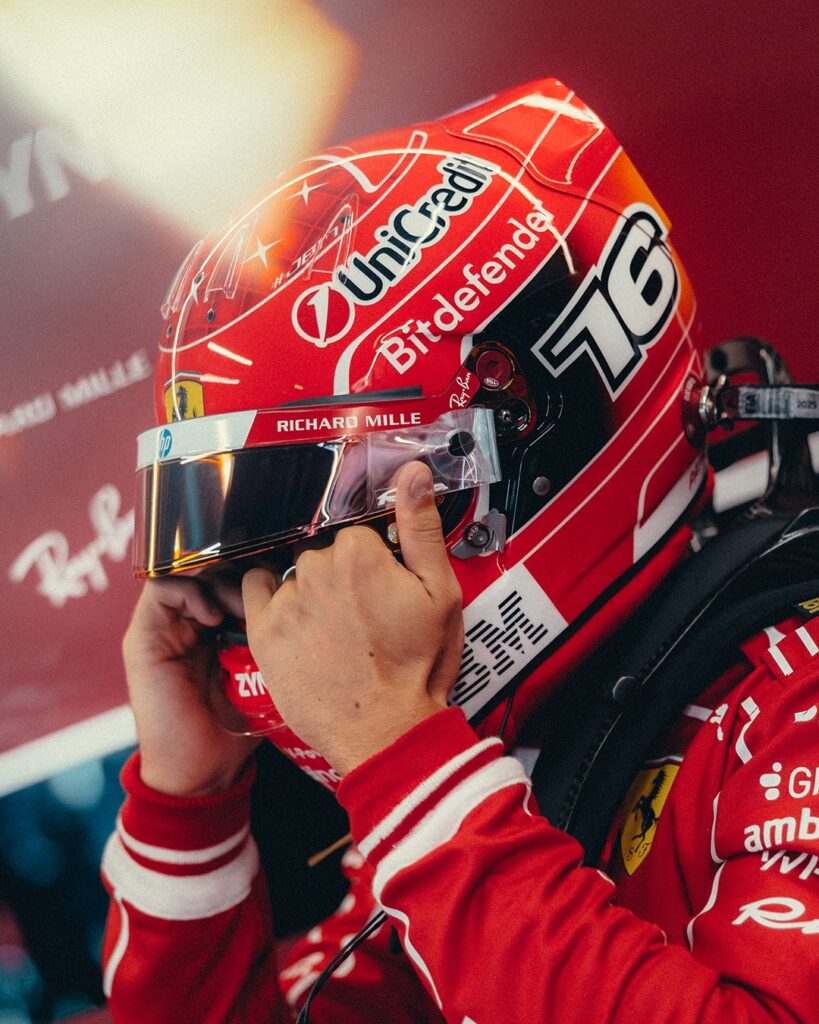
His Ferrari-era race helmet designs — worn during one of the most dramatic debut stories in modern F1 — are now full-size 1:1 collector replicas and exhibition-quality display pieces for serious enthusiasts.
A 16-Year-Old in Maranello: The Relocation That Changed Everything
Oliver Bearman moved to Italy at approximately 16 years old, a decision he now identifies as the single most formative episode of his career. Speaking on the F1 Off The Grid podcast, the British driver was candid about how unprepared he felt when he first arrived in the Ferrari Driver Academy environment near Maranello.
“Looking back to the person that I was when I moved to Italy, 16, I think, or even a bit younger. I just wasn’t ready for what the world had to throw at me,” Bearman said. The admission carries weight when you consider what followed: within roughly two years of that move, he was racing in Formula 1 for Ferrari in front of tens of thousands of fans in Jeddah.
Maranello itself played an unexpected role. The town’s relatively rural character — limited weekend activity, few peers his own age, and a language barrier that required him to pick up Italian quickly — stripped away any comfort zone. “Maranello is a great city, but it’s a bit rural. There’s not a whole lot going on there during the weekend, and I didn’t really know anyone there,” he recalled. The isolation, while challenging at the time, forced a discipline that would later show up in his race management and his composure under pressure.
His daily environment consisted almost entirely of adults. Engineers running simulation data, mechanics dissecting car setups, and his personal trainer — all of them significantly older. “So, I just had to mature to that level because those were the types of people I was spending my time with,” Bearman explained. For a teenager still waiting to hold a full European driving licence — he had his UK licence at 17 but could not drive on European roads until he turned 18 — the contrast between his personal life and professional world was stark.
From First Test to Saudi Arabia: Six Months That Defined a Career
Bearman’s escalation from his first official F1 test to a points-scoring Grand Prix debut took just six months — a compressed timeline that very few drivers in the modern era can match. That debut came at the 2024 Saudi Arabian Grand Prix, where Bearman stepped into the Ferrari SF-24 at just 18 years old as a last-minute replacement, scored championship points, and did so without a single full race weekend of Formula 1 preparation behind him.
“It was only six months after the first test that I had my first,” he noted on the podcast, the sentence trailing off but the implication unmistakable: the gap between a controlled test environment and a live race weekend in one of the fastest and most unforgiving circuits on the calendar is enormous. Bearman bridged it with a result that silenced doubters immediately.
The Saudi circuit — the Jeddah Corniche Circuit — is a 6.174 km street layout with minimal run-off and wall-to-wall barriers. Qualifying and race pace at that venue demand a level of car confidence that most rookies build over an entire season. Bearman did it in a weekend, and the helmet he wore during that performance has since become one of the defining collector items of the 2024 season.
Now in his second season in 2026, racing with Haas, Bearman carries the technical foundation that Ferrari’s structured environment provided. The engineers, the simulator hours, the race psychology built into the FDA programme — it all fed into a driver who arrived in Jeddah ready, even if no one outside the garage expected him to be.
The Ferrari Helmet Designs: Display-Worthy From Day One
Bearman’s Ferrari-era helmet liveries are collector pieces precisely because they were worn during one of the most dramatic driver stories in recent F1 history. The visual identity of a helmet worn at a shock debut — by a teenager, for Ferrari, on a street circuit — carries a narrative weight that makes it genuinely display-worthy rather than merely decorative.
The full-size 1:1 replica helmets produced to honour Bearman’s Ferrari chapter follow the same external geometry as a race-used lid: the characteristic oval shell profile, the wide visor aperture, and the sculpted chin section that defines modern F1 helmet architecture. At 1:1 scale, these pieces translate directly from the race footage you watched to the shelf or cabinet where they sit — no compromise in proportion, no miniaturisation of the design details that made the original striking.
Paint quality on exhibition-quality replicas of this type typically runs to multiple base layers before the sponsor and team graphics are applied, with a lacquer finish that preserves colour depth over time. The Ferrari red that defined Bearman’s race livery — Rosso Corsa in its current 2026 specification — is a high-chroma pigment that reads differently under track lighting versus ambient room light, a characteristic that collectors who display under directional spots appreciate immediately.
For the display collector, the Bearman Ferrari helmet sits at an interesting crossroads: it references a specific moment (a debut at 18, points on the board, Ferrari’s faith confirmed) rather than a season-long championship narrative. That specificity is exactly what makes it a conversation piece. A visitor to a collection can be told the exact race, the exact circumstances, and the result — and the helmet in the case becomes a three-dimensional record of that moment.
Visor and Shell Details Worth Noting
Exhibition-quality 1:1 replicas in this category present the full visor assembly — the dark-tinted aperture panel sits flush with the shell geometry and replicates the forward rake angle of the original. The chin vent channels and crown air exit are present as surface detail. These are display pieces and collector items only; they carry no FIA, Snell, or any other protective certification and are not designed for road or track use.
Livery Reading: What the 2026 Season Adds to the Story
By the 2026 F1 season, Bearman is racing under Haas colours, but the Ferrari chapter is the foundation that the collector market references. His Oliver Bearman display helmets and the broader Ferrari replica range reflect two distinct design eras: the FDA development years and the race-weekend liveries that followed.
Livery reading — the practice of identifying a helmet’s design period from its graphic layout — matters for collectors because it determines provenance and display context. A Bearman helmet in full Ferrari Scuderia livery, with the Prancing Horse positioned on the chin or crown, dates to a specific window: his debut appearance and the subsequent races before his 2026 programme with Haas began. That window is narrow, which typically correlates with higher display desirability.
The 2026 season has brought updated team liveries across the grid as the new technical regulations reshaped car concepts. Ferrari’s 2026 colour palette retains the Rosso Corsa base but has incorporated revised sponsor positioning reflecting the current partnership portfolio. A collector tracking Bearman’s arc can therefore map three distinct visual periods: pre-debut FDA kit, the 2024 race livery, and now his 2026 Haas configuration — three helmets that together tell a complete story of rapid F1 development.
Display cases that arrange these chronologically function almost as a timeline exhibit. The progression from the quieter, academically-branded FDA design through to a live race helmet on a Ferrari and then to the 2026 Haas scheme is a visual biography of a driver who moved from rural Maranello isolation to the F1 grid in an unusually compressed arc.
Why the Bearman Ferrari Story Resonates With Collectors
The most display-worthy helmets in any collection attach to a story that can be told in a single sentence — and Bearman’s Ferrari debut has exactly that quality: a teenager from the UK, six months of testing, an 18th birthday barely behind him, points scored for Ferrari in Jeddah. That single-sentence story is what gives a replica helmet displayed on a shelf its staying power as a conversation piece.
Collector psychology around F1 helmets tends to favour moments of surprise and specificity over generic championship seasons. A title-winning helmet is desirable for obvious reasons, but a debut helmet — especially one attached to a result — carries a different emotional register. It is the record of something that almost did not happen, that was not planned weeks in advance, and that exceeded every external expectation.
Bearman himself has articulated why the Maranello years were irreplaceable: the combination of isolation, language challenge, adult professional environment, and the rapid escalation from test to race built a mental architecture that no simulator programme or karting academy could have replicated. That backstory enhances the display value of anything associated with his Ferrari period. A full-size 1:1 replica helmet from that era is not just a team souvenir — it is a reference to a specific human story that played out on the grid.
For the serious collector building a curated display around the 2026 season’s most compelling driver narratives, Bearman’s Ferrari-era helmet is a logical anchor piece. It is the kind of object that rewards research: the more a visitor knows about the six months between his first test and Jeddah, the more the helmet in the case means. Exhibition-quality replicas in full 1:1 scale make that conversation possible in any room.
Building a Display Around the Ferrari–Bearman Narrative
A single full-size 1:1 replica helmet is the correct starting point for any Ferrari–Bearman display, and the Ferrari Scuderia livery version of his race helmet provides the strongest visual anchor. At 1:1 scale, the piece reads correctly from across a room: the proportions match what appears on broadcast footage, and the colour relationships between the Rosso Corsa base and the sponsor graphics hold at display distance.
Pairing the helmet with a printed race card or framed graphic documenting the 2024 Saudi Arabian Grand Prix weekend gives the display a date and context anchor — the kind of curatorial detail that separates a considered collection from a shelf of objects. The Jeddah Corniche Circuit hosted the race on the 2024 calendar, and that specific venue’s visual identity (night race, floodlit barriers, the long 27-metre-wide main straight) is distinct enough to provide strong display imagery if a collector chooses to frame a race photograph alongside the replica.
Scale consistency matters in multi-piece displays. A 1:1 helmet displayed alongside a 1:18 car model creates an immediately jarring size relationship; a 1:1 helmet alongside a 1:2 helmet or a similarly scaled replica steering wheel maintains visual coherence. The Bearman Ferrari display works best when every element references the same scale convention and the same race period.
Lighting is a practical consideration worth raising for any Rosso Corsa piece. Directed warm light (approximately 3000 K colour temperature) saturates Ferrari red and brings out the lacquer depth. Cool white light above 5000 K tends to flatten the chroma and grey the red slightly. Collectors who display under adjustable track lighting can shift between the two to see both readings — a characteristic of high-quality paint finishes that cheaper replicas typically cannot replicate. These are display and collector items only, produced at full 1:1 scale for exhibition purposes — not certified for any protective use.
“Looking back to the person that I was when I moved to Italy, 16, I think, or even a bit younger. I just wasn’t ready for what the world had to throw at me.”
— Oliver Bearman, F1 Off The Grid podcast
“I just had to mature to that level because those were the types of people I was spending my time with. Then I had my first test, my first FP1, and everything ramped up very quickly.”
— Oliver Bearman, F1 Off The Grid podcast
FAQ
Q: How old was Oliver Bearman when he made his Formula 1 debut for Ferrari?
Oliver Bearman was 18 years old when he made his Formula 1 debut at the 2024 Saudi Arabian Grand Prix, stepping in as a last-minute replacement for Ferrari and scoring points.
Q: How long after his first F1 test did Bearman make his race debut?
Bearman’s race debut came approximately six months after his first official Formula 1 test — a compressed timeline he has acknowledged himself in interviews, noting how rapidly everything escalated.
Q: Are the Oliver Bearman Ferrari replica helmets safe to wear on track or road?
No. The Oliver Bearman Ferrari replica helmets available at 123Helmets.com are full-size 1:1 display and collector pieces only. They carry no FIA, Snell, ECE, DOT, or any other protective certification and are not intended for road, track, or any protective use.
Q: What makes Bearman’s Ferrari-era helmet particularly collectible in 2026?
The Ferrari-era helmet is collectible because it references a specific, surprise debut — a teenager scoring points for Ferrari at a street circuit, six months after his first F1 test — a story that can be told in a single sentence and that gives the display piece immediate contextual value.
Q: What scale are the Oliver Bearman Ferrari replica helmets sold by 123Helmets.com?
All replica helmets at 123Helmets.com are produced at full 1:1 scale, meaning they match the exact external dimensions of a race-used helmet. They are exhibition-quality display and collector items, not miniatures or scaled-down versions.
Shop Ferrari Helmets — full-size 1:1 collector replicas celebrating the Scuderia’s most compelling driver stories, including Oliver Bearman’s landmark debut. Every piece is an exhibition-quality display item, produced at true 1:1 scale. Browse the Ferrari helmet collection now.
Display and collector replicas only. Not certified for protective use. Full-size 1:1 scale.
This article was written with the help of AI tools. Editorial policy