- Keke Rosberg
- Nigel Mansell
- Jenson Button
- Nico Rosberg
- Gilles Villeneuve
- Mika Hakkinen
- Jackie Stewart
- Mika Salo
- Emerson Fittipaldi
- Charles Leclerc
- Lewis Hamilton
- Max Verstappen
- Lando Norris
- Ayrton Senna
- Michael Schumacher
- Fernando Alonso
- Oscar Piastri
- George Russell
- Kimi Antonelli
- Nico Hülkenberg
- Gabriel Bortoleto
- Pierre Gasly
- Franco Colapinto
- Carlos Sainz
- Oliver Bearman
- Sergio Pérez
- Valtteri Bottas
- Isack Hadjar
- Alain Prost
- James Hunt
Why Sainz Got Only 5 Seconds for Piastri Clash in Hungary
Posted by
 123Helmets Editorial Team
123Helmets Editorial Team
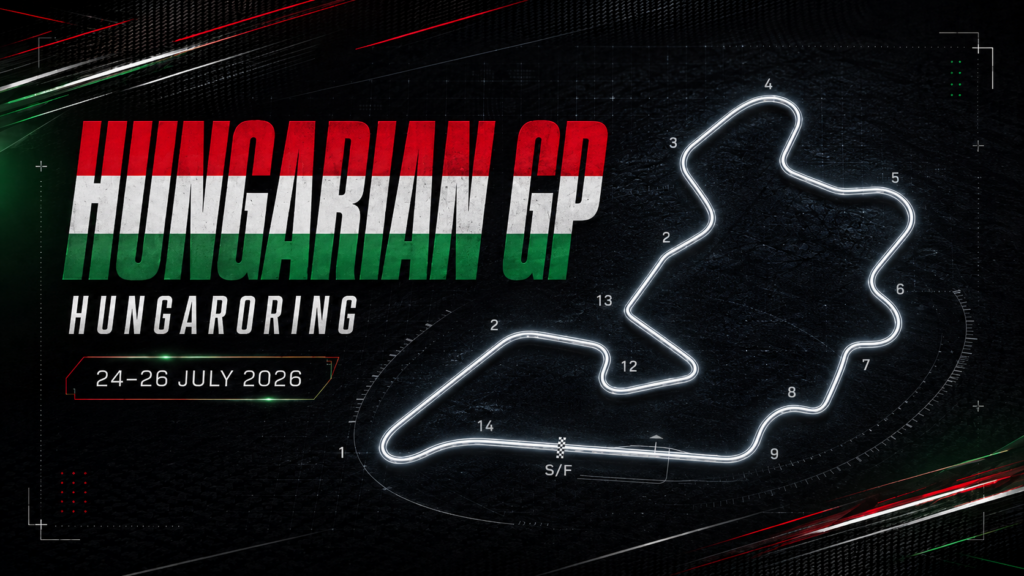
2026 Hungarian Grand Prix
Formula 1 stewards handed Carlos Sainz a five-second penalty rather than the standard ten seconds for his lap 38 collision with Oscar Piastri at the 2026 Hungarian Grand Prix, citing a specific visibility issue as a mitigating factor.
Key Takeaways
Sainz was found wholly responsible for the lap 38 collision with Piastri at Turn 3 but received five seconds, not the standard ten, due to a visibility mitigating factor.
Stewards ruled Piastri was not visible to Sainz in his mirrors at the moment of the overtake attempt, despite Sainz having been told blue flags were out.
Piastri continued without needing repairs, but the contact was enough to help Lando Norris take over the race lead.
Blue flag signalling problems during the 2026 Hungarian Grand Prix were noted as a contributing factor to the confusion on track.
What happened on lap 38 in Budapest
On lap 38 of the 2026 Hungarian Grand Prix, Carlos Sainz made contact with race leader Oscar Piastri at Turn 3 while the Williams driver was being lapped. Sainz was in the middle of his own fight with Fernando Alonso when Piastri arrived to unlap himself, and as the McLaren driver committed to the overtake, the two cars touched.
Piastri had built his advantage over the opening phase of the race and was still leading when the incident occurred. The contact did not end his afternoon — he was able to continue without visible damage — but it disrupted his rhythm at exactly the wrong moment. Track position in the mid-race stint window is unforgiving, and the disturbance played directly into what followed a short time later, when Lando Norris moved past for the lead.
Why the penalty was five seconds, not ten
The penalty was reduced from the standard 10 seconds to five seconds because stewards identified a genuine mitigating factor around visibility. In their published statement, the stewards said that at the point of the incident, the positioning of Sainz’s Williams relative to the circuit and the other cars meant that Piastri was not visible to Sainz in his mirrors immediately before he attempted to pass Alonso into Turn 3.
Crucially, the stewards still ruled Sainz wholly responsible for the collision — that finding did not change. What changed was the scale of the sanction. The statement noted that although Sainz had been informed by his team that blue flags were being shown for the approaching Piastri, the physical blind spot at that stage of the corner meant he could not see the McLaren before committing to his own move. That distinction between being informed and being able to see is what separated this case from a standard ten-second collision penalty.
“The Stewards determined that the driver of the other car was wholly responsible for the collision with the other car. While the standard penalty for causing a collision is a 10-second time penalty, the Stewards identified a mitigating factor.”
The blue flag confusion that shaped the incident
Blue flag signalling problems during the race were cited by stewards as part of the wider context around the collision. Drivers were not receiving clear, consistent signals throughout the Hungarian Grand Prix, which meant that even when a driver was told a faster car was approaching, translating that information into a safe, well-timed reaction at racing speed was harder than usual.
That backdrop matters for how the incident is read. Sainz had the radio call about Piastri’s approach, but a radio call is not the same as a clear sightline through a blind spot at Turn 3 while also managing a battle with Alonso. Stewards weighed that combination — imperfect signalling plus a genuine visual blind spot — and concluded that full responsibility for the contact still sat with Sainz, but that the ten-second tariff was too severe given the circumstances.
Podium visuals and the moments worth remembering
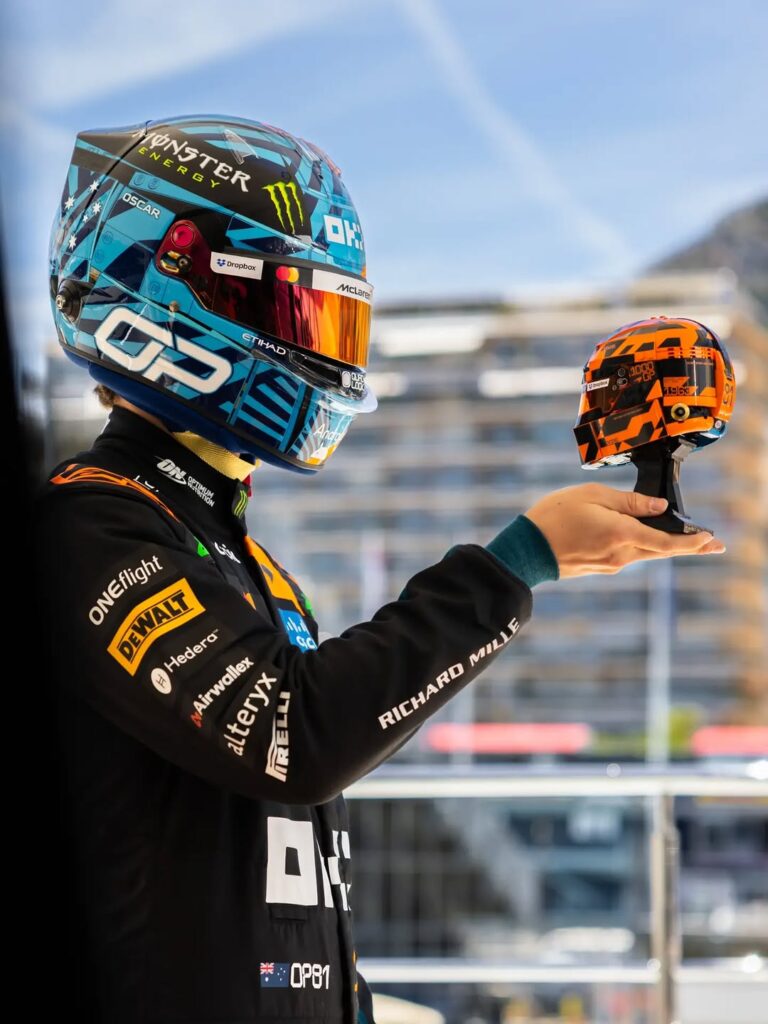
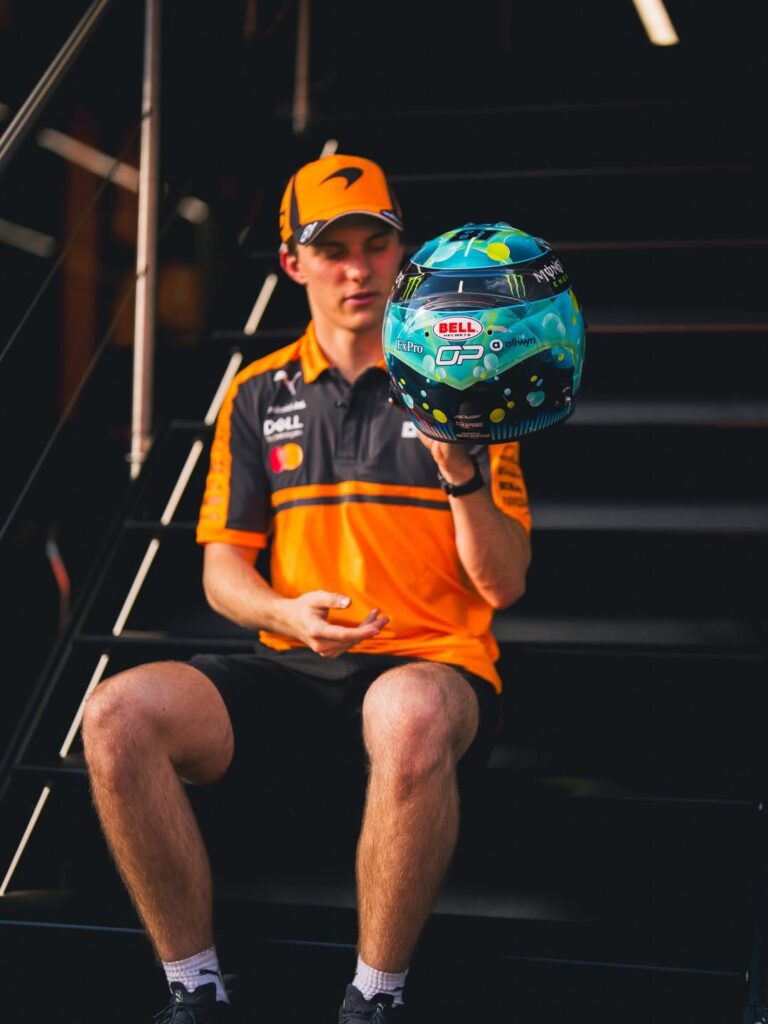
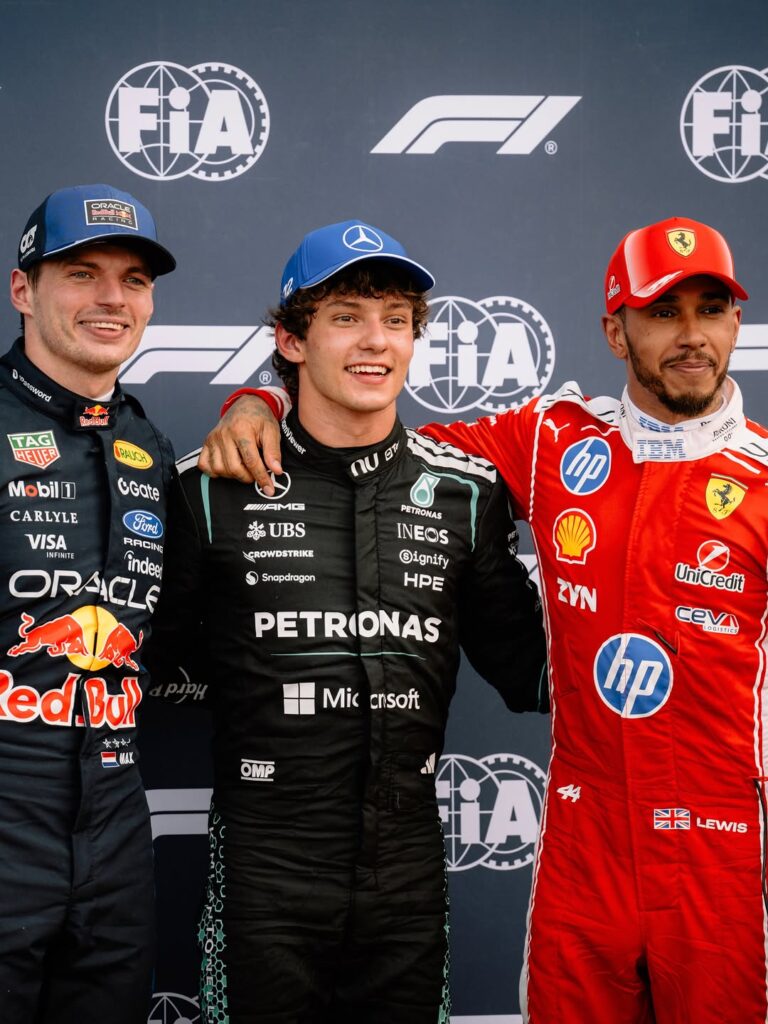
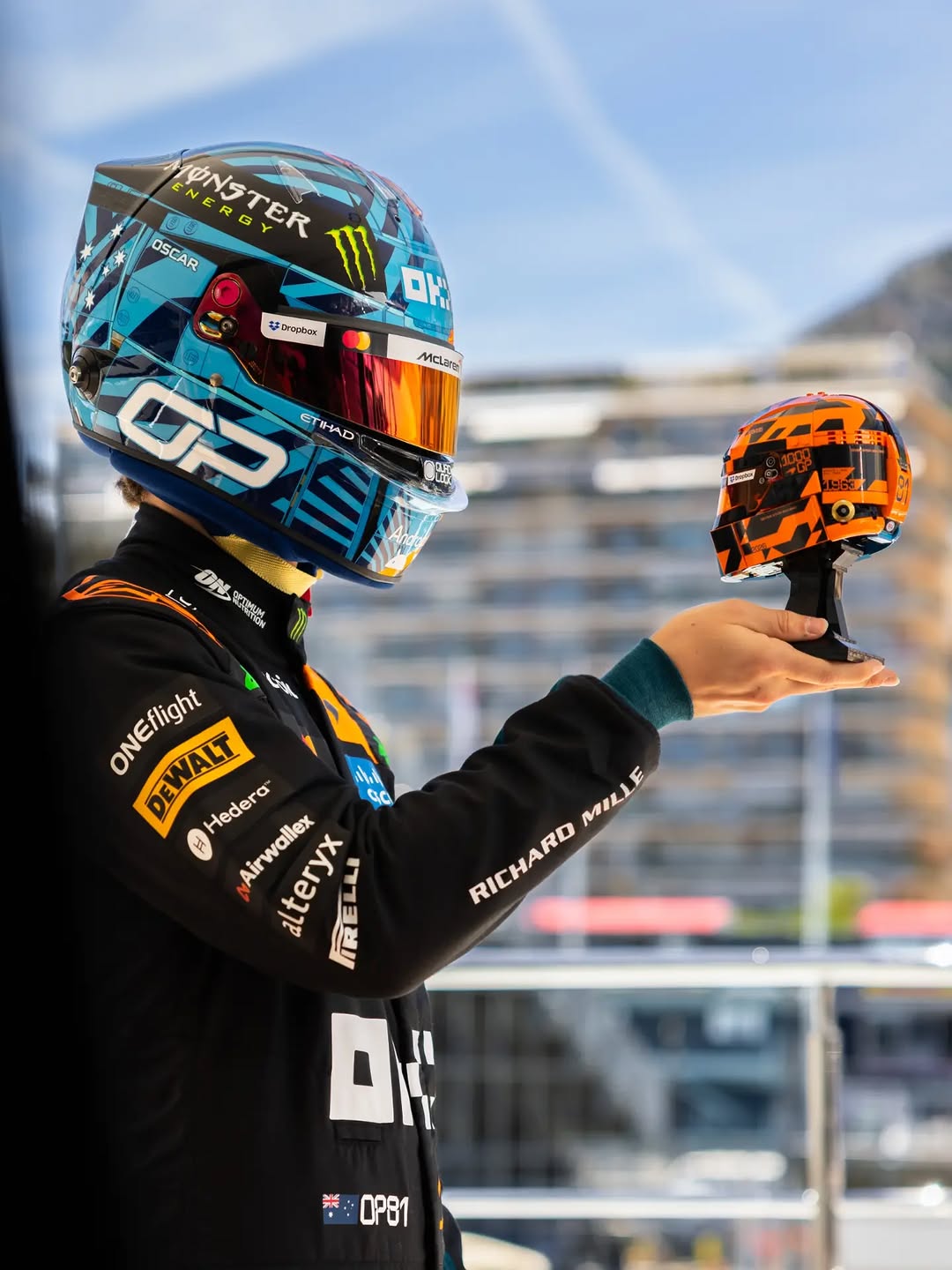
Piastri’s recovery from race leader to a lap 38 disruption is the kind of afternoon that produces the sort of visual moments fans replay for years — a driver still in his helmet and overalls after the chequered flag, the paint scheme catching the podium lights, the small scuffs and marks on a livery that tell the story of contact survived rather than a race ended. Even without needing repairs, the contact left its mark on how the rest of the grand prix played out for both McLaren drivers.
For collectors following the 2026 season, races like this one in Budapest are exactly why full-size 1:1 display helmets built around a specific grand prix carry weight beyond the paint itself — they mark a point in a title fight where track position shifted in real time. Norris taking over the lead from his teammate after the Sainz incident is now part of the story the Hungarian round tells, and it’s the kind of moment that gives a display piece from this weekend genuine context on a shelf.
What it means for the championship picture
Piastri lost the race lead to Norris in the aftermath of the lap 38 contact, turning what had been a controlled afternoon into a fight to limit the damage in the standings. The five-second penalty for Sainz did not restore the position or the time Piastri lost on track, since penalties of this kind are applied to the offending driver’s result rather than used to reorder the drivers directly affected further down the field.
The net effect is that a single moment of reduced visibility for one driver being lapped changed the complexion of the race for the two McLaren drivers fighting at the front. It’s a reminder that in modern F1, blue flag procedure and stewarding calls around visibility can carry consequences well beyond the driver being penalised.
“At the point of the incident, the positioning of the other car relative to the circuit and the other cars meant that the other car was not visible to the driver of the other car prior to the attempted overtake.”
— FIA Stewards’ Statement, 2026 Hungarian Grand Prix
FAQ
Q: Why did Carlos Sainz only get a five-second penalty against Oscar Piastri?
Stewards reduced the standard 10-second collision penalty to five seconds because Piastri was not visible to Sainz in his mirrors immediately before the attempted overtake at Turn 3, even though Sainz had been told by radio that blue flags were out.
Q: What lap did the Sainz and Piastri collision happen on?
The contact occurred on lap 38 of the 2026 Hungarian Grand Prix, as Sainz was fighting Fernando Alonso and Piastri attempted to unlap himself at Turn 3.
Q: Did Oscar Piastri lose the race lead because of the incident?
Yes, the disruption from the contact contributed to Lando Norris taking over the race lead from Piastri shortly afterward.
Q: Was Carlos Sainz found fully responsible for the collision?
Yes, stewards determined Sainz was wholly responsible for the collision, but applied a reduced five-second penalty due to the visibility mitigating factor rather than clearing him of blame.
Q: Did Piastri need repairs after the collision?
No, Piastri was able to continue racing without needing repairs despite the contact with Sainz’s Williams.
Shop Oscar Piastri Collection
Display and collector replicas only. Not certified for protective use. Full-size 1:1 scale.