- Keke Rosberg
- Nigel Mansell
- Jenson Button
- Nico Rosberg
- Gilles Villeneuve
- Mika Hakkinen
- Jackie Stewart
- Charles Leclerc
- Lewis Hamilton
- Max Verstappen
- Lando Norris
- Ayrton Senna
- Michael Schumacher
- Fernando Alonso
- Oscar Piastri
- George Russell
- Kimi Antonelli
- Nico Hülkenberg
- Gabriel Bortoleto
- Pierre Gasly
- Franco Colapinto
- Carlos Sainz
- Oliver Bearman
- Sergio Pérez
- Valtteri Bottas
- Isack Hadjar
- Alain Prost
- James Hunt
Verstappen Flags Grip Crisis at Barcelona: Red Bull’s Friday Struggle in Focus
Posted by
 123Helmets Editorial Team
123Helmets Editorial Team
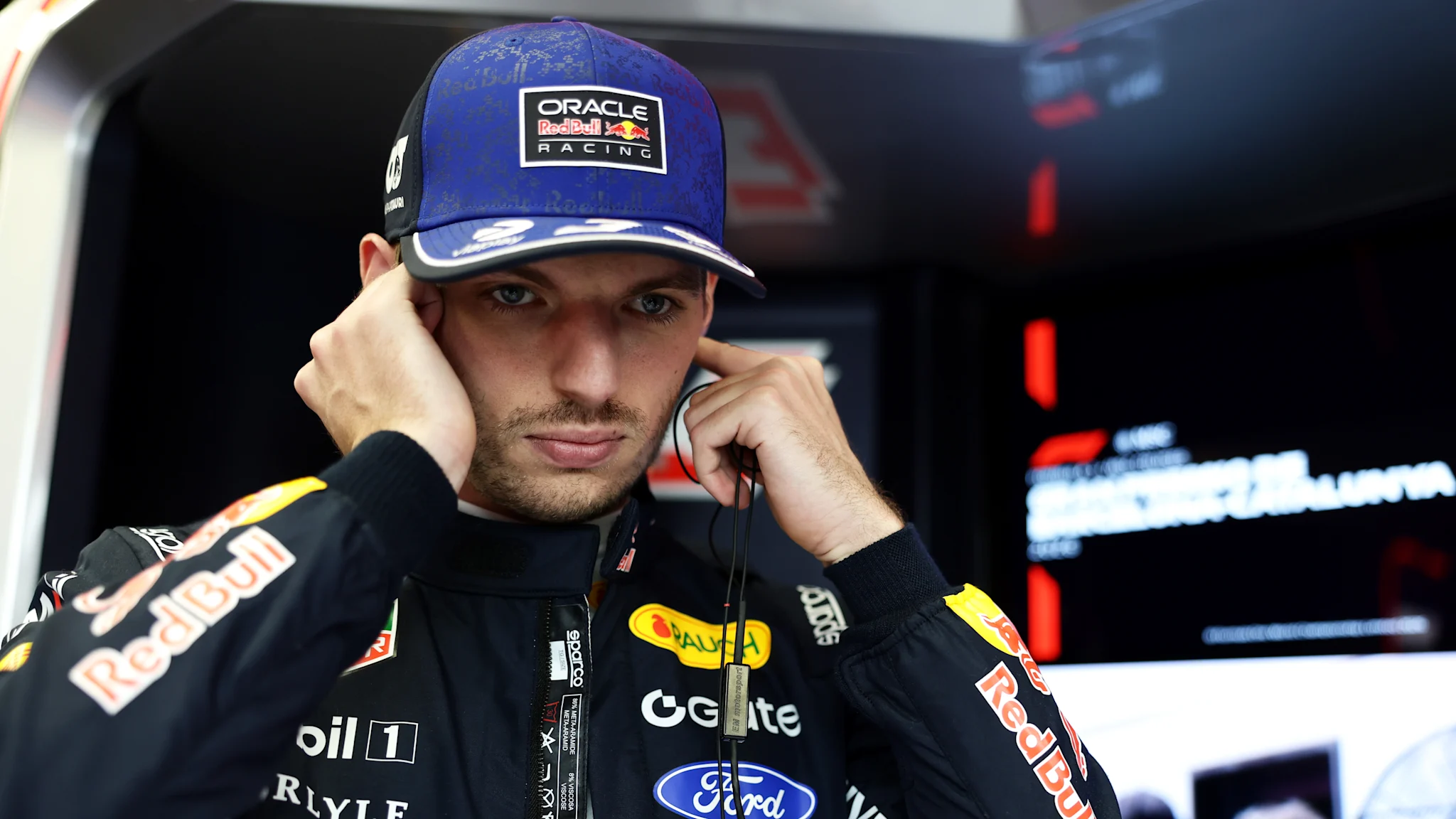
2025 Spanish GP · Friday Analysis
Max Verstappen ended Friday at Barcelona-Catalunya in sixth place after Free Practice 2, openly admitting Red Bull had grip and balance problems across all three tyre compounds — and that the team faces a significant amount of work before qualifying.
Key Takeaways
Verstappen finished FP1 fourth and FP2 sixth, describing a full-day grip deficit across low, medium, and high-speed corners at Barcelona-Catalunya.
All three tyre compounds felt poor to Verstappen, who noted that cars generally lacked traction throughout the session — not exclusively a Red Bull problem.
Red Bull Head of Car Engineering Paul Monaghan confirmed the car was ‘poor in places’, signalling an overnight setup reset was needed before Saturday qualifying.
Verstappen ruled out a front-row start for qualifying on Saturday, a candid assessment that underlines the scale of Red Bull’s single-lap performance gap at the Circuit de Barcelona-Catalunya.
A Friday to Forget: The Numbers Behind Verstappen’s Barcelona Struggle
Circuit de Barcelona-Catalunya has historically been a circuit where setup precision separates the front-runners from the midfield, and Friday, 30 May 2025 made that reality painfully clear for Red Bull. Max Verstappen, the 28-year-old four-time World Champion, completed both Free Practice sessions without ever finding the window the team needed. He ended FP1 in fourth place and FP2 in sixth — positions that, on paper, look respectable but masked a deeper mechanical frustration that Verstappen was unusually candid about over the radio and in the post-session press pen.
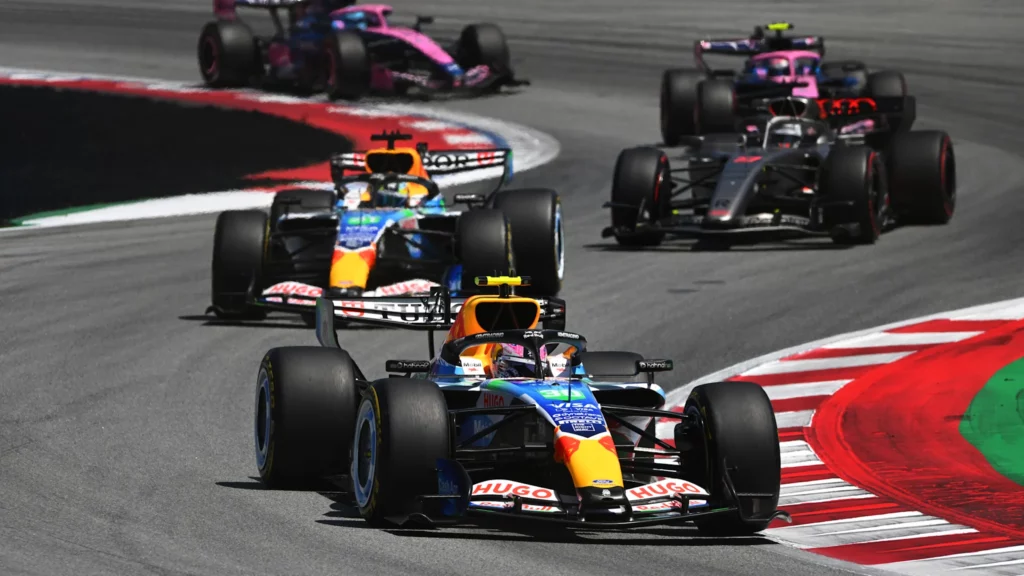
The Circuit de Barcelona-Catalunya’s 4.655 km layout places heavy demands on tyre management across its long, fast middle sector and the punishing final chicane sequence. On a day when ambient and track temperatures were already pressuring rubber performance, Verstappen reported that the Red Bull RB21 simply refused to generate consistent grip at any speed range — not a single sector offered a reprieve.
Paul Monaghan, Red Bull’s Head of Car Engineering, confirmed the picture was not flattering. His comment — ‘The car was poor in places’ — carried more weight given Monaghan’s typically measured public language. When the chief engineer is openly calling out performance deficits, the gap between expectation and reality on the stopwatch is real.
Verstappen’s Own Words: ‘Lacking Grip and Feeling Everywhere’
Verstappen’s post-session analysis was precise and, given the Red Bull communications culture, notably direct. Asked whether the RB21 had found the performance it needed in high-speed sections, he did not soften the response: ‘Yeah, but we lose in the high speeds, the low speeds, the medium speeds, it’s pretty much everywhere. The whole day [we were] just lacking grip and feeling with the car and balance, so that’s something that we’ll try to work on.’
The phrase ‘pretty much everywhere’ is significant. A car that loses time only in one specific speed range is manageable overnight — engineers can adjust ride height, wing angle, or differential mapping to target a known weakness. A car that bleeds lap time across all three speed categories is an order of magnitude harder to cure in a single Friday-night debrief. Verstappen’s language suggested this was exactly the situation Red Bull faced heading into the final hours before FP3.
His report on tyre feel was equally sobering. He tried all three Pirelli compounds across the two sessions and described the experience as uniformly unsatisfying: ‘Nothing felt nice.’ He was careful, though, to contextualise the issue — pointing out that other cars were also drifting and that the entire field seemed to be fighting the rubber in Barcelona’s conditions. ‘The cars are literally drifting around, the tyres are not giving any kind of grip,’ he said, attributing a portion of the problem to circuit-wide conditions rather than Red Bull’s setup alone.
That nuance matters. Verstappen acknowledged that Red Bull’s balance issue was more pronounced than the frontrunners’, but framed it within a wider picture of a tricky tyre window across the garage lane. Ferrari, notably, were on his mind when he assessed where Red Bull stood: ‘I don’t know what happened with Ferrari, but we have a lot of work to do.’
What the Balance Problem Actually Means for Red Bull Overnight
Balance complaints from Verstappen on the radio during a Friday are not uncommon — the setup process at any Grand Prix weekend involves deliberately exploring extremes to build data. What made Barcelona different was the consistency of the feedback across two separate practice hours and three tyre compounds. Engineers can tolerate a car that is difficult on the hard tyre but manageable on the soft; it becomes a harder problem when the driver’s message is identical regardless of rubber.
The 4.655 km Barcelona circuit demands a setup that works under both high-downforce braking zones and high-speed sweepers where mechanical grip and aerodynamic balance interact. If the car is too sensitive to ride height changes — a common issue when teams push new-specification floors — the balance can flip unpredictably between corners of different characters. Verstappen’s description of the RB21 ‘lacking feeling’ points precisely at this kind of inconsistency: the driver cannot predict what the rear end will do, making it impossible to commit fully to a lap.
Monaghan’s confirmation that the team still had ‘room for improvement’ was the polite public version of what was undoubtedly a longer and more detailed internal debrief. Red Bull’s engineering group is one of the fastest in the paddock at diagnosing overnight setup changes, but the scale of Verstappen’s deficit — sitting sixth while rivals showed stronger single-lap pace — meant that incremental adjustments might not be enough. A more fundamental setup direction change before qualifying was on the table.
Front Row Ruled Out: Verstappen’s Qualifying Reality Check
When a driver of Verstappen’s calibre tells the media that a front-row start is definitively not possible — not ‘unlikely’, not ‘a long shot’, but ‘No, for sure not’ — it is worth paying close attention. Verstappen has historically been among the most aggressive qualifiers on the grid, using Red Bull’s aerodynamic efficiency to extract maximum single-lap pace on Saturday afternoons. His flat refusal to entertain a front-row prediction at Barcelona was a clear-eyed reading of where the car stood after eight hours of data collection.
The qualifying format at Barcelona follows the standard Q1-Q2-Q3 knockout structure. With 20 drivers and a lap count pressure that means errors in Q3 cannot be repeated, starting from a position of balance uncertainty is genuinely damaging. If the car cannot be trusted at the limit across all three speed ranges, the driver has to drive conservatively below their natural commitment level — which costs tenths in a session where the top five are separated by hundredths.
Verstappen’s reference to Ferrari was pointed. Ferrari’s Friday pace at Barcelona had shown enough single-lap potential to suggest they would be genuine front-row contenders. If Red Bull could not solve the balance issue overnight, the gap on the Saturday timesheet would likely be greater than the Friday practice positions suggested.
The RB21 Helmet and Livery as a Collector Moment: Display Worth Remembering
Away from the engineering frustrations on track, the Barcelona weekend produced imagery that every Red Bull and Verstappen collector will recognise instantly. The RB21’s dark navy and Pantone-precise oracle red livery, combined with Verstappen’s race helmet in its characteristic Dutch orange base with the navy peak and Red Bull wing graphics, created one of the more visually striking paddock combinations of the 2025 season calendar.
A full-size 1:1 display replica of Verstappen’s 2025 race helmet captures this moment with the kind of fidelity that a photograph alone cannot replicate. Produced at 1:1 scale — matching the actual dimensions of a race-spec lid — collector replicas at exhibition quality carry the sponsor placement, helmet vent geometry, and visor surround detail that define the visual identity Verstappen brings to each race weekend. A typical display replica visor sits at approximately 3 mm thickness and the helmet shell itself spans the characteristic 300 mm internal width of a modern full-face race design.
Barcelona 2025 is precisely the kind of weekend that generates long-term collector significance: a champion under pressure, a team fighting back from adversity, and a vivid livery combination that reads clearly from a display shelf or cabinet. The four-time World Championship titles Verstappen secured between 2021 and 2024 mean that any race-specific helmet from the 2025 season carries historical weight regardless of the weekend’s on-track result. Display pieces tied to specific race weekends — especially those marked by notable events like a public engineering admission of car difficulties — tend to hold their collector relevance in a way that generic season pieces do not.
For collectors building a chronological display of Verstappen’s career, the Spanish GP 2025 piece sits at a particularly interesting inflection point: a champion being tested, a team recalibrating, and a helmet design that remains unmistakably his own across 27 rounds of a deeply competitive season.
What Friday Means for the Rest of the Barcelona Weekend
Friday practice data at Barcelona is rarely wasted — the circuit is well-understood by every team, and the long tyre runs collected in FP2 provide the race strategy group with fuel-load-corrected pace numbers that shape Sunday’s pit window decisions. Even on a difficult Friday, Red Bull will have gathered useful information about tyre degradation rates across all three compounds, which remains valuable for a race over 66 laps on the 4.655 km Circuit de Barcelona-Catalunya.
The overnight question for Red Bull’s engineers was whether the balance problem was fundamentally aerodynamic — requiring wing and floor parameter changes that might compromise race pace — or whether it was a mechanical setup issue addressable through suspension geometry and damper settings. Verstappen’s report that the issue existed across all speed ranges slightly favoured an aerodynamic root cause, which is the harder type to fix between Friday night and Saturday morning without losing something elsewhere in the performance envelope.
Monaghan’s public language, characteristically dry, pointed to a team that understood the problem was real but remained confident in the process. Red Bull have a documented history of recovering strongly from difficult Fridays at tracks where setup sensitivity is high — Silverstone 2023 and Hungary 2022 both featured troubled practice sessions followed by competitive qualifying appearances. Barcelona 2025 presented the same challenge, with Verstappen’s own engineering read suggesting the gap to the leaders was real but not insurmountable if the overnight work produced the right direction change.
Whether that gap closed by Saturday afternoon was the story that mattered for the race weekend itself. But for collectors and display enthusiasts, the Friday in Barcelona already provided the images, the quotes, and the on-track drama that make a specific race helmet more than a decorated shell — it makes it a document of a moment in the career of one of the sport’s most watched drivers.
“We lose in the high speeds, the low speeds, the medium speeds, it’s pretty much everywhere. The whole day [we were] just lacking grip and feeling with the car and balance, so that’s something that we’ll try to work on.”
— Max Verstappen, FP2 post-session interview, Barcelona-Catalunya 2025
“The car was poor in places. It’s fine — we have room for improvement.”
— Paul Monaghan, Head of Car Engineering, Red Bull Racing, Barcelona 2025
FAQ
Q: What position did Max Verstappen finish in Free Practice 2 at Barcelona 2025?
Verstappen finished sixth in Free Practice 2 at the Circuit de Barcelona-Catalunya. He had ended FP1 in fourth place earlier in the day.
Q: What specific problems did Verstappen report with the Red Bull RB21 on Friday?
Verstappen reported a lack of grip and car balance across all three speed ranges — low, medium, and high speed — throughout both practice sessions. He also noted that none of the three Pirelli tyre compounds produced a satisfying feel.
Q: Did Verstappen think he could compete for pole position at Barcelona 2025?
No. Verstappen explicitly ruled out a front-row start for qualifying, stating ‘No, for sure not’ when asked about his prospects, and acknowledged that Red Bull had ‘a lot of work to do’ before Saturday.
Q: What is a 1:1 full-size display replica F1 helmet?
A 1:1 full-size display replica is a collector and exhibition piece produced at the exact dimensions of a real race helmet. It is designed for display purposes only — it is not certified for protective use and should not be worn during any motorsport or road activity.
Q: Why does the Barcelona 2025 weekend make Verstappen’s helmet a notable collector item?
Collector significance often attaches to moments of narrative weight: a four-time World Champion openly admitting car difficulties, a team engineering chief confirming the car was ‘poor in places’, and a visually distinctive Dutch orange and navy helmet design against Red Bull’s 2025 livery all combine to make a Barcelona 2025 display replica a precise record of a specific point in Verstappen’s career.
Shop Max Verstappen Collection — full-size 1:1 display replicas of Verstappen’s race helmets, produced at exhibition quality for collectors and display enthusiasts.
Display and collector replicas only. Not certified for protective use. Full-size 1:1 scale.