
Blog
Williams Blockade in Monaco: When Team Tactics Replace Racing
 123Helmets Editorial Team
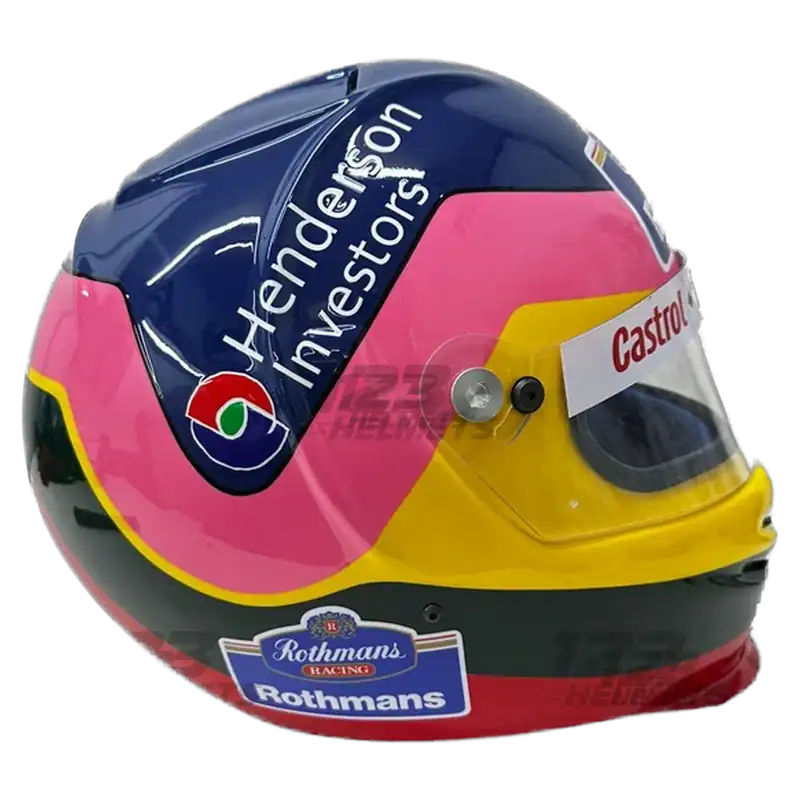
Monaco turned into a chess match where Williams used Carlos Sainz as a rolling roadblock to gift Alex Albon a free pit stop. The strategy worked, the points were collected, and the debate over team tactics on the Principality’s narrow streets reopened — with collector-worthy livery moments along the way.
Key Takeaways
Williams used a deliberate blocking tactic through Sainz, with Hulkenberg lapping 2 seconds per lap faster on fresh hard tyres fitted on lap 12.
After Norris’ retirement the roles flipped: Sainz inherited 10th place and the final points-paying position.
George Russell tried a backing-up trick to absorb a drive-through penalty but finished 12th, outside the points.
The blue-and-white Williams FW livery and Albon’s Thai-flag helmet remain among the most requested 1:1 display pieces from the 2024–2025 era.
The opening stint: Albon 10th, Sainz 11th
The Monaco Grand Prix started with the two Williams cars running nose-to-tail in the lower points zone. Alex Albon held 10th, Carlos Sainz sat 11th, and the team knew from the first ten laps that the medium tyres would not last against any driver willing to gamble on an early stop.
That gamble came from Nico Hulkenberg. The Audi-branded Sauber driver pitted on lap 12, switching from medium to hard rubber. The decision was immediate and ruthless: in the following laps, Hulkenberg was on average 2 seconds per lap quicker than the two Williams cars still circulating on their starting compound.
By extrapolation, Hulkenberg’s pace put him on a virtual run to 7th place. If the front-runners cycled through their stops cleanly, the German could have been racing Pierre Gasly and Lando Norris for real positions. From a Williams pit-wall perspective, that was a problem worth solving with tactics rather than lap time.
Why Monaco rewards strategy over speed
Monaco’s 3.337 km layout offers only one realistic overtaking spot, the Nouvelle Chicane, and even that requires a major tyre delta or a mistake. Once the field settles, the race becomes a queue. That reality is the backdrop to everything Williams did next.
The Sainz blockade: a free stop for Albon
Williams’ response was direct. Sainz slowed his pace to hold up the cars behind, creating a buffer of clean air ahead of Albon. With nothing chasing him within pit-window range, Albon could pit, take fresh tyres and rejoin without losing track position. It was, in effect, a free stop.
From a sporting standpoint it is hard to argue with the execution. The Grove team grabbed track position the only way Monaco allows: by manufacturing a gap from inside the team. From a spectator standpoint, it produced several laps of cars driving well below their potential — a pattern that has become familiar on this circuit.
The role swap after Norris’ retirement
When Lando Norris retired, the order shifted. Sainz, who had absorbed the blocking duty, was promoted into 10th place — inside the points. The strategy that originally served Albon now paid Sainz back. Williams left Monaco with both cars in the top eleven and a points haul that pure pace would not have delivered.
Numbers from the Williams stint
- Albon running order at the start of the blockade: 10th
- Sainz running order at the start of the blockade: 11th
- Hulkenberg tyre switch: lap 12, medium to hard
- Average pace delta against Williams: 2 seconds per lap
- Sainz final classified result after Norris DNF: 10th, inside the points
Russell’s backing-up gamble at the restart
The race took a second strange turn after the red flag. George Russell had a drive-through penalty hanging over him, with a deadline of no later than 3 laps after the restart to serve it. His plan was inventive: drive an extremely slow opening lap to bunch the field, then unleash a flat-out second lap to build a gap big enough that serving the penalty would still leave him inside the points.
It did not work. Russell crossed the line 12th, outside the scoring positions, but the idea itself was a textbook example of how Monaco rewards lateral thinking over outright speed. The Briton tried to convert a penalty into a strategic asset, which is the kind of move that only this circuit produces.
The wider problem with Monaco
The Williams blockade and Russell’s backing-up trick share a single root cause. Overtaking at Monaco remains close to impossible even under current car regulations. The grand prix becomes a strategic exercise: pit windows, undercuts, blockades, safety-car timing. For tactics fans it is fascinating. For viewers who tune in for wheel-to-wheel racing, it is a long Sunday.
Display-worthy helmet and livery moments
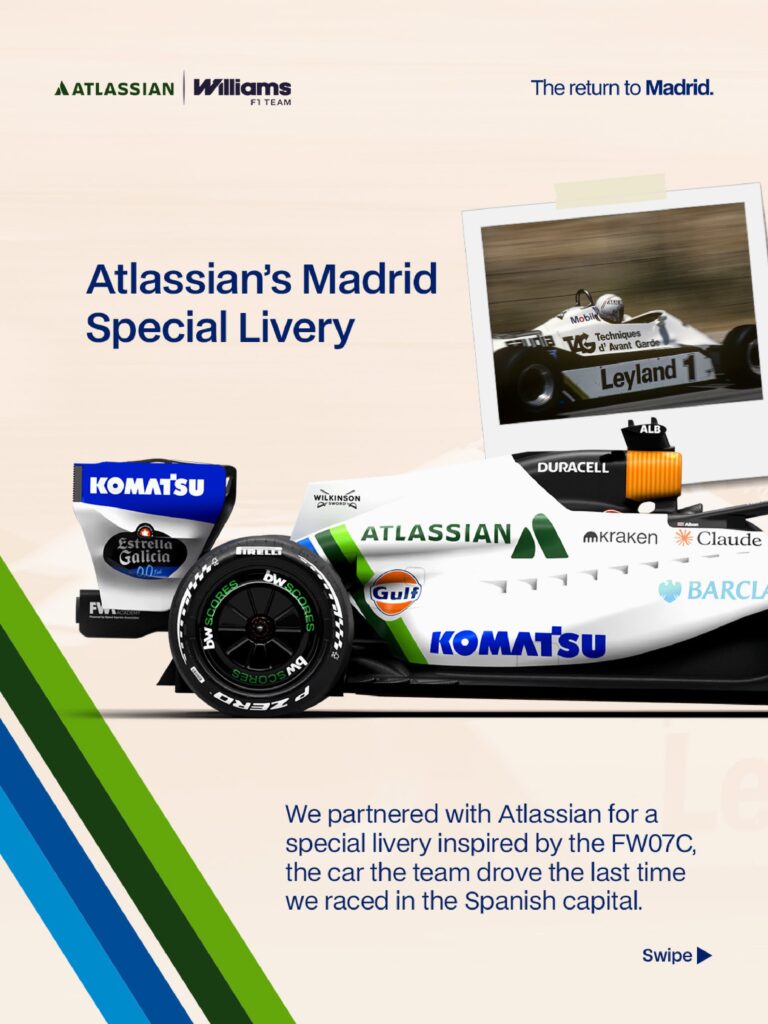
Even when the racing stalls, Monaco delivers visual material that collectors care about. The Williams FW livery, with its deep blue base, white flanks and yellow accents, photographs especially well against the Armco and the harbour backdrop. For full-size 1:1 display helmets, the lighting between Casino Square and the tunnel exit is exactly what makes Monaco the most replicated weekend on the calendar.
Alex Albon’s helmet
Albon’s lid keeps the Thai red, white and blue flag bands across the crown, with a contrasting visor surround. On a display stand at 29 × 25 × 35 cm including the plinth, the design reads cleanly from across a room — the kind of strong block colour that collector pieces are built around.
Carlos Sainz’s helmet
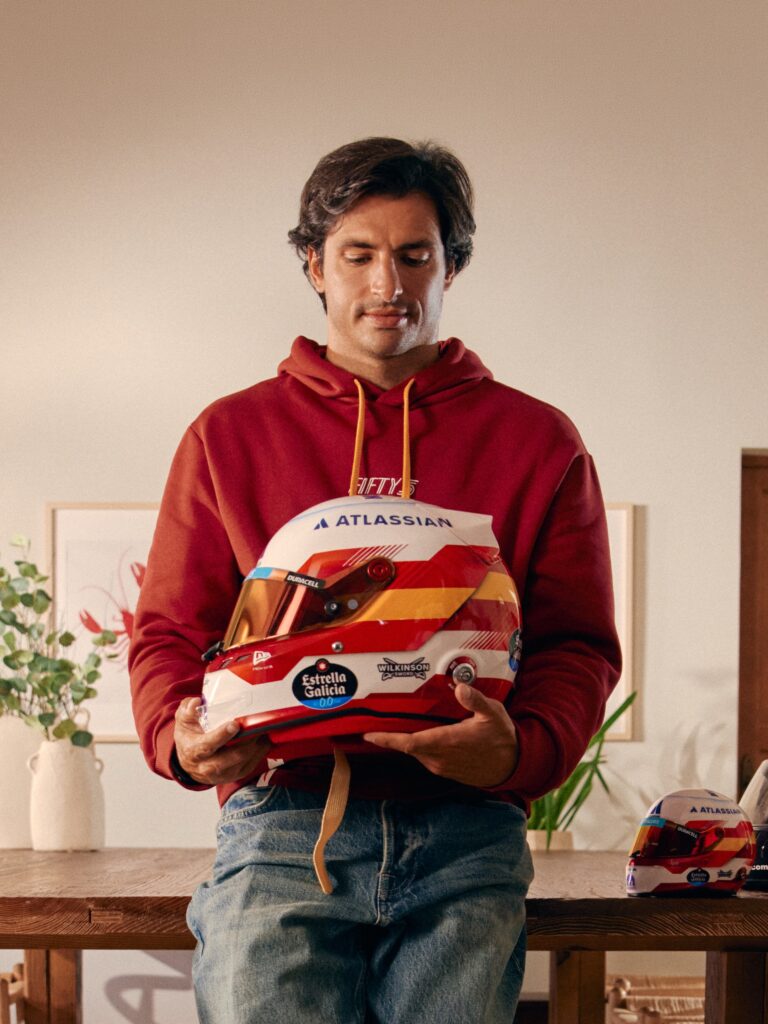
Sainz brought his signature yellow-and-red Spanish flag treatment to his first Monaco weekend in Williams blue. The contrast between the personal helmet palette and the team livery is exactly what makes 1:1 replica pieces from team-change seasons so collectable — they capture a specific, unrepeatable visual moment.
What makes a Monaco helmet a strong display piece
- Full-size 1:1 scale shell, typically around 1.2–1.5 kg for an exhibition replica
- Multi-layer paint finish — base, colour coats, decals, clear lacquer
- Tinted visor with correct tear-off posts for photographic accuracy
- Team and driver decals positioned to match the race-weekend specification
These are exhibition pieces for collectors and display use only. They are not certified for protective use of any kind.
What the Williams result means for the championship picture
Points in Monaco are heavier than points anywhere else because they are harder to earn. Sainz’s 10th place, secured through team orders rather than overtakes, still counts the same as a clean pass at Spa. For Williams, sitting in the constructors’ midfield fight, every single point of that kind is part of the case for the season.
The blockade also showed something else: the team is willing to use both cars as a single tactical unit. That is a sign of a constructor that thinks of itself as a points-scoring operation again, not a back-of-grid struggle. For collectors, that translates into stronger demand for current-spec Williams helmets and 1:1 display pieces, because the cars are appearing in the points pages of the results sheet rather than the lapped-runners section.
Should team tactics like this be banned in Monaco?
There are two honest answers. One: the rules allow it, the teams will use it, and any team that refuses to play the strategic game on this circuit will finish behind those that do. Two: if the spectacle of the Monaco Grand Prix depends on cars deliberately driving slowly, the regulation set or the circuit layout itself has a problem that goes beyond any one team’s pit wall.
The Williams blockade did not break any rule. It simply made the underlying issue impossible to ignore.
“Hulkenberg was, on average, 2 seconds per lap faster than the two Williams drivers after his lap 12 stop — that is the pace gap Williams had to neutralise without overtaking anyone.”
— 123Helmets editorial analysis
FAQ
Q: Did Williams break any rule with the Sainz blockade?
No. Holding station and managing pace between team-mates is permitted. The tactic was within the regulations — the debate is about whether Monaco’s layout makes such tactics necessary in the first place.
Q: Why was Hulkenberg so much faster than the Williams cars?
He pitted on lap 12 and switched from medium to hard tyres while Albon and Sainz stayed out on their starting compound. The fresh-rubber advantage averaged 2 seconds per lap.
Q: Where did Sainz and Albon finish?
After Norris’ retirement, Sainz was classified 10th, inside the points. Albon’s free pit stop earlier in the race was the move that set up the team’s points result.
Q: What happened with George Russell’s penalty?
Russell had a drive-through penalty to serve within 3 laps of the restart. He tried to back up the field on the first lap and sprint on the second to build a gap. The plan failed and he finished 12th.
Q: Are the Williams display helmets you sell wearable?
No. All pieces are full-size 1:1 collector and display replicas only. They are not certified for protective use and are intended as exhibition items for collectors, studios and showrooms.
Shop Williams Helmets
Display and collector replicas only. Not certified for protective use. Full-size 1:1 scale.
This article was written with the help of AI tools. Editorial policy