- Keke Rosberg
- Nigel Mansell
- Jenson Button
- Nico Rosberg
- Gilles Villeneuve
- Mika Hakkinen
- Jackie Stewart
- Charles Leclerc
- Lewis Hamilton
- Max Verstappen
- Lando Norris
- Ayrton Senna
- Michael Schumacher
- Fernando Alonso
- Oscar Piastri
- George Russell
- Kimi Antonelli
- Nico Hülkenberg
- Gabriel Bortoleto
- Pierre Gasly
- Franco Colapinto
- Carlos Sainz
- Oliver Bearman
- Sergio Pérez
- Valtteri Bottas
- Isack Hadjar
- Alain Prost
- James Hunt
Wolff Sets the Rules: Russell, Antonelli and the Fight for Barcelona Glory
Posted by
 123Helmets Editorial Team
123Helmets Editorial Team
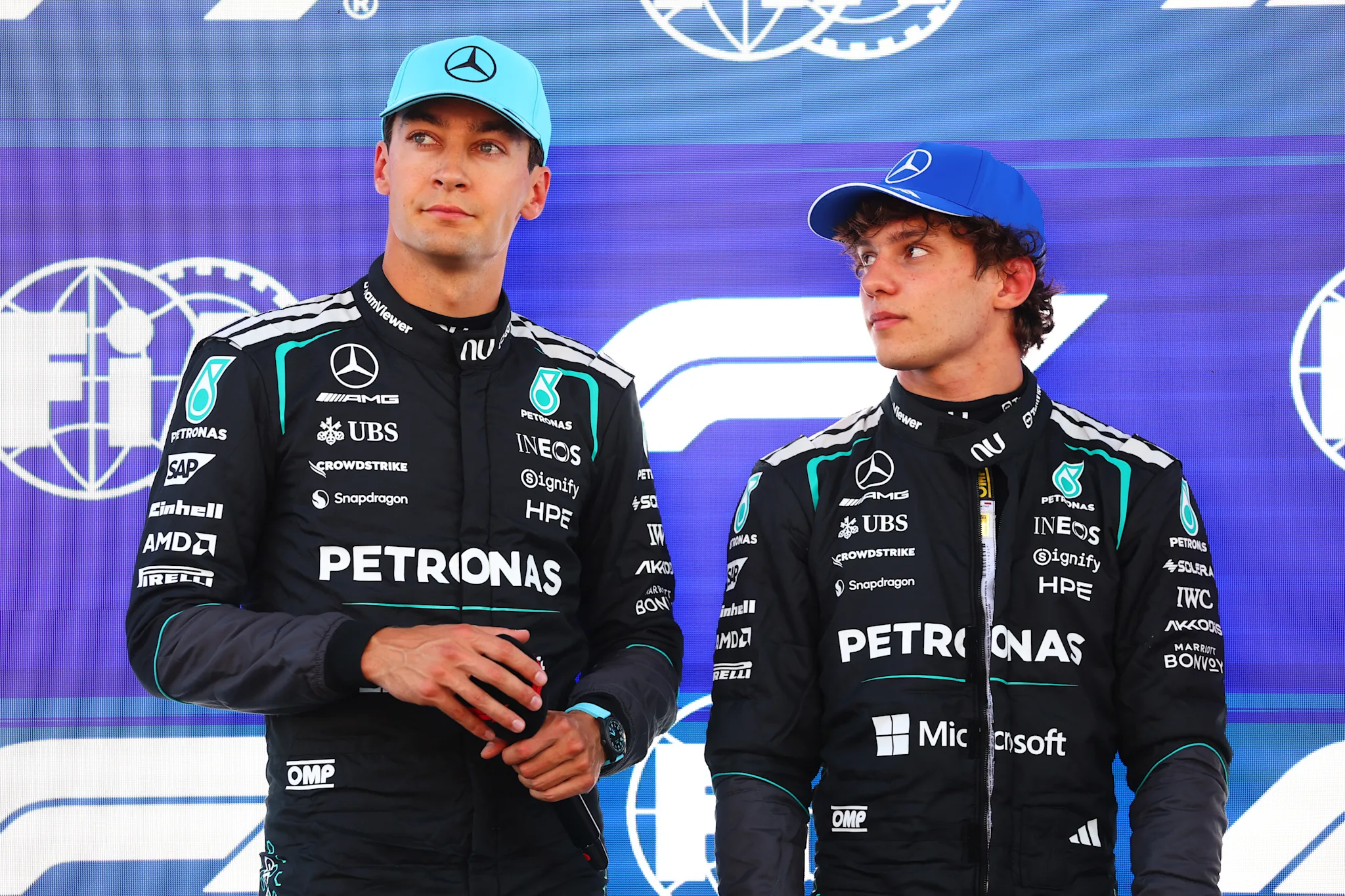
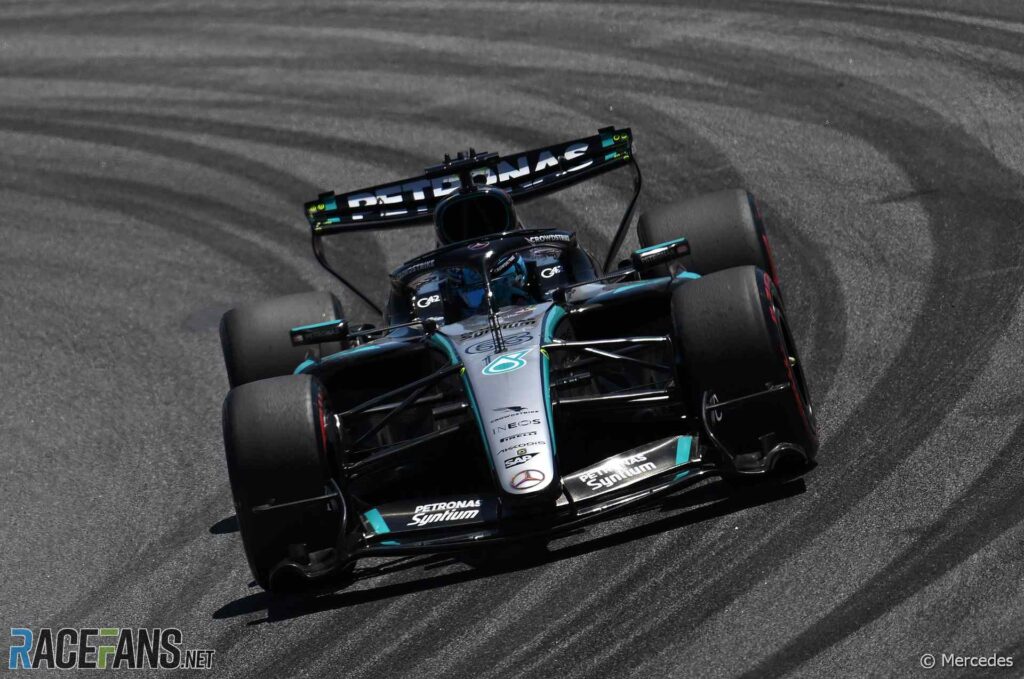
Mercedes Barcelona 2025
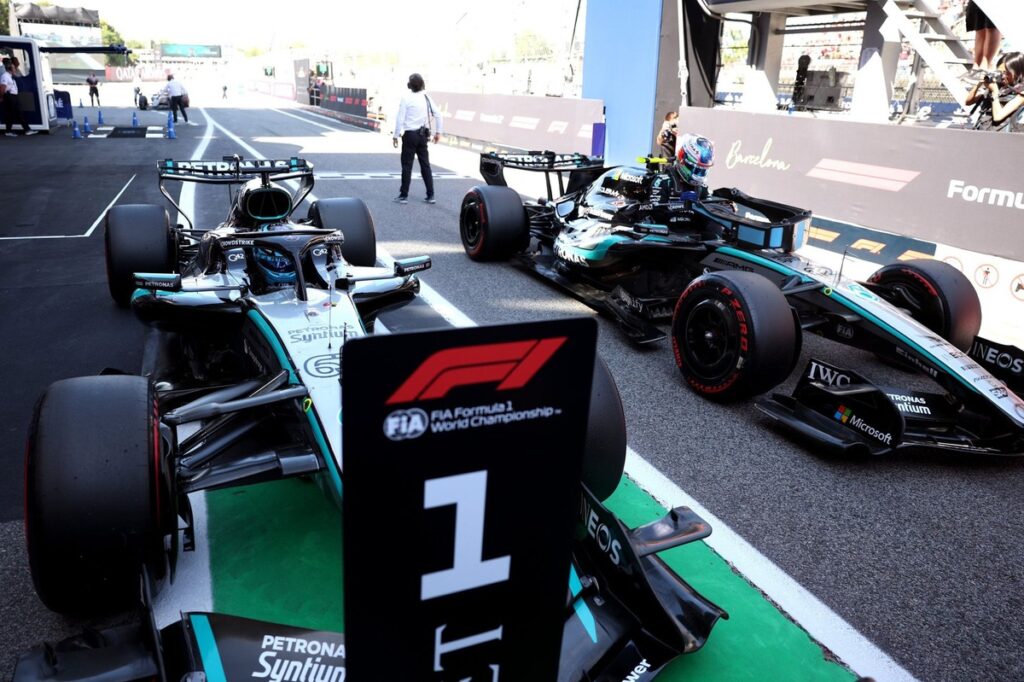
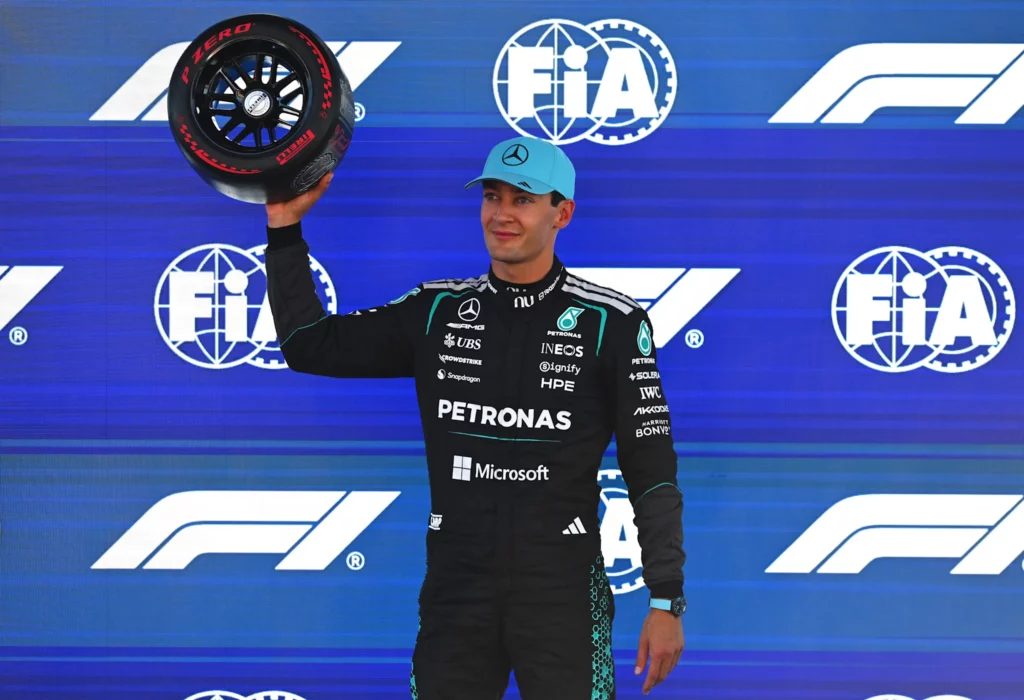
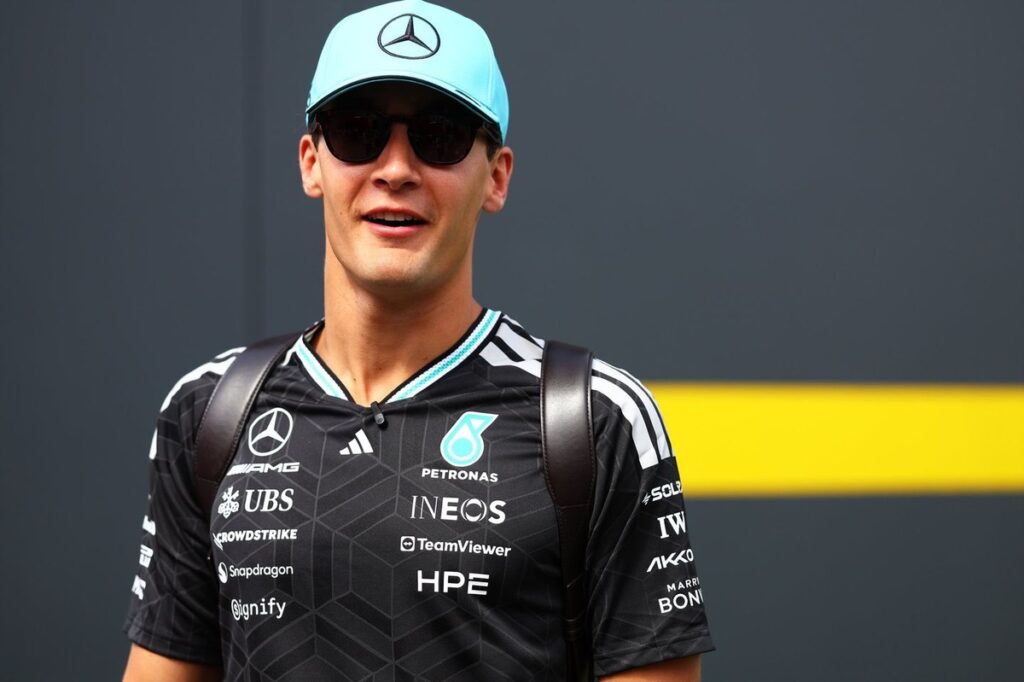
George Russell starts from pole at Circuit de Barcelona-Catalunya, 0.319 seconds clear of team-mate Kimi Antonelli, with Toto Wolff already drawing lessons from the 2016 Spanish Grand Prix to keep both Silver Arrows pointing the right way through Turn 4.
Key Takeaways
Russell secured his third pole position of the 2025 season, beating Antonelli by 0.319 seconds in Barcelona qualifying.
Wolff’s priority is zero contact between the Mercedes pair, citing the 2016 Hamilton-Rosberg collision at the same corner — Turn 4 — as the blueprint for what to avoid.
Hamilton split the two Mercedes in P2, putting Ferrari directly between Russell and Antonelli on the grid.
This Barcelona pole is the subject of the full-size 1:1 collector replica helmet featured in this design breakdown — a display piece capturing a landmark qualifying moment.
Pole Position and the Grid Order That Changes Everything
George Russell qualified on pole position for the Barcelona-Catalunya Grand Prix with a margin of 0.319 seconds over team-mate Kimi Antonelli, who was placed third on the grid. That gap looks comfortable on paper, but the Ferrari of Lewis Hamilton sitting second — sandwiched between the two Mercedes — turns a routine Silver Arrows front-row lockout into something far more complex before a single race lap is run.
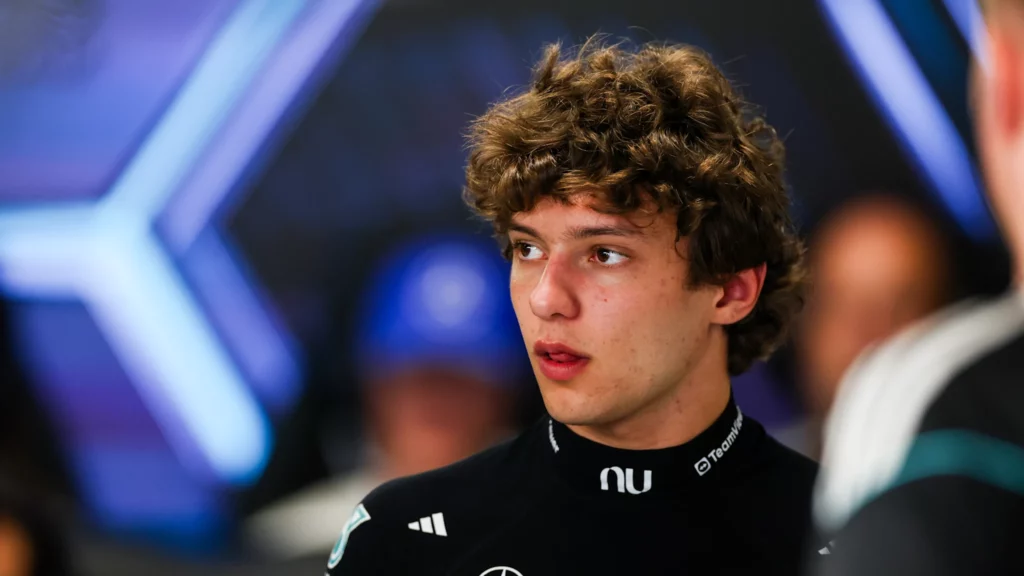
Russell’s pole was his third of the 2025 season, a run of form that underlines the continued speed of the W-series package around the fast, flowing corners of the Spanish venue. Antonelli, despite sitting 0.319s back in qualifying, starts close enough to benefit from a direct slipstream through the opening straight, a detail that Wolff himself noted with the kind of resigned humour only a team principal can manage: “more grey hair.”
For collectors and design enthusiasts, this is the qualifying moment the full-size 1:1 replica helmet commemorates — a snapshot of Russell at the top of the timing sheet in Spain, third pole of his season confirmed in the final sector of a high-pressure lap.
Wolff’s Rules of Engagement: No Contact, No Defending
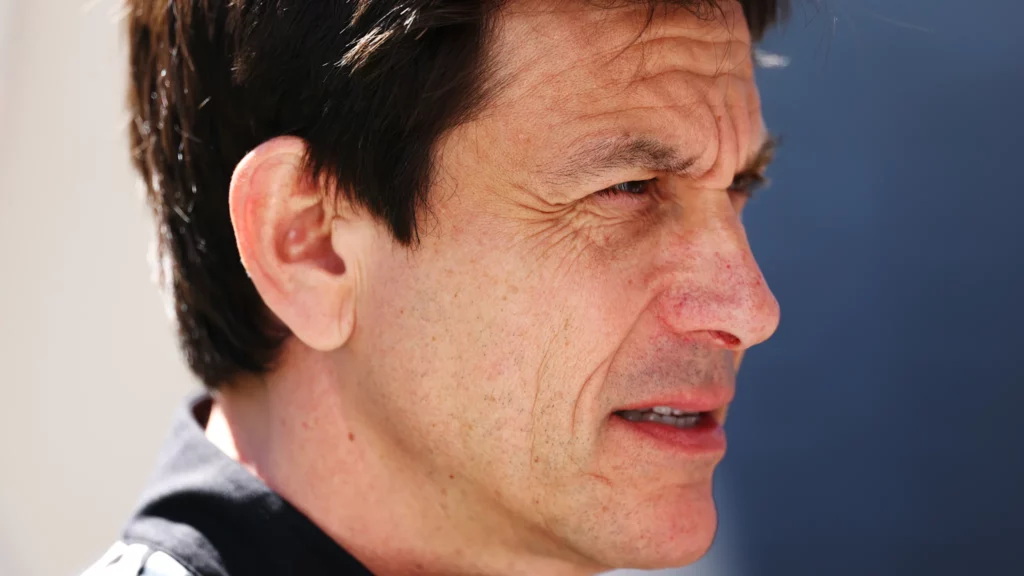
Toto Wolff’s stated primary directive for the Barcelona race is simple: no contact between the two Mercedes drivers. He expanded on that principle in a pre-race interview with F1 TV, drawing the distinction between a team that races forward and one that starts to protect what it already has.
“If you think conservatively, you need to think forwards and not start protecting points — it’s like a football team that starts to defend rather than attack.”
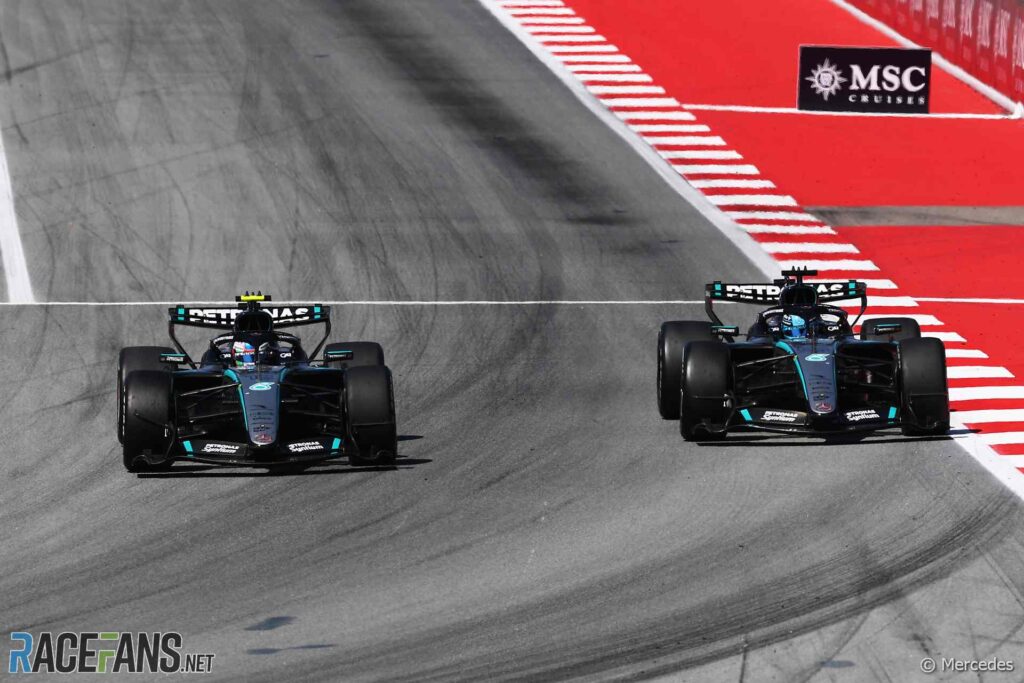
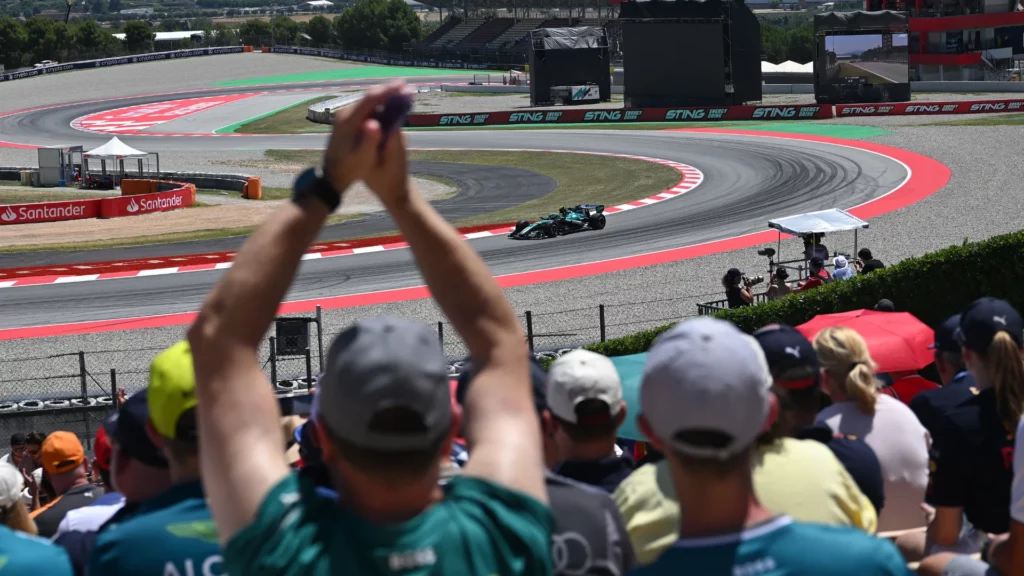
The framework Wolff is working within is shaped directly by events nine years ago at this same circuit. In the 2016 Spanish Grand Prix, Hamilton and Nico Rosberg made contact at Turn 4 — the fast right-hander that Wolff describes as “our famous corner” — and both cars ended up beached in the gravel. Two races lost in a single sequence of understeer and misjudgement. The memory has not faded.
“I’ve already had two cars stranded in the gravel bed in 2016,” Wolff noted, before outlining his ideal opening lap: survive Turn 1, Turn 2, and Turn 3, then navigate Turn 4 without incident. That is the entire plan reduced to its essentials. Get through the first sector intact and the race can be managed. Fail there, and the points damage is potentially season-defining.
Russell vs Antonelli: A Championship Statement at Stake
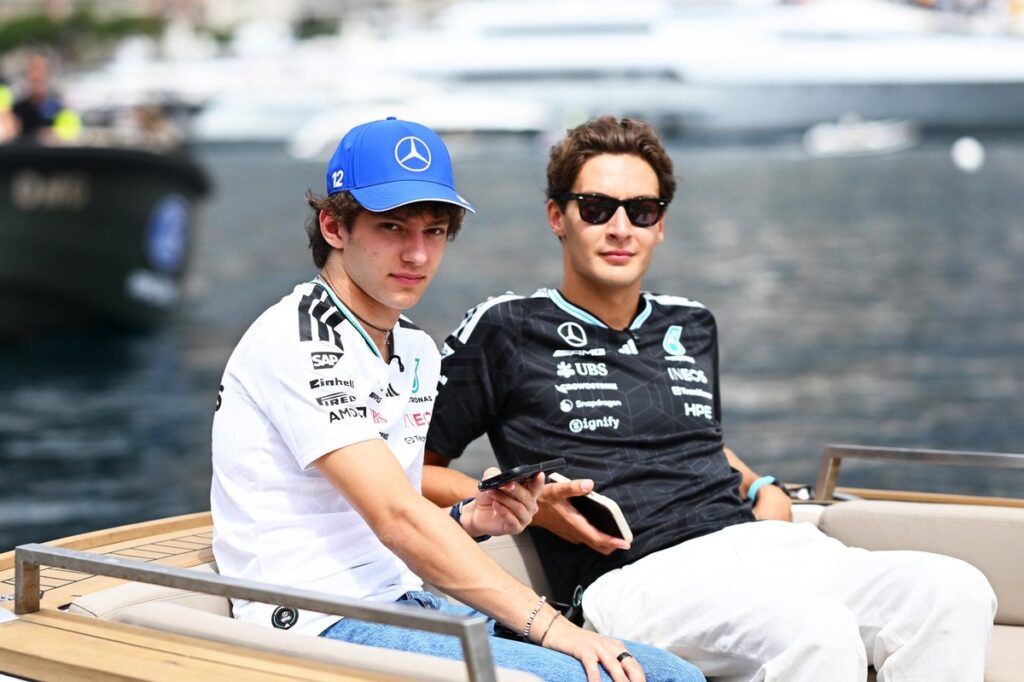
Russell and Antonelli are not just racing for position in Barcelona — each driver is making a case for who leads Mercedes’ championship direction. Wolff acknowledged this openly, describing the mindset of both men in terms that make clear no team orders are being issued at the start.
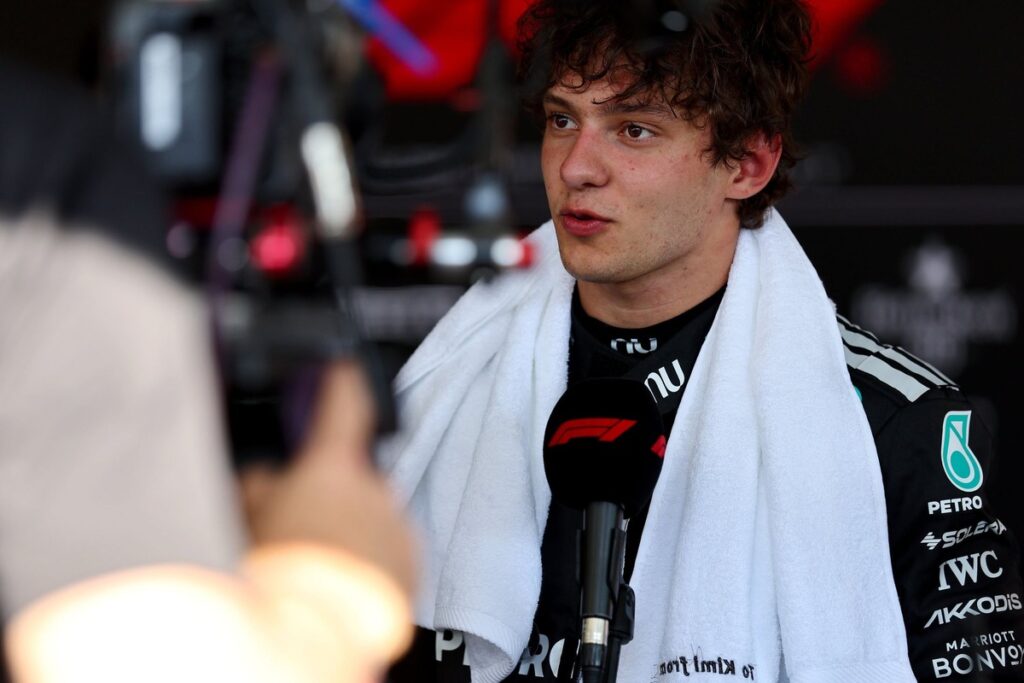
“George wants a good result to say ‘I’m the one, don’t discount me’,” Wolff told F1 TV. On the other side: “Kimi will want to show that he’s the one.” That dual ambition on a single team creates the precise tension that makes this race start one of the most watched in the current grid cycle.
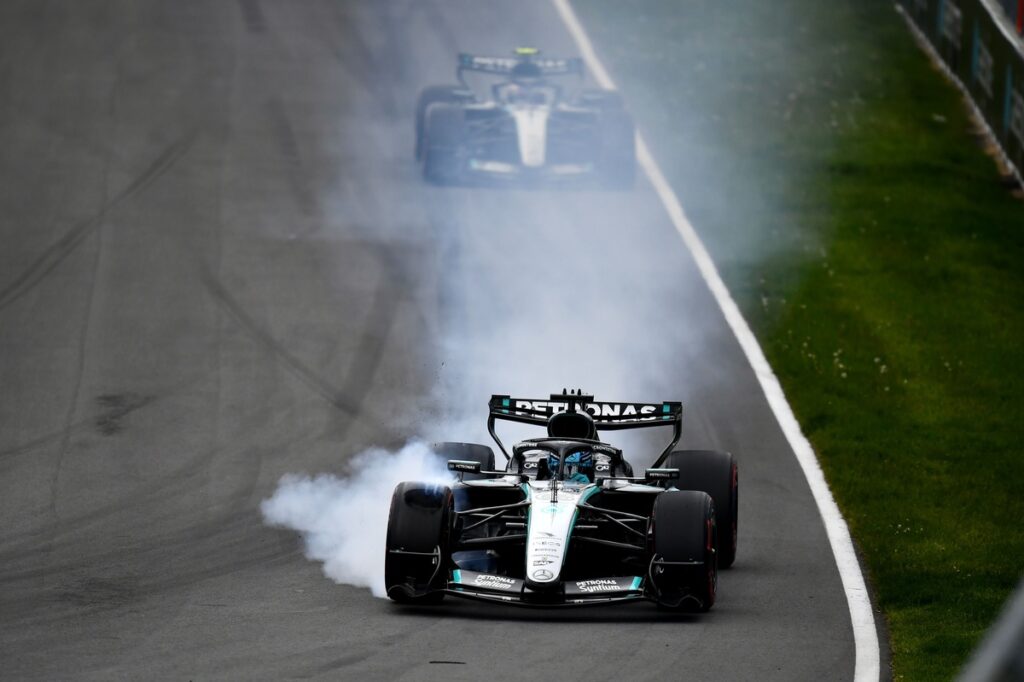
The two drivers previously clashed at the Canadian Grand Prix earlier in 2025, an incident that prompted Wolff to review how much latitude he gives them when racing each other. Barcelona is the first major test of whatever conclusions that review produced. The fact that Antonelli starts third — directly behind Russell but with a slipstream advantage off the line — means the situation at Turn 1 is live from the moment the lights go out.
Wolff’s position is not to neutralise either driver. Antonelli “is going to be on the attack and that’s fine,” he said. The qualifier is the one that matters: fine, as long as there is no contact.
The Hamilton Factor: Ferrari Between the Silver Arrows
Lewis Hamilton’s last-gasp qualifying lap to take second place put Ferrari directly between the two Mercedes cars on the starting grid, a physical and strategic complication that Wolff had not fully anticipated before the session ended. Hamilton starting P2 means Russell cannot simply focus on managing Antonelli — there is a Ferrari to deal with first, driven by a seven-time world champion who, by Wolff’s own assessment, is “in such a good frame of mind that he’s going for the win.”
That reading of Hamilton’s mental state is worth noting. Wolff, who spent over a decade working with Hamilton at Mercedes, does not use words like that casually. A Hamilton going for the win from P2 on a circuit he has won at multiple times is a genuine threat to Russell’s pole conversion, not a theoretical one.
The grid layout — Russell, Hamilton, Antonelli — means Mercedes faces a split threat scenario. If Hamilton leads at Turn 1, Russell is behind a Ferrari. If Antonelli jumps Hamilton off the line using the slipstream, the order could rearrange entirely within the first 3 corners. Wolff’s stated focus on surviving turns 1 through 3 before reaching Turn 4 reflects exactly this multi-body problem.
Design Breakdown: The Russell Barcelona Pole Replica Helmet
The full-size 1:1 display replica helmet for this article is built to exhibition quality, replicating the livery George Russell wore during his third pole position qualifying lap of the 2025 season at Circuit de Barcelona-Catalunya. It is a collector piece and display item only — not certified for protective use, not designed for road or track wear.
Mercedes helmets in this replica line follow the team’s signature colour language: the primary shell carries the Petronas teal-to-silver gradient that has defined the Silver Arrows era since 2014, with sponsor logo placement replicated at 1:1 accuracy across the crown, chin, and rear panels. The Russell-specific livery for 2025 introduces refined tonal shifts in the graphic architecture around the visor band, distinguishing it visually from the Antonelli variant at equivalent display distance.
At full 1:1 scale, the replica matches the external geometry of a race-specification helmet shell — the proportions, the visor aperture angle, and the surface curvature are all reference-accurate for display and exhibition purposes. Collectors displaying this piece alongside 2025 season photography will find the graphic alignment matches press and broadcast imagery from the Barcelona weekend.
The visor on the replica is a fixed display unit, tinted to match the bronze-amber specification Russell used in the Barcelona qualifying session. It is not a functional visor and carries no optical certification. Its role is visual accuracy for the collector context — achieving the right finish under display lighting so the helmet reads as it would in a paddock or pit lane environment.
For serious collectors, the significance of this particular piece is the timing: a third pole of the season, on a weekend where the inter-team championship stakes were explicitly raised by the team principal, at a circuit that already carries Mercedes history from 2016. That combination of competitive context and design authenticity is what separates a season-defining replica from a generic livery piece.
Why Collectors Prioritise Qualifying Moments Over Race Results
Qualifying helmets carry a distinct collector logic: the pole lap is a single, unrepeatable performance, defined by a specific set of conditions — tyre compound, track temperature, fuel load, driver commitment — that exist for exactly one flying lap before the result is locked in. Race-result helmets tell a story that unfolds over 66 laps; a qualifying replica captures the single moment when everything was committed to one attempt.
Russell’s 2025 Barcelona pole fits that logic precisely. The lap that put him 0.319 seconds clear of Antonelli in qualifying is fixed in the record. Whatever happens in the race does not alter the qualifying result. For a display replica, that permanence is part of the value — the collector owns a piece that references a confirmed historical data point, not a provisional one.
The 2016 context Wolff repeatedly references also adds a layer of collector significance to the 2025 Barcelona weekend. The same circuit, the same Turn 4, the same team managing two competitive drivers — the parallels make this particular race start a documented moment in Mercedes team history, and the helmet worn by the pole-sitter is the primary artefact associated with it.
Display pieces of this type are typically shown in full open-face stands or enclosed acrylic cases at 360-degree viewing angle, allowing the rear-panel sponsor graphics and the specific teal-to-silver fade on the crown to be seen from all positions. The 1:1 scale means no adjustment is needed when placing the replica alongside standard display furniture designed for full-size motorsport helmets.
“If you think conservatively, you need to think forwards and not start protecting points — it’s like a football team that starts to defend rather than attack. I think he’s going to be on the attack and that’s fine.”
— Toto Wolff, Mercedes Team Principal, F1 TV pre-race interview, Barcelona 2025
“Get through Turn 1 and 2 and 3! Then comes our famous corner, 4, the right-hander where I’ve already had two cars stranded in the gravel bed in 2016.”
— Toto Wolff, Mercedes Team Principal, F1 TV pre-race interview, Barcelona 2025
FAQ
Q: What grid positions did the Mercedes drivers occupy for the 2025 Barcelona Grand Prix?
George Russell started from pole position (P1) and Kimi Antonelli from P3. Lewis Hamilton’s Ferrari qualified P2, splitting the two Mercedes cars on the grid. Russell’s pole margin over Antonelli was 0.319 seconds.
Q: Why is Turn 4 at Barcelona significant for Mercedes?
Turn 4 at Circuit de Barcelona-Catalunya is where Lewis Hamilton and Nico Rosberg collided in the 2016 Spanish Grand Prix, putting both cars in the gravel and eliminating Mercedes from that race. Toto Wolff cited that specific corner in his 2025 pre-race briefing as the primary hazard to manage on the opening lap.
Q: Is the Russell Barcelona replica helmet certified for use on the road or track?
No. The replica is a full-size 1:1 display and collector piece only. It carries no FIA, Snell, ECE, or DOT certification and is not designed or intended for protective use on road or track. It is built for exhibition, collection, and display purposes.
Q: How many pole positions did George Russell take before the 2025 Barcelona Grand Prix?
Russell’s Barcelona pole was his third pole position of the 2025 season. His earlier poles that year preceded the Spanish round and established him as a consistent front-row qualifier across the 2025 calendar.
Q: What was the nature of the earlier Mercedes driver clash that shaped Wolff’s approach in Barcelona?
Russell and Antonelli clashed at the 2025 Canadian Grand Prix, an incident that prompted Wolff to reassess how much latitude he would allow the two drivers when racing each other directly. Barcelona was the first major test of the revised approach, with Antonelli starting third directly behind Russell.
Shop Mercedes Helmets — own a full-size 1:1 display replica of George Russell’s 2025 Barcelona pole-position livery. Exhibition-quality collector pieces, built to exact visual specification. Not for protective use.
Display and collector replicas only. Not certified for protective use. Full-size 1:1 scale.