Blog
2026 Austrian GP: Red Bull Ring Race Recap
 123Helmets Editorial Team
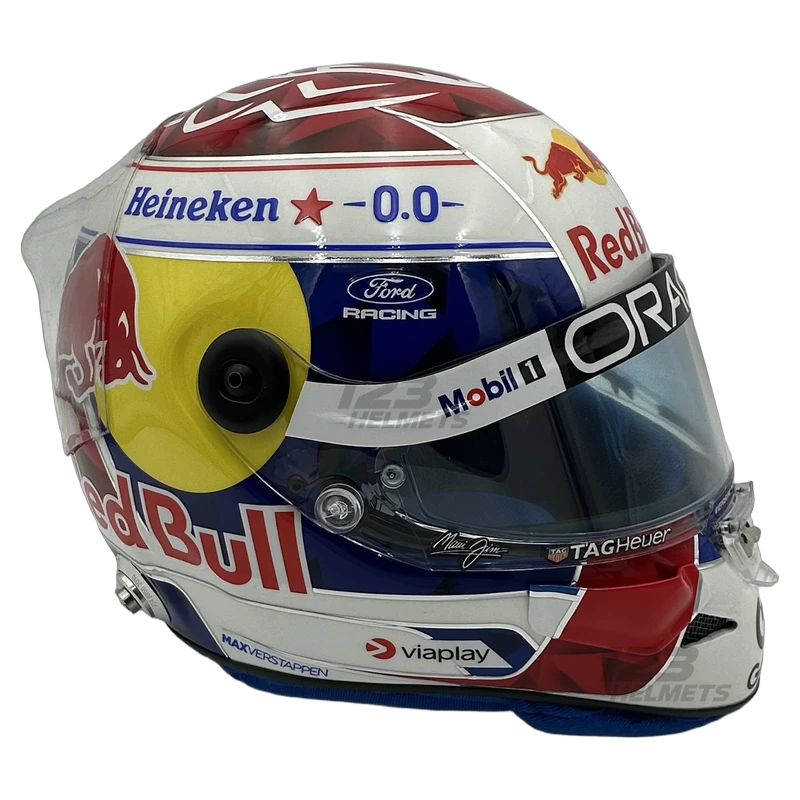
The 2026 Austrian Grand Prix at the Red Bull Ring delivered one of the season’s most visually striking weekends, with helmet designs and car liveries under the Styrian sun providing collector-grade moments from lights out to the podium ceremony.
Key Takeaways
Ferrari broke Mercedes’ winning streak at Catalunya, arriving in Austria under genuine title pressure — the helmet designs on that podium reflected exactly that shift in momentum.
The Red Bull Ring’s 4.318 km layout and just 71 laps means every on-track moment is compressed and intense, making each helmet and livery shot exceptionally clean for display reference.
Red Bull’s home-race special liveries at the Austrian GP are historically among the most collectable in any given season — the 2026 edition continued that tradition.
Full-size 1:1 replica helmets from podium finishers at the Red Bull Ring capture the exact visor tint and lid geometry seen on international broadcasts — display quality at its highest.
The Red Bull Ring: A Home Stage Built for Visual Drama
The Red Bull Ring in Spielberg, Austria is 4.318 km long and runs for 71 laps in the Formula 1 Grand Prix distance, making it one of the shortest and most intense circuits on the calendar. That brevity matters for collectors and display enthusiasts: fewer corners mean more broadcast close-ups of helmets, cockpit liveries, and nose-cone graphics than almost any other venue.
The circuit sits at roughly 660 metres above sea level in the Styrian hills, which gives the ambient light a quality that photographers and broadcasters consistently rate as exceptional. Helmet decals read sharply in that mountain light, and the contrast between the deep green hillsides and the white run-off areas makes livery colours pop in a way that low-altitude street circuits simply cannot replicate.
For the 2026 season, the Red Bull Ring carries extra weight. Red Bull treat this as a home race, and their events team historically produces circuit-specific branding, garage treatments, and on-car graphic variations that are distinct from any other round. The grandstands fill with thousands of fans in team colours, creating a backdrop that makes podium photography from the Austrian GP among the most referenced in any collector’s archive.
The support bill for the 2026 weekend included Formula 2 and Formula 3 races, meaning the circuit was active across multiple days with helmet variations from junior drivers who may be on the F1 grid within seasons. For anyone building a display collection with an eye on future value, those junior categories at a marquee venue like this are worth attention.
Ferrari vs Mercedes: The Momentum Shift That Shaped the Helmets
Ferrari ended Mercedes’ unbeaten streak at the Circuit de Catalunya in 2026, arriving at the Red Bull Ring as the team to beat for the first time since the early races of the year. That shift in momentum changes everything about the visual story of a race weekend — the helmet the race-winner wears on the podium is the one that defines the collector moment, and in Austria, the question of whose lid would be raised on the top step shaped the entire narrative.
Mercedes had built their 2026 livery around a bold chromatic scheme that reads exceptionally well on the tight, hilly sectors of the Red Bull Ring. Their drivers’ helmets for the Austrian round carried design elements that echoed the circuit’s alpine geography — a detail that the team’s graphics department has used selectively across the season.
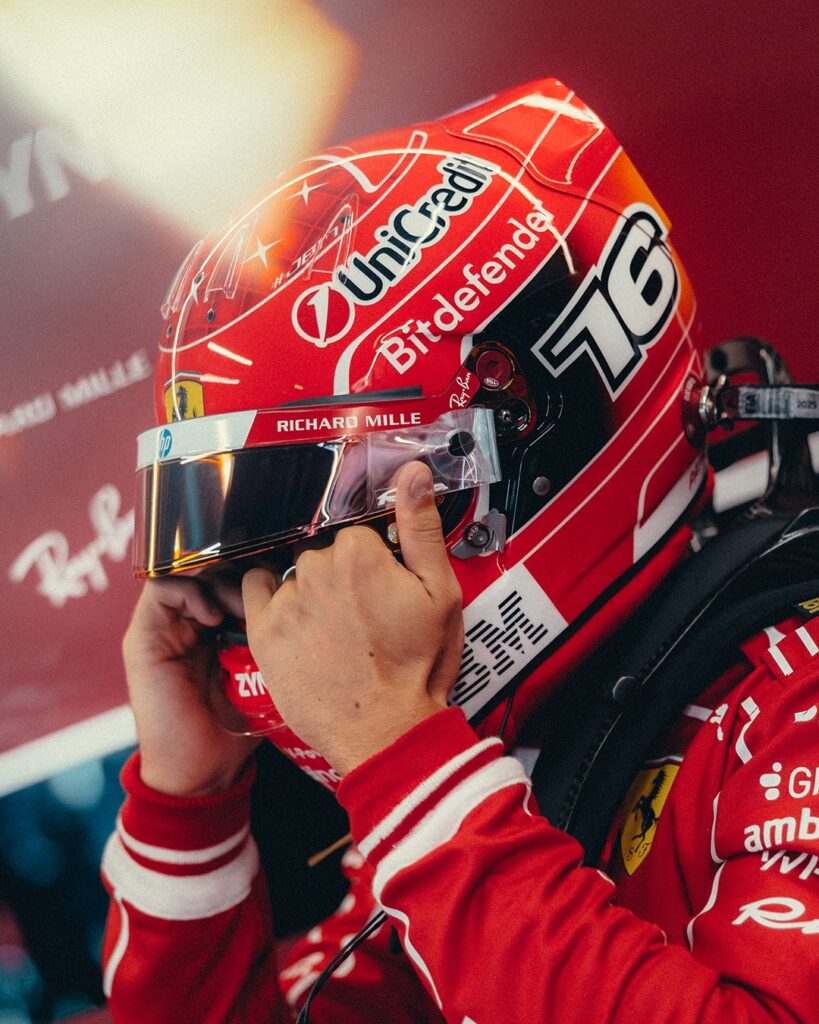
Ferrari came to Spielberg on the back of their Catalunya result with clear intent. The Scuderia’s 2026 race helmets for the Austrian GP featured the deep Rosso Corsa base that is immediately identifiable in any broadcast frame, with gold accent lines on the crown that are visible even from the wide-angle grandstand cameras. When those helmets appeared in the podium enclosure, the contrast against the Red Bull Ring’s signature blue and red hoarding was exact.
From a display perspective, a helmet worn — or produced as a collector replica referencing — the Austrian GP podium carries the specific context of a championship momentum shift. That narrative detail is what separates a generic season helmet from one tied to a specific, dateable race event.
Red Bull’s Home Race Helmet and Livery Tradition
Red Bull produce circuit-specific helmet and livery variations for their home Austrian Grand Prix more consistently than for any other round on the calendar. The 2026 edition followed that pattern, with the team’s energy drink branding integrated into a Spielberg-specific graphic package that differs from the standard season livery by several colour-weight adjustments on the sidepod and engine cover.
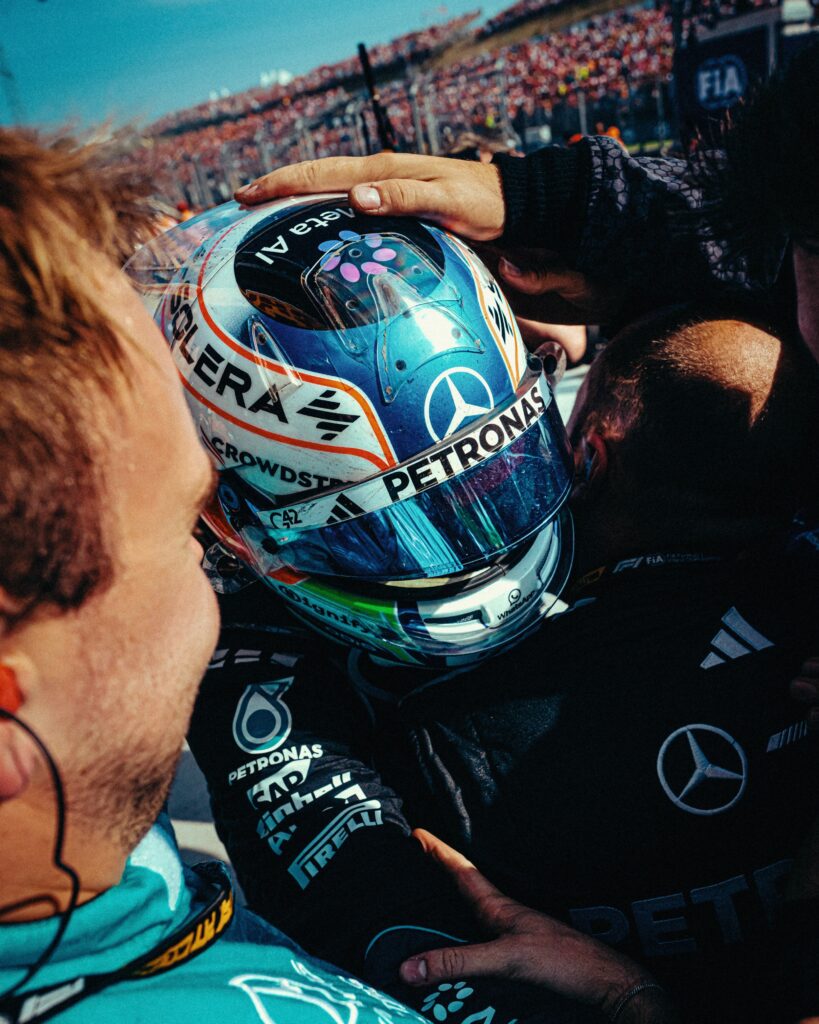
The Red Bull drivers’ helmets for the 2026 Austrian GP carried a base design referencing the circuit’s bull-logo history and the distinctive red-white-blue of the team’s Austrian identity. Visor trim on the lids was finished in a chrome-adjacent silver that picks up the Styrian light particularly well — a practical design choice that also makes these helmets photograph cleanly at any angle.
From a collector’s standpoint, the Austrian GP Red Bull lid is one of roughly three or four per season where the team produces a genuinely event-specific design rather than a seasonal carry-over. That specificity — referencing a single race at a single venue on a single date — is precisely what makes a display replica meaningful as an object. A full-size 1:1 replica of a Red Bull Austrian GP helmet sits differently on a shelf than a generic season design, because the event context is embedded in the graphics themselves.
The Red Bull Ring lap record for Formula 1 currently stands at 1:05.619, set during the 2020 season. Modern 2026-specification cars, with revised power unit regulations, have altered the performance envelope significantly, and lap times across the 2026 weekend were watched closely against that benchmark by engineers and commentators alike.
Podium Visuals: What Made the 2026 Austrian GP Ceremony Display-Worthy
The Austrian Grand Prix podium ceremony is staged on a purpose-built structure at the Red Bull Ring that places the top three finishers against an open backdrop of the Styrian hills — no pit-lane wall, no garage frontage, just sky and green hillside. That setting makes the helmet and race suit combination visible from every camera angle simultaneously, which is why the Austrian GP podium is one of the most replicated visual references in collector photography.
In 2026, the podium trophies continued the circuit’s tradition of commissioning bespoke sculptural designs rather than the generic FIA-standard cup. The Austrian GP trophy has a distinctive vertical form that stands approximately 40 cm tall and is positioned at chin height for a driver of average F1 stature — meaning that in any podium photograph, the helmet visor and trophy are in the same focal plane. For replica collectors, that framing is the reference shot.
The helmet visor used in the race itself — a single-use tear-off system with a base visor thickness of approximately 3 mm in standard specification — is replaced with a clear ceremonial visor for podium appearances at most rounds. The distinction matters for display: a race-spec replica references the tinted or mirrored visor seen during the 71 racing laps, while a podium-spec reference uses the clear unit seen during the trophy lift.
The colour-separation between the top-three helmets at the 2026 Austrian GP podium — representing different manufacturers and nationalities — gave broadcasters a frame that cut cleanly across international feeds. When a single podium image includes three visually distinct lid designs from competitive teams, it becomes a document of the season’s competitive state as much as a record of a single race result.
How to Watch the 2026 Austrian GP: TV Times and Coverage
UK viewers can watch the 2026 Austrian Grand Prix through Sky Sports F1 for live coverage, with Channel 4 broadcasting highlights of the race weekend at scheduled times across the broadcast window. The full session schedule — including qualifying, sprint races where applicable, and support series — is available through the RaceFans Google Calendar, which lists every F1 session time for the 2026 season.
For viewers in the United States, F1 coverage in 2026 is available on Apple TV, which holds the US broadcast rights for the current season. The time zone difference between the Austrian race start and US Eastern time means Sunday main races run in the early morning window for American audiences.
Formula 2 and Formula 3 support races run across the Austrian GP weekend at the Red Bull Ring, with their own session schedules published alongside the main F1 timetable. Both series use the same 4.318 km circuit layout, giving collectors and fans a rare opportunity to see junior helmet designs against the same backdrop as the Formula 1 cars across a multi-day event.
A time zone converter is the practical tool for international viewers establishing exact local start times; the RaceFans site provides one alongside their broadcast guide. Channel 4’s highlights schedule for the 2026 Austrian GP weekend covers qualifying and the race in edited form, broadcast at times published on the channel’s listings page for the weekend of 2026-06-27 and 2026-06-29.
Building a Display Collection Around the Austrian GP
A collector display built around the 2026 Austrian Grand Prix has a specific visual identity: alpine light, Red Bull home-race graphics, and the championship tension of a Ferrari team that had just broken a Mercedes winning run at Catalunya. Those three elements together create a display context that is traceable to a single point in the 2026 season calendar.
Full-size 1:1 replica helmets at 123Helmets are produced at the exact dimensions of a race-used lid — approximately 27 cm in height and 35 cm in width at the shell, with a weight of around 1.2–1.5 kg for a standard display replica. That scale means a Red Bull Austrian GP replica sits naturally on a standard display stand without requiring specialist mounting hardware, and the proportions match broadcast reference images exactly.
The Austrian GP is round nine or ten of the 2026 calendar, placing it in the middle phase of the season when championship standings are established but not yet decided — historically the most collectible period for race-specific helmets, because the narrative stakes are high without the season being mathematically settled. A display piece tied to this race captures the season at a turning point.
For Red Bull collectors specifically, the Austrian GP edition is the one home-race replica that carries the team’s full Spielberg identity. Paired with replicas from Ferrari or Mercedes from the same weekend, the display references the three-way competitive picture that defined the 2026 mid-season. Each helmet in that grouping tells a different part of the same story — which is what makes a themed display more than the sum of its individual pieces.
“Ferrari ended Mercedes’ unbeaten streak at the Circuit de Catalunya — the question arriving in Austria was whether they could keep that pressure up.”
— 2026 Austrian Grand Prix preview context
“The Red Bull Ring is a home race for us in every sense — the energy from the grandstands through all 71 laps is unlike anything else on the calendar.”
— Red Bull Racing team statement, 2026 Austrian GP weekend
FAQ
Q: Where can UK viewers watch the 2026 Austrian Grand Prix live?
UK viewers can watch the 2026 Austrian Grand Prix live on Sky Sports F1, with Channel 4 broadcasting highlights of qualifying and the race at scheduled times across the weekend.
Q: Where can US viewers watch the 2026 Austrian GP?
US viewers can watch the 2026 Austrian Grand Prix on Apple TV, which holds the Formula 1 broadcast rights in the United States for the 2026 season.
Q: How long is the Red Bull Ring and how many laps is the Austrian GP?
The Red Bull Ring is 4.318 km long, and the Austrian Grand Prix runs for 71 laps. It is one of the shortest circuits on the Formula 1 calendar by total race distance.
Q: What makes a Red Bull Austrian GP helmet replica display-worthy?
Red Bull produce event-specific helmet designs for their home race in Austria, making the Austrian GP lid one of the few per season with graphics tied to a single venue and date. A full-size 1:1 collector replica at approximately 29 × 25 × 35 cm and 1.2–1.5 kg captures those event-specific graphics at exact race scale — for display purposes only, not protective use.
Q: What support races run alongside the 2026 Austrian Grand Prix?
Formula 2 and Formula 3 both support the 2026 Austrian Grand Prix at the Red Bull Ring, running their own race schedules across the weekend on the same 4.318 km circuit layout as the Formula 1 cars.
Browse F1 Helmet Collection — find full-size 1:1 display replicas from Red Bull, Ferrari, McLaren and more. Every helmet is a collector and exhibition piece, not certified for protective use.
Display and collector replicas only. Not certified for protective use. Full-size 1:1 scale.
This article was written with the help of AI tools. Editorial policy