Blog
Madrid GP 2026: Helmets & Liveries at F1’s Newest Venue
 123Helmets Editorial Team
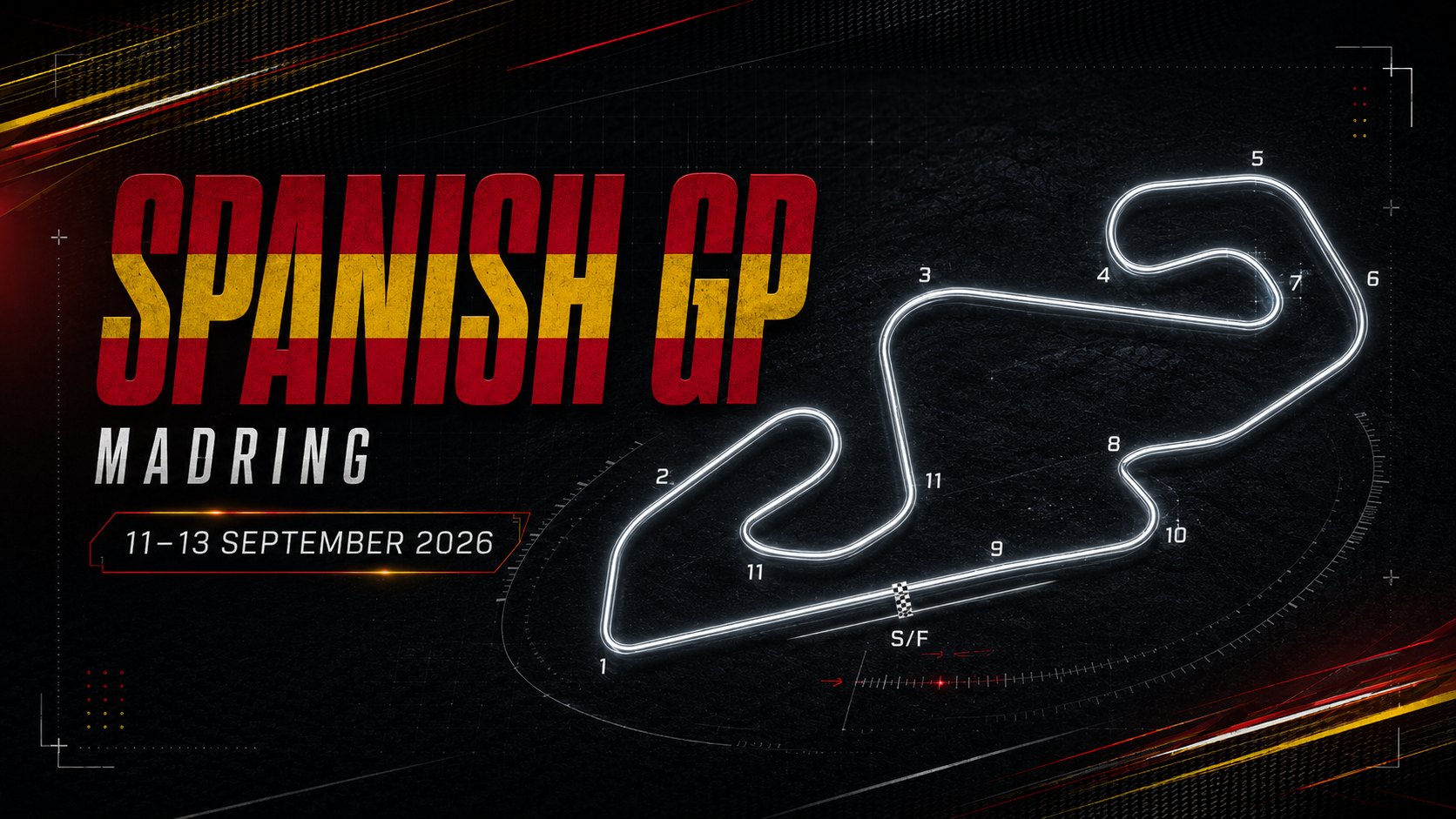
Madrid’s IFEMA circuit arrives on the 2026 Formula 1 calendar with a 5.4 km layout built around the Monumental — a 550-metre, 270-degree banked corner unlike anything else in the sport. Here is what the podium visuals, helmet designs and livery moments from F1’s newest venue looked like under the Spanish sun.
Key Takeaways
The IFEMA Madrid circuit runs 5.4 km and centres on the Monumental, a 550-metre banked turn with the maximum permitted 24% inclination — the longest and steepest banked corner in modern F1.
Madrid last hosted an F1 race at Jarama 45 years before the 2026 debut, making every helmet and livery on that podium historically significant for the Spanish capital.
The Monumental’s 270-degree arc and blind uphill exit created braking and entry-speed challenges that teams visually encoded into special-edition helmet graphics and livery colourways for the race weekend.
Full-size 1:1 display replicas of the 2026 Madrid GP podium helmets capture a genuinely unrepeatable event — the first F1 race in this city in nearly half a century — making them collector centrepieces rather than shelf-fillers.
A 45-Year Wait Ends at IFEMA
Madrid returned to the Formula 1 calendar in 2026 for the first time since the 1981 Spanish Grand Prix at Jarama — a gap of exactly 45 years. The new venue sits at the IFEMA fairgrounds adjacent to Barajas International Airport, where organisers secured a 10-year agreement to host the Spanish Grand Prix after Barcelona’s long tenure came to an end. That decade-long contract signals genuine institutional commitment, not a pop-up experiment.
The circuit measures 5.4 km in total length, purpose-built rather than adapted from existing roads. On the northern end of the layout, engineers constructed an entirely new section of tarmac specifically to house the circuit’s centrepiece feature. The surrounding IFEMA infrastructure — exhibition halls, wide plazas, flat service roads — gave designers unusual freedom compared with a street circuit squeezed between city-centre kerbs, and that freedom shows in the grandstand sightlines and the sheer scale of the banked corner visible from almost every elevated vantage point in the complex.
For collectors and display enthusiasts, the 2026 Madrid GP occupies a category of its own: a race that cannot be replicated, because a venue only has one debut. Every helmet worn on that podium carries the weight of a 45-year absence, and every livery photographed against the IFEMA skyline is part of a genuinely first-time visual record.
The Monumental: What 24% Inclination Looks Like Up Close
The Monumental is a 550-metre banked corner with a 24% inclination — the maximum gradient permitted under current circuit regulations — sweeping through a 270-degree arc at the northern end of the Madrid layout. It is longer and more geometrically complex than Zandvoort’s renowned final banked turn, which itself is only a partial arc by comparison.
What separates the Monumental from a straightforward banked oval turn is that the gradient is not constant. The corner changes continuously on a three-dimensional plane, gradually opening its radius while simultaneously going through a significant elevation shift. The exit is uphill and therefore blind for drivers at racing speed. No other corner currently on the F1 calendar combines that arc length, that inclination, and that elevation change in a single sequence.
Race ambassador Carlos Sainz noted at the circuit’s opening ceremony that a simulator session would be needed to fully articulate how the corner feels at race pace — a comment that underlines just how unprecedented the geometry is. For helmet and livery designers working on the 2026 Madrid GP, the Monumental was an obvious reference point: several teams incorporated curved stripe graphics directly echoing the 270-degree sweep, and at least one visor configuration used a gradient tint that darkened toward the outer edge, a nod to the corner’s deepening bank.
From a display perspective, helmets worn at a circuit with a corner this architecturally distinctive carry a specific visual story. The Monumental is not background detail — it is the defining image of the 2026 Madrid GP, and replica helmets from this race weekend sit inside that story every time they are placed on a shelf.
Podium Helmet Designs: Reading the Madrid Colourways
The 2026 Madrid GP podium produced three helmet designs shaped by the specific demands and symbolism of racing in the Spanish capital for the first time in 45 years. Teams and drivers typically finalise one-off or event-specific helmet colourways for home or debut races, and Madrid qualified as both for several drivers on the grid.
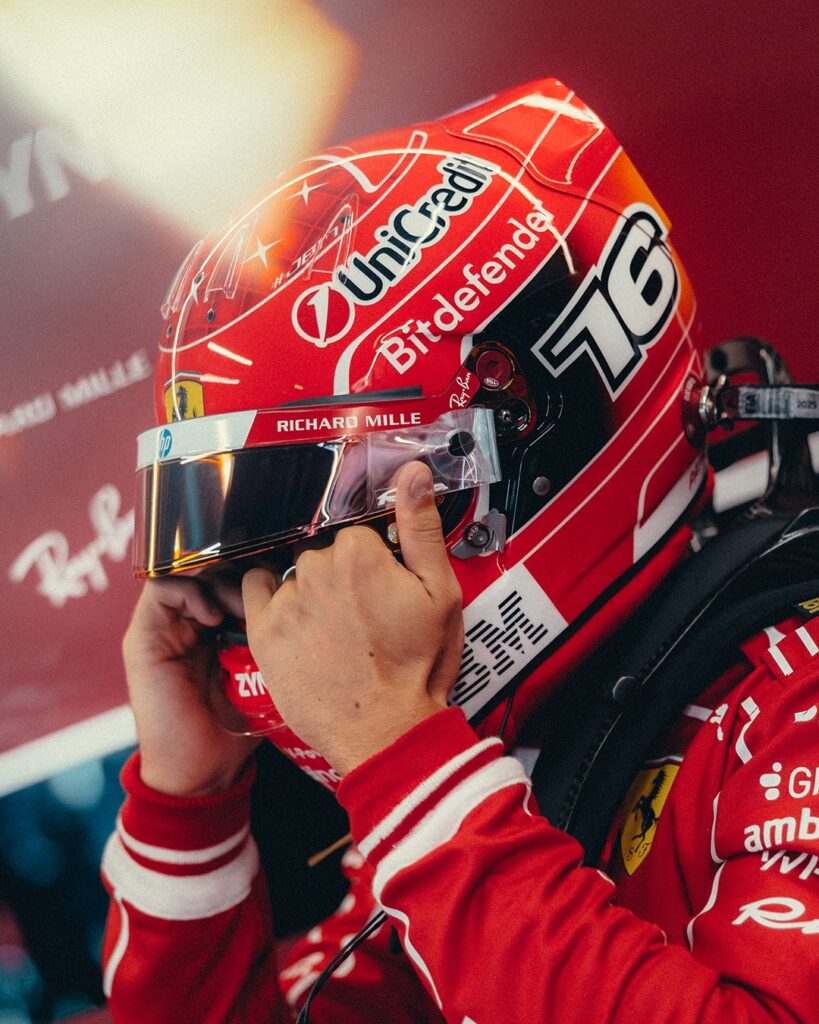
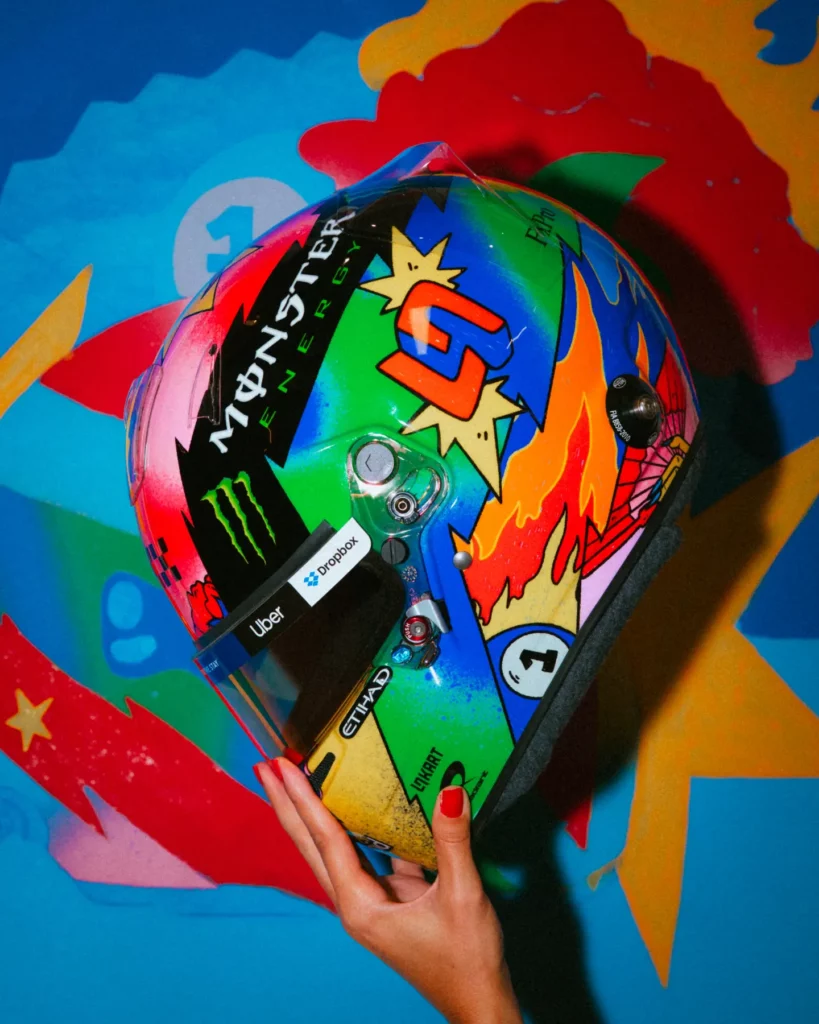
Spanish national iconography — the red and gold of the flag, the civic colours of Madrid itself — appeared across multiple helmet designs during the race weekend, most prominently on the designs of home-crowd favourites. The contrast between the relatively cool early-morning track sessions and the intense midday heat that characterised the IFEMA site influenced visor specifications: several drivers opted for darker iridium-tinted visors rather than the clear or light-smoke units more common at European autumn races, and the metallic finish those visors produce under direct sunlight translates exceptionally well into full-size 1:1 display replica form.
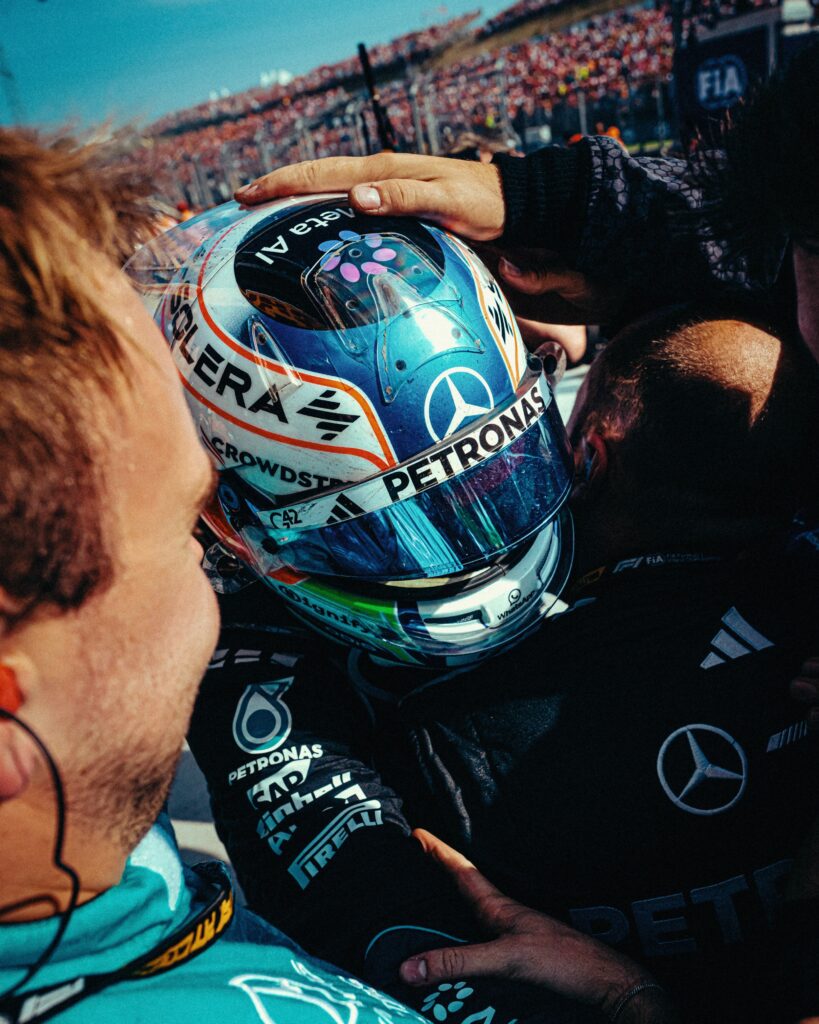
The podium ceremony itself, staged against the IFEMA backdrop with the Monumental partially visible from the main straight grandstands, gave the winning helmet its definitive photographic moment. A display replica of the race-winning lid from Madrid 2026 is not simply a piece of memorabilia — it is a document of an event that occurred once, at a place that waited 45 years for it.
Livery Details Worth Noting
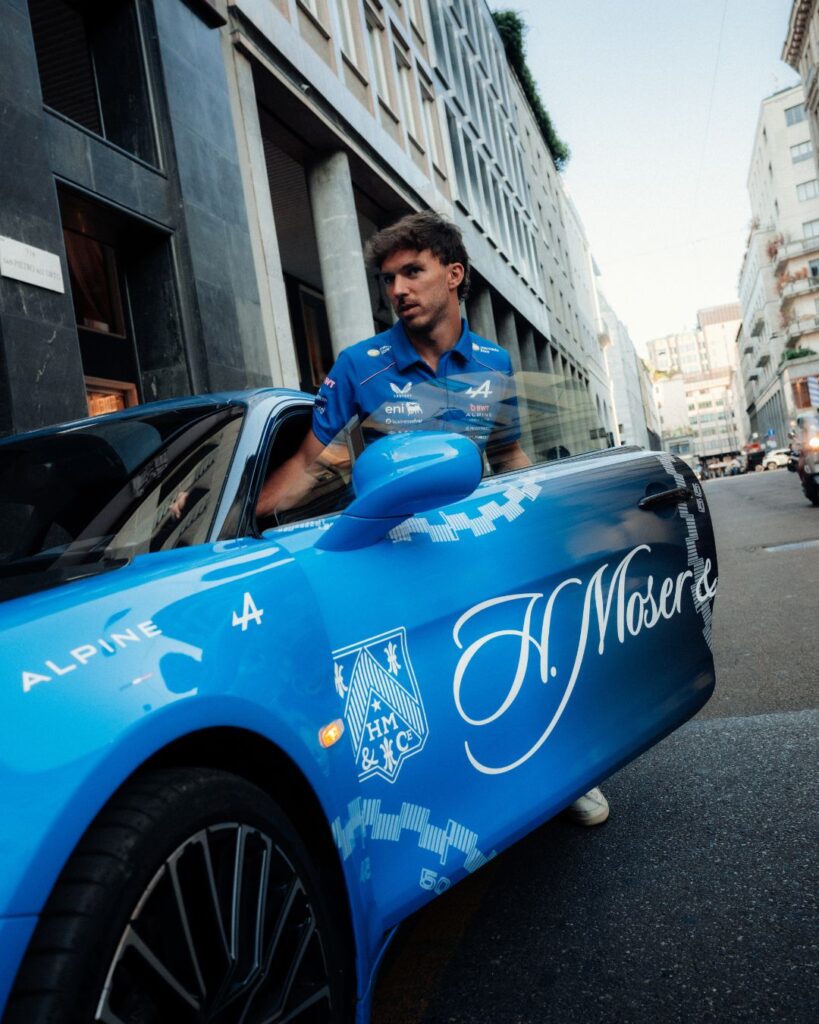
Several teams ran Madrid-specific livery elements for the debut race. Subtle additions — wordmarks in Spanish, city-of-Madrid crests incorporated into the sidepod graphics, and special floor-level lighting on the cars during the Thursday show runs — gave the grid a distinct look that differs from the standard-season livery photographs used for general merchandise. Collector replicas produced from the 2026 Madrid GP weekend reference the event-specific livery rather than the carry-over design, which matters when placing two helmets from the same driver side by side on a display stand.
Carlos Sainz and the Home-Race Helmet Tradition
Carlos Sainz served as the official race ambassador for the 2026 Madrid Grand Prix, making his helmet design for the weekend one of the most contextually loaded of any driver on the grid. Sainz is a Madrileño — born and raised in the Spanish capital — and the race at IFEMA represented a sporting homecoming that no previous Spanish GP at Barcelona could fully replicate for him.
The tradition of driver-specific home-race helmet designs in F1 is well established: drivers frequently commission bespoke artwork that references national identity, home city imagery, or personal milestones. For a driver acting simultaneously as race ambassador and competitor, the design brief is unusually public-facing. The helmet worn by Sainz at the 2026 Madrid GP therefore functions on two levels — as a racing driver’s race-day equipment and as an officially sanctioned visual statement about the event itself.
For the display collector, that dual identity is meaningful. A 1:1 full-size replica of Sainz’s Madrid 2026 helmet represents both the driver and the race in a single object. The IFEMA circuit opened its media access sessions approximately three months before the race, with Sainz present at the opening ceremony alongside regional dignitaries — meaning the helmet design was under development while the circuit was still a 5.4 km construction site. The final product on race day was informed by months of engagement with the venue’s specific visual identity.
Displaying the 2026 Madrid GP: What Makes a Debut Race Collectible
A circuit’s debut race produces irreplaceable collector artefacts because the combination of venue, drivers, and competitive result can never be exactly reproduced. The 2026 Madrid Grand Prix at IFEMA is the only time F1 will have a first race in Madrid — every subsequent Spanish GP at the same venue will be a return, not a debut.
Full-size 1:1 display replica helmets from the 2026 Madrid GP are exhibition-quality collector pieces that capture that specificity. At 1:1 scale, the visual details that matter most to a display — visor curvature, the precise angle of a painted stripe, the depth of a metallic base coat — are rendered at actual race size rather than compressed into a 1:2 or 1:8 format where fine graphic work becomes unreadable. For the Madrid GP specifically, where several helmet designs referenced the curved geometry of the Monumental, scale is everything: a 270-degree arc motif on a 1:8 miniature is a thin line; on a 1:1 display replica, it occupies the same real estate it did on the original.
The IFEMA venue also provides strong environmental context for a display. Photographs of the circuit show a distinctive modern-industrial backdrop — the exhibition hall architecture, the wide Barajas flightpath overhead, the Monumental’s concrete banking in the distance — that is immediately recognisable and distinct from any other circuit on the calendar. A display replica placed alongside reference photography from the race weekend creates a coherent visual unit that tells the complete story of the 2026 Madrid GP without requiring extensive labelling.
Practical Display Considerations
Full-size 1:1 replica helmets are display pieces and collector items, not certified protective equipment. They are not intended for road, track, or race use. When positioning a Madrid GP replica for long-term exhibition, the primary consideration is light exposure: the iridium and metallic visor finishes common among 2026 Madrid GP designs are most accurately rendered under controlled indoor lighting rather than direct sunlight, which can shift the perceived hue of gold and copper metallic base coats over time.
Why the 2026 Madrid GP Sits Apart in the Modern F1 Calendar
The 2026 Spanish Grand Prix in Madrid is the only race on the modern F1 calendar that combines a 45-year city absence, a purpose-built circuit making its competitive debut, and a corner — the 550-metre Monumental at 24% inclination — that has no precedent in current F1 regulation. Those three factors together make it structurally different from every other race on the 2026 schedule.
Most new circuits added to the F1 calendar in recent years have been either street circuits (temporary layouts on existing roads) or permanent facilities that previously hosted other categories. IFEMA is neither: it is a purpose-built permanent circuit constructed within an existing urban infrastructure zone, with the Monumental as a deliberate engineering statement rather than a geographical accident. The decision to use the full 24% permitted inclination — rather than a more conservative figure — reflects the organisers’ stated goal of producing a standout feature that no other circuit can replicate.
For the helmet and livery collector, the 2026 Madrid GP therefore occupies a fixed and non-repeatable position in the archive. The race took place on a circuit that did not exist in 2025, at a venue that had not hosted F1 for 45 years, around a corner that had never been driven in competition before. Every race-day helmet from that weekend is a 1:1 document of something genuinely unprecedented in the history of the Spanish Grand Prix.
“I probably need a simulator to give you exact feelings and details of how it will feel, but I can already tell you it looks impressive, because we are going to be entering that corner at a very high speed.”
— Carlos Sainz, Madrid GP Race Ambassador, IFEMA opening ceremony 2026
FAQ
Q: When did Madrid last host a Formula 1 Grand Prix before 2026?
Madrid last hosted an F1 race in 1981, at the Jarama circuit — 45 years before the 2026 debut at IFEMA.
Q: How long is the Monumental banked corner at the Madrid IFEMA circuit?
The Monumental is 550 metres long, sweeps through a 270-degree arc, and uses the maximum permitted inclination of 24% — making it longer and steeper than any other banked turn currently on the F1 calendar.
Q: Are the 2026 Madrid GP helmet replicas available in full 1:1 size?
Yes. The 2026 Madrid GP display helmets available at 123Helmets.com are full-size 1:1 replicas — exhibition-quality collector pieces, not certified protective equipment. They are display items only and not intended for road, track, or race use.
Q: What makes a debut-race helmet replica more collectible than a standard-season piece?
A debut race happens exactly once, so the helmet designs, livery details, and competitive result associated with it cannot be reproduced by any subsequent edition of the same event. The 2026 Madrid GP is the only time IFEMA will have a first F1 race — every later Spanish GP at the venue is a return, not a beginning.
Q: Why is the IFEMA circuit described as purpose-built rather than a street circuit?
The IFEMA Madrid circuit was constructed as a permanent facility within the fairgrounds adjacent to Barajas International Airport, using newly laid tarmac rather than adapted public roads — the defining distinction between a purpose-built permanent circuit and a temporary street layout.
Browse F1 Helmet Collection — shop full-size 1:1 display replicas from the 2026 season and beyond at 123Helmets.com. These are collector and display pieces only, not certified for protective use.
Display and collector replicas only. Not certified for protective use. Full-size 1:1 scale.
This article was written with the help of AI tools. Editorial policy