Blog
Cadillac Brings Major Upgrade to 2026 Austrian GP
 123Helmets Editorial Team
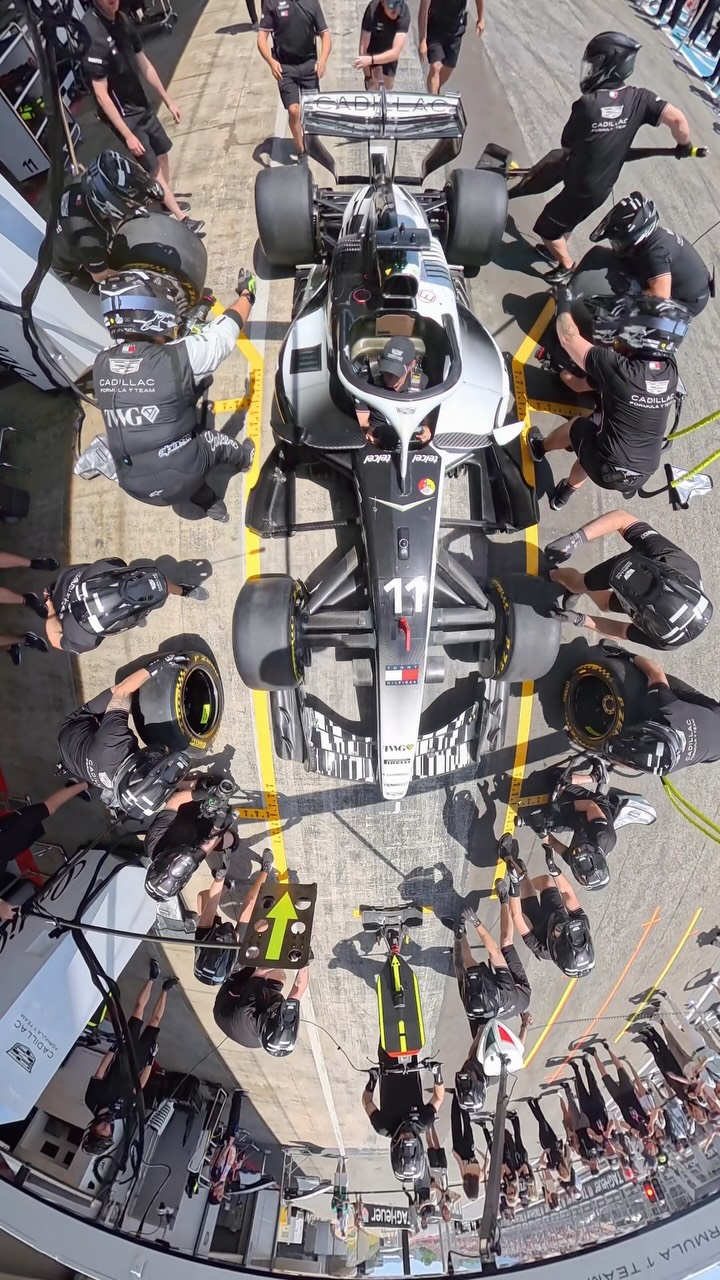
Cadillac arrives at the Red Bull Ring for the 2026 Austrian Grand Prix carrying new sidepods and a revised floor — the team’s most significant upgrade package yet on the MAC-26 — as Sergio Perez and the American outfit target their first points of the season.
Key Takeaways
Cadillac’s Austrian GP package includes new sidepods and a revised floor — the largest single upgrade step on the MAC-26 so far in 2026.
At Barcelona, Sergio Perez qualified just 1.9 seconds off the fastest Q1 time and outqualified both Aston Martins by 1.2 seconds.
The team has introduced rear wing and exhaust upgrades in Monaco, then further rear wing and cooling improvements in Barcelona, building a consistent development chain race by race.
Team principal Graeme Lowdon confirmed the midfield is the explicit target, with Silverstone following immediately after Austria in a rapid back-to-back stretch.
Cadillac’s Austrian GP Upgrade in Plain Numbers
Cadillac’s 2026 Austrian Grand Prix entry is the most technically evolved version of the MAC-26 seen so far, with new sidepods and a full floor revision arriving at the Red Bull Ring. Those two components together represent the largest aerodynamic change the American team has made in a single race weekend, building on rear wing and exhaust work introduced in Monaco and cooling refinements added in Barcelona. Team principal Graeme Lowdon described the combined package as “another substantial upgrade,” and the scope — new bodywork plus a revised underbody — backs that up.
To put the pace of development in context: at the 2026 Spanish Grand Prix, Sergio Perez qualified 1.9 seconds off the fastest Q1 time. That gap already included the Monaco upgrades. The Barcelona cooling and rear wing changes have since been stacked on top, and now the sidepod and floor kit adds another layer ahead of what Lowdon called the “rapid succession” of races heading into Silverstone next weekend.
The Red Bull Ring circuit layout — 4.318 km, with ten corners and a heavy reliance on rear-end stability under traction — gives the new floor a specific arena to prove itself. Cadillac’s engineers will be watching sector three data closely to judge whether the floor’s underbody load translates to lap time in the long right-handers that close out the lap.
The Development Chain: Monaco to Barcelona to Austria
Cadillac’s 2026 upgrade sequence has been deliberate and additive: each race weekend since the team’s debut has carried at least one new aerodynamic element. Monaco brought an upgraded rear wing and a revised exhaust exit. Barcelona followed with further rear wing geometry changes and cooling improvements — necessary updates for the Circuit de Barcelona-Catalunya’s sustained high-speed sections, where thermal management directly affects power unit performance.
The result at Barcelona was measurable. Perez outqualified both Aston Martin entries by 1.2 seconds in Q1, which marked the first time a direct midfield comparison favoured the MAC-26 over an established team. That is not yet a points position, but it represents a 1.2-second swing against a constructor with multiple seasons of aerodynamic iteration behind them.
Austria now receives sidepods and a new floor. Those are not incremental parts — sidepod geometry affects cooling airflow, drag, and the way air is conditioned before it reaches the rear of the car. A revised floor changes the entire underbody pressure map. Together they represent a step in scale that Monaco and Barcelona did not reach. The question is whether the Red Bull Ring’s relatively short lap — typically completed in under 1 minute 7 seconds in modern F1 machinery — gives enough aerodynamic loading time for the floor update to show a clear lap time benefit.
Why the Floor Matters More Than the Sidepods at This Track
At a circuit as power-sensitive as the Red Bull Ring, the floor’s contribution to rear downforce under acceleration is worth more per lap second than sidepod shaping. The three long straights bleed top speed from high-downforce configurations, so teams compromise on wing angle — meaning the floor must carry a greater share of total aerodynamic load. Cadillac’s engineers will be targeting a net-positive result from the floor even if the sidepod change is primarily a cooling and drag benefit on this specific layout.
Perez’s View: Progress Every Race Weekend
Sergio Perez said the MAC-26 has delivered learning at every round, describing the team’s development rate as “very good” heading into Austria. The 2026 season has asked the Mexican driver to contribute both lap time and engineering feedback in circumstances where data is thin and reference laps from the car’s predecessor do not exist — Cadillac built the MAC-26 from scratch as a new entry.
Monaco was the sharpest illustration of that challenge. Points were close — Perez described a “topsy-turvy” race in the principality — but the result did not come. Barcelona was openly difficult. Yet the 1.9-second Q1 gap at Barcelona, when set against whatever the gap was at Cadillac’s debut events, shows a trajectory rather than a plateau. Perez confirmed: “Every race it feels that we’re making progress.”
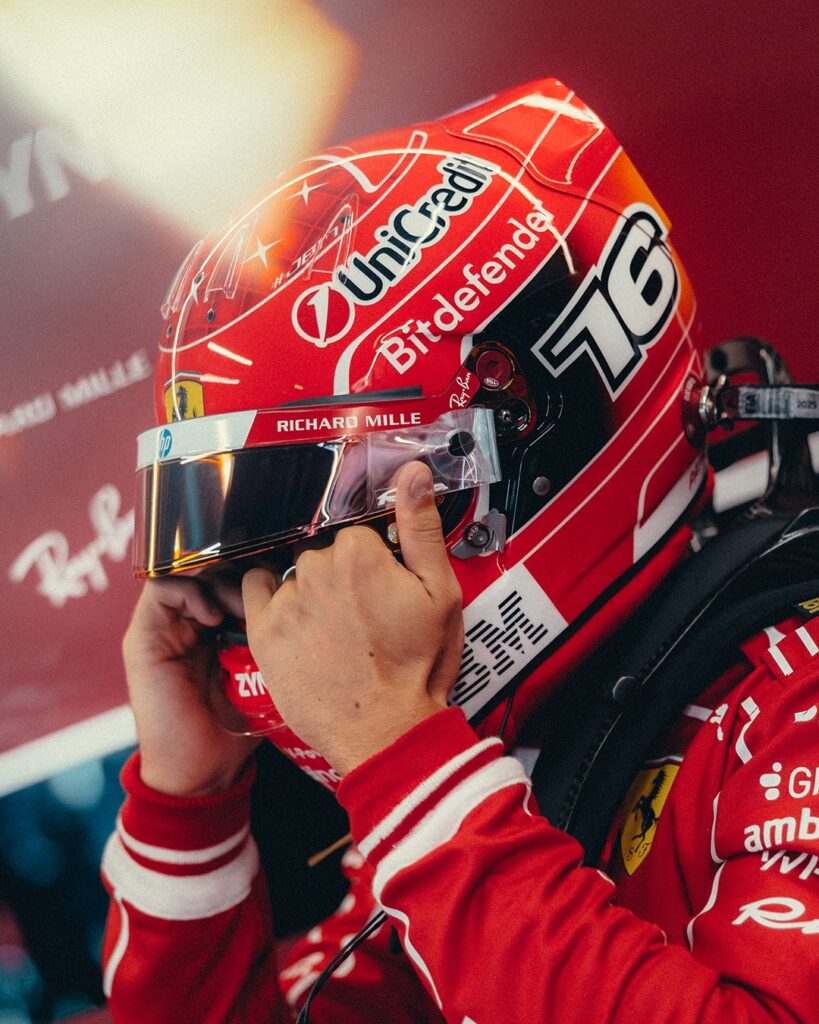
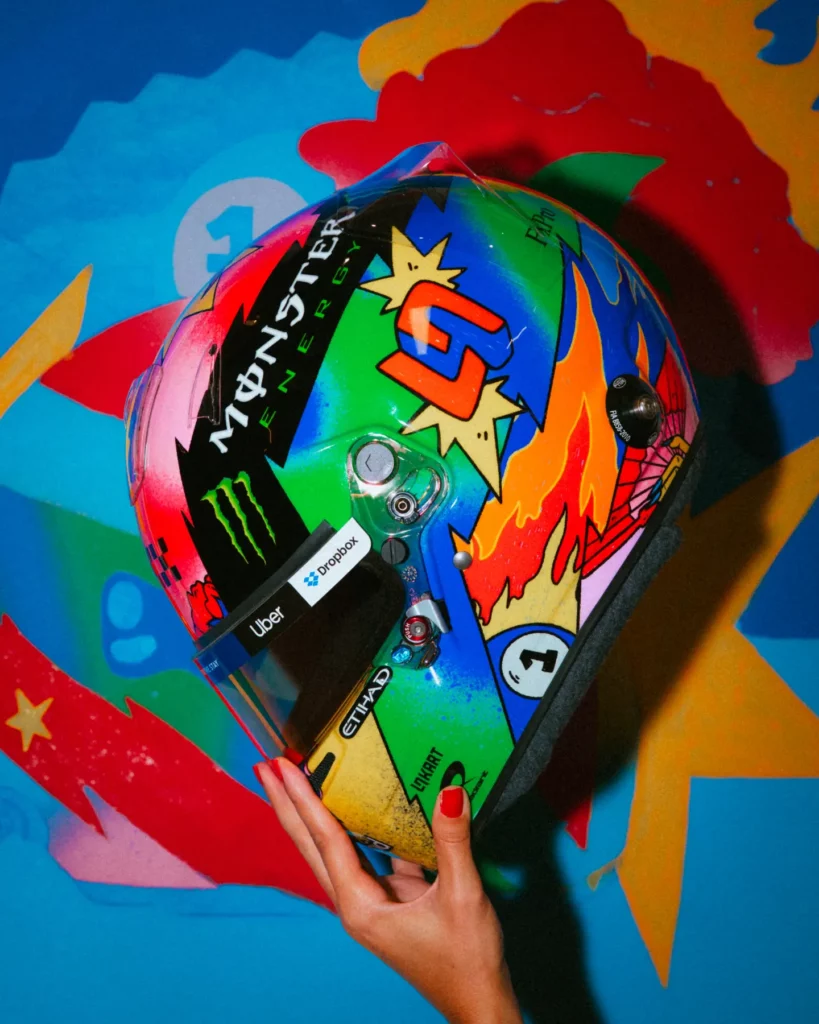
For a display-quality helmet collector, Perez’s 2026 race lid already carries a visual identity tied to the MAC-26’s evolving livery. Each upgrade package at Cadillac has been accompanied by minor livery detail shifts — sponsor placement responding to new bodywork geometry — meaning the Austria-spec MAC-26 will look visually distinct from the Monaco-spec car. Full-size 1:1 replica helmets capturing this period of the team’s development are collector items that document a specific chapter: the formation months of a brand-new F1 constructor in active aerodynamic development.
Lowdon on the Logistical Reality of Back-to-Back Races
Graeme Lowdon identified the gap between delivering on-track performance upgrades and managing the physical logistics of a back-to-back race calendar as the primary challenge Cadillac faces in mid-2026. Silverstone follows Austria by a matter of days. That means components manufactured for the Austrian package must arrive, be fitted, and generate data — all before the freight deadline for the British Grand Prix closes.
“The races now come along in rapid succession, and meeting that logistical element while improving our competitive performance is one of the key challenges of this part of the year,” Lowdon said. For a team in its first season, that pressure is amplified: there are no carryover set-up files from a 2025 season, no baseline at these circuits. Every data point from Austria will feed directly into the Silverstone preparation window.
Lowdon was also direct about the competitive picture. He said the team does “not underestimate the challenges Austria presents” but expressed confidence in continued progress. The word he chose — “trajectory” — matters. Cadillac is not claiming to be fast; the team is claiming to be getting faster at a measurable rate. That distinction is an honest framing for a constructor in its first year, and it gives a realistic benchmark against which the Austrian result should be read: not whether Cadillac scores points, but whether the MAC-26 with its new sidepods and floor is closer to the midfield than it was in Barcelona.
What the Red Bull Ring Layout Demands of a New Constructor
The Red Bull Ring has produced high-attrition races in recent seasons. Its short lap — completed in roughly 66–67 seconds by the front runners — concentrates tyre stress into brief but intense braking and acceleration events. For Cadillac, whose race pace has been building incrementally, a layout with fewer slow corners means fewer places to lose large chunks of time from mechanical grip deficits. That, in theory, suits a car that has been improving its aerodynamic base rather than its mechanical set-up.
Helmet and Livery Moments Worth Collecting from the 2026 Austrian GP
The 2026 Austrian Grand Prix weekend is a display-worthy moment for Cadillac helmet collectors because it marks the first race at which the MAC-26 runs a sidepod geometry that will define the car’s visual silhouette for the remainder of the European swing. When bodywork changes at this scale, the livery reading changes with it — sponsor panels shift, colour transitions move, and the car photographed at the Red Bull Ring looks structurally different from the car photographed at Monaco.
Full-size 1:1 collector replica helmets tied to this round capture a specific moment in Cadillac’s formation year: the weekend the team’s engineers considered the sidepod question answered and moved on. Exhibition-quality display pieces at 1:1 scale reproduce the helmet’s exact paint layering and visor geometry — a standard 26 mm polycarbonate visor profile at full scale, finished to the same colour-matched specification as the race item.
The Red Bull Ring’s grandstand photography produces some of the most identifiable helmet shots on the calendar. The circuit’s topography means cars are frequently photographed against an open sky backdrop at Turns 3 and 4, isolating the driver’s helmet against a clean background. For any driver who steps onto the podium here — or even into the points — the Austrian GP produces some of the most display-ready visual references in the European season.
Perez’s 2026 helmet design, worn across the MAC-26’s first development arc from the team’s debut through to Austria, represents the opening chapter of an entirely new constructor’s history. Collector and display replica helmets from this season document that origin — not just as Formula 1 merchandise, but as a physical record of a new American team’s first attempt to close the gap to the midfield, one upgrade package at a time.
What Austria Means for Cadillac’s 2026 Season Arc
Austria is Cadillac’s clearest points opportunity since Monaco, because it combines the largest upgrade step the team has yet produced with a circuit that penalises mechanical grip deficits less severely than street circuits. If the new sidepods and floor perform as intended, the 1.9-second Q1 deficit from Barcelona should narrow — potentially placing the MAC-26 inside or near the Q1 elimination zone for the first time.
The team has been transparent about its position: Lowdon’s language — “steadily catching up to the midfield” — describes a gap that still exists. Outqualifying the Aston Martin entries by 1.2 seconds in Q1 at Barcelona was meaningful, but Q1 elimination still means starting at the back. The Austrian upgrade needs to move Perez from the Q1 pack into a position where Q2 is a genuine target, rather than a distant ambition.
Silverstone the following week presents an even sharper test. The British Grand Prix circuit demands high-speed aerodynamic load across its iconic sections — Maggotts, Becketts, Chapel — and a floor that works at the Red Bull Ring will be asked to perform in a sustained high-load environment just days later. The data window between these two circuits is almost non-existent, which is why Lowdon framed the logistical challenge so directly.
For collectors and display enthusiasts, the Austrian and Silverstone rounds together represent a two-weekend arc in which Cadillac’s car and helmet identity will be photographed in the most high-profile settings of the European calendar. A full-size 1:1 replica helmet from this period — exhibition quality, display-only — is a record of the moment a new American F1 team decided to stop managing its debut and start chasing the pack.
“We are pleased to be able to bring another substantial upgrade package this weekend. With new sidepods and floor it’s a significant amount of work and we hope that it will continue our trajectory of steadily catching up to the midfield.”
— Graeme Lowdon, Cadillac F1 Team Principal
“Every race it feels that we’re making progress, and there was a lot of valuable learning in getting to the checkered flag in Barcelona. The rate of development is very good, everyone back at the factory is going full speed to deliver new parts to the track.”
— Sergio Perez, Cadillac F1 Driver
FAQ
Q: What upgrades is Cadillac bringing to the 2026 Austrian Grand Prix?
Cadillac is bringing new sidepods and a revised floor to the 2026 Austrian Grand Prix, the largest single-weekend aerodynamic package the MAC-26 has received so far. Previous upgrades in Monaco covered the rear wing and exhaust; Barcelona added further rear wing geometry changes and cooling improvements. The Austrian package builds on all of those steps.
Q: How far off the pace was Sergio Perez at the 2026 Spanish Grand Prix?
Perez qualified 1.9 seconds off the fastest Q1 time at the 2026 Spanish Grand Prix. Despite that gap, he outqualified both Aston Martin entries by 1.2 seconds in Q1, marking the first time the MAC-26 had a direct head-to-head advantage over an established midfield constructor.
Q: What race follows the 2026 Austrian Grand Prix for Cadillac?
The 2026 British Grand Prix at Silverstone follows the Austrian round in rapid succession, with the two circuits running in a near back-to-back sequence. Team principal Graeme Lowdon highlighted this logistical challenge explicitly, noting that delivering upgrade parts while managing freight timelines is one of the central difficulties of this part of the 2026 calendar.
Q: Are Cadillac F1 helmets available as display collector replicas?
Yes — full-size 1:1 scale collector and display replica helmets representing the 2026 Cadillac F1 season are available as exhibition-quality display pieces. These replicas are not certified for protective use; they are collector items that document the visual identity of the MAC-26’s debut season, including helmet designs worn by Sergio Perez across the team’s first development arc.
Q: Why is the 2026 Austrian GP significant for Cadillac’s livery and helmet collectors?
The 2026 Austrian Grand Prix is the first event at which the MAC-26 runs its revised sidepod geometry, which changes the car’s visual profile and affects how livery panels and sponsor graphics read in photography. Full-size 1:1 display replica helmets from this round capture the moment Cadillac’s car took on the bodywork shape it will carry through the European swing — making it a visually distinct and historically specific collector reference.
Browse F1 Helmet Collection — explore full-size 1:1 display replica helmets from the 2026 season, including Cadillac and every team on the grid. Exhibition quality, collector grade. Browse the collection here.
Display and collector replicas only. Not certified for protective use. Full-size 1:1 scale.
This article was written with the help of AI tools. Editorial policy