Blog
Overtake Mode Locked the Field Together at the 2025 Canadian GP — Mercedes Display Notes
 123Helmets Editorial Team
Montreal delivered a recap collectors will study for years: Overtake Mode shortened the gaps, the silver-and-black Mercedes machinery led the visual story, and the podium produced helmet and livery details worth a dedicated shelf. Here is the race read through the lens of a display-quality 1:1 replica collector.
Key Takeaways
Overtake Mode kept cars within DRS range, producing tighter on-track images for replica reference
Mercedes presented a refined silver-and-black package at the Circuit Gilles Villeneuve, 4.361 km per lap across 70 laps
Helmet finishes from the Montreal weekend translate well to a full-size 1:1 collector display
Podium-day visuals — visor tear-offs, sponsor placement, scuff patterns — define authenticity in a replica
The Overtake Mode story and why it matters for collectors
The headline from Montreal was simple: Overtake Mode helped lock cars together in close battle. For a viewer at home it meant cleaner wheel-to-wheel pictures. For a collector building a display around the 2025 Canadian Grand Prix it means something more practical — the reference images coming out of the weekend are richer, with cars framed side by side, helmets catching the same late-afternoon Montreal light, liveries shown from angles the broadcast rarely lingers on.
The Circuit Gilles Villeneuve runs 4.361 km per lap over 70 racing laps, a layout of long straights into tight chicanes that already rewards slipstream work. Add an Overtake Mode that narrows the closing gap and the field stops stretching into a procession. That matters for the replica builder because the photos taken on lap 14, lap 38 and lap 61 — the windows where the system was most active — show the cars in formation. A side-pod sponsor reads clearly. A helmet top-view becomes legible. The carbon weave around the airbox is photographed cleanly rather than blurred in isolation.
If your collector shelf is built around capturing a single race, this is the kind of weekend that produces the source material a 1:1 full-size helmet replica is judged against.
Mercedes at Montreal: the silver-and-black display read
Livery details worth photographing
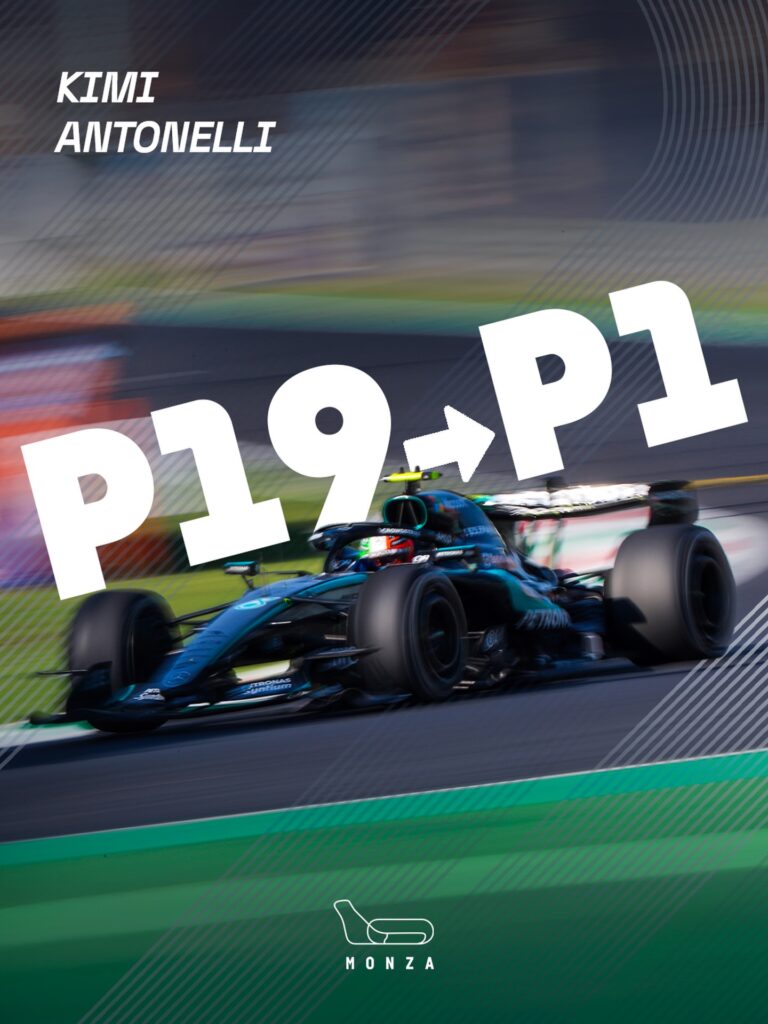
The Mercedes package arrived in Montreal in its refined silver-and-black configuration. From a display angle the contrast works hard: the matte sections absorb the overhead pit-lane lighting while the gloss panels around the halo and engine cover return a mirror finish. A collector item placed on a black acrylic plinth picks up the same behaviour — the helmet shell reads as two surfaces depending on viewing angle, which is exactly the effect the team chases on the car.
Helmet shapes on the grid
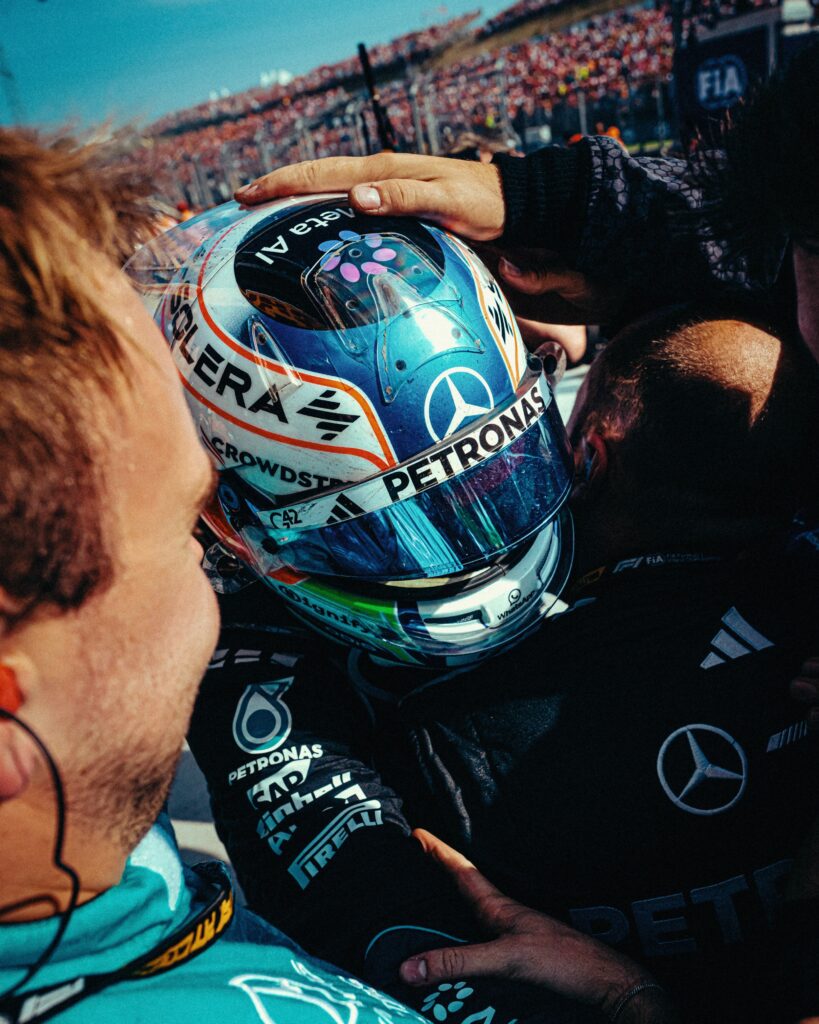
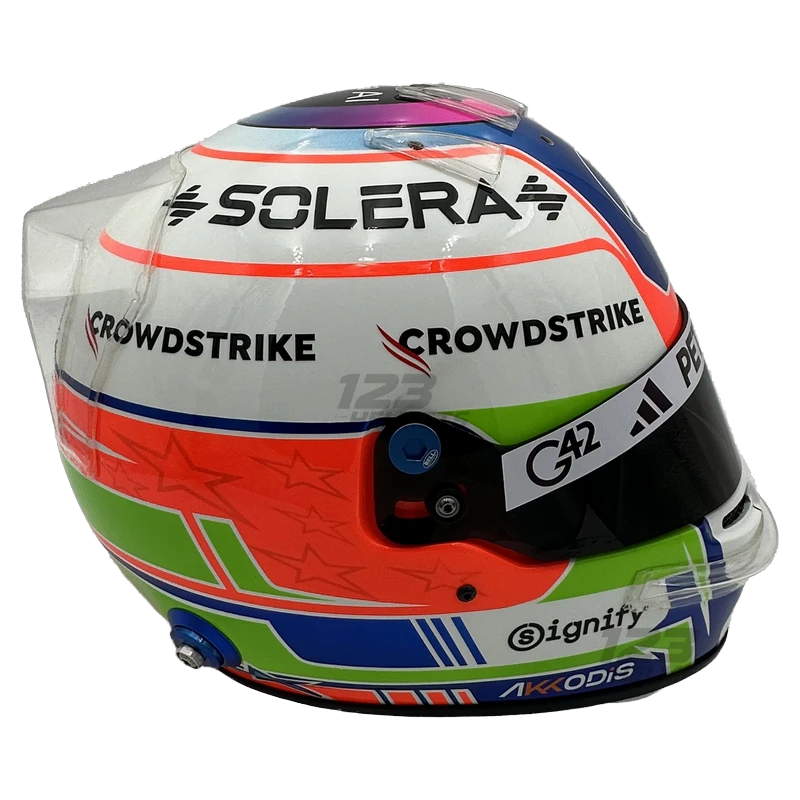
The two Mercedes helmets on the grid carried distinct top-plate graphics. Viewed from the 12 o’clock position — the angle most often used for a wall-mounted full-size 1:1 replica — the star motif sits forward of the visor aperture, with secondary sponsor blocks running back toward the rear spoiler of the lid. For exhibition quality work, that forward-weighted graphic is the single most important reference, because it dictates how the helmet sits on a stand at eye level.
Visor tear-offs and pit-stop scuffs
By the time the cars completed their first stint the visors had collected the usual Montreal debris pattern: rubber marbles from the exit of Turn 2, bug strikes along the upper third, and tear-off adhesive residue along the left edge where the driver pulls. A display piece that recreates a race-used look needs those marks placed correctly. The Canadian GP gave us clean photographic evidence of where they fall.
Lap-by-lap visual moments for the shelf
Some races give a collector one image. Montreal gave several. Here are the moments worth bookmarking when planning a 2025 Canadian GP display around a Mercedes full-size 1:1 replica helmet.
The opening stint
The first 18 laps produced the cleanest helmet-and-livery photographs of the weekend. With Overtake Mode keeping the pack compressed, broadcast cameras stayed wide rather than cutting between isolated cars. That wide framing is what a collector wants — the helmet is shown in context, the airbox behind it is in focus, and the sponsor logos on the halo surround are not cropped out.
The middle phase
Around lap 38 the lighting at Montreal shifts. The sun drops behind the main grandstand and the cars run through alternating bands of shade and direct light along the back straight. For an exhibition-quality replica this is the reference period to study, because it shows how a paint scheme behaves under mixed lighting. A display helmet sitting in a domestic room rarely sees flat studio light — it sees a window, a lamp, and a shadow. The lap-38 footage from Montreal is the closest broadcast equivalent.
The closing laps
From lap 61 onward the visors are fully marked, the front-wing endplates show track contact, and the helmets carry the dust-and-rubber finish that distinguishes a race-end photograph from a Saturday qualifying shot. Collectors who want their display piece to read as a Sunday-evening artefact rather than a showroom item should use this footage as the colour and texture reference.
Podium framing and the collector item case
What the podium gives you
The Canadian GP podium produces a specific photograph: three drivers, helmets removed and held at waist height, champagne arc rising into the grandstand backdrop. For a collector building around a single race, that frame is the brief. A full-size 1:1 replica on a display stand should match the way the driver holds the helmet on the podium — chin-bar forward, visor closed, top-plate graphic facing the room.
Display stand height
The standard podium-step ratio in Formula 1 places the winner’s helmet at roughly the same eye-line as a seated viewer on a domestic sofa when the replica is mounted on a 110 cm display column. That is the height most collectors converge on, and it is the height the Montreal podium photography supports as a reference.
Backdrop and lighting at home
The Circuit Gilles Villeneuve podium uses a warm-white lighting rig. A collector item displayed under cool-white domestic LEDs will read differently to the podium photograph. A 3000 K bulb in a single overhead spot produces the closest match for a Mercedes display helmet, holding the silver tones without pushing them toward blue.
Building the 2025 Canadian GP Mercedes display
The core piece
The full-size 1:1 replica helmet is the anchor. Exhibition quality means the shell proportions match the on-track lid, the visor aperture sits where the photographs show it, and the paint layers reproduce the silver-to-black transition without a visible step. This is a display piece and collector item — not a wearable object — and the judgement is purely visual.
Supporting items
A printed lap chart from the 70-lap race, a framed photograph from the lap-38 sun-shift sequence, and a small acrylic plaque listing the date, the 4.361 km lap length and the circuit name complete the shelf. Nothing on the shelf needs to move or function — every item is there to be looked at.
Placement notes
Position the helmet so the visor faces the room’s primary seating. Angle the display column 15 degrees off-axis so the top-plate graphic is visible without the viewer needing to stand. Keep the helmet at least 40 cm from any direct heat source and out of direct sunlight to preserve the paint finish over years rather than months.
“Overtake Mode kept the cars locked together in the battle.”
— Canadian GP race report, June 2025
FAQ
Q: Is this a wearable helmet?
No. Every helmet we discuss is a display piece and collector item — a full-size 1:1 replica built for exhibition. It is not intended for any on-track or on-road use.
Q: What scale is the replica?
Full-size 1:1. The shell proportions match the dimensions of the helmet used by the driver, so the display piece reads correctly at eye level and on a standard 110 cm column.
Q: Why focus on the Canadian GP for a Mercedes display?
The 2025 Montreal weekend produced unusually rich visual reference material thanks to Overtake Mode keeping the field compressed, which gave clean photographs of the silver-and-black livery and helmets in context.
Q: How should I light a Mercedes display helmet at home?
A single 3000 K warm-white overhead spot is the closest match to the Canadian GP podium lighting and holds the silver tones without pushing them blue.
Q: What finishing details define an exhibition-quality replica?
Correct top-plate graphic placement forward of the visor aperture, accurate sponsor block positioning, a clean silver-to-black paint transition, and visor and shell scuff patterns matching late-race photography.
Shop Mercedes Helmets
Display and collector replicas only. Not certified for protective use. Full-size 1:1 scale.