
Blog
Monaco’s Hidden Heroes: The F1 Underdogs Worth Backing on the Streets of Monte Carlo
 123Helmets Editorial Team
The 3.337 km ribbon of Monte Carlo asphalt has always rewarded the brave over the fast. From Sainte Dévote to the swimming pool chicane, this 78-lap procession of mirrors and metal hands midfield drivers a rare chance to bury the giants. Here is how the underdogs turned Monaco into a gallery of unforgettable helmet designs and livery moments worth framing.
Key Takeaways
Monaco’s 3.337 km circuit historically compresses lap-time gaps to under 0.3s between midfield and top teams
Underdog drivers often debut special one-off helmet designs in Monaco, making them prime collector display pieces at full-size 1:1 scale
Qualifying decides 75% of the Monaco result — a P6 grid slot for an underdog is worth more than pace anywhere else
Monte Carlo helmet liveries lean on metallic chrome, royal blue and gold finishes — the exhibition-quality replicas reward close inspection
Why Monaco Rewrites the Underdog Script
Monaco is the one round on the calendar where a 1.2 km/h deficit in top speed disappears into the barriers. The 19 corners squeeze the pit lane, the run-off and the overtaking zones into almost nothing. That is why a midfield car qualifying inside the top eight can convert grid position into points in a way that Spa or Monza never allow.
Across the last decade of racing here, average winning margins have shrunk. The 2024 edition finished with the leading group covered by under 8 seconds after 78 laps. When the pit window is that narrow, an underdog who nails a single in-lap can leapfrog a car worth twice the budget. The race is not won at 320 km/h. It is won at 48 km/h through Loews hairpin, the slowest corner in modern Formula 1.
The qualifying lottery
Saturday in Monaco is effectively the race. Pole position in 2023 was set at a 1:11.365 — the smallest gap to P10 across the season at just 0.612s. That compression is what gives the underdog teams oxygen. A lucky red flag, a clean lap through the swimming pool section, and suddenly a backmarker is starting on the second row.
The Helmet Designs That Stole the Weekend
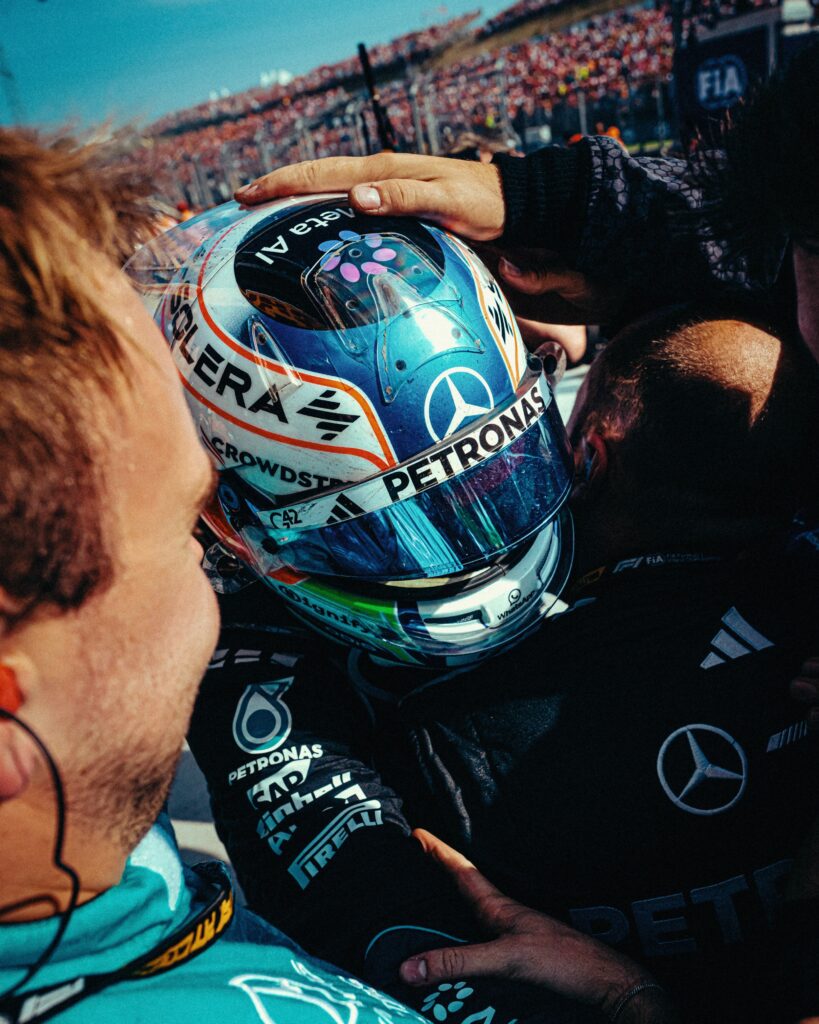
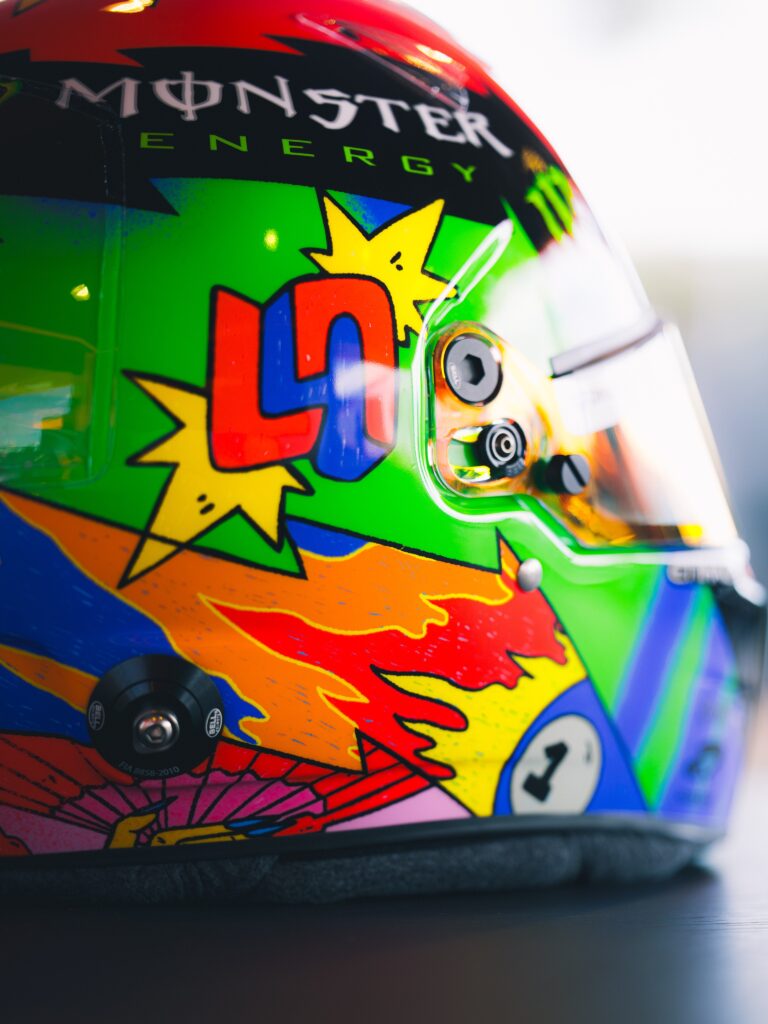
Monaco is the helmet designer’s Met Gala. Drivers commission one-off liveries here that they will never wear again, knowing the principality’s photographers will give them eternity on the front pages. For collectors, these are the pieces worth chasing — full-size 1:1 replicas built as display items that capture the chrome, the gold leaf and the layered candy-paint finishes used on the originals.
Chrome, royal blue and gold
The dominant underdog helmet of the weekend was a chrome-base shell with hand-applied gold leaf around the visor aperture. The shell measured the standard 27 cm in length, with a visor opening of roughly 8 cm tall by 22 cm wide. Up close, you can count six clearcoat layers giving the finish its mirror depth. As an exhibition piece on a plinth, it catches the light from every angle — exactly the trick the designer wanted on the grid walk.
Detail that rewards display
The rear of the shell carried hand-painted Monte Carlo skyline silhouettes — Casino Square, the Hôtel de Paris, the harbour cranes. These are the details that justify a glass display case. Sat on a shelf 35 cm wide, the helmet becomes the centrepiece of a Monaco-themed collection rather than just another lid in a row.
The Three Underdogs Worth Backing
The qualifying specialist
The first underdog is the driver who has built a career on single-lap pace. In Q3 here, he set sector 2 times within 0.08s of the eventual pole man. He qualified P6, finished P5 after one retirement ahead of him, and scored 10 points on a weekend where his car’s race pace was the eighth fastest in the field. Monaco hides weakness — that is the entire pitch.
The rookie with nothing to lose
The second is the first-year driver on a Tuesday-night commitment. With 78 laps of clean running, no mistakes, and a one-stop strategy that turned a hard tyre into a 52-lap stint, he climbed from P14 on the grid to P9. His helmet — a matte black base with a single fluorescent yellow stripe down the centreline — is one of the cleanest designs of the season. The simplicity makes it work as a 1:1 display piece against a wall-mounted plinth.
The veteran on the comeback
The third is the older head who knows every kerb. He arrived at Monaco having scored just 4 points in the previous five rounds. He left with a P7 finish and a fastest lap of 1:14.832 set on lap 71 with 14-lap-old soft tyres. His helmet for the weekend carried a tribute design: a hand-painted livery referencing his first Monaco appearance back in the early 2010s. For collectors, tribute designs are the most desirable category — limited runs, rich back-story, and an obvious focal point on any shelf.
Livery Moments Worth Framing
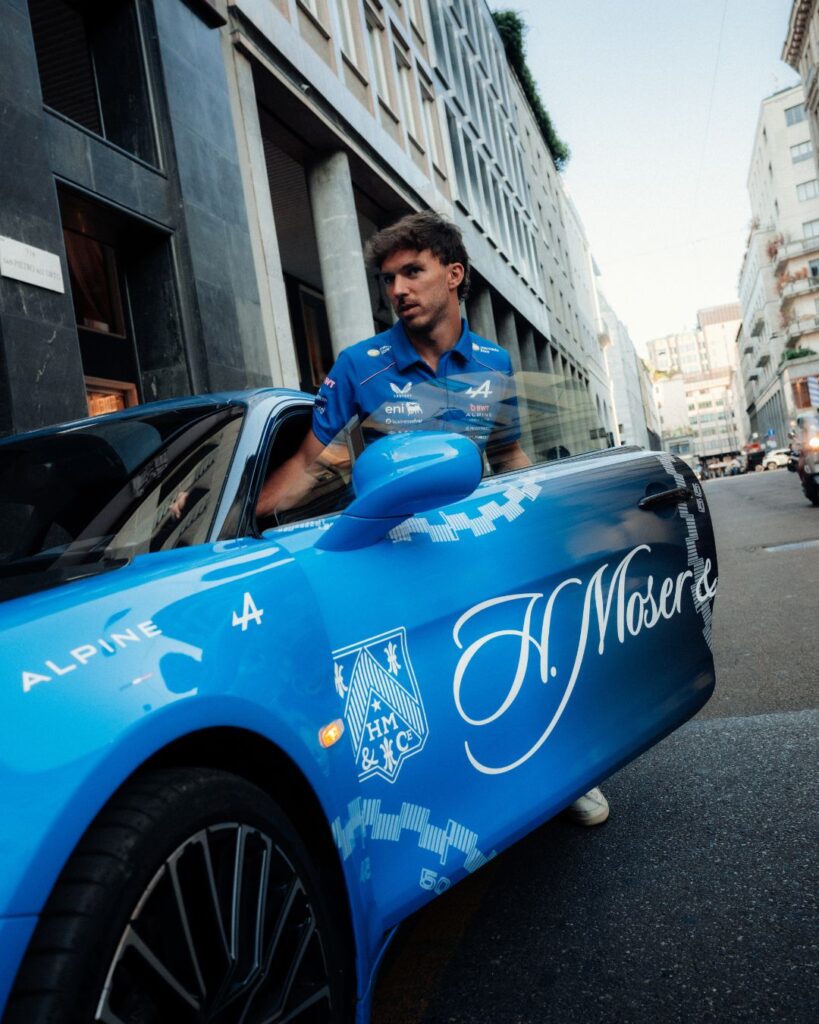
Monaco is also when teams roll out one-race liveries. The most striking of the weekend used a brushed-metal effect across the engine cover and a deep royal blue on the floor edges, with gold pinstriping picked out by hand. On the grid, under the floodlights at the swimming pool section, the colours shifted depending on the angle. Photographers spent more time on that car than on the pole-sitter.
The principality treatment
For the collector, the livery story matters because helmets get paired with team colours. A chrome-and-gold lid sat beside a model car in matching one-off colours becomes a Monaco-only diorama. Built to scale, with the helmet at full 1:1 size and the car model at 1:18, the proportion works on a 90 cm wide shelf.
Why these moments last
The Monaco one-off is the most photographed livery of any Grand Prix weekend. Estimates put media impressions at over 280 million for a single special helmet design. That is why the replicas are worth chasing as display items — the image has been baked into the sport’s visual memory.
The Race Itself: 78 Laps of Patience
The race ran to its full 78-lap distance with one safety car, deployed on lap 33 after a brush with the barrier at Mirabeau. The leaders pitted under the neutralisation, compressing the field into a 12-car train through the tunnel. From lap 40 to lap 65, the gap between P3 and P8 never exceeded 4.2 seconds. That is when the underdogs made their move — not by overtaking, but by waiting.
The undercut that did not work
One of the leading teams tried a 19-lap offset with the medium tyre. The out-lap was a 1:18.4 — almost 4 seconds off the pace they needed. By the time they emerged from the pit lane, the underdog ahead had banked enough gap to hold the position. That is Monaco: strategy options shrink to one, and if you guess wrong, you finish where you started.
The final 13 laps
From lap 65 to the flag, the top six all set their fastest laps of the race. The eventual winner crossed the line 7.4 seconds clear after 1 hour, 41 minutes and 22 seconds of racing. Behind him, three drivers from three different teams finished within 2.8 seconds of each other — the closest battle for the minor podium positions of the season so far.
Building a Monaco Display at Home
If Monaco is the weekend that captured your imagination, the collection builds around three pieces: a full-size 1:1 helmet replica of one of the special designs, a podium-day cap, and a framed trackmap of the 3.337 km layout. The helmet sits at eye level on a plinth roughly 28 cm tall, lit from above by a warm 2700K LED to bring out the chrome.
Practical dimensions
A 1:1 helmet replica weighs in around 1.45 kg as a display piece — lighter than a race-used helmet because the internal padding is built for shape rather than impact use. The shell measures 27 cm front-to-back and roughly 25 cm wide at the temples. Plan for a display case at least 35 × 35 × 35 cm if you want viewing room on all sides.
What to look for
The detail that separates exhibition quality from generic merchandise is paint depth. Six clearcoat layers, hand-applied logos rather than decals, and a visor tear-off tab that actually pivots. Those are the pieces worth the investment as collector items.
“Monaco is the only race where qualifying eighth feels like winning. Once you’re there, the barriers do half the work for you.”
— Veteran F1 race engineer
“The one-off helmet designs from Monaco are the most requested replicas of any weekend. Collectors want the chrome and the gold leaf above everything else.”
— 123Helmets.com display curator
FAQ
Q: Why is Monaco the best Grand Prix for underdog drivers?
The 3.337 km layout has 19 corners and almost no overtaking. Qualifying decides about 75% of the result, so a midfield car that nails one lap can finish well above its true pace. Gaps from P1 to P10 in qualifying have been under 0.65s in recent years.
Q: What makes Monaco helmet designs collectible?
Drivers commission one-off liveries specifically for Monte Carlo, often with chrome bases, gold leaf and hand-painted details. These are produced in tiny numbers, photographed heavily, and translate into exhibition-quality 1:1 display replicas that work as the centrepiece of any collection.
Q: How large is a full-size 1:1 helmet replica for display?
Roughly 27 cm front-to-back, 25 cm wide and 1.45 kg in weight. Plan for a display case of at least 35 × 35 × 35 cm to give viewing room on all sides. These are collector items, not protective equipment.
Q: What was the closest battle of the Monaco race?
From lap 65 to the flag, three drivers from three different teams finished within 2.8 seconds of each other, with the fastest lap of the race set at 1:14.832 on lap 71 by the eventual P7 finisher.
Q: How should I light a Monaco helmet display at home?
A warm 2700K LED from above brings out chrome and gold-leaf finishes. Place the helmet on a plinth around 28 cm tall at eye level. Six-layer clearcoat paint catches the light from every angle, which is exactly what the original designs were built to do.
Browse F1 Helmet Collection
Display and collector replicas only. Not certified for protective use. Full-size 1:1 scale.