Blog
Ferrari’s Austria Engine Upgrade: Steel Alloy, 115 °C Combustion and the Helmets That Capture the Moment
 123Helmets Editorial Team
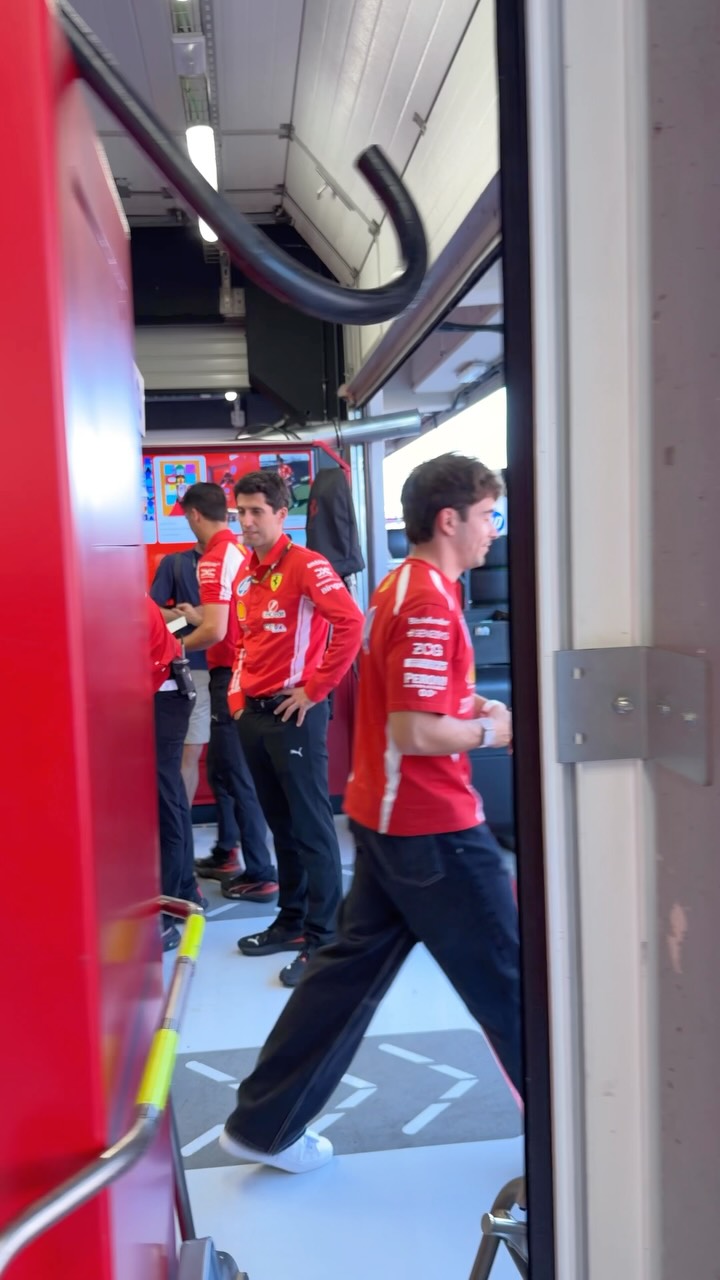
Ferrari is bringing its third-spec 067/6 power unit to the Austrian Grand Prix at Spielberg, pending FIA approval under the ADUO regulations. The upgrade pushes combustion intake temperatures beyond 115 °C and pairs a redesigned steel-alloy cylinder head with a Shell fuel formula developed in Hamburg. For collectors, the timing is perfect: a technical leap of this scale always produces podium imagery worth owning in full-size 1:1 replica form.
Key Takeaways
Ferrari’s 067/6 v3 raises intake air temperature past 115 °C, up from the existing 100 °C threshold, to improve combustion efficiency.
The steel-alloy cylinder head replaces aluminium specifically because aluminium would suffer structural failure at the new operating temperatures.
Shell’s Hamburg laboratory co-developed the new fuel formula alongside Enrico Gualtieri’s engine department for this exact configuration.
Austrian Grand Prix podium livery moments give Ferrari helmet collectors a historically significant display reference tied directly to a measurable technical milestone.
What Ferrari Is Actually Changing at Spielberg
Ferrari is introducing the third specification of its 067/6 power unit at the Austrian Grand Prix, subject to FIA sign-off under the ADUO — Additional Development and Upgrade Opportunities — framework. This is not a cosmetic revision. The core change is a steel-alloy cylinder head operating at combustion intake temperatures that will now exceed 115 °C, compared to the 100 °C ceiling the team has already been running and the 60–70 °C range typical of conventional F1 engine design.
The decision to use steel alloy rather than aluminium for the cylinder head is structural, not marginal. At the temperatures Ferrari’s engine department, led by Enrico Gualtieri, is now targeting, an aluminium cylinder head would face inevitable structural failure. Steel alloy holds its integrity at those conditions, which is why the upgrade unlocks temperature thresholds that simply were not available with the previous material choice.
The team will ship the updated unit to Spielberg and run it in preparation ahead of receiving formal FIA approval. The plan carries a degree of calculated risk — the unit does not race until the green light arrives — but it signals how confident Ferrari and Shell are in the readiness of this package.
How the New Shell Fuel Changes the Combustion Equation
Shell’s Hamburg laboratory developed the new fuel formula specifically for the higher temperature and pressure conditions created by the 067/6 v3 cylinder head. The relationship between the fuel chemistry and the engine architecture is deliberate: the fuel is not a generic upgrade applied across the grid, it is matched to Ferrari’s exact combustion chamber geometry and thermal range.
At higher combustion temperatures and pressures, a significantly greater proportion of fuel particles burn completely before the exhaust stroke begins. That cleaner burn converts more of the fuel’s chemical potential energy into mechanical work, which is the direct mechanism behind the expected power increase. It also produces fewer residual emissions per combustion cycle — a side effect of efficiency rather than a primary goal, but worth noting.
What makes the Austria package difficult to analyse from the outside is that the performance gain comes from two sources simultaneously: the newly homologated fuel and the FIA-approved mechanical modifications to the engine. Ferrari and Shell have not publicly separated those contributions, and from a competitive standpoint they have every reason to keep that information internal. The headline number — whatever lap time improvement emerges in Spielberg qualifying — will represent both variables working together.
The stated objective is to reduce Ferrari’s horsepower deficit to Mercedes’ internal combustion engine. Lewis Hamilton’s Barcelona victory underlined that gap remains a live competitive problem for the Scuderia, making the Austria introduction timeline feel urgent rather than precautionary.
The Austrian Grand Prix as a Collector Visual Event
The Austrian Grand Prix at the Red Bull Ring in Spielberg produces some of the most recognisable helmet and livery imagery in the F1 calendar, and a Ferrari technical breakthrough tied to this venue makes the 2025 edition particularly significant for display collectors. The circuit’s compact layout — 4.318 km per lap — places cars and helmets in close proximity to grandstands and cameras for long stretches, generating sharp, close-range podium and cockpit imagery that translates directly into the reference material collectors use when evaluating a full-size 1:1 replica helmet.
When Ferrari brings a measurable upgrade package to a race, the podium moments that follow carry extra historical weight. A race win or podium finish in Austria, achieved with the 067/6 v3 running, would anchor that helmet design to a specific technical chapter in the team’s season — the point where the combustion temperature ceiling moved from 100 °C to over 115 °C. That kind of specificity is exactly what separates a display piece with a story from one without context.
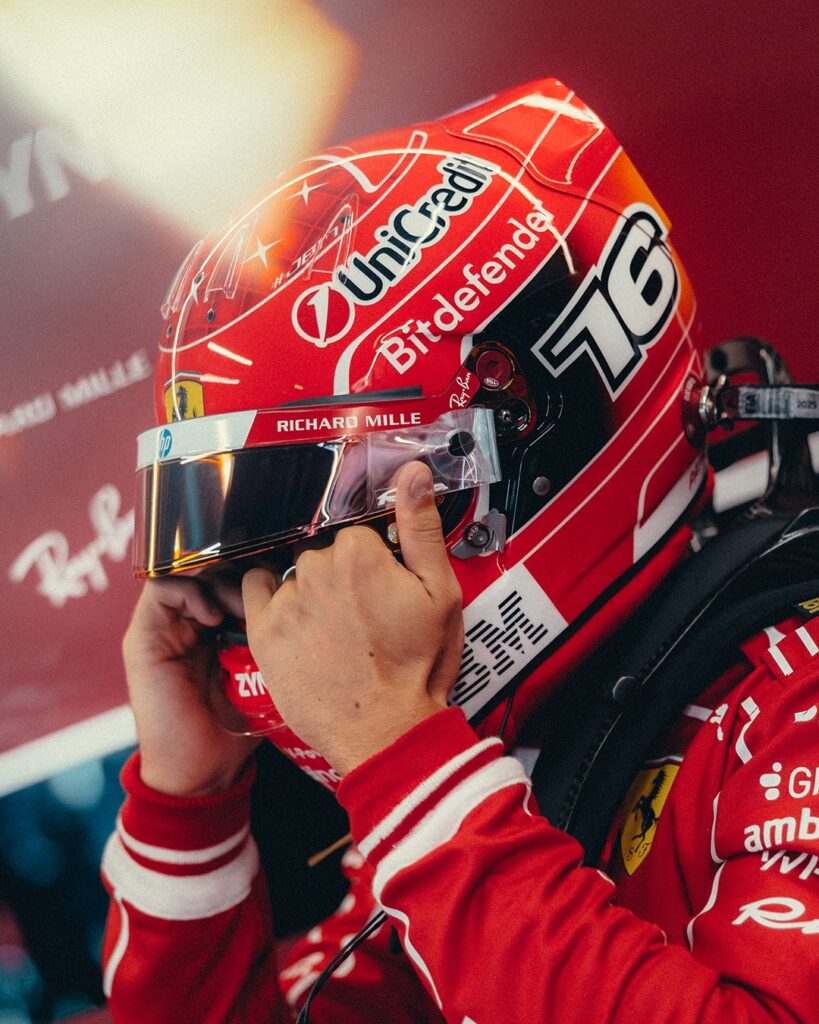
Ferrari’s current race helmets, worn by its drivers in the scarlet livery that has defined the team since its earliest championship campaigns, sit at the centre of that visual moment. A full-size 1:1 replica of an Austrian Grand Prix-era Ferrari helmet captures not just the graphic design on the shell but the competitive context it was worn in — a context that, from the 2025 Austrian race onward, includes one of the team’s most technically significant engine introductions in recent seasons.
Ferrari Helmet Design: What Makes Austria 2025 Display-Worthy
Ferrari’s 2025 race helmet designs carry the team’s signature scarlet base with the black and yellow Shield branding, Scuderia wordmark, and sponsor graphics positioned to remain legible at racing distances — which also means they read cleanly on a display stand at 1:1 scale. The helmet shell on a full-size collector replica measures the same dimensions as the race-used item, giving the display piece the correct visual weight and proportion when placed alongside photography from the actual event.
The Austrian Grand Prix podium backdrop — the Red Bull Ring’s mountain setting, the Spielberg hillside grandstands, Ferrari’s engineers in their red kit — provides a strong visual frame for any collector who wants to contextualise their replica. A display helmet positioned beside an event programme or race print from Austria 2025 immediately communicates a specific moment rather than a generic F1 season.
For collectors focused on exhibition quality, the detail that matters is finish consistency: a properly produced 1:1 replica replicates the helmet’s outer graphic layer, visor geometry, and shell curvature without deviation from the source design. The visor on the replica should sit at the same rake angle as the race item, and the sponsor decals should be sized to the correct percentage of the shell surface. These are the details that hold up under close inspection during display.
Why the Timing Matters for Your Collection
Engine upgrade races are rarer than they appear on the calendar. ADUO-framework introductions happen at defined points in the season, not continuously, which means the Austria 2025 event marks a discrete moment in Ferrari’s 2025 campaign. A helmet from this period of the season — introduced to the market as a full-size 1:1 collector replica — references a window in which Ferrari was actively closing a performance gap using the most technically ambitious combustion configuration the team has produced under the current engine regulations.
The Ferrari–Shell Partnership and What It Means for the Display Shelf
The Ferrari–Shell technical partnership has produced fuel developments for Ferrari’s race programme across multiple generations of power unit, and the Hamburg laboratory’s involvement in the Austria 2025 fuel formula continues that line directly. Shell’s branding appears on Ferrari’s race cars and helmets as a result of this working relationship, which means every full-size 1:1 replica helmet from the current Ferrari season carries that partnership’s visual signature on the shell.
For collectors, sponsor graphics are not decoration — they are documentation. The Shell logo placement on a Ferrari race helmet in 2025 is a record of an active technical collaboration that, in Austria, produced a fuel formula matched to a combustion chamber running above 115 °C. That is a specific fact embedded in the graphic design of the helmet, visible on the display shelf every time someone looks at the piece.
Ferrari’s engine department under Enrico Gualtieri has been working toward this configuration since the steel-alloy cylinder head concept was first introduced. The Austria upgrade does not arrive without a development history behind it. Collectors who understand that history — who know that the 067/6 v3 represents the third specification of this unit and that the ADUO framework is the regulatory mechanism that allows it — are looking at their display helmet differently than someone who sees only the colour and the logo. The technical story makes the object more interesting, not less.
How to Display a Ferrari Austria 2025 Replica Helmet
A full-size 1:1 Ferrari replica helmet displays best at eye level, on a stand that holds the helmet at the same orientation it sits on a driver’s head — chin slightly forward, visor facing the viewer. This orientation shows the primary graphic zone across the top and sides of the shell, which is where Ferrari’s 2025 livery places its most recognisable design elements.
The display case, if used, should allow the visor to be seen clearly. The visor is a defining element of the helmet’s silhouette and a key part of what makes the replica immediately identifiable as an F1 piece rather than any other motorsport category. A smoked or mirrored visor in the replica matches the race-used specification and adds depth to the display.
Lighting positioned above and slightly in front of the display stand brings out the gloss finish of the shell and catches the metallic elements in the sponsor graphics. Avoid direct downward lighting that creates hard shadows across the visor opening. The goal is to replicate, as closely as possible, the way the helmet looks under Spielberg’s open-sky conditions — which is exactly the lighting context in which the race photographs that make collectors want these pieces in the first place were taken.
At 1:1 scale, a Ferrari replica helmet occupies a defined physical space: it is a full-size object, not a miniature, and it commands the shelf accordingly. Placed in context with a circuit map, a race result card, or a note on the 067/6 v3’s 115 °C combustion threshold, the display becomes a curated moment in Ferrari’s 2025 season rather than simply an attractive object.
“The higher temperature and pressure inside the combustion chamber will allow a much greater proportion of the fuel particles to burn, producing fewer emissions while achieving a significantly more efficient combustion process.”
— Ferrari technical briefing on 067/6 v3 upgrade, Austria 2025
“Using a steel alloy rather than aluminium for the cylinder head allows combustion chamber temperatures to be significantly higher than usual; with aluminium, structural failures would have been inevitable at the same temperatures.”
— Ferrari power unit development notes, 2025 season
FAQ
Q: What is the Ferrari 067/6 v3 engine upgrade introduced at the Austrian Grand Prix?
The 067/6 v3 is the third specification of Ferrari’s current power unit, introduced at Spielberg under the ADUO framework pending FIA approval. It features a steel-alloy cylinder head capable of sustaining combustion intake temperatures above 115 °C, paired with a Shell fuel formula developed in Hamburg for this specific configuration. The upgrade is designed to reduce Ferrari’s horsepower deficit to Mercedes’ internal combustion engine.
Q: Why does Ferrari use a steel-alloy cylinder head instead of aluminium?
Ferrari uses steel alloy because aluminium would suffer structural failure at the combustion temperatures the upgraded engine targets. The 067/6 v3 operates above 115 °C on the intake air side — compared to 60–70 °C in conventional designs — and steel alloy maintains its integrity at those conditions where aluminium cannot.
Q: What is an ADUO in Formula 1 engine regulations?
ADUO stands for Additional Development and Upgrade Opportunities, a regulatory framework the FIA uses to allow engine manufacturers to introduce specified modifications outside the standard homologation freeze. Ferrari is using this mechanism to introduce the 067/6 v3 at Austria, running the unit pending formal approval before it races.
Q: Are Ferrari replica helmets certified for protective use?
No. Ferrari replica helmets from 123Helmets.com are full-size 1:1 display and collector pieces only. They are not certified for any protective use, road use, race use, or track use. They carry no FIA, Snell, ECE, or DOT rating and are produced exclusively as exhibition-quality collector items.
Q: Why is the Austrian Grand Prix a significant event for Ferrari helmet collectors in 2025?
The 2025 Austrian Grand Prix is the race at which Ferrari introduced the 067/6 v3 power unit — the version that pushed combustion intake temperatures past 115 °C using a steel-alloy cylinder head and a new Shell fuel. A full-size 1:1 replica helmet from this period of the season is directly tied to that technical milestone, giving the display piece a specific historical context within Ferrari’s 2025 championship campaign.
Shop Ferrari Helmets — bring a full-size 1:1 display replica of the 2025 Scuderia season to your collection. Each piece is exhibition quality, sized to race specification, and tied to one of the most technically significant chapters in Ferrari’s recent engine development history.
Display and collector replicas only. Not certified for protective use. Full-size 1:1 scale.
This article was written with the help of AI tools. Editorial policy